

Milk, lowfat, fluid, 1% milkfat, with added vitamin A and vitamin D
Whole food · Dairy and Egg Products
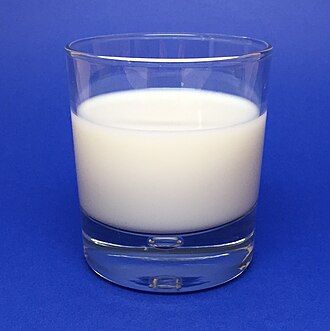
Photo: Wikipedia
This is a lean, fortified dairy staple—a smooth, pourable liquid with a clean, subtly sweet flavor and a light, refreshing body. Nutritionally, it's a protein powerhouse relative to its calories, delivering high-quality, complete protein with minimal fat. The added vitamins A and D make it a practical source of these often-missing nutrients in a modern diet.
Calorie split: 32% protein · 48% carbs · 20% fat
↓ Full nutrition💚 Why it's loved
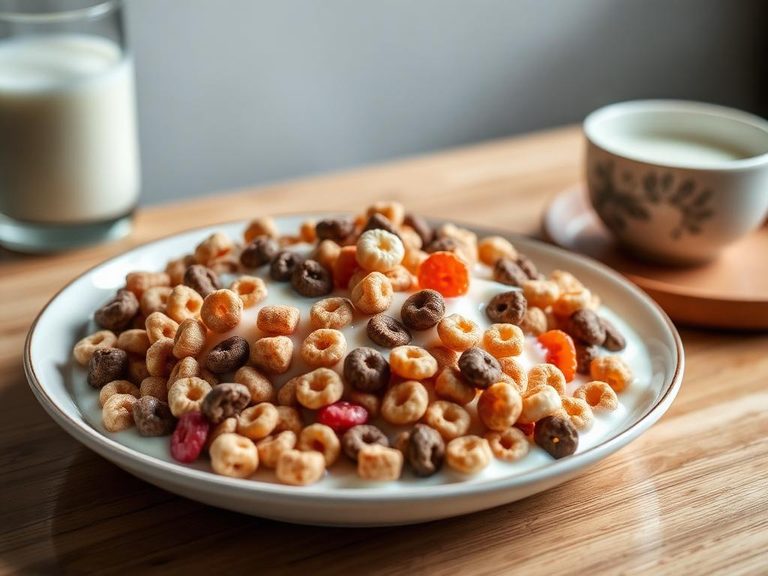
People love it for its mild, versatile sweetness that complements both sweet and savory dishes, and its role as a foundational, comforting beverage in countless cultures. It's a reliable, everyday protein source that's easy to incorporate into meals, from breakfast cereal to baking.
⚠️ Watch-outs & how to enjoy it better
As a dairy product, it's a common allergen for those with cow's milk protein or lactose intolerance, potentially causing digestive distress. The natural lactose content can also cause blood-sugar spikes for some individuals. To counteract, pair it with fiber-rich foods like oats or berries, or choose lactose-free versions if sensitivity is an issue. For those avoiding dairy entirely, fortified plant-based milks can be a substitute, though they typically lack the same protein profile.
Key benefits
- Excellent source of high-quality, complete protein for muscle maintenance.
- Naturally rich in bone-building calcium and phosphorus.
- Fortified with Vitamin D to enhance calcium absorption.
- Low in calories and saturated fat compared to whole milk.
- Provides essential amino acids in a highly bioavailable form.
🍽️ Popular dishes


🌍 Where it's eaten
💡 Did you know?
The process of pasteurization, which makes milk safe to drink, was named after Louis Pasteur, but it was actually a French chemist named Nicolas Appert who first developed the canning method that inspired Pasteur's work.
Full nutrition (USDA data · scales with serving)
| Water | 89.7 g |
| Energy (Atwater General Factors) | 43.0 kcal |
| Energy (Atwater Specific Factors) | 43.0 kcal |
| Energy | 43.0 kcal |
| Energy | 179 kj |
| Nitrogen | 0.53 g |
| Protein | 3.4 g |
| Total lipid (fat) | 0.95 g |
| Total fat (NLEA) | 0.85 g |
| Ash | 0.80 g |
| Carbohydrate, by difference | 5.2 g |
| Sugars, Total | 5.0 g |
| Sucrose | 0.00 g |
| Glucose | 0.00 g |
| Fructose | 0.00 g |
| Lactose | 5.0 g |
| Maltose | 0.00 g |
| Galactose | 0.00 g |
| Calcium, Ca | 126 mg |
| Iron, Fe | 0.00 mg |
| Magnesium, Mg | 12.0 mg |
| Phosphorus, P | 103 mg |
| Potassium, K | 159 mg |
| Sodium, Na | 39.0 mg |
| Zinc, Zn | 0.43 mg |
| Copper, Cu | 0.00 mg |
| Manganese, Mn | 0.00 mg |
| Iodine, I | 36.2 ug |
| Selenium, Se | 2.1 ug |
| Thiamin | 0.06 mg |
| Riboflavin | 0.14 mg |
| Niacin | 0.11 mg |
| Pantothenic acid | 0.37 mg |
| Vitamin B-6 | 0.06 mg |
| Folate, total | 2.0 ug |
| Choline, total | 17.4 mg |
| Choline, free | 3.0 mg |
| Choline, from phosphocholine | 0.90 mg |
| Choline, from phosphotidyl choline | 1.8 mg |
| Choline, from glycerophosphocholine | 10.9 mg |
| Choline, from sphingomyelin | 0.80 mg |
| Betaine | 0.90 mg |
| Vitamin B-12 | 0.61 ug |
| Vitamin A, RAE | 58.0 ug |
| Retinol | 58.0 ug |
| Carotene, beta | 1.0 ug |
| cis-beta-Carotene | 0.00 ug |
| trans-beta-Carotene | 1.0 ug |
| Carotene, alpha | 0.00 ug |
| Cryptoxanthin, beta | 0.00 ug |
| Cryptoxanthin, alpha | 0.00 ug |
| Lycopene | 0.00 ug |
| cis-Lycopene | 0.00 ug |
| trans-Lycopene | 0.00 ug |
| cis-Lutein/Zeaxanthin | 0.00 ug |
| Lutein | 0.00 ug |
| Zeaxanthin | 0.00 ug |
| Vitamin E (alpha-tocopherol) | 0.02 mg |
| Tocopherol, beta | 0.00 mg |
| Tocopherol, gamma | 0.00 mg |
| Tocopherol, delta | 0.00 mg |
| Tocotrienol, alpha | 0.00 mg |
| Tocotrienol, beta | 0.00 mg |
| Tocotrienol, gamma | 0.00 mg |
| Tocotrienol, delta | 0.00 mg |
| Vitamin D (D2 + D3), International Units | 42.4 iu |
| Vitamin D (D2 + D3) | 1.1 ug |
| Vitamin D2 (ergocalciferol) | 0.00 ug |
| Vitamin D3 (cholecalciferol) | 1.1 ug |
| 25-hydroxycholecalciferol | 0.00 ug |
Fat & fatty acid profile (per 100g)
| Fatty acids, total saturated | 0.57 g |
| SFA 4:0 | 0.02 g |
| SFA 5:0 | 0.00 g |
| SFA 6:0 | 0.01 g |
| SFA 7:0 | 0.00 g |
| SFA 8:0 | 0.01 g |
| SFA 9:0 | 0.00 g |
| SFA 10:0 | 0.02 g |
| SFA 11:0 | 0.00 g |
| SFA 12:0 | 0.03 g |
| SFA 14:0 | 0.09 g |
| SFA 15:0 | 0.01 g |
| SFA 16:0 | 0.27 g |
| SFA 17:0 | 0.01 g |
| SFA 18:0 | 0.10 g |
| SFA 20:0 | 0.00 g |
| SFA 21:0 | 0.00 g |
| SFA 22:0 | 0.00 g |
| SFA 23:0 | 0.00 g |
| SFA 24:0 | 0.00 g |
| Fatty acids, total monounsaturated | 0.21 g |
| MUFA 12:1 | 0.00 g |
| MUFA 14:1 c | 0.01 g |
| MUFA 15:1 | 0.00 g |
| MUFA 16:1 c | 0.01 g |
| MUFA 17:1 | 0.00 g |
| MUFA 17:1 c | 0.00 g |
| MUFA 18:1 c | 0.19 g |
| MUFA 20:1 c | 0.00 g |
| MUFA 22:1 c | 0.00 g |
| MUFA 22:1 n-9 | 0.00 g |
| MUFA 22:1 n-11 | 0.00 g |
| MUFA 24:1 c | 0.00 g |
| Fatty acids, total polyunsaturated | 0.03 g |
| PUFA 18:2 c | 0.03 g |
| PUFA 18:2 n-6 c,c | 0.03 g |
| PUFA 18:2 CLAs | 0.00 g |
| PUFA 18:3 c | 0.00 g |
| PUFA 18:3 n-3 c,c,c (ALA) | 0.00 g |
| PUFA 18:3 n-6 c,c,c | 0.00 g |
| PUFA 18:4 | 0.00 g |
| PUFA 20:2 c | 0.00 g |
| PUFA 20:2 n-6 c,c | 0.00 g |
| PUFA 20:3 c | 0.00 g |
| PUFA 20:3 n-3 | 0.00 g |
| PUFA 20:3 n-6 | 0.00 g |
| PUFA 20:3 n-9 | 0.00 g |
| PUFA 22:3 | 0.00 g |
| PUFA 20:4 | 0.00 g |
| PUFA 20:4c | 0.00 g |
| PUFA 20:5c | 0.00 g |
| PUFA 20:5 n-3 (EPA) | 0.00 g |
| PUFA 22:2 | 0.00 g |
| PUFA 22:5 c | 0.00 g |
| PUFA 22:4 | 0.00 g |
| PUFA 22:5 n-3 (DPA) | 0.00 g |
| PUFA 22:6 c | 0.00 g |
| PUFA 22:6 n-3 (DHA) | 0.00 g |
| Fatty acids, total trans | 0.04 g |
| Fatty acids, total trans-monoenoic | 0.03 g |
| TFA 14:1 t | 0.00 g |
| TFA 16:1 t | 0.00 g |
| TFA 18:1 t | 0.03 g |
| TFA 20:1 t | 0.00 g |
| TFA 22:1 t | 0.00 g |
| Fatty acids, total trans-dienoic | 0.00 g |
| TFA 18:2 t not further defined | 0.00 g |
| Fatty acids, total trans-polyenoic | 0.00 g |
| TFA 18:3 t | 0.00 g |
| Cholesterol | 5.0 mg |
Amino acid profile (per 100g)
| Tryptophan | 0.04 g |
| Threonine | 0.16 g |
| Isoleucine | 0.17 g |
| Leucine | 0.34 g |
| Lysine | 0.31 g |
| Methionine | 0.09 g |
| Phenylalanine | 0.17 g |
| Tyrosine | 0.17 g |
| Valine | 0.21 g |
| Arginine | 0.13 g |
| Histidine | 0.10 g |
| Alanine | 0.11 g |
| Aspartic acid | 0.29 g |
| Glutamic acid | 0.81 g |
| Glycine | 0.07 g |
| Proline | 0.35 g |
| Serine | 0.19 g |
| Hydroxyproline | 0.00 g |
| Cysteine | 0.04 g |
FAQ
Is low-fat milk as nutritious as whole milk?
Yes, for most nutrients. Low-fat milk retains the same amount of protein, calcium, and vitamins as whole milk. The primary difference is the fat content, which also reduces the calorie count. Whole milk may offer better satiety due to the fat.
Why is it fortified with vitamins A and D?
When fat is removed from milk, fat-soluble vitamins like Vitamin A are also reduced. Fortification restores these nutrients. Vitamin D is added because it's not naturally abundant in food and is crucial for calcium absorption, especially in regions with limited sunlight.
Can I use this in cooking and baking?
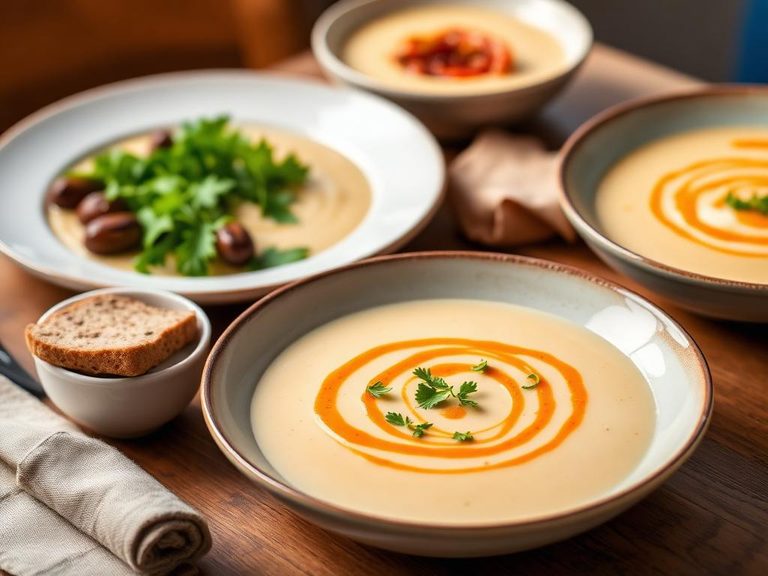
Absolutely. It's a versatile ingredient. Use it in place of water for richer flavor in oatmeal, as a base for creamy soups, or in baking recipes like cakes and breads to add moisture and protein.
Nutrient density (calculated · NRF9.3)
Nutrient Rich Foods index: beneficial nutrients (protein, fiber, vitamins, minerals) minus saturated fat, added sugar & sodium, per 100 kcal.
NRF9.3 index — Fulgoni, Keast & Drewnowski, 2009. Computed from USDA nutrients.
Weight-loss friendliness (composite index)
Energy density 0.43 kcal/g · 31% calories from protein · 0.0 g fiber · 0.0 g sugar per 100 g.
Composite of energy density (Rolls et al., 1999), protein & fiber satiety, minus sugar. A calculated heuristic — ranks satiety-per-calorie, not a clinical measure.
Dietary load (calculated from USDA values)
Potential renal acid load. Positive = acid-forming, negative = alkaline-forming.
Sodium-to-potassium ratio: 0.25 (lower is better — aim for ≤ 1)
Sodium:potassium per WHO potassium guidance. Computed from USDA nutrients.