

Cheese, swiss
Whole food · Dairy and Egg Products
Swiss cheese is a semi-hard, pale-yellow cow's milk cheese celebrated for its iconic, large holes and mild, nutty flavor. Its smooth, firm texture and sweet, slightly earthy taste make it a versatile staple. Nutritionally, it's a powerhouse of protein and fat, with virtually no carbohydrates.
Calorie split: 27% protein · 1% carbs · 71% fat
↓ Full nutrition💚 Why it's loved
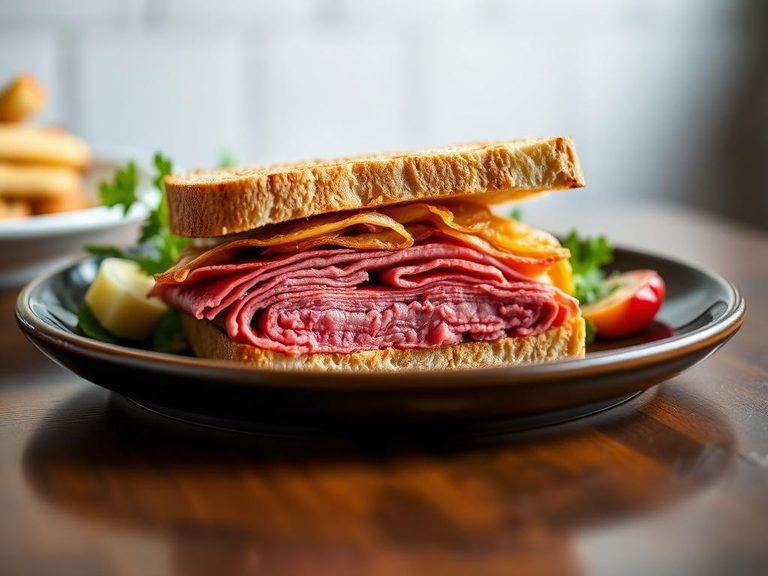
People love Swiss cheese for its distinctive, sweet-nutty flavor that isn't overpowering, making it perfect for both cooking and snacking. Its iconic appearance and role in classic dishes like the Reuben sandwich have cemented its place in culinary culture.
⚠️ Watch-outs & how to enjoy it better
Its high fat and calorie density means it should be enjoyed in moderation, especially for those managing weight. The sodium content can be significant, and it's a dairy product, making it a common allergen. Tip: Use it as a flavorful accent rather than the main ingredient, and pair it with fiber-rich vegetables or whole-grain bread to balance the meal.
Key benefits
- Excellent source of high-quality protein for muscle maintenance.
- Rich in calcium for bone and dental health.
- Provides vitamin B12, essential for nerve function and red blood cell formation.
- Contains conjugated linoleic acid (CLA), a fatty acid studied for potential health benefits.
- Naturally low in lactose, often tolerable for those with mild sensitivities.
🍽️ Popular dishes
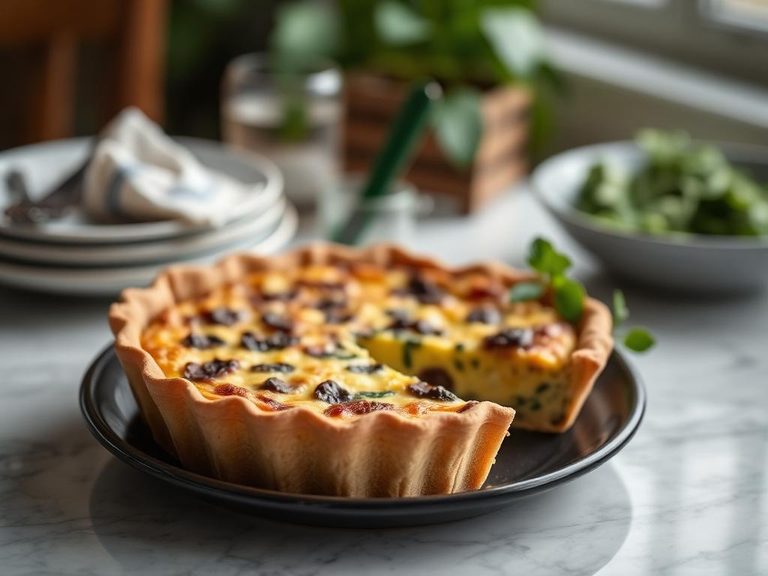
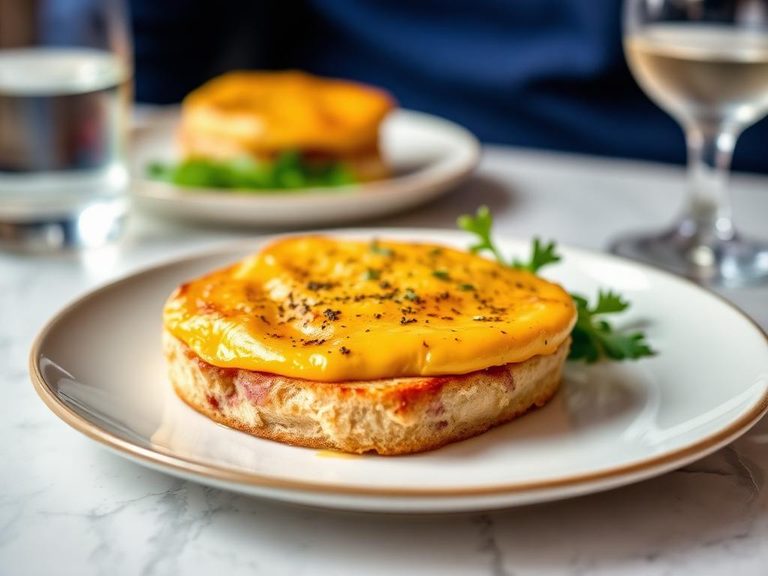
🌍 Where it's eaten
💡 Did you know?
The large holes in Swiss cheese, called 'eyes,' are formed by carbon dioxide bubbles released by the bacterium Propionibacterium freudenreichii during the fermentation process.
Full nutrition (USDA data · scales with serving)
| Water | 37.6 g |
| Energy | 393 kcal |
| Energy | 1645 kj |
| Protein | 27.0 g |
| Total lipid (fat) | 31.0 g |
| Ash | 3.0 g |
| Carbohydrate, by difference | 1.4 g |
| Fiber, total dietary | 0.00 g |
| Total Sugars | 0.00 g |
| Sucrose | 0.00 g |
| Glucose | 0.00 g |
| Fructose | 0.00 g |
| Lactose | 0.00 g |
| Maltose | 0.00 g |
| Galactose | 0.00 g |
| Calcium, Ca | 890 mg |
| Iron, Fe | 0.13 mg |
| Magnesium, Mg | 33.0 mg |
| Phosphorus, P | 574 mg |
| Potassium, K | 72.0 mg |
| Sodium, Na | 187 mg |
| Zinc, Zn | 4.4 mg |
| Copper, Cu | 0.05 mg |
| Manganese, Mn | 0.03 mg |
| Selenium, Se | 30.0 ug |
| Vitamin C, total ascorbic acid | 0.00 mg |
| Thiamin | 0.01 mg |
| Riboflavin | 0.30 mg |
| Niacin | 0.06 mg |
| Pantothenic acid | 0.35 mg |
| Vitamin B-6 | 0.07 mg |
| Folate, total | 10.0 ug |
| Folic acid | 0.00 ug |
| Folate, food | 10.0 ug |
| Folate, DFE | 10.0 ug |
| Choline, total | 13.8 mg |
| Betaine | 0.10 mg |
| Vitamin B-12 | 3.1 ug |
| Vitamin B-12, added | 0.00 ug |
| Vitamin A, RAE | 288 ug |
| Retinol | 283 ug |
| Carotene, beta | 61.0 ug |
| Carotene, alpha | 1.0 ug |
| Cryptoxanthin, beta | 2.0 ug |
| Vitamin A, IU | 1047 iu |
| Lycopene | 1.0 ug |
| Lutein + zeaxanthin | 8.0 ug |
| Vitamin E (alpha-tocopherol) | 0.60 mg |
| Vitamin E, added | 0.00 mg |
| Tocopherol, beta | 0.02 mg |
| Tocopherol, gamma | 0.07 mg |
| Tocopherol, delta | 0.00 mg |
| Tocotrienol, alpha | 0.13 mg |
| Tocotrienol, beta | 0.00 mg |
| Tocotrienol, gamma | 0.00 mg |
| Tocotrienol, delta | 0.00 mg |
| Vitamin D (D2 + D3), International Units | 0.00 iu |
| Vitamin D (D2 + D3) | 0.00 ug |
| Vitamin D2 (ergocalciferol) | 0.00 ug |
| Vitamin D3 (cholecalciferol) | 0.00 ug |
| Vitamin K (phylloquinone) | 1.4 ug |
| Vitamin K (Dihydrophylloquinone) | 0.00 ug |
| Vitamin K (Menaquinone-4) | 6.3 ug |
| Alcohol, ethyl | 0.00 g |
| Caffeine | 0.00 mg |
| Theobromine | 0.00 mg |
Fat & fatty acid profile (per 100g)
| Fatty acids, total saturated | 18.2 g |
| SFA 4:0 | 0.68 g |
| SFA 6:0 | 0.54 g |
| SFA 8:0 | 0.33 g |
| SFA 10:0 | 0.77 g |
| SFA 12:0 | 0.88 g |
| SFA 14:0 | 2.9 g |
| SFA 15:0 | 0.30 g |
| SFA 16:0 | 8.4 g |
| SFA 17:0 | 0.19 g |
| SFA 18:0 | 3.2 g |
| SFA 20:0 | 0.04 g |
| SFA 22:0 | 0.01 g |
| SFA 24:0 | 0.01 g |
| Fatty acids, total monounsaturated | 8.0 g |
| MUFA 14:1 | 0.30 g |
| MUFA 15:1 | 0.00 g |
| MUFA 16:1 | 0.56 g |
| MUFA 16:1 c | 0.46 g |
| MUFA 17:1 | 0.06 g |
| MUFA 18:1 | 7.1 g |
| MUFA 18:1 c | 6.4 g |
| MUFA 20:1 | 0.06 g |
| MUFA 22:1 | 0.00 g |
| MUFA 22:1 c | 0.00 g |
| MUFA 24:1 c | 0.00 g |
| Fatty acids, total polyunsaturated | 1.3 g |
| PUFA 18:2 | 1.1 g |
| PUFA 18:2 n-6 c,c | 0.73 g |
| PUFA 18:2 CLAs | 0.16 g |
| PUFA 18:3 | 0.13 g |
| PUFA 18:3 n-3 c,c,c (ALA) | 0.13 g |
| PUFA 18:3 n-6 c,c,c | 0.00 g |
| PUFA 18:3i | 0.00 g |
| PUFA 18:4 | 0.00 g |
| PUFA 20:2 n-6 c,c | 0.01 g |
| PUFA 20:3 | 0.04 g |
| PUFA 20:3 n-3 | 0.00 g |
| PUFA 20:3 n-6 | 0.03 g |
| PUFA 20:4 | 0.05 g |
| PUFA 20:5 n-3 (EPA) | 0.01 g |
| PUFA 22:4 | 0.01 g |
| PUFA 22:5 n-3 (DPA) | 0.02 g |
| PUFA 22:6 n-3 (DHA) | 0.00 g |
| Fatty acids, total trans | 0.99 g |
| Fatty acids, total trans-monoenoic | 0.79 g |
| TFA 16:1 t | 0.10 g |
| TFA 18:1 t | 0.69 g |
| TFA 22:1 t | 0.00 g |
| TFA 18:2 t not further defined | 0.19 g |
| Fatty acids, total trans-polyenoic | 0.19 g |
| Cholesterol | 93.0 mg |
Amino acid profile (per 100g)
| Tryptophan | 0.40 g |
| Threonine | 1.0 g |
| Isoleucine | 1.5 g |
| Leucine | 3.0 g |
| Lysine | 2.6 g |
| Methionine | 0.78 g |
| Cystine | 0.29 g |
| Phenylalanine | 1.7 g |
| Tyrosine | 1.7 g |
| Valine | 2.1 g |
| Arginine | 0.93 g |
| Histidine | 1.1 g |
| Alanine | 0.91 g |
| Aspartic acid | 1.6 g |
| Glutamic acid | 5.7 g |
| Glycine | 0.51 g |
| Proline | 3.7 g |
| Serine | 1.6 g |
FAQ
Why does Swiss cheese have holes?
The holes, or 'eyes,' are created by carbon dioxide gas produced by specific bacteria during the cheese-making process. As the cheese ages, the gas forms bubbles that leave behind the characteristic pockets.
Is Swiss cheese low in lactose?
Yes, during aging, bacteria consume most of the lactose (milk sugar). A typical aged Swiss cheese contains very little lactose, often making it easier to digest for people with mild lactose intolerance.
What's the difference between Swiss and Emmental?
Emmental is a specific type of Swiss cheese from the Emmental region of Switzerland, known for its large holes. 'Swiss cheese' is a broader category used in the U.S. to describe any cheese with a similar mild flavor and holey appearance.
Nutrient density (calculated · NRF9.3)
Nutrient Rich Foods index: beneficial nutrients (protein, fiber, vitamins, minerals) minus saturated fat, added sugar & sodium, per 100 kcal.
NRF9.3 index — Fulgoni, Keast & Drewnowski, 2009. Computed from USDA nutrients.
Weight-loss friendliness (composite index)
Energy density 3.93 kcal/g · 27% calories from protein · 0.0 g fiber · 0.0 g sugar per 100 g.
Composite of energy density (Rolls et al., 1999), protein & fiber satiety, minus sugar. A calculated heuristic — ranks satiety-per-calorie, not a clinical measure.
Dietary load (calculated from USDA values)
Potential renal acid load. Positive = acid-forming, negative = alkaline-forming.
Sodium-to-potassium ratio: 2.60 (lower is better — aim for ≤ 1)
Sodium:potassium per WHO potassium guidance. Computed from USDA nutrients.