

Cheese, pasteurized process, American, vitamin D fortified
Whole food · Dairy and Egg Products
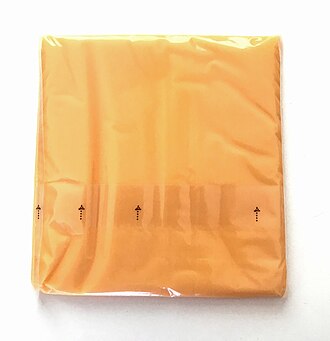
Photo: Wikipedia
This is the iconic, smooth, and meltable American cheese slice, engineered for perfect consistency in a grilled cheese or burger. Its flavor is mild, salty, and creamy, with a texture that becomes gloriously gooey when heated. Nutritionally, it's a dense source of protein and fat, with added vitamin D to aid absorption.
Calorie split: 20% protein · 6% carbs · 75% fat
↓ Full nutrition💚 Why it's loved
People love it for its unparalleled meltability and nostalgic, comforting flavor that defines classic American comfort food. It's the ultimate convenience cheese, delivering reliable creaminess and saltiness in everything from a midnight snack to a diner-style patty melt.
⚠️ Watch-outs & how to enjoy it better
It is highly processed and typically high in sodium, which can be a concern for blood pressure. The high fat and calorie density require portion awareness, and it's a common dairy allergen. To counteract, use it as a flavor accent rather than the main event, pair it with fiber-rich vegetables like lettuce and tomato on a burger, and choose lower-sodium varieties when available.
Key benefits
- Excellent source of complete protein (18g per 100g)
- Fortified with vitamin D for bone health
- Melts smoothly and consistently for cooking
- Provides a quick, calorie-dense energy source
- Long shelf life compared to natural cheeses
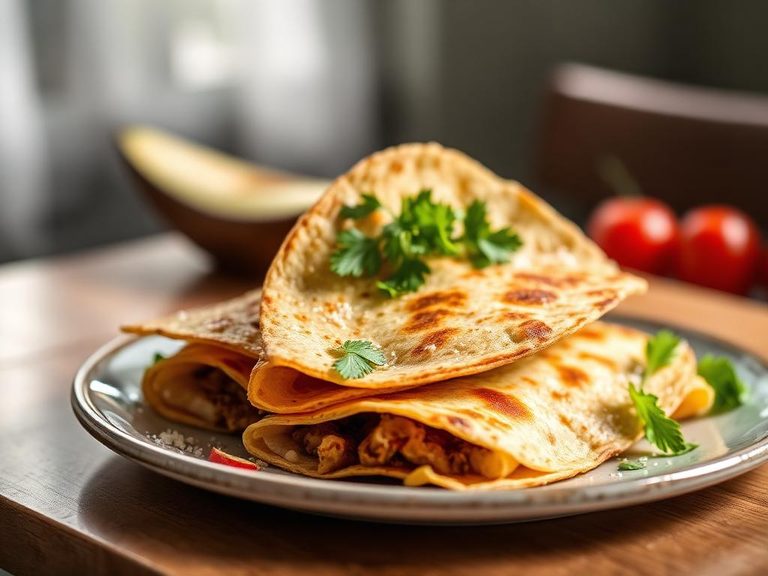
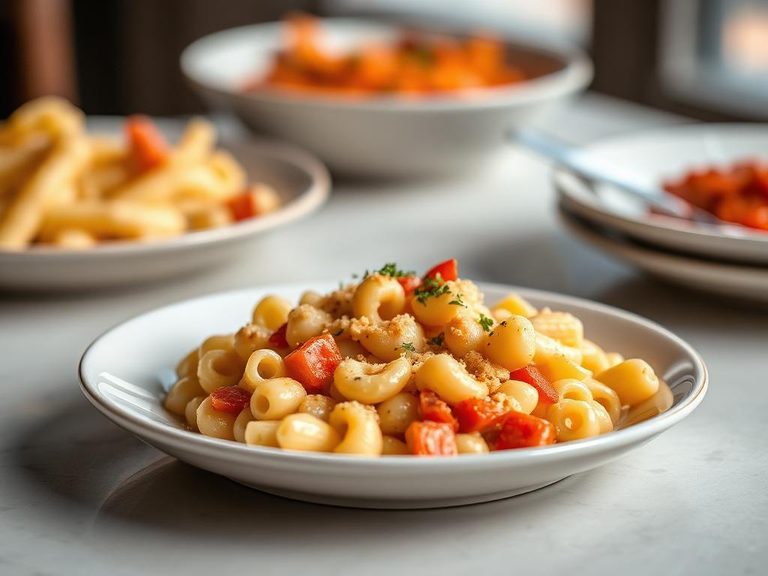
🍽️ Popular dishes
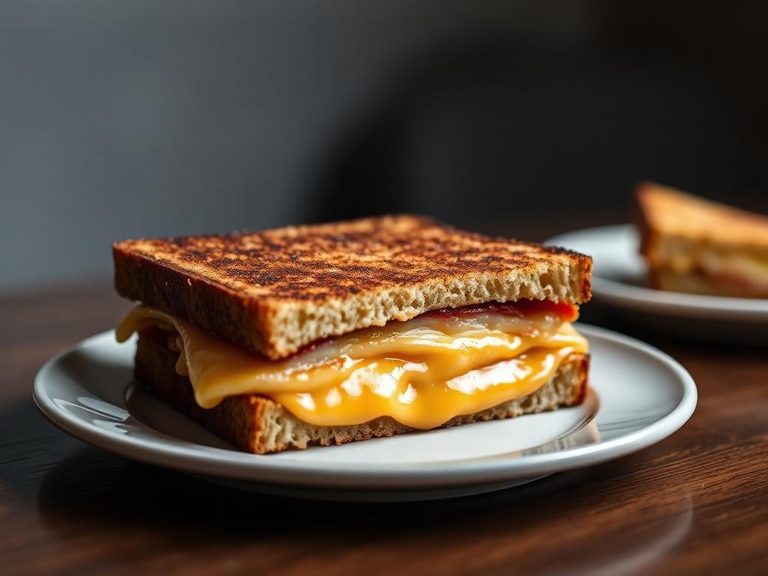
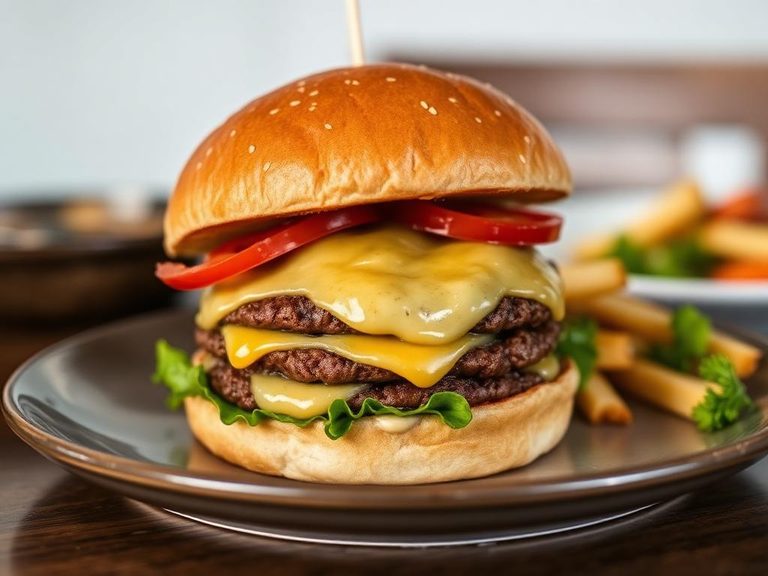
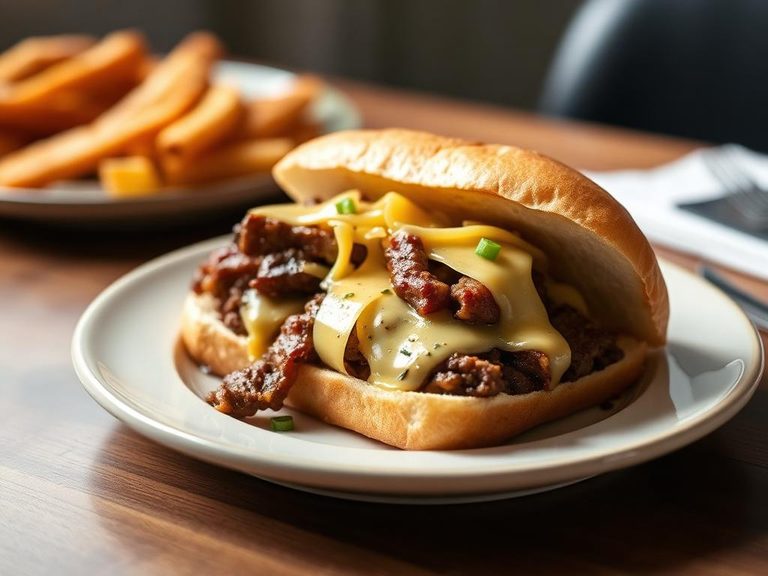

🌍 Where it's eaten
💡 Did you know?
American cheese was invented in the 1910s by Canadian-American James L. Kraft, who patented a process to make a shelf-stable, meltable cheese product from cheddar scraps.
Full nutrition (USDA data · scales with serving)
| Water | 39.6 g |
| Energy (Atwater General Factors) | 368 kcal |
| Energy (Atwater Specific Factors) | 366 kcal |
| Energy | 366 kcal |
| Energy | 1530 kj |
| Nitrogen | 2.8 g |
| Protein | 18.0 g |
| Total lipid (fat) | 30.6 g |
| Total fat (NLEA) | 27.6 g |
| Ash | 6.6 g |
| Carbohydrate, by difference | 5.3 g |
| Sugars, Total | 2.6 g |
| Sucrose | 0.00 g |
| Glucose | 0.00 g |
| Fructose | 0.00 g |
| Lactose | 2.5 g |
| Maltose | 0.00 g |
| Galactose | 0.13 g |
| Calcium, Ca | 866 mg |
| Iron, Fe | 0.48 mg |
| Magnesium, Mg | 25.1 mg |
| Phosphorus, P | 540 mg |
| Potassium, K | 149 mg |
| Sodium, Na | 1660 mg |
| Zinc, Zn | 2.4 mg |
| Copper, Cu | 0.05 mg |
| Manganese, Mn | 0.04 mg |
| Selenium, Se | 20.4 ug |
| Thiamin | 0.01 mg |
| Riboflavin | 0.25 mg |
| Niacin | 0.10 mg |
| Pantothenic acid | 0.41 mg |
| Vitamin B-6 | 0.06 mg |
| Choline, total | 19.2 mg |
| Choline, free | 2.6 mg |
| Choline, from phosphocholine | 0.70 mg |
| Choline, from phosphotidyl choline | 5.9 mg |
| Choline, from glycerophosphocholine | 4.5 mg |
| Choline, from sphingomyelin | 5.6 mg |
| Betaine | 2.7 mg |
| Vitamin B-12 | 1.4 ug |
| Vitamin A, RAE | 300 ug |
| Retinol | 297 ug |
| Carotene, beta | 26.0 ug |
| Carotene, alpha | 0.00 ug |
| Cryptoxanthin, beta | 4.0 ug |
| Lycopene | 0.00 ug |
| Lutein + zeaxanthin | 16.0 ug |
| Vitamin E (alpha-tocopherol) | 0.79 mg |
| Tocopherol, beta | 0.00 mg |
| Tocopherol, gamma | 0.13 mg |
| Tocopherol, delta | 0.04 mg |
| Tocotrienol, alpha | 0.02 mg |
| Tocotrienol, beta | 0.01 mg |
| Tocotrienol, gamma | 0.06 mg |
| Tocotrienol, delta | 0.04 mg |
| Vitamin D (D2 + D3), International Units | 301 iu |
| Vitamin D (D2 + D3) | 7.5 ug |
| Vitamin D2 (ergocalciferol) | 0.00 ug |
| Vitamin D3 (cholecalciferol) | 7.5 ug |
| Vitamin K (phylloquinone) | 3.2 ug |
| Vitamin K (Menaquinone-4) | 10.3 ug |
Fat & fatty acid profile (per 100g)
| Fatty acids, total saturated | 18.1 g |
| SFA 4:0 | 0.62 g |
| SFA 6:0 | 0.51 g |
| SFA 8:0 | 0.33 g |
| SFA 10:0 | 0.80 g |
| SFA 11:0 | 0.02 g |
| SFA 12:0 | 0.88 g |
| SFA 14:0 | 2.9 g |
| SFA 15:0 | 0.31 g |
| SFA 16:0 | 8.2 g |
| SFA 17:0 | 0.19 g |
| SFA 18:0 | 3.2 g |
| SFA 20:0 | 0.05 g |
| SFA 22:0 | 0.02 g |
| SFA 24:0 | 0.01 g |
| Fatty acids, total monounsaturated | 7.3 g |
| MUFA 14:1 c | 0.24 g |
| MUFA 15:1 | 0.00 g |
| MUFA 16:1 c | 0.40 g |
| MUFA 17:1 | 0.06 g |
| MUFA 17:1 c | 0.06 g |
| MUFA 18:1 c | 6.4 g |
| MUFA 20:1 | 0.22 g |
| MUFA 20:1 c | 0.22 g |
| MUFA 22:1 c | 0.00 g |
| MUFA 24:1 c | 0.00 g |
| Fatty acids, total polyunsaturated | 1.1 g |
| PUFA 18:2 c | 0.83 g |
| PUFA 18:2 n-6 c,c | 0.81 g |
| PUFA 18:2 CLAs | 0.02 g |
| PUFA 18:3 c | 0.14 g |
| PUFA 18:3 n-3 c,c,c (ALA) | 0.14 g |
| PUFA 18:3 n-6 c,c,c | 0.00 g |
| PUFA 18:4 | 0.01 g |
| PUFA 20:2 c | 0.01 g |
| PUFA 20:2 n-6 c,c | 0.01 g |
| PUFA 20:3 c | 0.04 g |
| PUFA 20:3 n-3 | 0.00 g |
| PUFA 20:3 n-6 | 0.03 g |
| PUFA 20:4 | 0.04 g |
| PUFA 20:4c | 0.04 g |
| PUFA 20:5c | 0.01 g |
| PUFA 20:5 n-3 (EPA) | 0.01 g |
| PUFA 22:2 | 0.00 g |
| PUFA 22:5 c | 0.02 g |
| PUFA 22:4 | 0.01 g |
| PUFA 22:5 n-3 (DPA) | 0.02 g |
| PUFA 22:6 c | 0.01 g |
| PUFA 22:6 n-3 (DHA) | 0.01 g |
| Fatty acids, total trans | 1.1 g |
| Fatty acids, total trans-monoenoic | 0.95 g |
| TFA 16:1 t | 0.10 g |
| TFA 18:1 t | 0.84 g |
| TFA 22:1 t | 0.00 g |
| Fatty acids, total trans-dienoic | 0.20 g |
| TFA 18:2 t not further defined | 0.20 g |
| Cholesterol | 98.0 mg |
Amino acid profile (per 100g)
Estimated from Cheese, cottage, with vegetables — USDA does not publish this profile for Cheese.
| Tryptophan | 0.13 g |
| Threonine | 0.53 g |
| Isoleucine | 0.70 g |
| Leucine | 1.2 g |
| Lysine | 0.97 g |
| Methionine | 0.36 g |
| Cystine | 0.11 g |
| Phenylalanine | 0.65 g |
| Tyrosine | 0.64 g |
| Valine | 0.74 g |
| Arginine | 0.55 g |
| Histidine | 0.40 g |
| Alanine | 0.62 g |
| Aspartic acid | 0.82 g |
| Glutamic acid | 2.6 g |
| Glycine | 0.27 g |
| Proline | 1.4 g |
| Serine | 0.67 g |
FAQ
Is American cheese real cheese?
It's a 'pasteurized process cheese product.' It starts with real cheese (like cheddar) but is blended with emulsifiers, oils, and extra milk to create its signature smooth melt and extended shelf life.
Why does it melt so perfectly?
The added emulsifiers (like sodium citrate) prevent the proteins and fats from separating when heated, resulting in a smooth, creamy, and non-greasy melt unlike many natural cheeses.
Is it a good source of calcium?
Yes, it typically provides a decent amount of calcium, similar to other cheeses. However, its primary nutritional profile is dominated by its high fat and sodium content.
Nutrient density (calculated · NRF9.3)
Nutrient Rich Foods index: beneficial nutrients (protein, fiber, vitamins, minerals) minus saturated fat, added sugar & sodium, per 100 kcal.
NRF9.3 index — Fulgoni, Keast & Drewnowski, 2009. Computed from USDA nutrients.
Weight-loss friendliness (composite index)
Energy density 3.66 kcal/g · 20% calories from protein · 0.0 g fiber · 0.0 g sugar per 100 g.
Composite of energy density (Rolls et al., 1999), protein & fiber satiety, minus sugar. A calculated heuristic — ranks satiety-per-calorie, not a clinical measure.
Dietary load (calculated from USDA values)
Potential renal acid load. Positive = acid-forming, negative = alkaline-forming.
Sodium-to-potassium ratio: 11.14 (lower is better — aim for ≤ 1)
Sodium:potassium per WHO potassium guidance. Computed from USDA nutrients.