

Salad dressing, mayonnaise, regular
Whole food · Fats and Oils
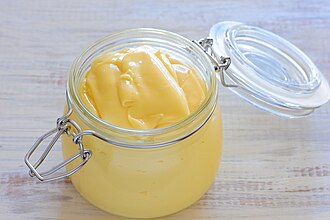
Photo: Wikipedia
Regular mayonnaise is a thick, creamy, and rich emulsion of oil, egg yolk, and an acid like vinegar or lemon juice, delivering a smooth, velvety texture. Its flavor is a balanced blend of tangy, savory, and subtly sweet notes from the oil and egg. Nutritionally, it is an extremely energy-dense food, composed almost entirely of fat, with very little protein or carbohydrates.
Calorie split: 1% protein · 0% carbs · 99% fat
↓ Full nutrition💚 Why it's loved
People love mayonnaise for its unparalleled ability to add a luxurious, creamy mouthfeel and a rich, savory depth to countless dishes. Its versatility as a base for countless sauces, dips, and dressings makes it a foundational ingredient in global kitchens.
⚠️ Watch-outs & how to enjoy it better
Its very high fat and calorie content can be a concern for those monitoring energy intake or managing heart health. As a common egg-based product, it is a frequent allergen; individuals with egg allergies must avoid it. To counteract this, use it sparingly as a flavor accent rather than the main event, or opt for lighter versions. Pairing it with high-fiber vegetables (like in a salad) can help moderate its overall glycemic impact.
Key benefits
- Provides a concentrated source of energy from fats.
- Acts as a key flavor carrier and textural enhancer in cold dishes.
- Contains fat-soluble vitamins like Vitamin E from the oil base.
- Helps create palatable textures in dips, spreads, and sauces.
🍽️ Popular dishes
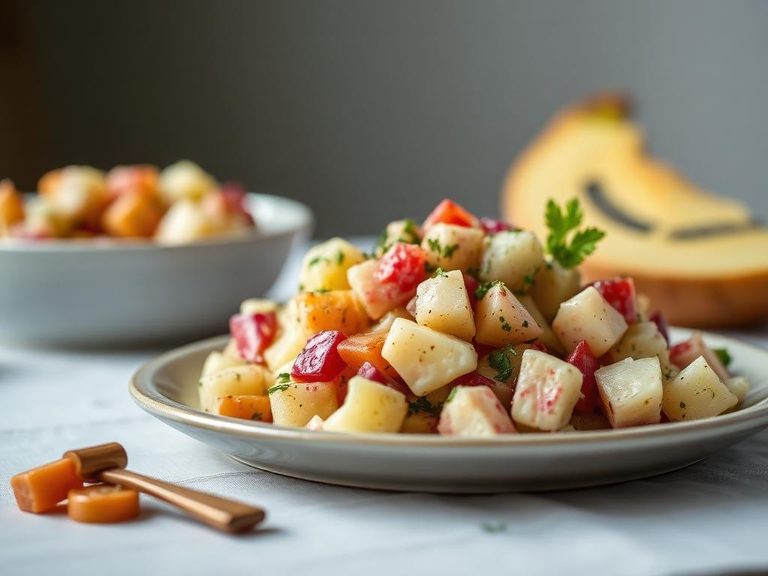
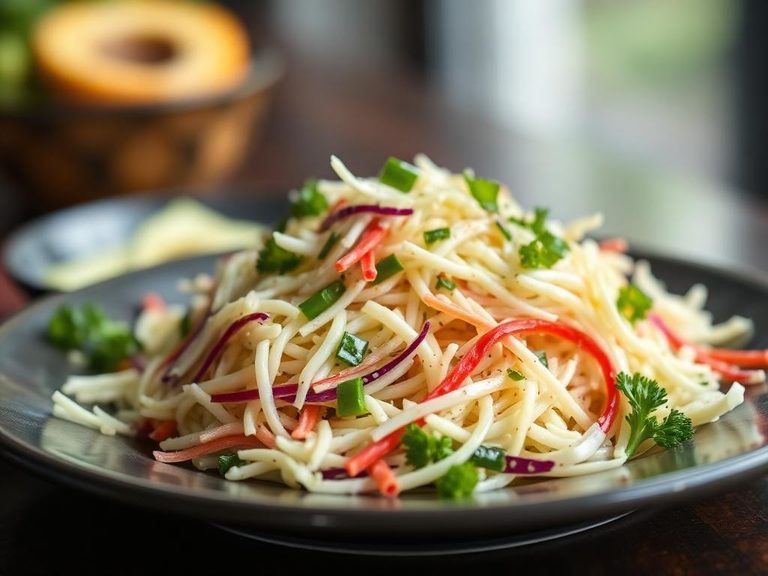
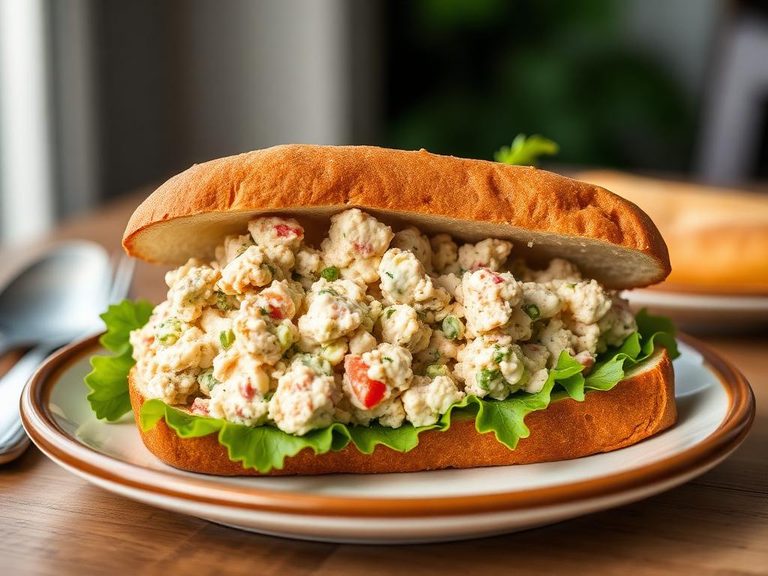

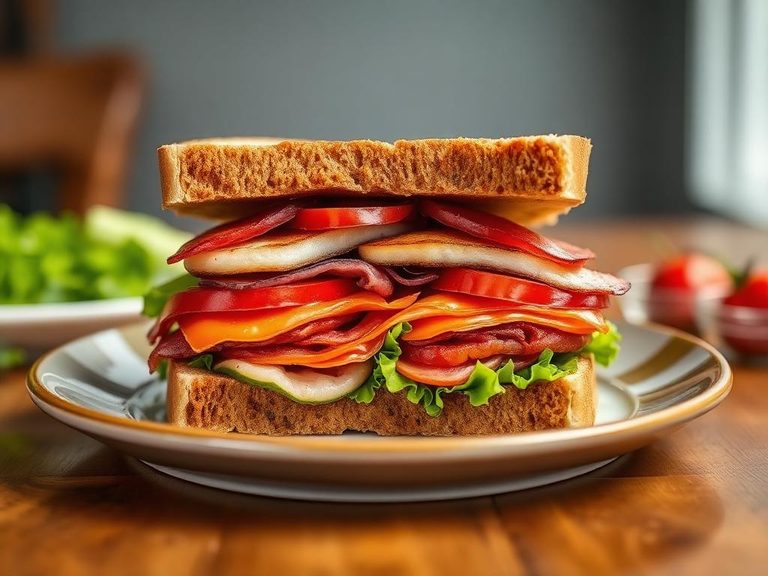
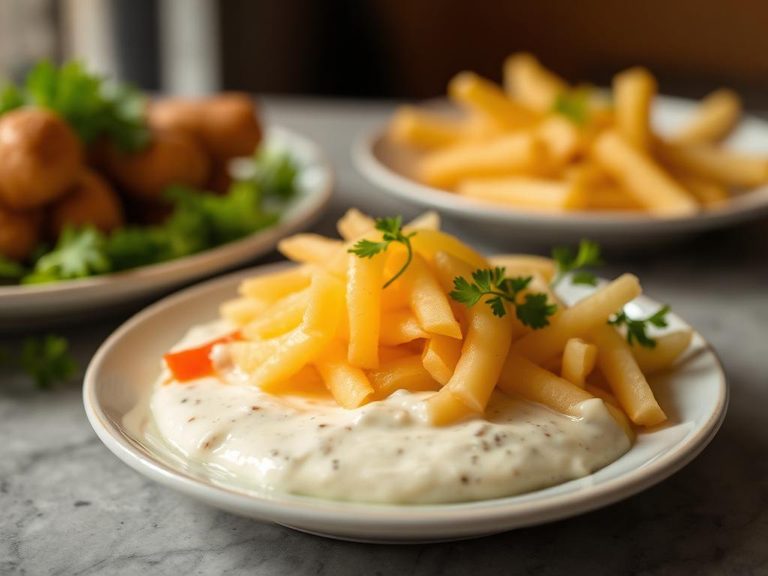
🌍 Where it's eaten
💡 Did you know?
The name 'mayonnaise' is thought to honor the French Duc de Mayenne, but the sauce's true origins are fiercely debated between French and Spanish culinary historians, with some linking it to the Spanish port city of Mahón.
Full nutrition (USDA data · scales with serving)
| Water | 21.6 g |
| Energy | 680 kcal |
| Energy | 2844 kj |
| Protein | 0.96 g |
| Total lipid (fat) | 74.8 g |
| Ash | 2.0 g |
| Carbohydrate, by difference | 0.57 g |
| Fiber, total dietary | 0.00 g |
| Total Sugars | 0.57 g |
| Sucrose | 0.48 g |
| Glucose | 0.04 g |
| Fructose | 0.05 g |
| Lactose | 0.00 g |
| Maltose | 0.00 g |
| Galactose | 0.00 g |
| Calcium, Ca | 8.0 mg |
| Iron, Fe | 0.21 mg |
| Magnesium, Mg | 1.0 mg |
| Phosphorus, P | 21.0 mg |
| Potassium, K | 20.0 mg |
| Sodium, Na | 635 mg |
| Zinc, Zn | 0.15 mg |
| Copper, Cu | 0.02 mg |
| Manganese, Mn | 0.01 mg |
| Selenium, Se | 2.3 ug |
| Vitamin C, total ascorbic acid | 0.00 mg |
| Thiamin | 0.01 mg |
| Riboflavin | 0.02 mg |
| Niacin | 0.00 mg |
| Pantothenic acid | 0.17 mg |
| Vitamin B-6 | 0.01 mg |
| Folate, total | 5.0 ug |
| Folic acid | 0.00 ug |
| Folate, food | 5.0 ug |
| Folate, DFE | 5.0 ug |
| Choline, total | 34.2 mg |
| Betaine | 0.00 mg |
| Vitamin B-12 | 0.12 ug |
| Vitamin B-12, added | 0.00 ug |
| Vitamin A, RAE | 16.0 ug |
| Retinol | 15.0 ug |
| Carotene, beta | 6.0 ug |
| Carotene, alpha | 0.00 ug |
| Cryptoxanthin, beta | 4.0 ug |
| Vitamin A, IU | 65.0 iu |
| Lycopene | 0.00 ug |
| Lutein + zeaxanthin | 12.0 ug |
| Vitamin E (alpha-tocopherol) | 3.3 mg |
| Vitamin E, added | 0.00 mg |
| Tocopherol, beta | 0.74 mg |
| Tocopherol, gamma | 35.5 mg |
| Tocopherol, delta | 10.2 mg |
| Tocotrienol, alpha | 0.00 mg |
| Tocotrienol, beta | 0.00 mg |
| Tocotrienol, gamma | 0.00 mg |
| Tocotrienol, delta | 0.00 mg |
| Vitamin D (D2 + D3), International Units | 7.0 iu |
| Vitamin D (D2 + D3) | 0.20 ug |
| Vitamin K (phylloquinone) | 163 ug |
| Vitamin K (Dihydrophylloquinone) | 0.00 ug |
| Alcohol, ethyl | 0.00 g |
| Caffeine | 0.00 mg |
| Theobromine | 0.00 mg |
Fat & fatty acid profile (per 100g)
| Fatty acids, total saturated | 11.7 g |
| SFA 4:0 | 0.00 g |
| SFA 6:0 | 0.00 g |
| SFA 8:0 | 0.00 g |
| SFA 10:0 | 0.00 g |
| SFA 12:0 | 0.00 g |
| SFA 14:0 | 0.06 g |
| SFA 15:0 | 0.01 g |
| SFA 16:0 | 7.9 g |
| SFA 17:0 | 0.07 g |
| SFA 18:0 | 3.1 g |
| SFA 20:0 | 0.23 g |
| SFA 22:0 | 0.24 g |
| SFA 24:0 | 0.08 g |
| Fatty acids, total monounsaturated | 16.8 g |
| MUFA 14:1 | 0.00 g |
| MUFA 15:1 | 0.00 g |
| MUFA 16:1 | 0.09 g |
| MUFA 16:1 c | 0.09 g |
| MUFA 17:1 | 0.04 g |
| MUFA 18:1 | 16.5 g |
| MUFA 18:1 c | 16.4 g |
| MUFA 20:1 | 0.24 g |
| MUFA 22:1 | 0.02 g |
| MUFA 22:1 c | 0.01 g |
| MUFA 24:1 c | 0.00 g |
| Fatty acids, total polyunsaturated | 44.7 g |
| PUFA 18:2 | 39.1 g |
| PUFA 18:2 n-6 c,c | 38.9 g |
| PUFA 18:2 CLAs | 0.06 g |
| PUFA 18:3 | 5.5 g |
| PUFA 18:3 n-3 c,c,c (ALA) | 5.3 g |
| PUFA 18:3 n-6 c,c,c | 0.13 g |
| PUFA 18:4 | 0.00 g |
| PUFA 20:2 n-6 c,c | 0.03 g |
| PUFA 20:3 | 0.00 g |
| PUFA 20:3 n-3 | 0.00 g |
| PUFA 20:3 n-6 | 0.00 g |
| PUFA 20:4 | 0.05 g |
| PUFA 20:5 n-3 (EPA) | 0.00 g |
| PUFA 22:4 | 0.00 g |
| PUFA 22:5 n-3 (DPA) | 0.00 g |
| PUFA 22:6 n-3 (DHA) | 0.01 g |
| Fatty acids, total trans | 0.19 g |
| Fatty acids, total trans-monoenoic | 0.04 g |
| TFA 16:1 t | 0.00 g |
| TFA 18:1 t | 0.03 g |
| TFA 22:1 t | 0.01 g |
| TFA 18:2 t not further defined | 0.15 g |
| Fatty acids, total trans-polyenoic | 0.15 g |
| Cholesterol | 42.0 mg |
| Stigmasterol | 39.0 mg |
| Campesterol | 39.0 mg |
| Beta-sitosterol | 102 mg |
Amino acid profile (per 100g)
| Tryptophan | 0.02 g |
| Threonine | 0.06 g |
| Isoleucine | 0.07 g |
| Leucine | 0.10 g |
| Lysine | 0.07 g |
| Methionine | 0.04 g |
| Cystine | 0.02 g |
| Phenylalanine | 0.06 g |
| Tyrosine | 0.05 g |
| Valine | 0.07 g |
| Arginine | 0.07 g |
| Histidine | 0.03 g |
| Alanine | 0.06 g |
| Aspartic acid | 0.09 g |
| Glutamic acid | 0.14 g |
| Glycine | 0.04 g |
| Proline | 0.04 g |
| Serine | 0.09 g |
FAQ
Is mayonnaise dairy-free?
Yes, traditional mayonnaise is dairy-free. It is an emulsion of oil, egg yolks, and an acid (vinegar or lemon juice), with no milk or cream ingredients.
Why does mayonnaise need to be refrigerated?
Because it contains raw or lightly cooked egg yolks, it is a perishable food that can support bacterial growth if left at room temperature. Refrigeration slows this process.
Can I make mayonnaise at home?
Absolutely. Homemade mayonnaise is made by slowly whisking oil into egg yolks with an acid like lemon juice or vinegar, often with mustard as an emulsifier, until it thickens.
Nutrient density (calculated · NRF9.3)
Nutrient Rich Foods index: beneficial nutrients (protein, fiber, vitamins, minerals) minus saturated fat, added sugar & sodium, per 100 kcal.
NRF9.3 index — Fulgoni, Keast & Drewnowski, 2009. Computed from USDA nutrients.
Weight-loss friendliness (composite index)
Energy density 6.80 kcal/g · 1% calories from protein · 0.0 g fiber · 0.6 g sugar per 100 g.
Composite of energy density (Rolls et al., 1999), protein & fiber satiety, minus sugar. A calculated heuristic — ranks satiety-per-calorie, not a clinical measure.
Dietary load (calculated from USDA values)
Potential renal acid load. Positive = acid-forming, negative = alkaline-forming.
Sodium-to-potassium ratio: 31.75 (lower is better — aim for ≤ 1)
Sodium:potassium per WHO potassium guidance. Computed from USDA nutrients.