

Oil, soybean, salad or cooking
Whole food · Fats and Oils
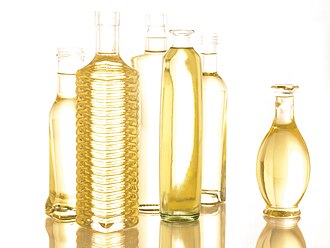
Photo: Wikipedia
Soybean oil is a pale, neutral-tasting liquid fat extracted from the seeds of soybeans, prized for its high smoke point and clean flavor profile. It is an almost pure source of fat, providing 884 calories per 100g, with a balance of polyunsaturated and monounsaturated fatty acids. Its light texture and ability to absorb flavors make it a foundational ingredient in countless cooking methods worldwide.
Calorie split: 0% protein · 0% carbs · 100% fat
↓ Full nutrition💚 Why it's loved
People love it for its incredible versatility; it's a blank canvas that lets the flavors of garlic, ginger, or herbs shine through in stir-fries and baked goods. Its neutral taste and reliable performance make it a go-to staple in both home kitchens and professional restaurants.
⚠️ Watch-outs & how to enjoy it better
As a highly refined oil, it offers no protein or fiber, and its high omega-6 content can promote inflammation if not balanced with omega-3s. To counteract this, use it in moderation and pair meals with omega-3-rich foods like fatty fish, flaxseeds, or walnuts, and consider alternating with oils like olive or avocado oil.
Key benefits
- High in polyunsaturated fats, including omega-6 fatty acids
- Contains vitamin E, a natural antioxidant
- Neutral flavor doesn't overpower other ingredients
- High smoke point suitable for frying and sautéing
- Widely available and cost-effective cooking oil
🍽️ Popular dishes
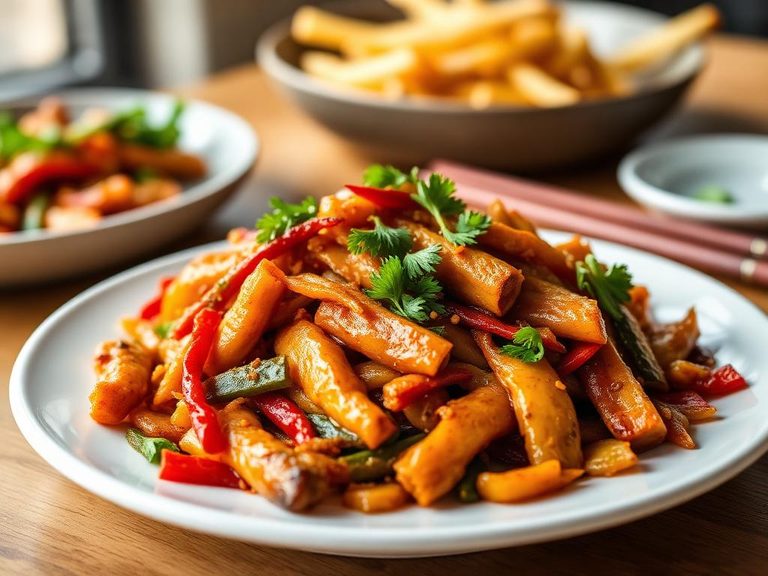
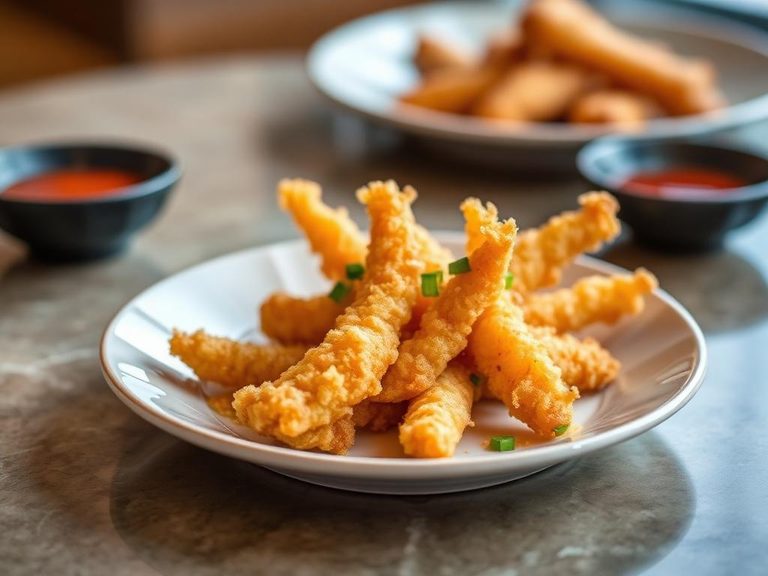


🌍 Where it's eaten
💡 Did you know?
Soybean oil is the most widely consumed vegetable oil in the United States, accounting for about 70% of all vegetable oil use, and it's a key ingredient in everything from salad dressings to biodiesel fuel.
Full nutrition (USDA data · scales with serving)
| Water | 0.00 g |
| Energy | 884 kcal |
| Energy | 3699 kj |
| Protein | 0.00 g |
| Total lipid (fat) | 100 g |
| Ash | 0.00 g |
| Carbohydrate, by difference | 0.00 g |
| Fiber, total dietary | 0.00 g |
| Total Sugars | 0.00 g |
| Calcium, Ca | 0.00 mg |
| Iron, Fe | 0.05 mg |
| Magnesium, Mg | 0.00 mg |
| Phosphorus, P | 0.00 mg |
| Potassium, K | 0.00 mg |
| Sodium, Na | 0.00 mg |
| Zinc, Zn | 0.01 mg |
| Copper, Cu | 0.00 mg |
| Manganese, Mn | 0.00 mg |
| Selenium, Se | 0.00 ug |
| Vitamin C, total ascorbic acid | 0.00 mg |
| Thiamin | 0.00 mg |
| Riboflavin | 0.00 mg |
| Niacin | 0.00 mg |
| Pantothenic acid | 0.00 mg |
| Vitamin B-6 | 0.00 mg |
| Folate, total | 0.00 ug |
| Folic acid | 0.00 ug |
| Folate, food | 0.00 ug |
| Folate, DFE | 0.00 ug |
| Choline, total | 0.20 mg |
| Betaine | 0.00 mg |
| Vitamin B-12 | 0.00 ug |
| Vitamin B-12, added | 0.00 ug |
| Vitamin A, RAE | 0.00 ug |
| Retinol | 0.00 ug |
| Carotene, beta | 0.00 ug |
| Carotene, alpha | 0.00 ug |
| Cryptoxanthin, beta | 0.00 ug |
| Vitamin A, IU | 0.00 iu |
| Lycopene | 0.00 ug |
| Lutein + zeaxanthin | 0.00 ug |
| Vitamin E (alpha-tocopherol) | 8.2 mg |
| Vitamin E, added | 0.00 mg |
| Tocopherol, beta | 0.90 mg |
| Tocopherol, gamma | 64.3 mg |
| Tocopherol, delta | 21.3 mg |
| Tocotrienol, alpha | 0.04 mg |
| Tocotrienol, beta | 0.03 mg |
| Tocotrienol, gamma | 0.00 mg |
| Tocotrienol, delta | 0.01 mg |
| Vitamin D (D2 + D3), International Units | 0.00 iu |
| Vitamin D (D2 + D3) | 0.00 ug |
| Vitamin K (phylloquinone) | 184 ug |
| Vitamin K (Dihydrophylloquinone) | 0.00 ug |
| Vitamin K (Menaquinone-4) | 0.00 ug |
| Alcohol, ethyl | 0.00 g |
| Caffeine | 0.00 mg |
| Theobromine | 0.00 mg |
Fat & fatty acid profile (per 100g)
| Fatty acids, total saturated | 15.7 g |
| SFA 4:0 | 0.00 g |
| SFA 6:0 | 0.00 g |
| SFA 8:0 | 0.00 g |
| SFA 10:0 | 0.00 g |
| SFA 12:0 | 0.00 g |
| SFA 14:0 | 0.00 g |
| SFA 15:0 | 0.00 g |
| SFA 16:0 | 10.5 g |
| SFA 17:0 | 0.03 g |
| SFA 18:0 | 4.4 g |
| SFA 20:0 | 0.36 g |
| SFA 22:0 | 0.37 g |
| Fatty acids, total monounsaturated | 22.8 g |
| MUFA 14:1 | 0.00 g |
| MUFA 15:1 | 0.00 g |
| MUFA 16:1 | 0.00 g |
| MUFA 17:1 | 0.00 g |
| MUFA 18:1 | 22.6 g |
| MUFA 18:1 c | 22.6 g |
| MUFA 20:1 | 0.23 g |
| MUFA 22:1 | 0.00 g |
| Fatty acids, total polyunsaturated | 57.7 g |
| PUFA 18:2 | 51.0 g |
| PUFA 18:2 n-6 c,c | 50.4 g |
| PUFA 18:3 | 6.8 g |
| PUFA 18:3 n-3 c,c,c (ALA) | 6.8 g |
| PUFA 18:3 n-6 c,c,c | 0.00 g |
| PUFA 18:4 | 0.00 g |
| PUFA 20:2 n-6 c,c | 0.00 g |
| PUFA 20:3 | 0.00 g |
| PUFA 20:4 | 0.00 g |
| PUFA 20:5 n-3 (EPA) | 0.00 g |
| PUFA 22:5 n-3 (DPA) | 0.00 g |
| PUFA 22:6 n-3 (DHA) | 0.00 g |
| Fatty acids, total trans | 0.53 g |
| Fatty acids, total trans-monoenoic | 0.00 g |
| TFA 18:1 t | 0.00 g |
| TFA 18:2 t,t | 0.53 g |
| Fatty acids, total trans-polyenoic | 0.53 g |
| Cholesterol | 0.00 mg |
| Stigmasterol | 59.0 mg |
| Campesterol | 62.0 mg |
| Beta-sitosterol | 172 mg |
Amino acid profile (per 100g)
| Tryptophan | 0.00 g |
| Threonine | 0.00 g |
| Isoleucine | 0.00 g |
| Leucine | 0.00 g |
| Lysine | 0.00 g |
| Methionine | 0.00 g |
| Cystine | 0.00 g |
| Phenylalanine | 0.00 g |
| Tyrosine | 0.00 g |
| Valine | 0.00 g |
| Arginine | 0.00 g |
| Histidine | 0.00 g |
| Alanine | 0.00 g |
| Aspartic acid | 0.00 g |
| Glutamic acid | 0.00 g |
| Glycine | 0.00 g |
| Proline | 0.00 g |
| Serine | 0.00 g |
FAQ
Is soybean oil healthy?
It's a source of unsaturated fats and vitamin E, but its high omega-6 content means it should be used in moderation and balanced with omega-3-rich foods to support a healthy diet.
Can I use soybean oil for high-heat cooking?
Yes, its high smoke point (around 230°C/450°F) makes it suitable for frying, sautéing, and baking without breaking down easily.
Is soybean oil a common allergen?
Soy is one of the major food allergens. While highly refined soybean oil is often considered safe for most people with soy allergies, it's always best to consult with a healthcare provider if you have a known allergy.
Nutrient density (calculated · NRF9.3)
Nutrient Rich Foods index: beneficial nutrients (protein, fiber, vitamins, minerals) minus saturated fat, added sugar & sodium, per 100 kcal.
NRF9.3 index — Fulgoni, Keast & Drewnowski, 2009. Computed from USDA nutrients.
Weight-loss friendliness (composite index)
Energy density 8.84 kcal/g · 0% calories from protein · 0.0 g fiber · 0.0 g sugar per 100 g.
Composite of energy density (Rolls et al., 1999), protein & fiber satiety, minus sugar. A calculated heuristic — ranks satiety-per-calorie, not a clinical measure.
Dietary load (calculated from USDA values)
Potential renal acid load. Positive = acid-forming, negative = alkaline-forming.
Sodium:potassium per WHO potassium guidance. Computed from USDA nutrients.