

Mollusks, scallop, mixed species, raw
Whole food · Finfish and Shellfish Products

Photo: Wikipedia
Scallops are the tender, adductor muscles of bivalve mollusks, prized for their sweet, delicate flavor and a texture that's both succulent and slightly firm when cooked properly. Nutritionally, they are a lean powerhouse, offering a substantial 12 grams of high-quality protein per 100 grams with minimal fat and a modest calorie count, making them a favorite for clean eating.
Calorie split: 74% protein · 19% carbs · 7% fat
↓ Full nutrition💚 Why it's loved
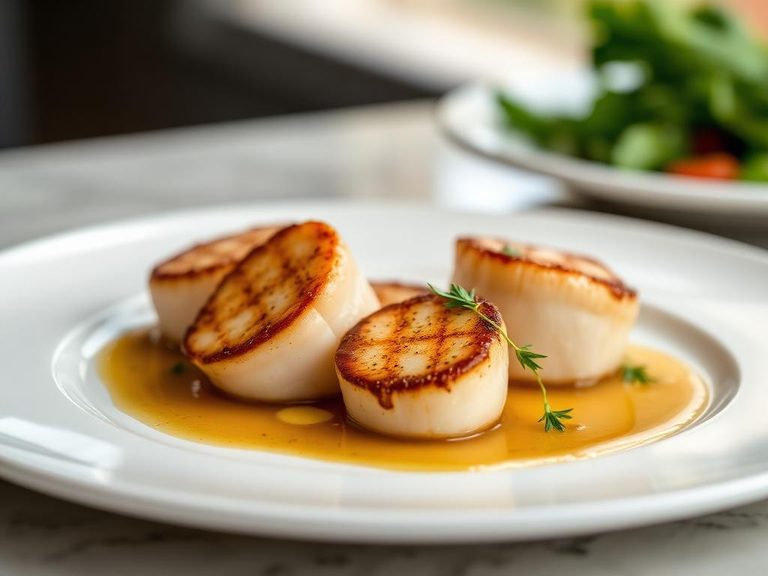
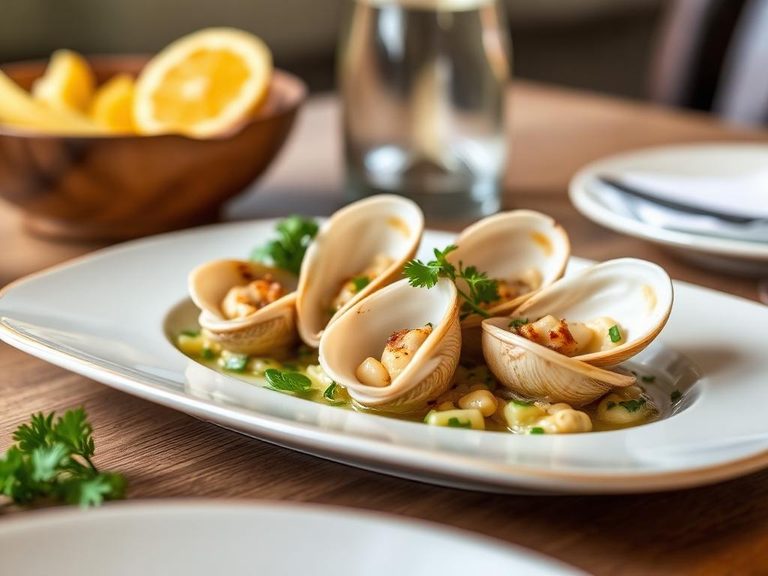
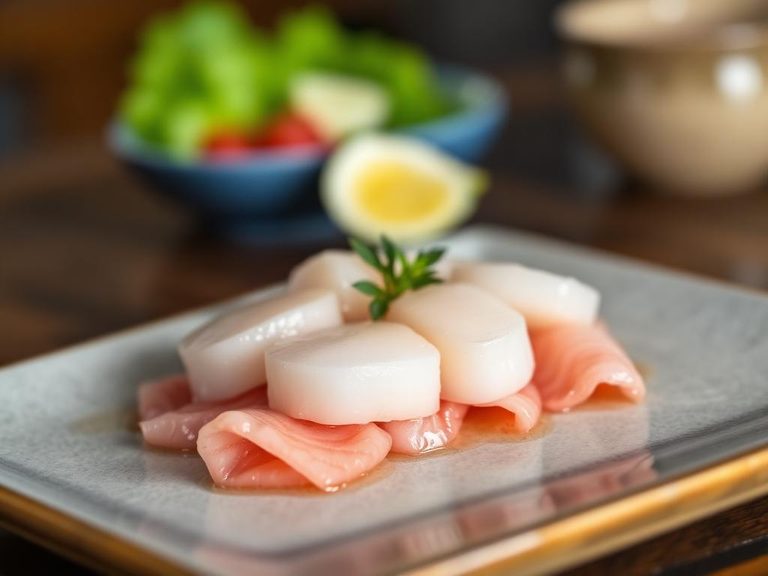
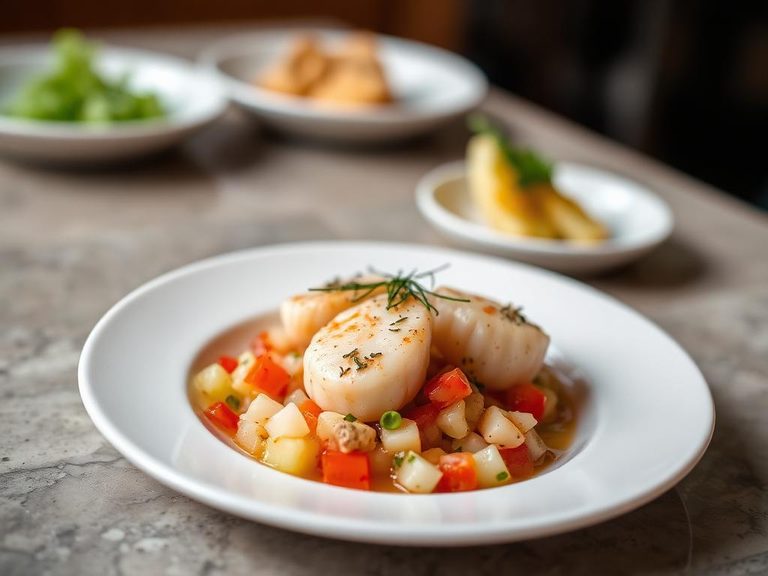
People adore scallops for their uniquely sweet, oceanic flavor that tastes luxurious without being overpowering. Their versatility is key—they can be quickly seared to a golden crust, gently poached, or served raw, adapting beautifully to both simple and elaborate culinary preparations.
⚠️ Watch-outs & how to enjoy it better
As a common shellfish allergen, scallops must be avoided by those with shellfish allergies. Their mild flavor can be overpowered by strong sauces, and overcooking turns them rubbery. To counteract, always pat scallops dry and sear them very quickly in a hot pan to develop a crust while keeping the interior tender. Pair with a simple sauce like brown butter or a citrus vinaigrette to complement, not mask, their natural sweetness.
Key benefits
- Excellent source of lean protein for muscle maintenance.
- Very low in fat and calories, ideal for weight management.
- Rich in essential minerals like selenium, zinc, and magnesium.
- Provides vitamin B12, crucial for nerve function and red blood cell formation.
- Contains omega-3 fatty acids, though in smaller amounts than oily fish.
🍽️ Popular dishes
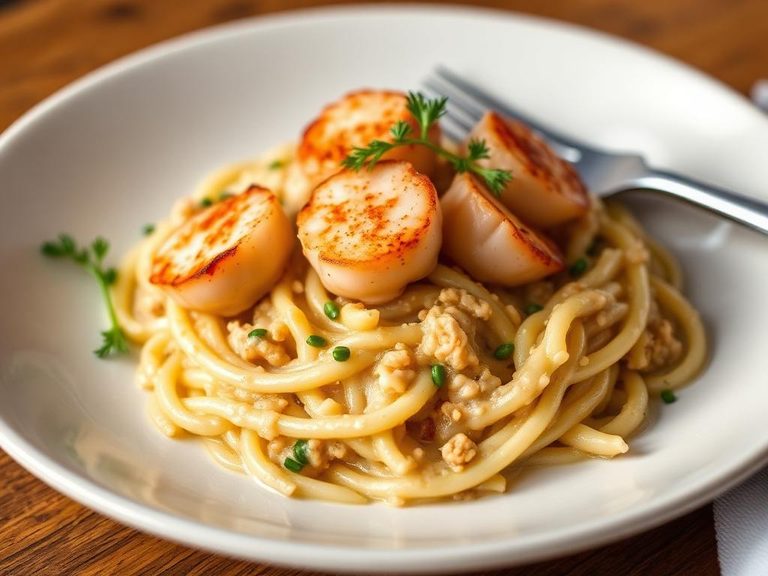
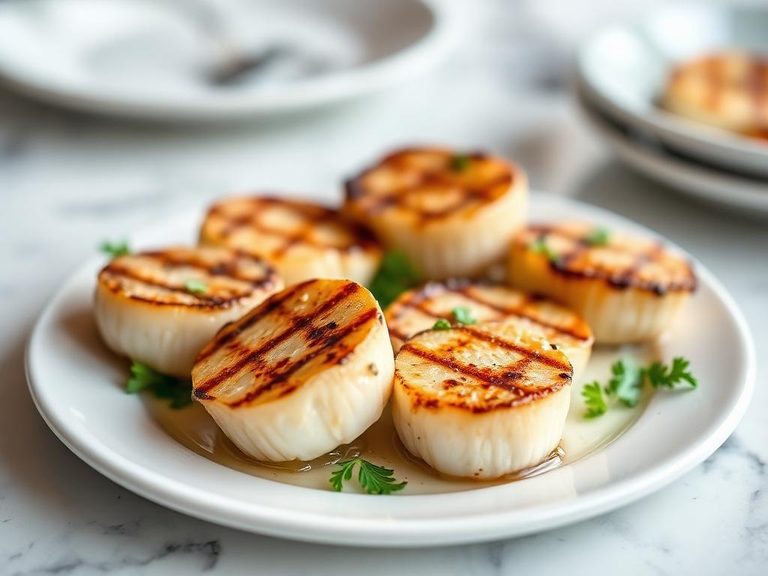
🌍 Where it's eaten
💡 Did you know?
Scallops can 'swim' by rapidly clapping their two shells together, propelling themselves backward through the water in short bursts—a unique escape mechanism among bivalves.
Full nutrition (USDA data · scales with serving)
| Water | 82.5 g |
| Energy | 69.0 kcal |
| Energy | 289 kj |
| Protein | 12.1 g |
| Total lipid (fat) | 0.49 g |
| Ash | 1.7 g |
| Carbohydrate, by difference | 3.2 g |
| Fiber, total dietary | 0.00 g |
| Total Sugars | 0.00 g |
| Sucrose | 0.00 g |
| Glucose | 0.00 g |
| Fructose | 0.00 g |
| Lactose | 0.00 g |
| Maltose | 0.00 g |
| Galactose | 0.00 g |
| Starch | 2.2 g |
| Calcium, Ca | 6.0 mg |
| Iron, Fe | 0.38 mg |
| Magnesium, Mg | 22.0 mg |
| Phosphorus, P | 334 mg |
| Potassium, K | 205 mg |
| Sodium, Na | 392 mg |
| Zinc, Zn | 0.91 mg |
| Copper, Cu | 0.02 mg |
| Manganese, Mn | 0.02 mg |
| Selenium, Se | 12.8 ug |
| Vitamin C, total ascorbic acid | 0.00 mg |
| Thiamin | 0.01 mg |
| Riboflavin | 0.01 mg |
| Niacin | 0.70 mg |
| Pantothenic acid | 0.21 mg |
| Vitamin B-6 | 0.07 mg |
| Folate, total | 16.0 ug |
| Folic acid | 0.00 ug |
| Folate, food | 16.0 ug |
| Folate, DFE | 16.0 ug |
| Choline, total | 65.0 mg |
| Vitamin B-12 | 1.4 ug |
| Vitamin B-12, added | 0.00 ug |
| Vitamin A, RAE | 1.0 ug |
| Retinol | 1.0 ug |
| Carotene, beta | 0.00 ug |
| Carotene, alpha | 0.00 ug |
| Cryptoxanthin, beta | 0.00 ug |
| Vitamin A, IU | 3.0 iu |
| Lycopene | 0.00 ug |
| Lutein + zeaxanthin | 0.00 ug |
| Vitamin E (alpha-tocopherol) | 0.00 mg |
| Vitamin E, added | 0.00 mg |
| Tocopherol, beta | 0.00 mg |
| Tocopherol, gamma | 0.00 mg |
| Tocopherol, delta | 0.00 mg |
| Tocotrienol, alpha | 0.00 mg |
| Tocotrienol, beta | 0.00 mg |
| Tocotrienol, gamma | 0.00 mg |
| Tocotrienol, delta | 0.00 mg |
| Vitamin D (D2 + D3), International Units | 1.0 iu |
| Vitamin D (D2 + D3) | 0.00 ug |
| Vitamin D3 (cholecalciferol) | 0.00 ug |
| Vitamin K (phylloquinone) | 0.00 ug |
| Vitamin K (Dihydrophylloquinone) | 0.00 ug |
| Vitamin K (Menaquinone-4) | 0.00 ug |
| Alcohol, ethyl | 0.00 g |
| Caffeine | 0.00 mg |
| Theobromine | 0.00 mg |
Fat & fatty acid profile (per 100g)
| Fatty acids, total saturated | 0.13 g |
| SFA 4:0 | 0.00 g |
| SFA 6:0 | 0.00 g |
| SFA 8:0 | 0.00 g |
| SFA 10:0 | 0.00 g |
| SFA 12:0 | 0.00 g |
| SFA 14:0 | 0.01 g |
| SFA 15:0 | 0.00 g |
| SFA 16:0 | 0.08 g |
| SFA 17:0 | 0.00 g |
| SFA 18:0 | 0.03 g |
| SFA 20:0 | 0.00 g |
| SFA 22:0 | 0.00 g |
| SFA 24:0 | 0.00 g |
| Fatty acids, total monounsaturated | 0.05 g |
| MUFA 14:1 | 0.00 g |
| MUFA 15:1 | 0.00 g |
| MUFA 16:1 | 0.01 g |
| MUFA 16:1 c | 0.01 g |
| MUFA 17:1 | 0.00 g |
| MUFA 18:1 | 0.03 g |
| MUFA 18:1 c | 0.03 g |
| MUFA 20:1 | 0.01 g |
| MUFA 22:1 | 0.00 g |
| MUFA 22:1 c | 0.00 g |
| MUFA 24:1 c | 0.00 g |
| Fatty acids, total polyunsaturated | 0.13 g |
| PUFA 18:2 | 0.01 g |
| PUFA 18:2 n-6 c,c | 0.01 g |
| PUFA 18:2 CLAs | 0.00 g |
| PUFA 18:3 | 0.00 g |
| PUFA 18:3 n-3 c,c,c (ALA) | 0.00 g |
| PUFA 18:3 n-6 c,c,c | 0.00 g |
| PUFA 18:4 | 0.00 g |
| PUFA 20:2 n-6 c,c | 0.00 g |
| PUFA 20:3 | 0.00 g |
| PUFA 20:3 n-3 | 0.00 g |
| PUFA 20:3 n-6 | 0.00 g |
| PUFA 20:4 | 0.01 g |
| PUFA 20:5 n-3 (EPA) | 0.04 g |
| PUFA 22:4 | 0.00 g |
| PUFA 22:5 n-3 (DPA) | 0.00 g |
| PUFA 22:6 n-3 (DHA) | 0.06 g |
| Fatty acids, total trans | 0.01 g |
| Fatty acids, total trans-monoenoic | 0.00 g |
| TFA 16:1 t | 0.00 g |
| TFA 18:1 t | 0.00 g |
| TFA 22:1 t | 0.00 g |
| TFA 18:2 t not further defined | 0.00 g |
| Fatty acids, total trans-polyenoic | 0.00 g |
| Cholesterol | 24.0 mg |
Amino acid profile (per 100g)
| Tryptophan | 0.10 g |
| Threonine | 0.37 g |
| Isoleucine | 0.41 g |
| Leucine | 0.72 g |
| Lysine | 0.74 g |
| Methionine | 0.29 g |
| Cystine | 0.12 g |
| Phenylalanine | 0.35 g |
| Tyrosine | 0.30 g |
| Valine | 0.38 g |
| Arginine | 0.65 g |
| Histidine | 0.18 g |
| Alanine | 0.54 g |
| Aspartic acid | 0.92 g |
| Glutamic acid | 1.4 g |
| Glycine | 1.0 g |
| Proline | 0.29 g |
| Serine | 0.36 g |
FAQ
How do I know when scallops are perfectly cooked?
They should be opaque and slightly firm to the touch but still tender in the center. The internal temperature should reach 145°F (63°C). Overcooking makes them tough and rubbery.
What's the difference between 'dry' and 'wet' scallops?
Dry scallops are fresh and untreated, with a natural creamy color and sweet flavor. Wet scallops are treated with sodium tripolyphosphate (STP), which makes them absorb water, appear brighter white, and can have a soapy taste and rubbery texture when cooked.
Can I eat scallops raw?
Yes, if they are labeled 'sushi-grade' or 'sashimi-grade,' indicating they have been handled and frozen to kill parasites. Always source from a reputable fishmonger for raw consumption.
Nutrient density (calculated · NRF9.3)
Nutrient Rich Foods index: beneficial nutrients (protein, fiber, vitamins, minerals) minus saturated fat, added sugar & sodium, per 100 kcal.
NRF9.3 index — Fulgoni, Keast & Drewnowski, 2009. Computed from USDA nutrients.
Weight-loss friendliness (composite index)
Energy density 0.69 kcal/g · 70% calories from protein · 0.0 g fiber · 0.0 g sugar per 100 g.
Composite of energy density (Rolls et al., 1999), protein & fiber satiety, minus sugar. A calculated heuristic — ranks satiety-per-calorie, not a clinical measure.
Dietary load (calculated from USDA values)
Potential renal acid load. Positive = acid-forming, negative = alkaline-forming.
Sodium-to-potassium ratio: 1.91 (lower is better — aim for ≤ 1)
Sodium:potassium per WHO potassium guidance. Computed from USDA nutrients.