

Fish, salmon, sockeye, wild caught, raw
Whole food · Finfish and Shellfish Products

Photo: Wikipedia
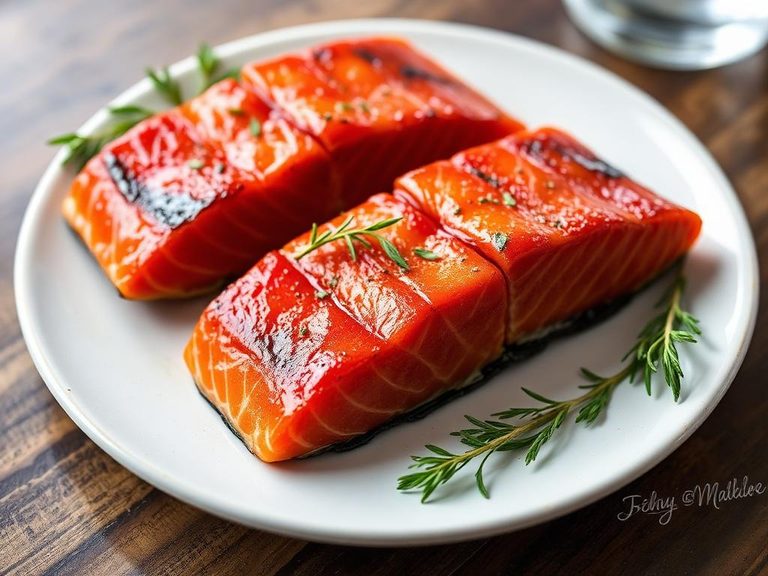
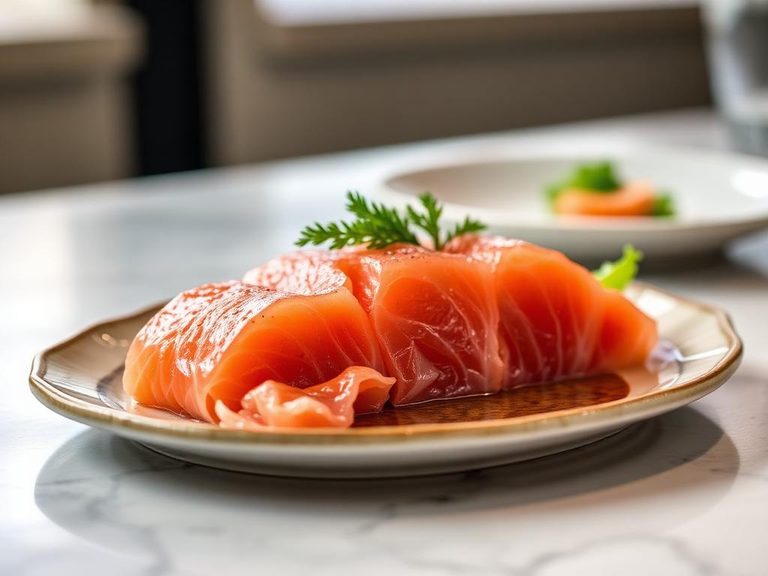
Sockeye salmon, also known as red salmon, is prized for its deep crimson flesh and robust, distinctly wild flavor. Its texture is firm and meaty, holding up beautifully to various cooking methods while delivering a rich, satisfying mouthfeel. Nutritionally, it's a powerhouse of high-quality protein and heart-healthy fats, with virtually no carbohydrates.
Calorie split: 67% protein · 0% carbs · 33% fat
↓ Full nutrition💚 Why it's loved
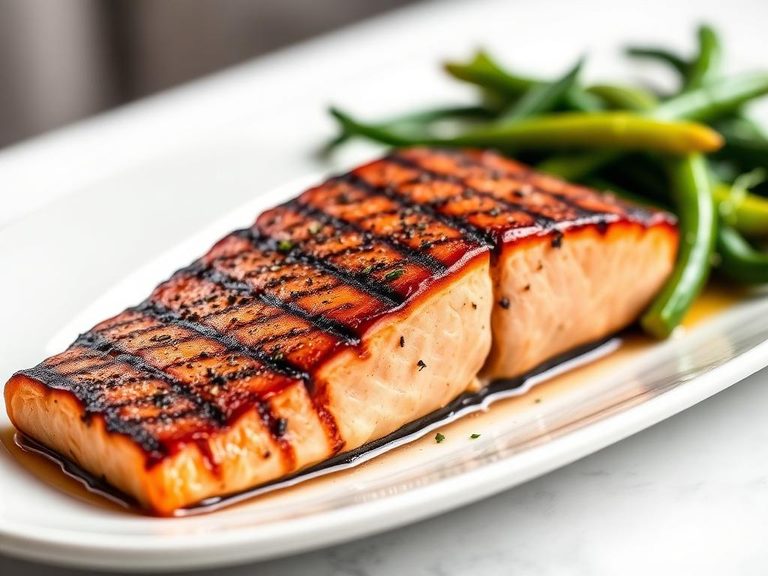
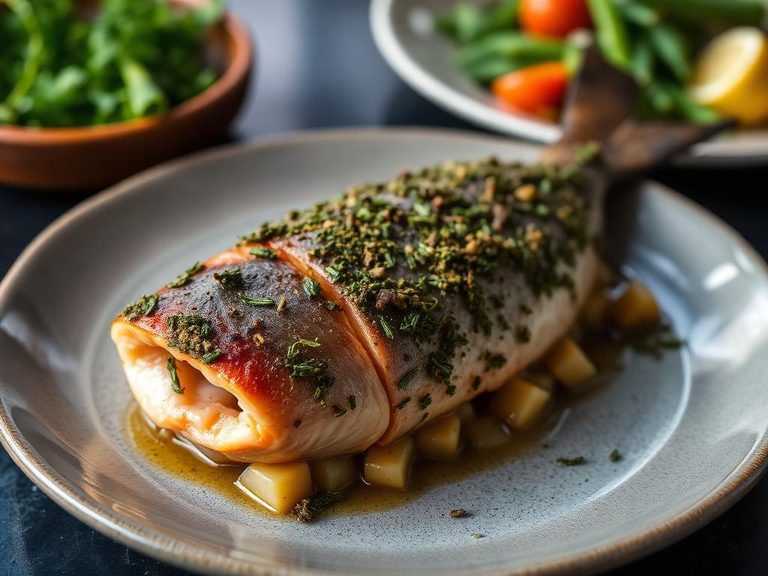
People adore sockeye for its pronounced, almost meaty salmon flavor that stands out from milder farmed varieties. Its vibrant color and firm texture make it a showstopper on the plate, equally delicious grilled, baked, or cured.
⚠️ Watch-outs & how to enjoy it better
Its strong flavor can be too intense for those who prefer milder fish, and its leaner profile compared to farmed salmon means it can dry out if overcooked. As a common allergen, fish must be avoided by those with specific allergies. To counteract dryness, use a quick, high-heat cooking method like searing or grilling, or baste with a flavorful glaze or oil.
Key benefits
- Excellent source of complete protein for muscle maintenance.
- Rich in omega-3 fatty acids (EPA & DHA) for brain and heart health.
- Provides a significant dose of vitamin D, especially wild-caught.
- Contains astaxanthin, a potent antioxidant giving it its red color.
- Naturally low in carbohydrates and sugar.
🍽️ Popular dishes
🌍 Where it's eaten
💡 Did you know?
Sockeye salmon gets its name from the Halkomelem word 'suk-kegh,' meaning 'red fish,' and it's the only salmon species that turns completely red across its entire body during spawning.
Full nutrition (USDA data · scales with serving)
| Water | 72.5 g |
| Energy (Atwater General Factors) | 130 kcal |
| Energy (Atwater Specific Factors) | 136 kcal |
| Nitrogen | 3.6 g |
| Protein | 22.3 g |
| Total lipid (fat) | 4.9 g |
| Ash | 1.2 g |
| Carbohydrate, by difference | 0.00 g |
| Calcium, Ca | 14.8 mg |
| Iron, Fe | 0.40 mg |
| Magnesium, Mg | 26.1 mg |
| Phosphorus, P | 226 mg |
| Potassium, K | 330 mg |
| Sodium, Na | 53.3 mg |
| Zinc, Zn | 0.42 mg |
| Copper, Cu | 0.06 mg |
| Manganese, Mn | 0.00 mg |
| Iodine, I | 18.4 ug |
| Selenium, Se | 30.2 ug |
| Vitamin B-12 | 5.2 ug |
| Retinol | 42.8 ug |
Fat & fatty acid profile (per 100g)
| Fatty acids, total saturated | 0.72 g |
| SFA 4:0 | 0.00 g |
| SFA 6:0 | 0.00 g |
| SFA 8:0 | 0.00 g |
| SFA 10:0 | 0.00 g |
| SFA 12:0 | 0.00 g |
| SFA 14:0 | 0.12 g |
| SFA 16:0 | 0.48 g |
| SFA 18:0 | 0.09 g |
| Fatty acids, total monounsaturated | 1.1 g |
| MUFA 18:1 c | 0.58 g |
| Fatty acids, total polyunsaturated | 0.71 g |
| PUFA 18:2 n-6 c,c | 0.05 g |
| PUFA 18:3 n-3 c,c,c (ALA) | 0.02 g |
| PUFA 20:5 n-3 (EPA) | 0.21 g |
| PUFA 22:5 n-3 (DPA) | 0.07 g |
| PUFA 22:6 n-3 (DHA) | 0.33 g |
| Cholesterol | 59.3 mg |
Amino acid profile (per 100g)
Estimated from Fish, fish sticks, frozen, prepared — USDA does not publish this profile for Fish.
| Tryptophan | 0.12 g |
| Threonine | 0.37 g |
| Isoleucine | 0.43 g |
| Leucine | 0.85 g |
| Lysine | 0.80 g |
| Methionine | 0.30 g |
| Phenylalanine | 0.47 g |
| Tyrosine | 0.29 g |
| Valine | 0.50 g |
| Arginine | 0.59 g |
| Histidine | 0.23 g |
| Alanine | 0.55 g |
| Aspartic acid | 0.82 g |
| Glutamic acid | 2.3 g |
| Glycine | 0.47 g |
| Proline | 0.78 g |
| Serine | 0.49 g |
| Hydroxyproline | 0.00 g |
FAQ
How is wild-caught sockeye different from farmed salmon?
Wild sockeye has a deeper red color, firmer texture, and a more pronounced, robust flavor due to its natural diet. It is typically leaner and higher in omega-3s per gram than farmed Atlantic salmon.
What's the best way to cook sockeye to prevent it from drying out?
Due to its leanness, sockeye cooks quickly. Use high-heat methods like grilling, broiling, or pan-searing for just 3-4 minutes per side. Alternatively, bake at 400°F (200°C) until just opaque in the center, and consider adding a glaze or fat like butter or olive oil.
Is sockeye salmon safe to eat raw?
Yes, when properly handled and labeled as 'sushi-grade' or 'sashimi-grade.' Wild-caught sockeye must be flash-frozen at specific temperatures to kill parasites before being sold raw for human consumption.
Nutrient density (calculated · NRF9.3)
Nutrient Rich Foods index: beneficial nutrients (protein, fiber, vitamins, minerals) minus saturated fat, added sugar & sodium, per 100 kcal.
NRF9.3 index — Fulgoni, Keast & Drewnowski, 2009. Computed from USDA nutrients.
Weight-loss friendliness (composite index)
Energy density 1.30 kcal/g · 69% calories from protein · 0.0 g fiber · 0.0 g sugar per 100 g.
Composite of energy density (Rolls et al., 1999), protein & fiber satiety, minus sugar. A calculated heuristic — ranks satiety-per-calorie, not a clinical measure.
Dietary load (calculated from USDA values)
Potential renal acid load. Positive = acid-forming, negative = alkaline-forming.
Sodium-to-potassium ratio: 0.16 (lower is better — aim for ≤ 1)
Sodium:potassium per WHO potassium guidance. Computed from USDA nutrients.