Sockeye Salmon Sashimi or Poke
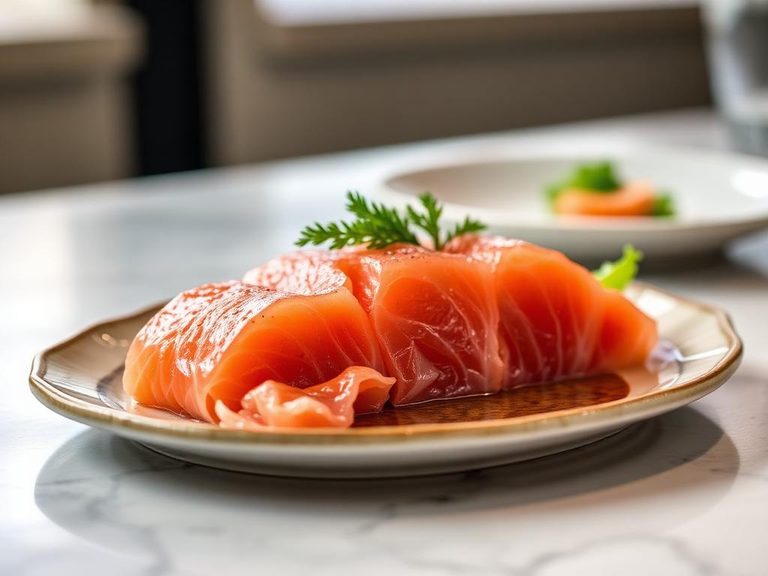
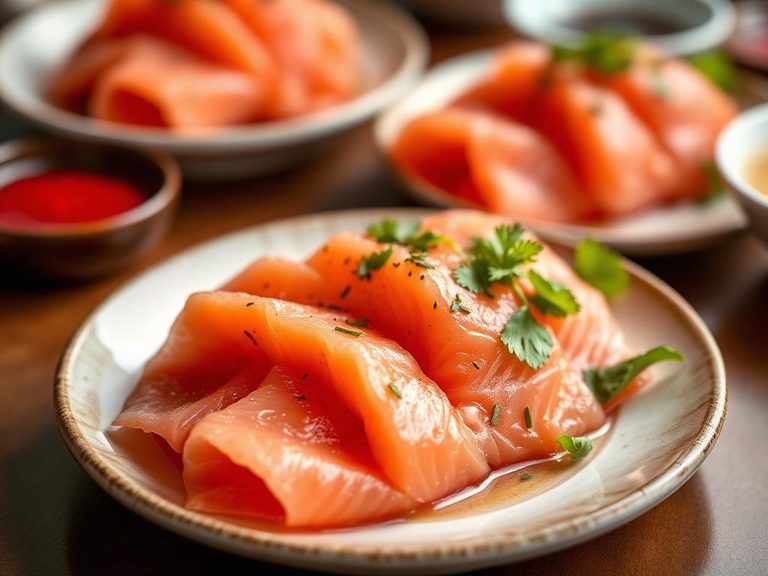
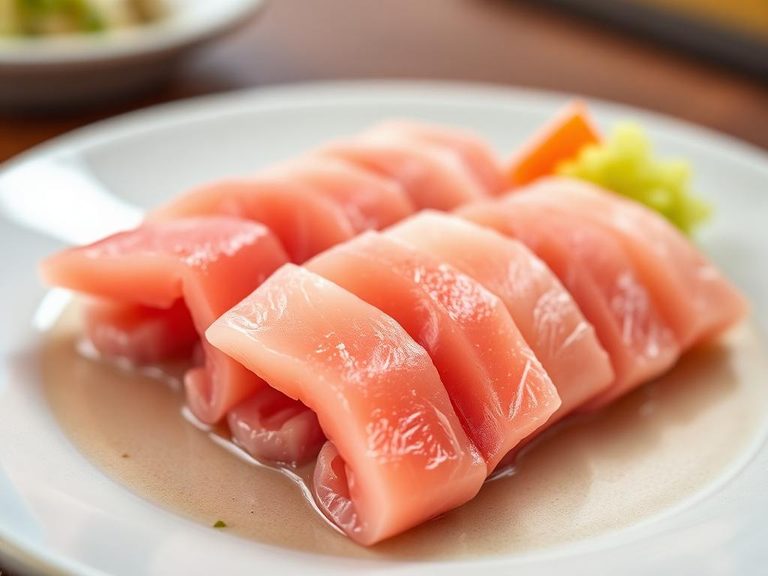
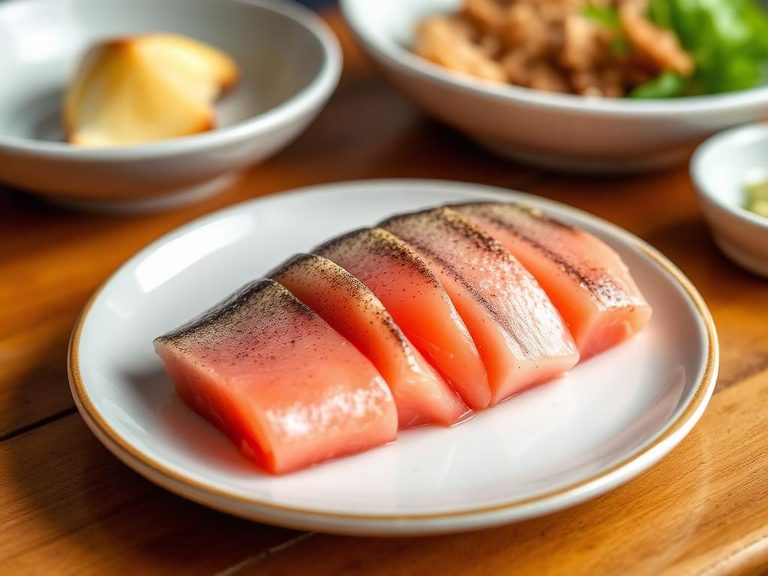
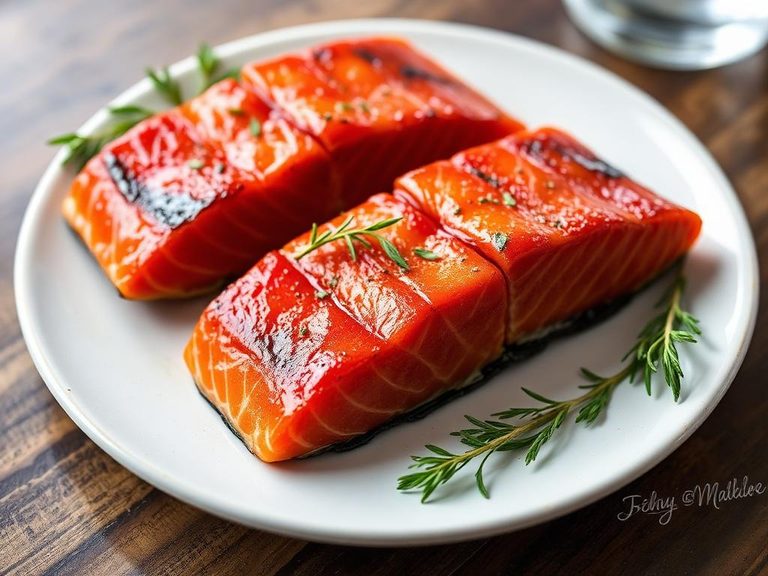
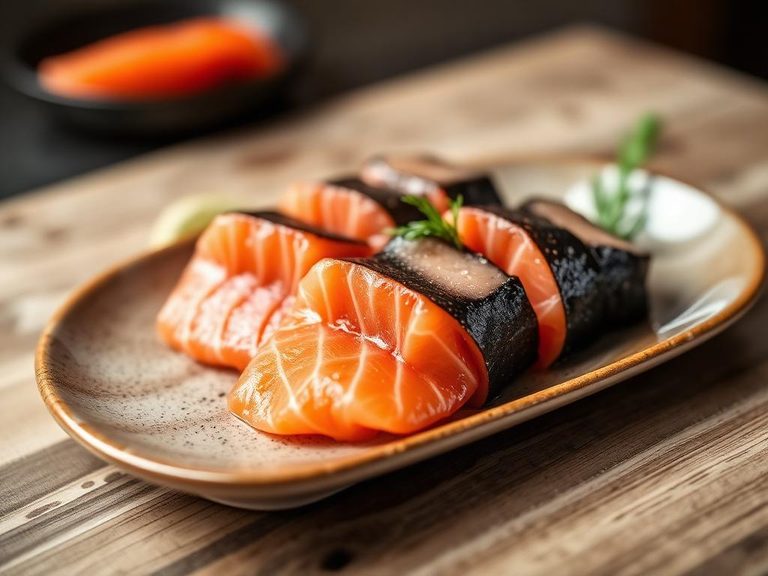
Sockeye Salmon Sashimi or Poke is a dish featuring raw, fresh sockeye salmon, a species prized for its deep red color and rich flavor. In sashimi, the fish is sliced and served plain, often with soy sauce and wasabi, while in poke, it's cubed and tossed with ingredients like soy sauce, sesame oil, onions, and seaweed. The dish originates from Japanese cuisine for sashimi and Hawaiian cuisine for poke, with sockeye salmon being native to the Pacific Ocean and rivers of North America.
🍽️ Nutrition at a glance
This dish is very high in protein and healthy fats, particularly omega-3 fatty acids, with minimal carbohydrates. A typical 4-ounce (113g) serving provides around 200-250 calories, along with significant amounts of vitamin D, selenium, and B vitamins.
Nutrition breakdown
| Calories | 175 kcal |
| Protein | 23 g |
| Carbs | 0 g |
| Fat | 9 g |
| Fiber | 0 g |
| Sugar | 0 g |
| Sodium | 50 mg |
| Vitamin D | 17 mcg |
| Vitamin B12 | 4.8 mcg |
| Niacin (B3) | 8.6 mg |
| Selenium | 40 mcg |
| Phosphorus | 280 mg |
| Potassium | 350 mg |
| Omega-3 (EPA+DHA) | 1.2 g |
| Astaxanthin | 2-4 mg |
Per 4 oz (113 g) · estimated, varies by recipe
💡 What's interesting
Culturally, it represents a fusion of Japanese and Hawaiian culinary traditions, both emphasizing fresh, high-quality seafood. Nutritionally, sockeye salmon is one of the best natural sources of astaxanthin, a powerful antioxidant that gives it its vibrant red color and may offer anti-inflammatory benefits.