

Salmon Sashimi/Sushi
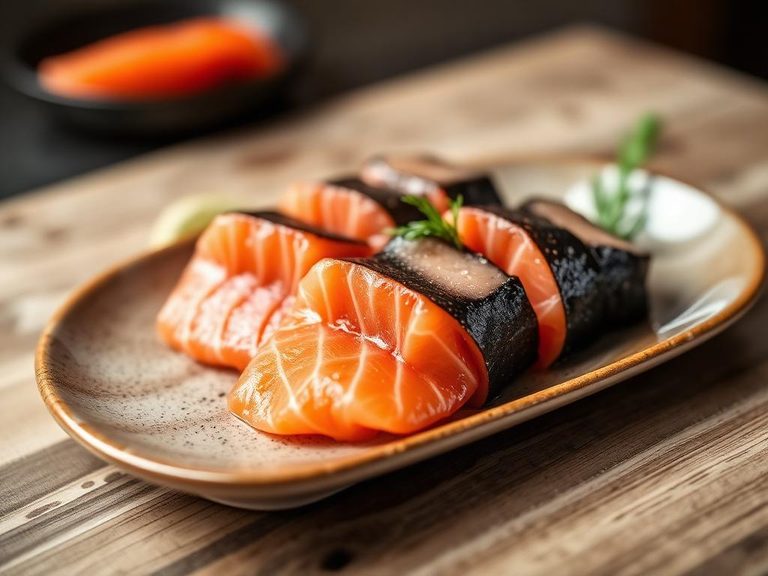
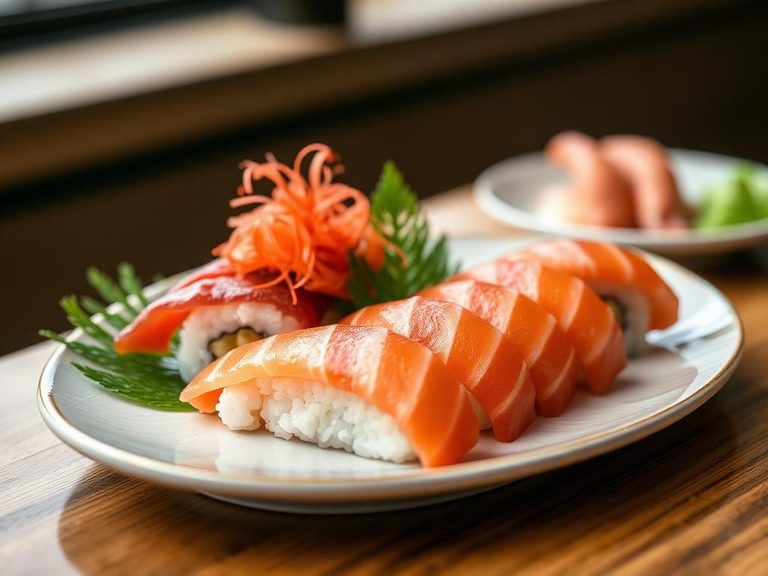
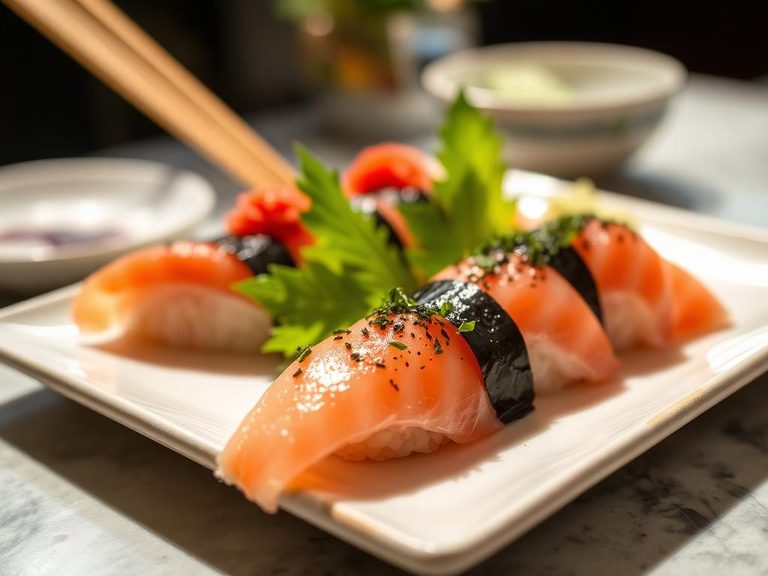
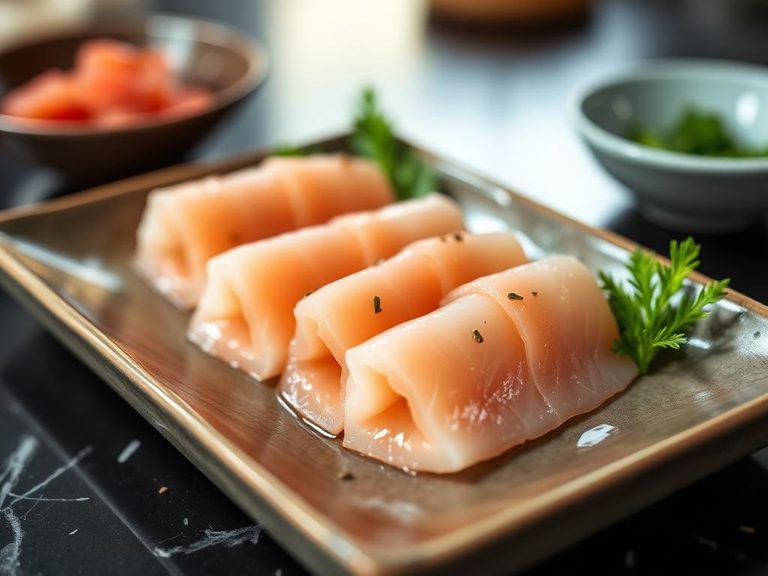
Salmon Sashimi/Sushi is a classic Japanese dish featuring thinly sliced raw salmon, either served on its own (sashimi) or atop vinegared rice (sushi). The dish typically highlights the fish's buttery texture and rich, delicate flavor, often accompanied by soy sauce, wasabi, and pickled ginger. Originating from Japan, it has become a globally beloved staple of Japanese cuisine.
🍳 View the full Salmon Sashimi/Sushi recipe →
🍽️ Nutrition at a glance
This dish is high in protein and healthy fats, particularly omega-3 fatty acids, while being low in carbohydrates. A typical serving provides a good source of vitamin D, B vitamins, and selenium, with a calorie range of approximately 150-250 calories per serving, depending on portion size and preparation.
Nutrition breakdown
| Calories | 208 kcal |
| Protein | 20 g |
| Carbs | 0 g |
| Fat | 13 g |
| Fiber | 0 g |
| Sugar | 0 g |
| Sodium | 55 mg |
| Potassium | 350 mg |
| Vitamin D | 11 mcg |
| Vitamin B12 | 4.8 mcg |
| Niacin (B3) | 8 mg |
| Selenium | 40 mcg |
| Phosphorus | 250 mg |
| Omega-3 (EPA+DHA) | 1.5 g |
| Vitamin B6 | 0.8 mg |
Per 4 oz (113 g) · estimated, varies by recipe
💡 What's interesting
Culturally, salmon sushi gained popularity in Japan in the late 20th century, influenced by Western tastes and the availability of farmed salmon. Nutritionally, it's unique for its high omega-3 content, which supports heart health, and its minimal processing preserves the fish's natural nutrients.
🍽️ Related dishes
AI estimate may be inaccurate · Terms