Sushi and Sashimi garnish
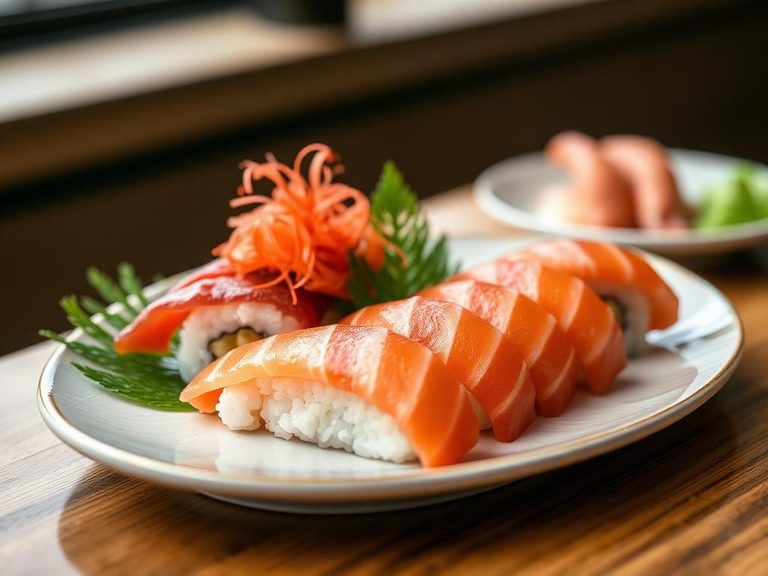
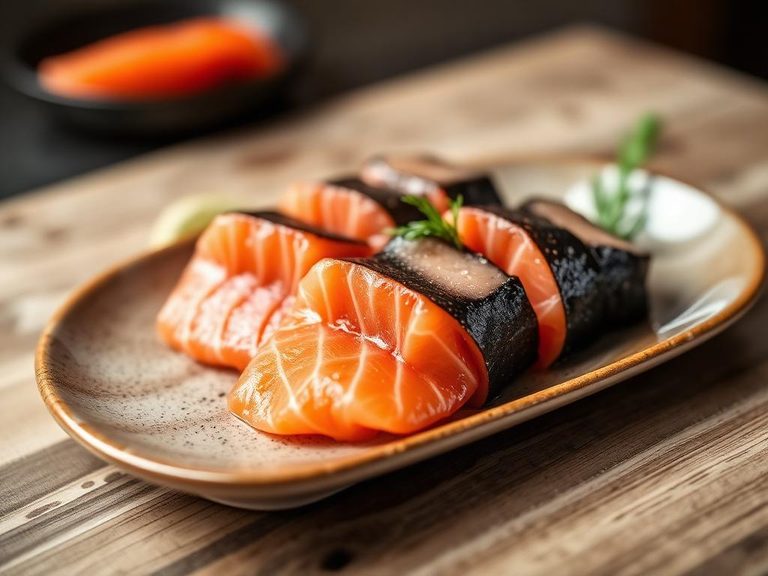
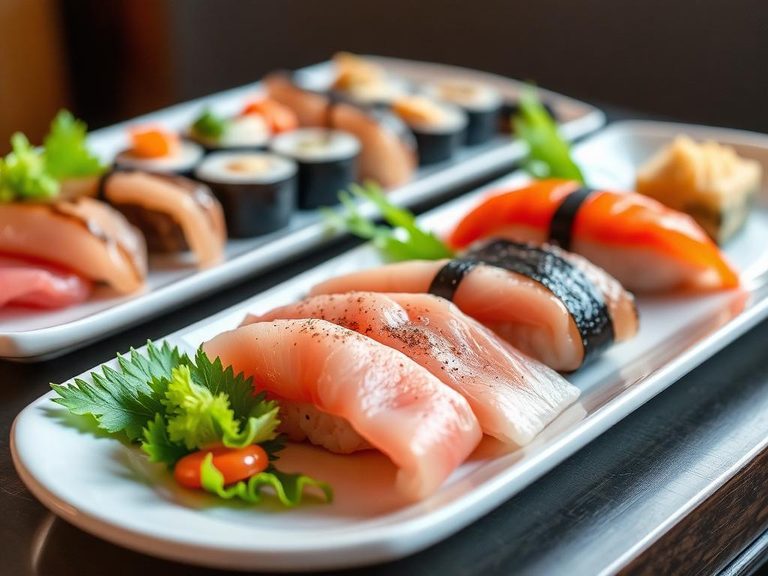
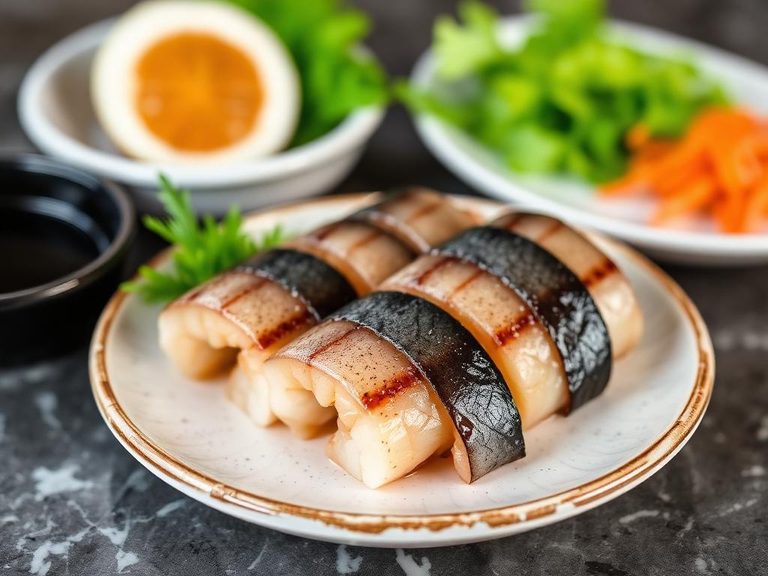
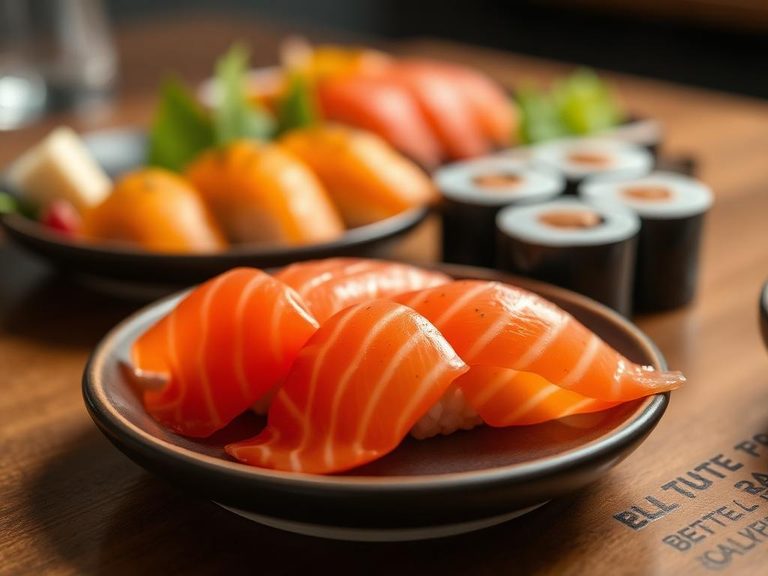
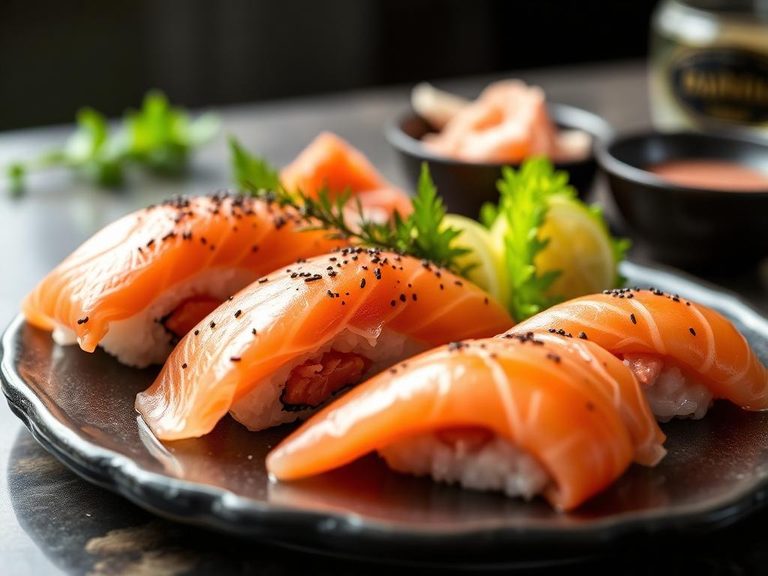
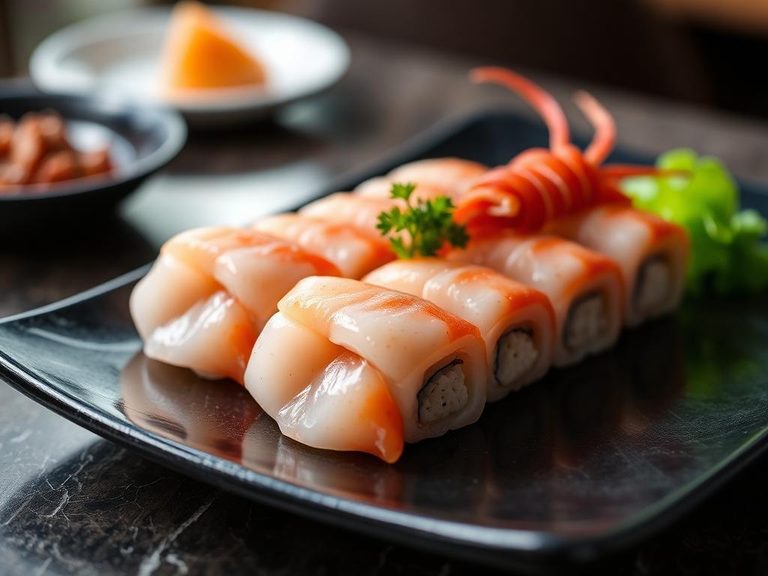
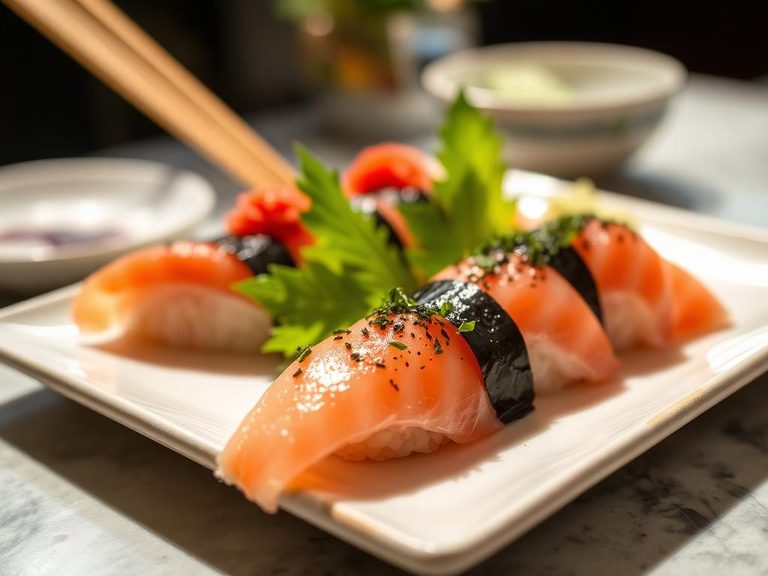
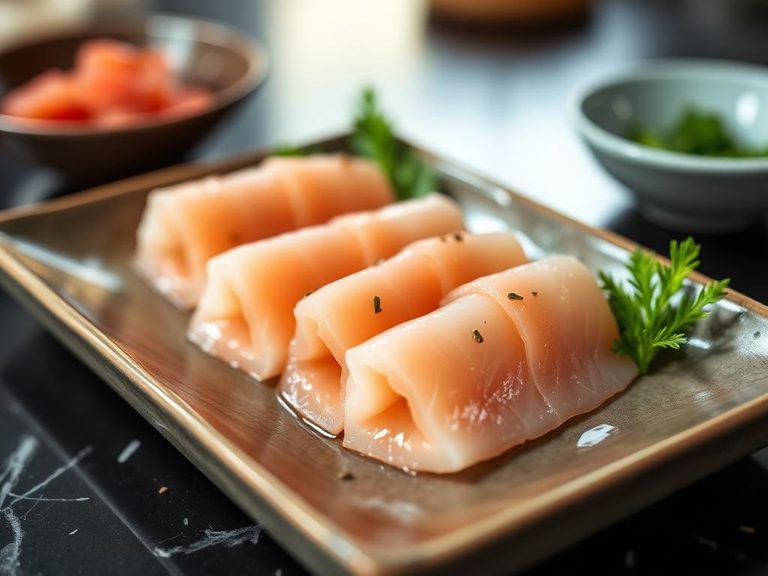
Sushi and sashimi garnish is a collection of traditional Japanese condiments and accompaniments served alongside sushi and sashimi to enhance flavor, provide contrast, and aid digestion. It typically includes pickled ginger (gari), wasabi, and soy sauce (shoyu), and is an essential part of the Japanese dining experience. These elements are not just toppings but integral components that balance the rich, umami flavors of the fish.
🍽️ Nutrition at a glance
This garnish is generally low in calories, carbohydrates, and fat, with negligible protein, as it is used in small quantities. Its key nutrients come from the ginger (which contains gingerol) and the fermented soy sauce, which provides sodium and trace minerals.
Nutrition breakdown
| Calories | 10 kcal |
| Protein | 0.5 g |
| Carbs | 2 g |
| Fat | 0 g |
| Fiber | 0.3 g |
| Sugar | 1 g |
| Sodium | 500 mg |
| Sodium | 500 mg |
| Manganese | 0.1 mg |
| Vitamin B6 | 0.02 mg |
| Copper | 0.01 mg |
| Magnesium | 2 mg |
| Iron | 0.1 mg |
| Potassium | 15 mg |
| Phosphorus | 5 mg |
Per 1 typical serving (approx. 15 g total, including 10 g pickled ginger, 2 g wasabi paste, and 3 g soy sauce) · estimated, varies by recipe
💡 What's interesting
Culturally, the garnish serves a specific purpose: pickled ginger is meant to cleanse the palate between different types of fish, while wasabi adds heat that complements the fish's richness. Nutritionally, the fermentation process in soy sauce creates beneficial compounds, and ginger is known for its digestive and anti-inflammatory properties.