

Toppings, strawberry
Whole food · Sweets
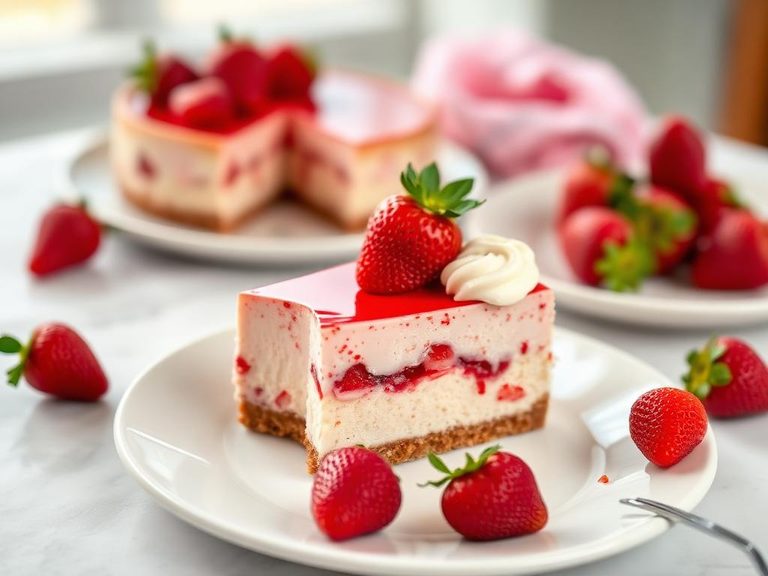
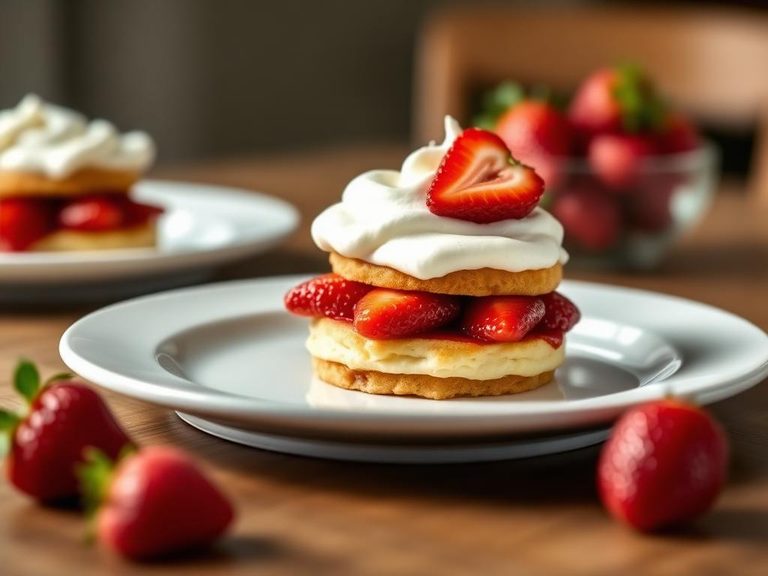
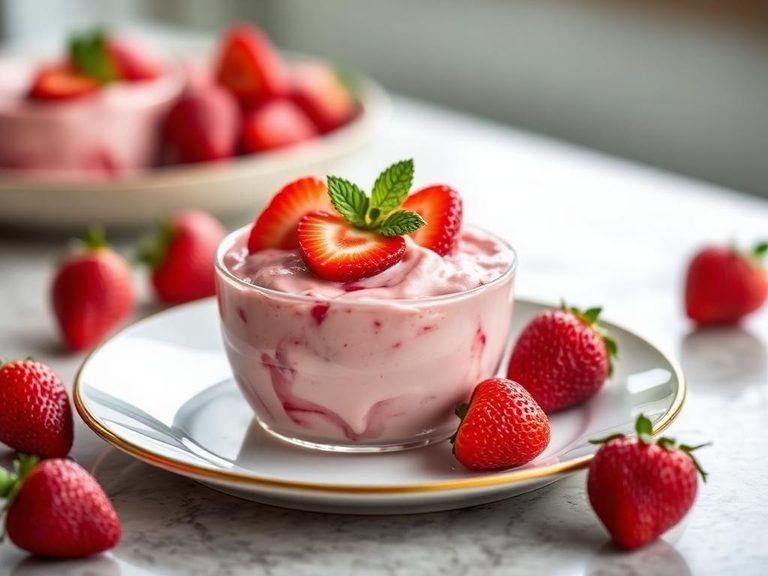
A glossy, intensely sweet strawberry topping, typically a compote or syrup made from cooked strawberries, sugar, and sometimes thickeners. It delivers a jammy, concentrated berry flavor with a soft, slightly chunky texture, often used to crown desserts. Nutritionally, it is almost entirely carbohydrate, primarily from added sugar, offering minimal protein or fat.
Calorie split: 0% protein · 99% carbs · 0% fat
↓ Full nutrition💚 Why it's loved
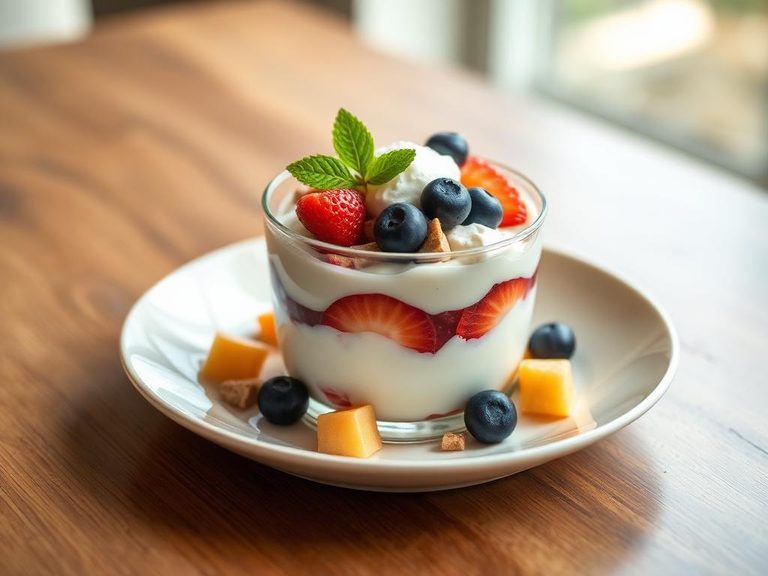
People adore its intense, sweet-tart strawberry punch and the way it transforms simple treats like ice cream, pancakes, or yogurt into something special. It's a nostalgic, versatile topping that evokes classic dessert experiences.
⚠️ Watch-outs & how to enjoy it better
The very high sugar content (over 27g per 100g) can cause rapid blood-sugar spikes, making it unsuitable for those managing diabetes or insulin resistance. To mitigate this, pair it with a source of protein or healthy fat (like Greek yogurt or nuts) to slow sugar absorption, and practice strict portion control. Some commercial versions may also contain added thickeners or preservatives.
Key benefits
- Provides quick energy from simple carbohydrates.
- Adds vibrant flavor and color to desserts and breakfasts.
- Offers a small amount of dietary fiber from fruit pulp.
- Convenient way to add fruit flavor to dishes year-round.
🍽️ Popular dishes

🌍 Where it's eaten
💡 Did you know?
The classic strawberry topping for ice cream sundaes in the US became widely popular in the mid-20th century, coinciding with the rise of the ice cream parlor and the availability of canned, preserved fruit toppings.
Full nutrition (USDA data · scales with serving)
| Water | 33.0 g |
| Energy | 254 kcal |
| Energy | 1063 kj |
| Protein | 0.20 g |
| Total lipid (fat) | 0.10 g |
| Ash | 0.40 g |
| Carbohydrate, by difference | 66.3 g |
| Fiber, total dietary | 0.70 g |
| Total Sugars | 27.4 g |
| Calcium, Ca | 6.0 mg |
| Iron, Fe | 0.28 mg |
| Magnesium, Mg | 4.0 mg |
| Phosphorus, P | 5.0 mg |
| Potassium, K | 51.0 mg |
| Sodium, Na | 21.0 mg |
| Zinc, Zn | 0.06 mg |
| Copper, Cu | 0.03 mg |
| Manganese, Mn | 0.17 mg |
| Selenium, Se | 0.80 ug |
| Vitamin C, total ascorbic acid | 13.7 mg |
| Thiamin | 0.01 mg |
| Riboflavin | 0.02 mg |
| Niacin | 0.16 mg |
| Pantothenic acid | 0.05 mg |
| Vitamin B-6 | 0.01 mg |
| Folate, total | 6.0 ug |
| Folic acid | 0.00 ug |
| Folate, food | 6.0 ug |
| Folate, DFE | 6.0 ug |
| Choline, total | 9.8 mg |
| Vitamin B-12 | 0.00 ug |
| Vitamin B-12, added | 0.00 ug |
| Vitamin A, RAE | 1.0 ug |
| Retinol | 0.00 ug |
| Carotene, beta | 9.0 ug |
| Carotene, alpha | 0.00 ug |
| Cryptoxanthin, beta | 0.00 ug |
| Vitamin A, IU | 18.0 iu |
| Lycopene | 0.00 ug |
| Lutein + zeaxanthin | 9.0 ug |
| Vitamin E (alpha-tocopherol) | 0.10 mg |
| Vitamin E, added | 0.00 mg |
| Vitamin D (D2 + D3), International Units | 0.00 iu |
| Vitamin D (D2 + D3) | 0.00 ug |
| Vitamin K (phylloquinone) | 0.70 ug |
| Alcohol, ethyl | 0.00 g |
| Caffeine | 0.00 mg |
| Theobromine | 0.00 mg |
Fat & fatty acid profile (per 100g)
| Fatty acids, total saturated | 0.01 g |
| SFA 4:0 | 0.00 g |
| SFA 6:0 | 0.00 g |
| SFA 8:0 | 0.00 g |
| SFA 10:0 | 0.00 g |
| SFA 12:0 | 0.00 g |
| SFA 14:0 | 0.00 g |
| SFA 16:0 | 0.00 g |
| SFA 18:0 | 0.00 g |
| Fatty acids, total monounsaturated | 0.01 g |
| MUFA 16:1 | 0.00 g |
| MUFA 18:1 | 0.01 g |
| MUFA 20:1 | 0.00 g |
| MUFA 22:1 | 0.00 g |
| Fatty acids, total polyunsaturated | 0.05 g |
| PUFA 18:2 | 0.03 g |
| PUFA 18:3 | 0.02 g |
| PUFA 18:4 | 0.00 g |
| PUFA 20:4 | 0.00 g |
| PUFA 20:5 n-3 (EPA) | 0.00 g |
| PUFA 22:5 n-3 (DPA) | 0.00 g |
| PUFA 22:6 n-3 (DHA) | 0.00 g |
| Cholesterol | 0.00 mg |
Amino acid profile (per 100g)
Estimated from Toppings, butterscotch or caramel — USDA does not publish this profile for Toppings.
| Threonine | 0.07 g |
| Isoleucine | 0.09 g |
| Leucine | 0.14 g |
| Lysine | 0.12 g |
| Methionine | 0.04 g |
| Cystine | 0.01 g |
| Phenylalanine | 0.07 g |
| Tyrosine | 0.07 g |
| Valine | 0.10 g |
| Arginine | 0.05 g |
| Histidine | 0.04 g |
| Alanine | 0.05 g |
| Aspartic acid | 0.11 g |
| Glutamic acid | 0.31 g |
| Glycine | 0.03 g |
| Proline | 0.14 g |
| Serine | 0.08 g |
FAQ
Is strawberry topping the same as strawberry jam or preserves?
Not exactly. While similar, a topping is often looser, more syrupy, and may contain more sugar or added thickeners to create a pourable, glossy consistency. Jam and preserves are thicker and are typically used as spreads.
Can I use strawberry topping for savory dishes?
It's uncommon, but a small amount can be used in glazes for meats like pork or chicken, or in vinaigrettes for a sweet-tart element. The high sugar content means it should be used sparingly in savory applications.
How should I store opened strawberry topping?
Once opened, store it in an airtight container in the refrigerator. It will typically last for 1-2 weeks. For longer storage, you can freeze it in portions.
Nutrient density (calculated · NRF9.3)
Nutrient Rich Foods index: beneficial nutrients (protein, fiber, vitamins, minerals) minus saturated fat, added sugar & sodium, per 100 kcal.
NRF9.3 index — Fulgoni, Keast & Drewnowski, 2009. Computed from USDA nutrients.
Weight-loss friendliness (composite index)
Energy density 2.54 kcal/g · 0% calories from protein · 0.7 g fiber · 27.4 g sugar per 100 g.
Composite of energy density (Rolls et al., 1999), protein & fiber satiety, minus sugar. A calculated heuristic — ranks satiety-per-calorie, not a clinical measure.
Dietary load (calculated from USDA values)
Potential renal acid load. Positive = acid-forming, negative = alkaline-forming.
Sodium-to-potassium ratio: 0.41 (lower is better — aim for ≤ 1)
Sodium:potassium per WHO potassium guidance. Computed from USDA nutrients.