

Ice creams, vanilla
Whole food · Sweets
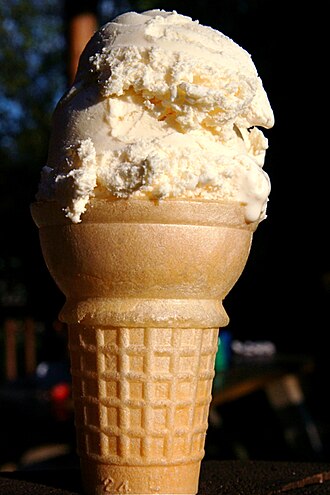
Photo: Wikipedia
Vanilla ice cream is a rich, creamy frozen dessert with a smooth, velvety texture and a sweet, aromatic flavor derived from vanilla beans or extract. It is a classic comfort food, often enjoyed on its own or as a base for other desserts, with a nutritional profile that includes a moderate amount of sugar and fat. A 100g serving provides about 207 kcal, 3.5g protein, 23.6g carbs, and 11g fat, making it a treat best enjoyed in moderation.
Calorie split: 7% protein · 46% carbs · 48% fat
↓ Full nutrition💚 Why it's loved
People love vanilla ice cream for its comforting, nostalgic taste and smooth, creamy texture that pairs well with almost any topping or dessert. Its versatility and cultural significance as a classic flavor make it a universal favorite across generations and cuisines.
⚠️ Watch-outs & how to enjoy it better
Vanilla ice cream is high in sugar (21.22g per 100g) and fat, which can contribute to blood-sugar spikes and weight gain if consumed excessively. To counteract this, pair it with protein-rich foods like nuts or Greek yogurt, practice portion control by sticking to a single scoop (about 118g), and consider choosing low-sugar or sugar-free varieties when possible.
Key benefits
- Provides a quick source of energy from carbohydrates and fats.
- Contains calcium and vitamin D for bone health, especially in fortified varieties.
- Can be a mood booster due to its sweet taste and association with positive experiences.
- Offers a small amount of protein, which can help with satiety.
- Vanilla flavor may have antioxidant properties from vanillin.
🍽️ Popular dishes

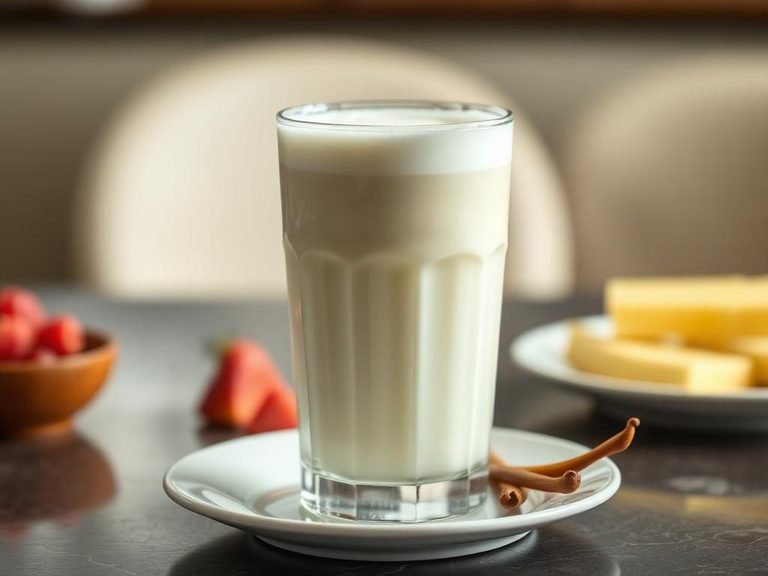
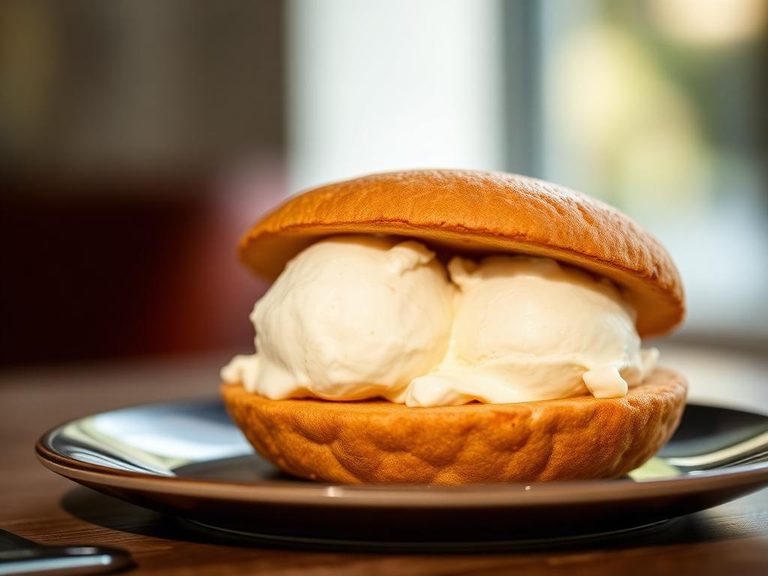
🌍 Where it's eaten
💡 Did you know?
Vanilla ice cream was once a luxury reserved for royalty and the wealthy, as vanilla beans were extremely expensive and difficult to cultivate outside of Mexico.
Full nutrition (USDA data · scales with serving)
| Water | 61.0 g |
| Energy | 207 kcal |
| Energy | 868 kj |
| Protein | 3.5 g |
| Total lipid (fat) | 11.0 g |
| Ash | 0.90 g |
| Carbohydrate, by difference | 23.6 g |
| Fiber, total dietary | 0.70 g |
| Total Sugars | 21.2 g |
| Calcium, Ca | 128 mg |
| Iron, Fe | 0.09 mg |
| Magnesium, Mg | 14.0 mg |
| Phosphorus, P | 105 mg |
| Potassium, K | 199 mg |
| Sodium, Na | 80.0 mg |
| Zinc, Zn | 0.69 mg |
| Copper, Cu | 0.02 mg |
| Manganese, Mn | 0.01 mg |
| Selenium, Se | 1.8 ug |
| Fluoride, F | 15.4 ug |
| Vitamin C, total ascorbic acid | 0.60 mg |
| Thiamin | 0.04 mg |
| Riboflavin | 0.24 mg |
| Niacin | 0.12 mg |
| Pantothenic acid | 0.58 mg |
| Vitamin B-6 | 0.05 mg |
| Folate, total | 5.0 ug |
| Folic acid | 0.00 ug |
| Folate, food | 5.0 ug |
| Folate, DFE | 5.0 ug |
| Choline, total | 26.0 mg |
| Vitamin B-12 | 0.39 ug |
| Vitamin B-12, added | 0.00 ug |
| Vitamin A, RAE | 118 ug |
| Retinol | 116 ug |
| Carotene, beta | 19.0 ug |
| Carotene, alpha | 0.00 ug |
| Cryptoxanthin, beta | 0.00 ug |
| Vitamin A, IU | 421 iu |
| Lycopene | 0.00 ug |
| Lutein + zeaxanthin | 0.00 ug |
| Vitamin E (alpha-tocopherol) | 0.30 mg |
| Vitamin E, added | 0.00 mg |
| Vitamin D (D2 + D3), International Units | 8.0 iu |
| Vitamin D (D2 + D3) | 0.20 ug |
| Vitamin D3 (cholecalciferol) | 0.20 ug |
| Vitamin K (phylloquinone) | 0.30 ug |
| Alcohol, ethyl | 0.00 g |
| Caffeine | 0.00 mg |
| Theobromine | 0.00 mg |
Fat & fatty acid profile (per 100g)
| Fatty acids, total saturated | 6.8 g |
| SFA 4:0 | 0.36 g |
| SFA 6:0 | 0.21 g |
| SFA 8:0 | 0.12 g |
| SFA 10:0 | 0.28 g |
| SFA 12:0 | 0.31 g |
| SFA 13:0 | 0.00 g |
| SFA 14:0 | 1.1 g |
| SFA 15:0 | 0.00 g |
| SFA 16:0 | 3.1 g |
| SFA 17:0 | 0.00 g |
| SFA 18:0 | 1.3 g |
| SFA 20:0 | 0.00 g |
| SFA 22:0 | 0.00 g |
| SFA 24:0 | 0.00 g |
| Fatty acids, total monounsaturated | 3.0 g |
| MUFA 14:1 | 0.00 g |
| MUFA 16:1 | 0.21 g |
| MUFA 18:1 | 2.8 g |
| MUFA 20:1 | 0.00 g |
| MUFA 22:1 | 0.00 g |
| Fatty acids, total polyunsaturated | 0.45 g |
| PUFA 18:2 | 0.28 g |
| PUFA 18:3 | 0.17 g |
| PUFA 18:4 | 0.00 g |
| PUFA 20:4 | 0.00 g |
| PUFA 20:5 n-3 (EPA) | 0.00 g |
| PUFA 22:5 n-3 (DPA) | 0.00 g |
| PUFA 22:6 n-3 (DHA) | 0.00 g |
| Cholesterol | 44.0 mg |
Amino acid profile (per 100g)
| Tryptophan | 0.04 g |
| Threonine | 0.15 g |
| Isoleucine | 0.20 g |
| Leucine | 0.32 g |
| Lysine | 0.26 g |
| Methionine | 0.08 g |
| Cystine | 0.03 g |
| Phenylalanine | 0.16 g |
| Tyrosine | 0.15 g |
| Valine | 0.22 g |
| Arginine | 0.13 g |
| Histidine | 0.09 g |
| Alanine | 0.12 g |
| Aspartic acid | 0.25 g |
| Glutamic acid | 0.68 g |
| Glycine | 0.09 g |
| Proline | 0.33 g |
| Serine | 0.18 g |
FAQ
Is vanilla ice cream gluten-free?
Most vanilla ice cream is gluten-free, but it's important to check labels for any added ingredients or cross-contamination, especially if you have celiac disease or gluten sensitivity.
Can vanilla ice cream be part of a healthy diet?
Yes, in moderation. It can be enjoyed as an occasional treat, especially when paired with nutrient-dense foods like fruit or nuts to balance its sugar and fat content.
What is the difference between vanilla ice cream and frozen custard?
Frozen custard contains more egg yolks than traditional ice cream, giving it a richer, creamier texture and a slightly different flavor profile.
Nutrient density (calculated · NRF9.3)
Nutrient Rich Foods index: beneficial nutrients (protein, fiber, vitamins, minerals) minus saturated fat, added sugar & sodium, per 100 kcal.
NRF9.3 index — Fulgoni, Keast & Drewnowski, 2009. Computed from USDA nutrients.
Weight-loss friendliness (composite index)
Energy density 2.07 kcal/g · 7% calories from protein · 0.7 g fiber · 21.2 g sugar per 100 g.
Composite of energy density (Rolls et al., 1999), protein & fiber satiety, minus sugar. A calculated heuristic — ranks satiety-per-calorie, not a clinical measure.
Dietary load (calculated from USDA values)
Potential renal acid load. Positive = acid-forming, negative = alkaline-forming.
Sodium-to-potassium ratio: 0.40 (lower is better — aim for ≤ 1)
Sodium:potassium per WHO potassium guidance. Computed from USDA nutrients.