

Pancakes or Waffles

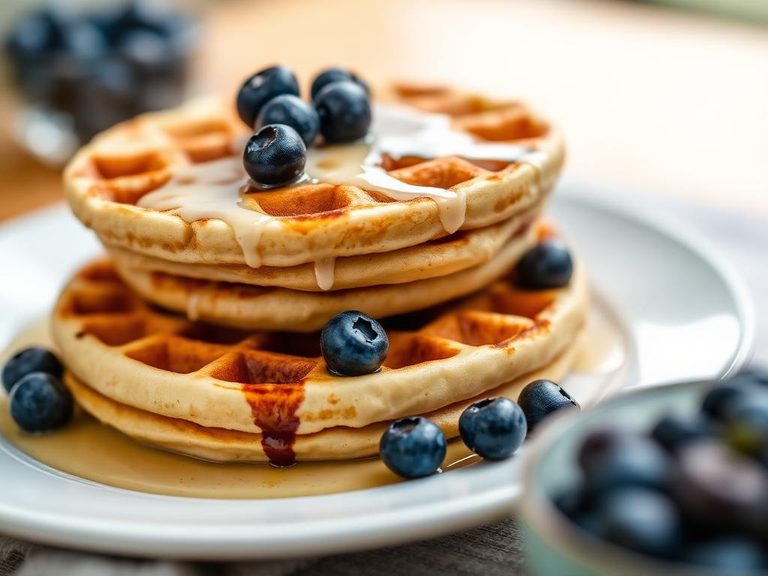
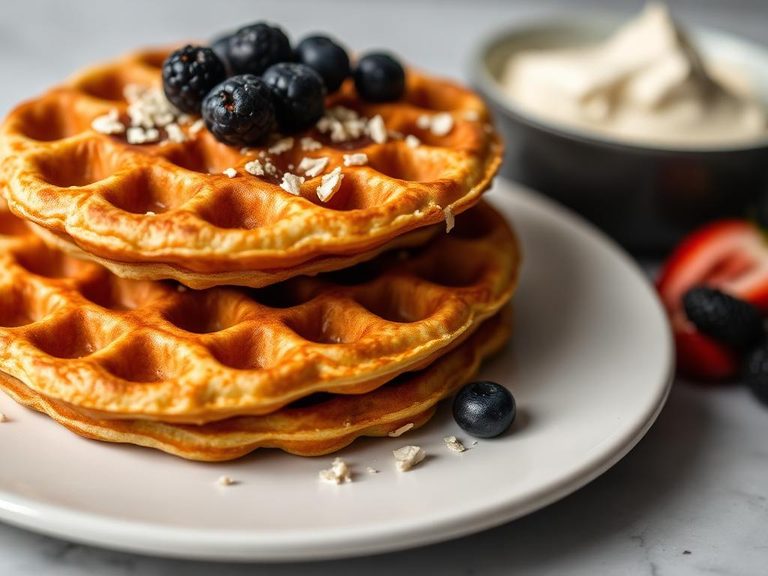
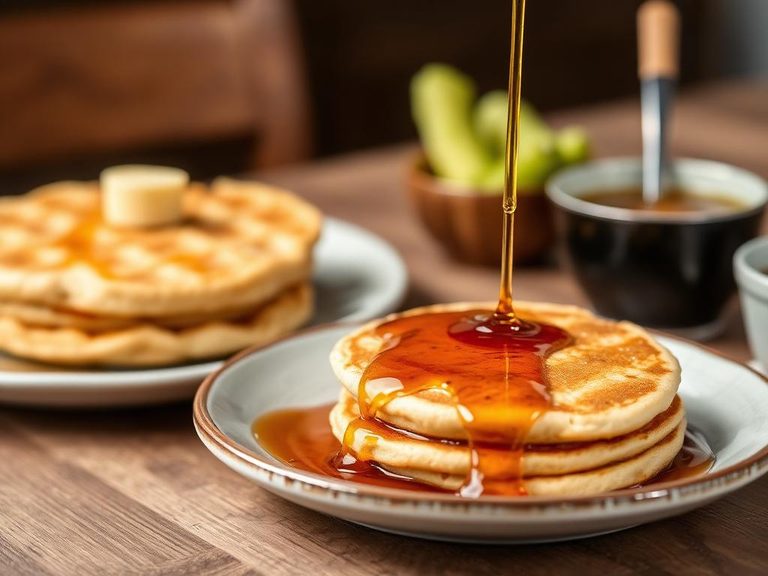
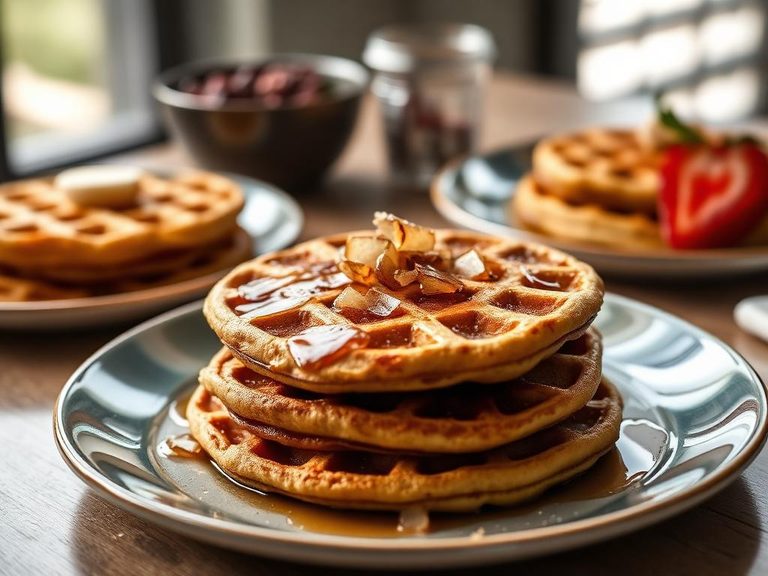
Pancakes and waffles are beloved breakfast staples made from a simple batter of flour, eggs, milk, and a leavening agent, cooked on a griddle or in a specialized iron. While pancakes are flat and round, waffles are defined by their grid-like pattern and lighter, crispier texture. Both dishes have roots in ancient civilizations but evolved into their modern forms in Europe and North America.
🍳 View the full Pancakes or Waffles recipe →
🍽️ Nutrition at a glance
These dishes are typically high in carbohydrates from the flour and sugar, with moderate fat content from butter or oil in the batter and toppings. They provide key nutrients like B vitamins from enriched flour and protein from eggs and milk, with a typical serving ranging from 300 to 500 calories depending on size and toppings.
Nutrition breakdown
| Calories | 350 kcal |
| Protein | 8 g |
| Carbs | 45 g |
| Fat | 15 g |
| Fiber | 1.5 g |
| Sugar | 8 g |
| Sodium | 550 mg |
| Calcium | 150 mg |
| Iron | 2.5 mg |
| Potassium | 200 mg |
| Phosphorus | 180 mg |
| Thiamin (B1) | 0.3 mg |
| Riboflavin (B2) | 0.2 mg |
| Niacin (B3) | 2.5 mg |
| Folate | 60 mcg |
Per 2 medium pancakes (approx. 150 g) · estimated, varies by recipe
💡 What's interesting
Culturally, pancakes and waffles serve as a canvas for global flavors, from American maple syrup and berries to Belgian Liège waffles with pearl sugar. Nutritionally, their simple base makes them highly adaptable for dietary modifications, such as using whole-grain flours or alternative milks to boost fiber and reduce lactose.
🍽️ Related dishes




AI estimate may be inaccurate · Terms