

Flour, wheat, all-purpose, enriched, bleached
Whole food · Cereal Grains and Pasta
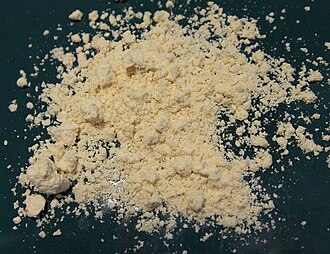
Photo: Wikipedia
This is the workhorse of the modern kitchen: a fine, soft powder milled from the endosperm of hard red wheat, then bleached and enriched with nutrients. Its taste is neutral and slightly sweet, with a soft, powdery texture that becomes light and airy when sifted. Nutritionally, it's a dense source of quick energy, providing about 77 grams of carbohydrates per 100g.
Calorie split: 12% protein · 84% carbs · 4% fat
↓ Full nutrition💚 Why it's loved
People love it for its incredible versatility and reliability—it's the blank canvas for everything from fluffy birthday cakes and flaky pie crusts to thickening a savory gravy. Its mild flavor allows other ingredients to shine, making it a foundational staple in home baking worldwide.
⚠️ Watch-outs & how to enjoy it better
As a refined carbohydrate with a high glycemic index, it can cause rapid blood-sugar spikes, making it less ideal for those managing diabetes. It contains gluten, a common allergen, and offers minimal fiber. To counteract this, pair it with protein (like eggs or nuts) and healthy fats (like butter or oil) in recipes, or choose whole-wheat blends to increase fiber content.
Key benefits
- Excellent source of quick energy from complex carbohydrates.
- Enriched with iron and B vitamins like niacin, thiamine, and folic acid.
- Provides a moderate amount of plant-based protein (10.9g per 100g).
- Versatile base for countless baked goods and savory dishes.
- Long shelf life when stored properly in a cool, dry place.
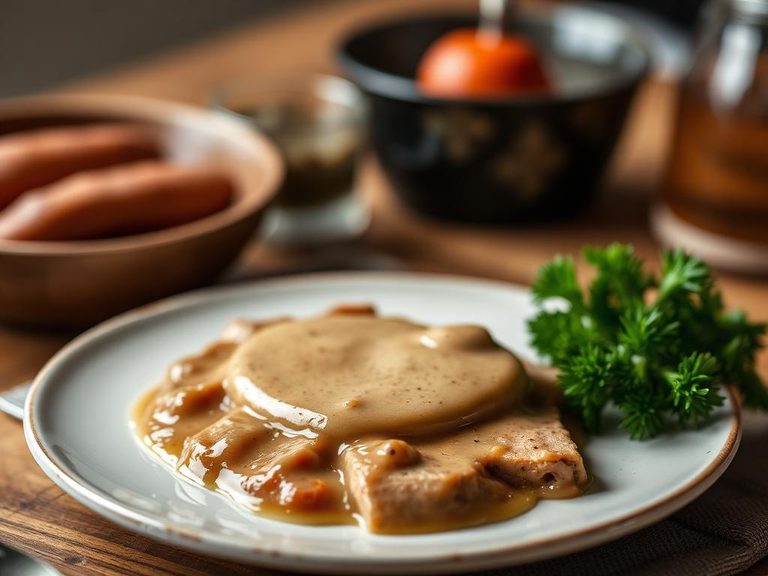
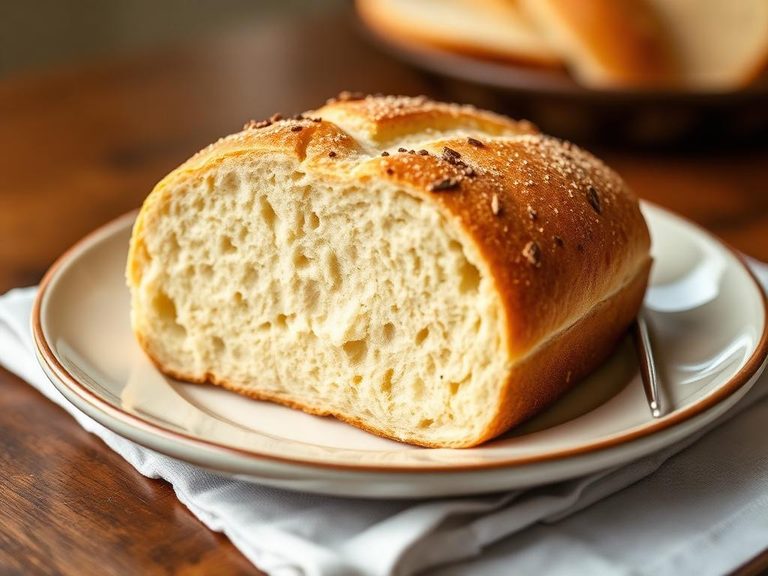
🍽️ Popular dishes




🌍 Where it's eaten
💡 Did you know?
The 'bleaching' process isn't about cleaning; it uses agents like benzoyl peroxide or chlorine gas to oxidize the flour's natural yellow pigments, creating a whiter color and also slightly aging the gluten for better baking performance.
Full nutrition (USDA data · scales with serving)
| Water | 9.8 g |
| Energy (Atwater General Factors) | 366 kcal |
| Energy (Atwater Specific Factors) | 375 kcal |
| Energy | 366 kcal |
| Energy | 1530 kj |
| Nitrogen | 1.8 g |
| Protein | 10.9 g |
| Total lipid (fat) | 1.5 g |
| Ash | 0.42 g |
| Carbohydrate, by difference | 77.3 g |
| Calcium, Ca | 19.0 mg |
| Iron, Fe | 5.6 mg |
| Magnesium, Mg | 26.7 mg |
| Phosphorus, P | 108 mg |
| Potassium, K | 136 mg |
| Sodium, Na | 2.0 mg |
| Zinc, Zn | 0.72 mg |
| Copper, Cu | 0.15 mg |
| Manganese, Mn | 0.76 mg |
| Selenium, Se | 15.7 ug |
| Molybdenum, Mo | 37.6 ug |
| Thiamin | 0.94 mg |
| Riboflavin | 0.44 mg |
| Niacin | 6.7 mg |
| Vitamin B-6 | 0.07 mg |
| Folate, total | 160 ug |
Fat & fatty acid profile (per 100g)
Estimated from Pasta, gluten-free, corn flour and quinoa flour, cooked, ANCIENT HARVEST — USDA does not publish this profile for Flour.
| Fatty acids, total saturated | 0.15 g |
| SFA 4:0 | 0.00 g |
| SFA 6:0 | 0.00 g |
| SFA 8:0 | 0.00 g |
| SFA 10:0 | 0.00 g |
| SFA 12:0 | 0.00 g |
| SFA 14:0 | 0.01 g |
| SFA 15:0 | 0.00 g |
| SFA 16:0 | 0.09 g |
| SFA 17:0 | 0.00 g |
| SFA 18:0 | 0.04 g |
| SFA 20:0 | 0.01 g |
| SFA 22:0 | 0.00 g |
| SFA 24:0 | 0.00 g |
| Fatty acids, total monounsaturated | 0.66 g |
| MUFA 14:1 | 0.00 g |
| MUFA 15:1 | 0.17 g |
| MUFA 16:1 | 0.00 g |
| MUFA 16:1 c | 0.00 g |
| MUFA 17:1 | 0.00 g |
| MUFA 18:1 | 0.48 g |
| MUFA 18:1 c | 0.47 g |
| MUFA 20:1 | 0.01 g |
| MUFA 22:1 | 0.00 g |
| MUFA 22:1 c | 0.00 g |
| MUFA 24:1 c | 0.00 g |
| Fatty acids, total polyunsaturated | 0.95 g |
| PUFA 18:2 | 0.91 g |
| PUFA 18:2 n-6 c,c | 0.91 g |
| PUFA 18:2 CLAs | 0.00 g |
| PUFA 18:3 | 0.03 g |
| PUFA 18:3 n-3 c,c,c (ALA) | 0.03 g |
| PUFA 18:3 n-6 c,c,c | 0.00 g |
| PUFA 18:3i | 0.00 g |
| PUFA 18:4 | 0.00 g |
| PUFA 20:2 n-6 c,c | 0.00 g |
| PUFA 20:3 | 0.00 g |
| PUFA 20:3 n-3 | 0.00 g |
| PUFA 20:3 n-6 | 0.00 g |
| PUFA 20:4 | 0.00 g |
| PUFA 20:5 n-3 (EPA) | 0.00 g |
| PUFA 22:4 | 0.00 g |
| PUFA 22:5 n-3 (DPA) | 0.00 g |
| PUFA 22:6 n-3 (DHA) | 0.00 g |
| Fatty acids, total trans | 0.01 g |
| Fatty acids, total trans-monoenoic | 0.00 g |
| TFA 16:1 t | 0.00 g |
| TFA 18:1 t | 0.00 g |
| TFA 22:1 t | 0.00 g |
| TFA 18:2 t not further defined | 0.00 g |
| Fatty acids, total trans-polyenoic | 0.00 g |
| Cholesterol | 0.00 mg |
Amino acid profile (per 100g)
Estimated from Pasta, gluten-free, corn flour and quinoa flour, cooked, ANCIENT HARVEST — USDA does not publish this profile for Flour.
| Tryptophan | 0.02 g |
| Threonine | 0.10 g |
| Isoleucine | 0.09 g |
| Leucine | 0.35 g |
| Lysine | 0.16 g |
| Methionine | 0.06 g |
| Cystine | 0.07 g |
| Phenylalanine | 0.15 g |
| Tyrosine | 0.12 g |
| Valine | 0.11 g |
| Arginine | 0.18 g |
| Histidine | 0.09 g |
| Alanine | 0.21 g |
| Aspartic acid | 0.19 g |
| Glutamic acid | 0.46 g |
| Glycine | 0.12 g |
| Proline | 0.29 g |
| Serine | 0.15 g |
| Hydroxyproline | 0.00 g |
FAQ
What's the difference between 'bleached' and 'unbleached' all-purpose flour?
Bleached flour is chemically treated to whiten it and achieve a finer, softer texture. Unbleached flour is simply milled and aged naturally by exposure to air. Unbleached flour has a slightly denser texture and creamier color, which some bakers prefer for breads and pastries.
Why is it called 'enriched'?
During milling, the nutrient-rich bran and germ are removed. 'Enriched' means that key nutrients lost in processing—specifically iron and B vitamins (thiamine, riboflavin, niacin, folic acid)—are added back in.
Can I substitute it for bread flour?
In a pinch, yes, for recipes like pizza dough or rustic breads. However, all-purpose flour has less protein (and thus less gluten), so the resulting dough will be less elastic and the final product less chewy. For best results in yeast breads, use bread flour.
Nutrient density (calculated · NRF9.3)
Nutrient Rich Foods index: beneficial nutrients (protein, fiber, vitamins, minerals) minus saturated fat, added sugar & sodium, per 100 kcal.
NRF9.3 index — Fulgoni, Keast & Drewnowski, 2009. Computed from USDA nutrients.
Weight-loss friendliness (composite index)
Energy density 3.66 kcal/g · 12% calories from protein · 0.0 g fiber · 0.0 g sugar per 100 g.
Composite of energy density (Rolls et al., 1999), protein & fiber satiety, minus sugar. A calculated heuristic — ranks satiety-per-calorie, not a clinical measure.
Dietary load (calculated from USDA values)
Potential renal acid load. Positive = acid-forming, negative = alkaline-forming.
Sodium-to-potassium ratio: 0.01 (lower is better — aim for ≤ 1)
Sodium:potassium per WHO potassium guidance. Computed from USDA nutrients.