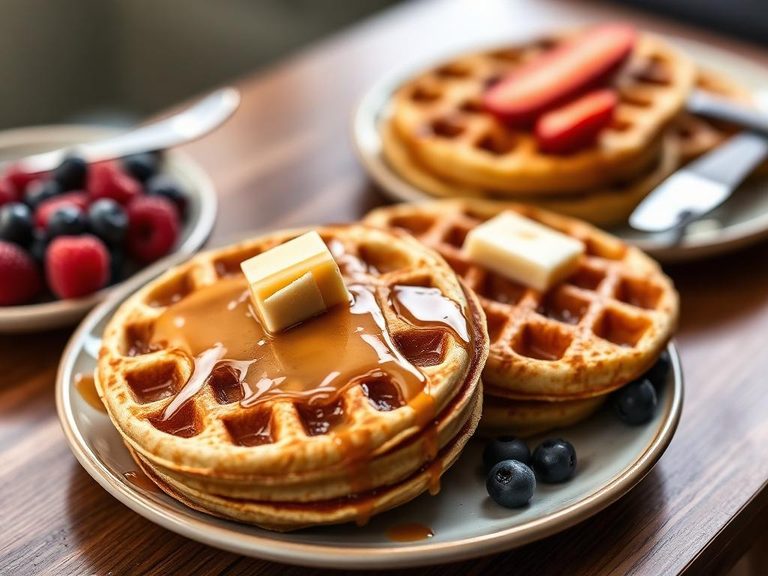
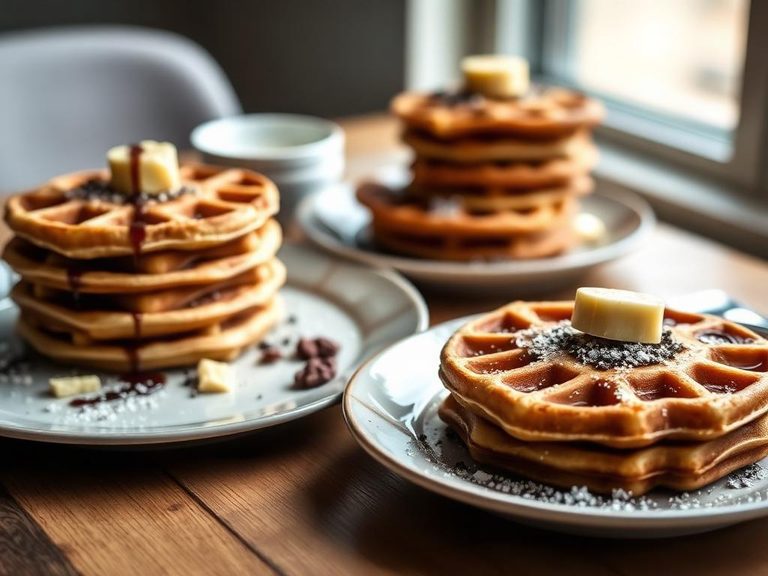
Okara Pancakes or Waffles
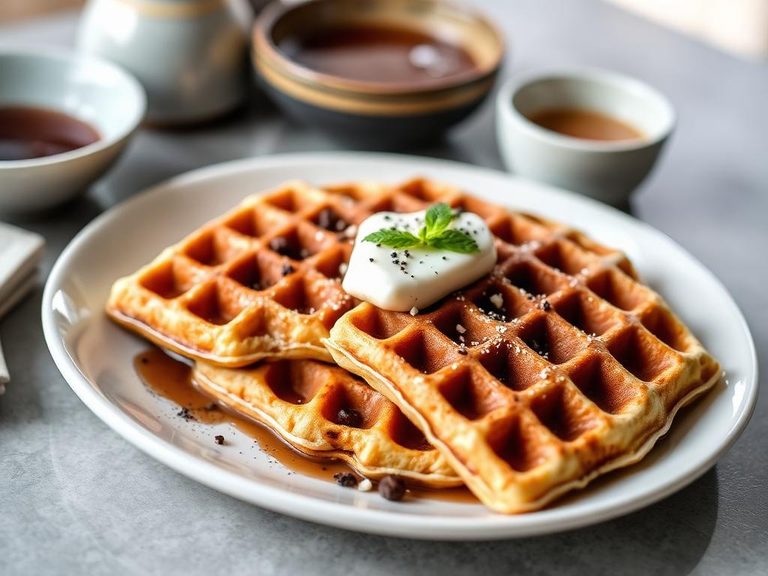
Okara pancakes or waffles are savory or sweet breakfast items made from okara, the fibrous pulp left over from making soy milk or tofu. This dish is a popular way to reduce food waste in Japanese and other East Asian cuisines, often mixed with flour, eggs, and seasonings. They have a unique, slightly dense texture and a mild, nutty flavor.
🍽️ Nutrition at a glance
These pancakes are typically high in dietary fiber and a good source of plant-based protein, while being relatively low in fat and carbohydrates compared to traditional pancakes. A single serving provides significant amounts of manganese, selenium, and phosphorus, with a calorie range of approximately 150-250 kcal.
Nutrition breakdown
| Calories | 180 kcal |
| Protein | 12 g |
| Carbs | 22 g |
| Fat | 5 g |
| Fiber | 6 g |
| Sugar | 2 g |
| Sodium | 300 mg |
| Manganese | 1.2 mg |
| Selenium | 11 mcg |
| Phosphorus | 180 mg |
| Magnesium | 60 mg |
| Folate | 65 mcg |
| Iron | 2.1 mg |
| Calcium | 90 mg |
| Potassium | 280 mg |
Per 2 medium pancakes (approx. 150 g) · estimated, varies by recipe
💡 What's interesting
Okara is a byproduct of soy milk production, making these pancakes a historically thrifty and sustainable dish that transforms waste into nutritious food. Nutritionally, the high fiber content supports digestive health and helps promote a feeling of fullness.