Sushi or Sashimi
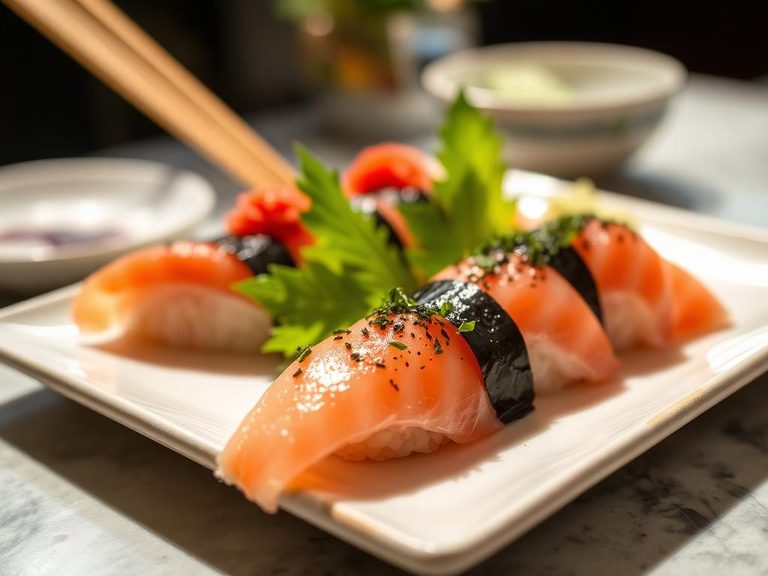
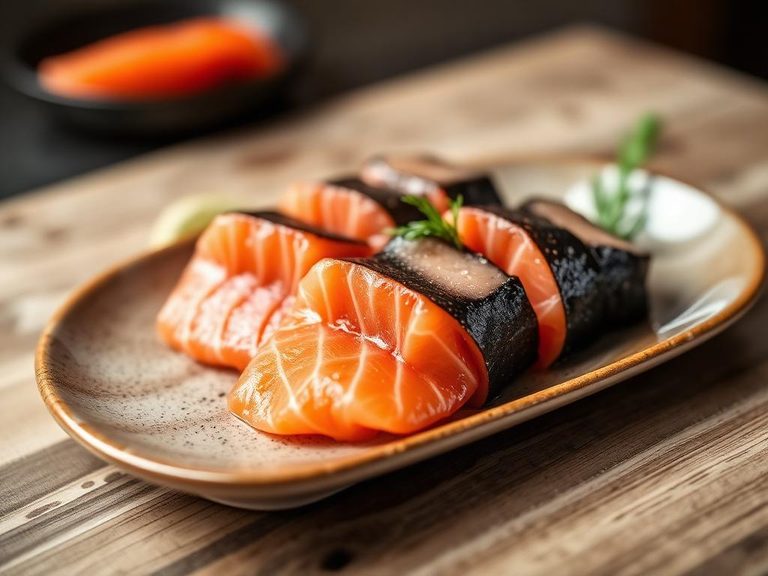
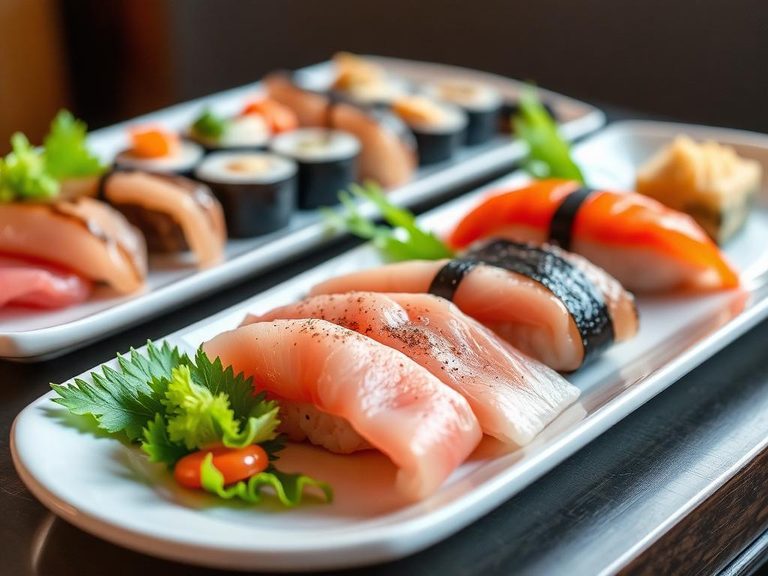
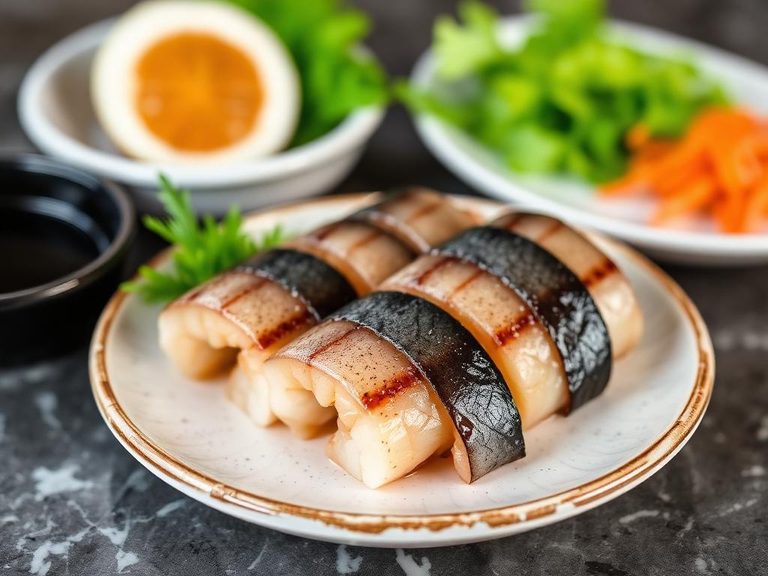
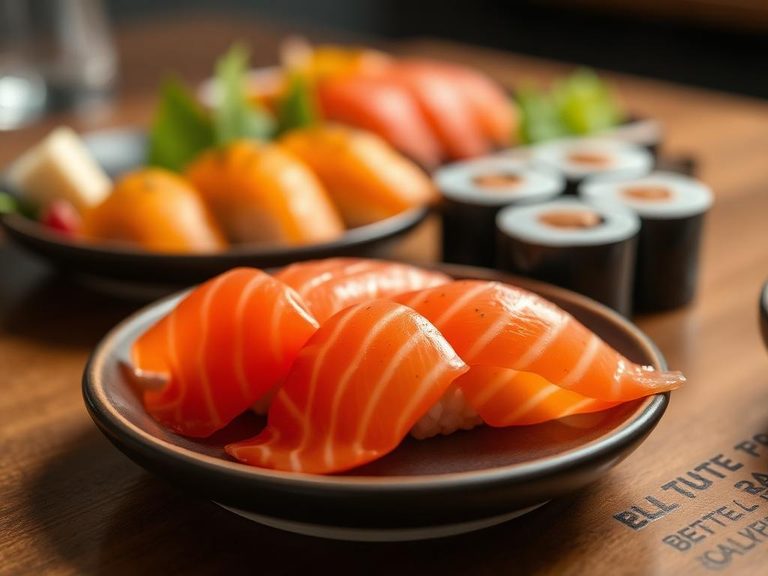
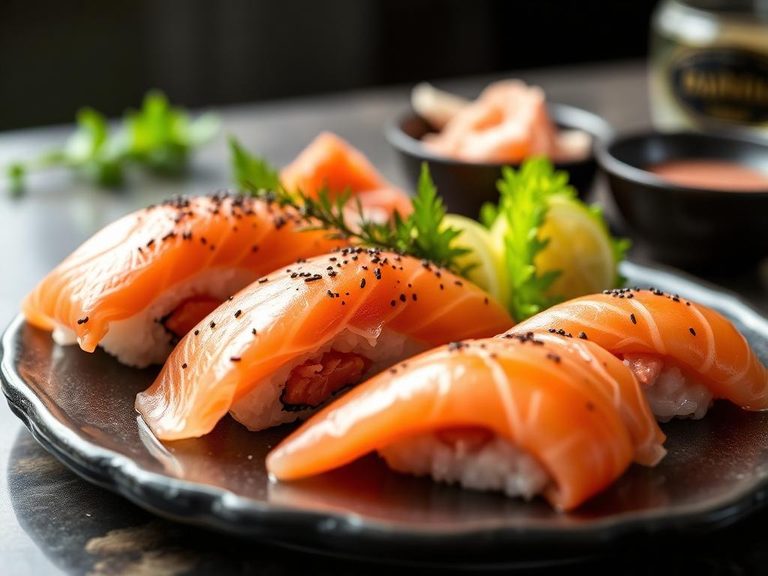
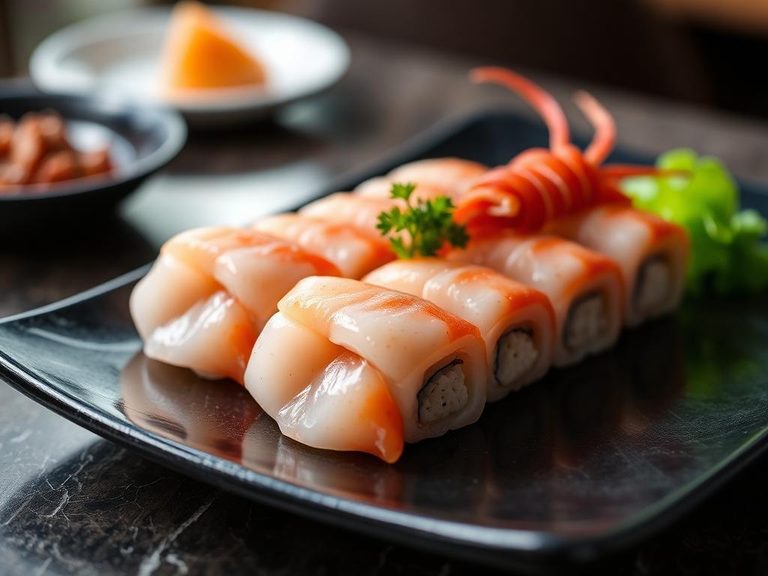
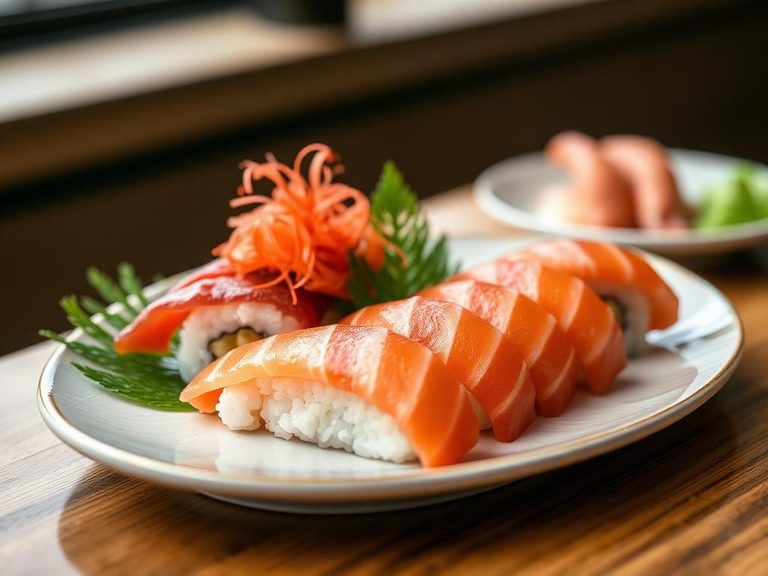
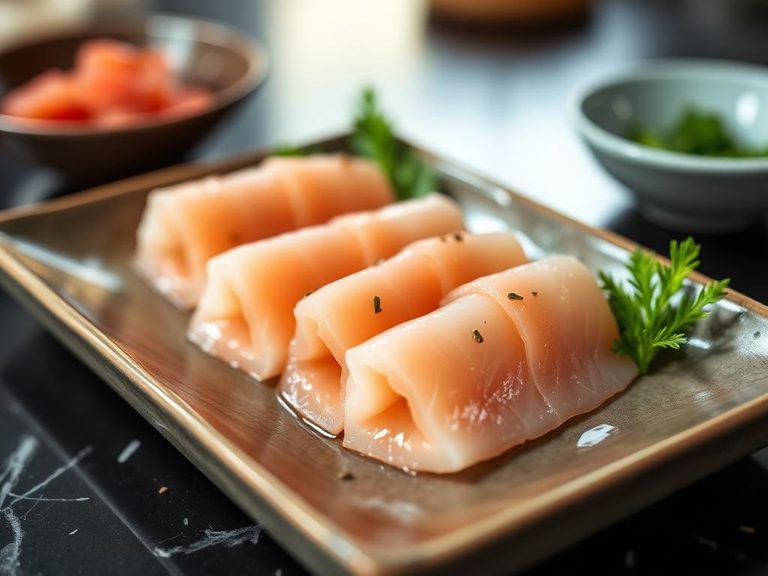
Sushi and sashimi are traditional Japanese dishes centered on fresh, high-quality raw fish. Sushi refers to vinegared rice combined with various toppings or fillings, while sashimi is simply sliced raw fish or seafood served without rice. Both are staples of Japanese cuisine, often enjoyed with soy sauce, wasabi, and pickled ginger.
🍽️ Nutrition at a glance
These dishes are generally high in protein and healthy fats, with sushi also providing carbohydrates from the rice. They are excellent sources of omega-3 fatty acids, vitamin D, and selenium, with a typical serving of sashimi containing roughly 150-200 calories and a sushi roll containing 250-400 calories.
Nutrition breakdown
| Calories | 170 kcal |
| Protein | 25 g |
| Carbs | 0 g |
| Fat | 7 g |
| Fiber | 0 g |
| Sugar | 0 g |
| Sodium | 55 mg |
| Vitamin D | 10 mcg |
| Vitamin B12 | 4.2 mcg |
| Selenium | 40 mcg |
| Niacin (B3) | 8 mg |
| Phosphorus | 250 mg |
| Omega-3 (EPA+DHA) | 1.5 g |
Per 1 serving of sashimi (approximately 113 g, about 4 slices) · estimated, varies by recipe
💡 What's interesting
The cultural art of sushi-making is a highly respected craft in Japan, with apprenticeships lasting years. Nutritionally, the omega-3s in the fish are celebrated for supporting heart and brain health.