Mackerel Sushi or Sashimi
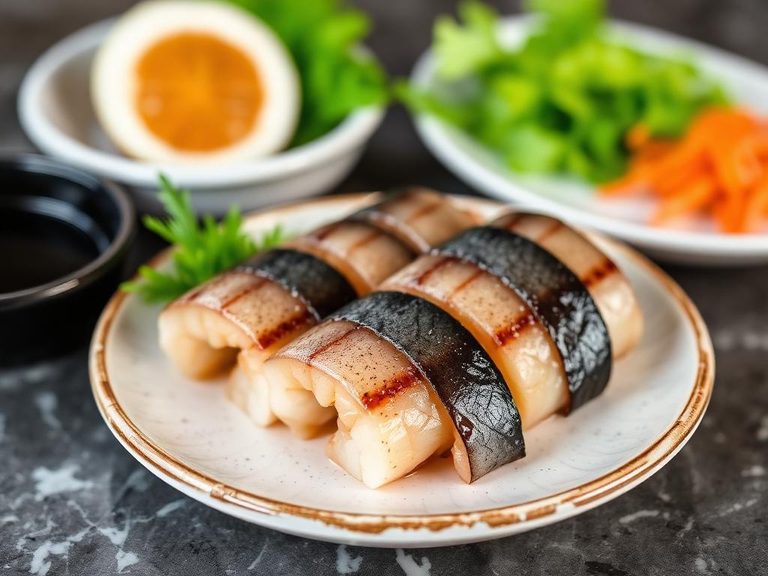
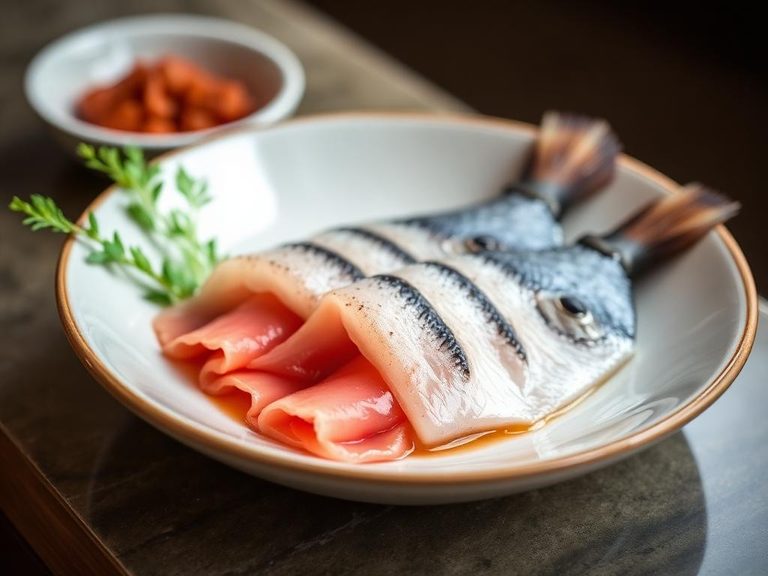
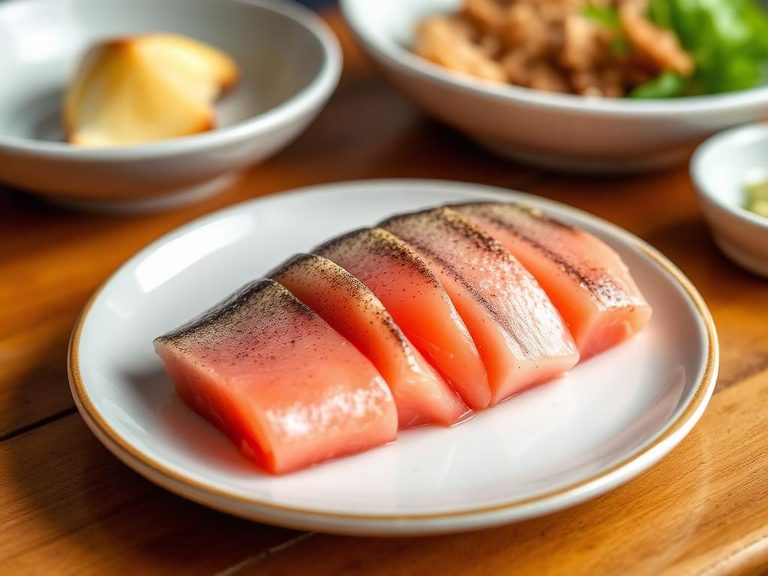
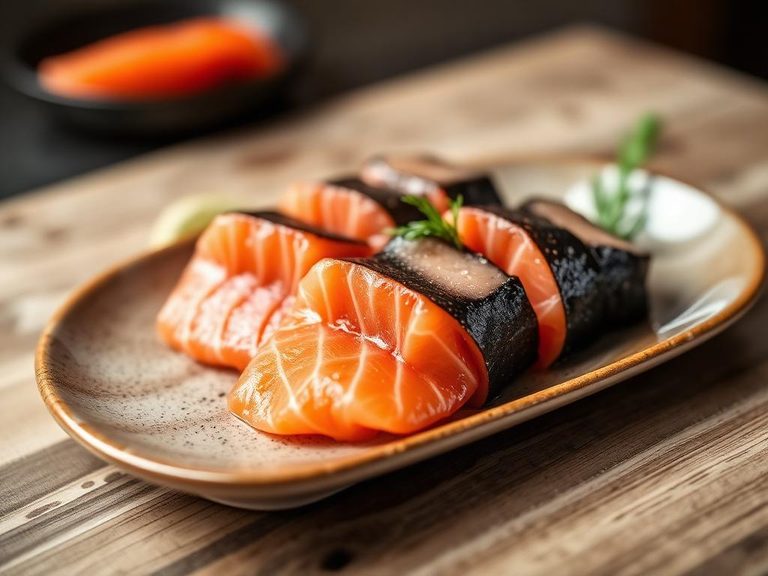
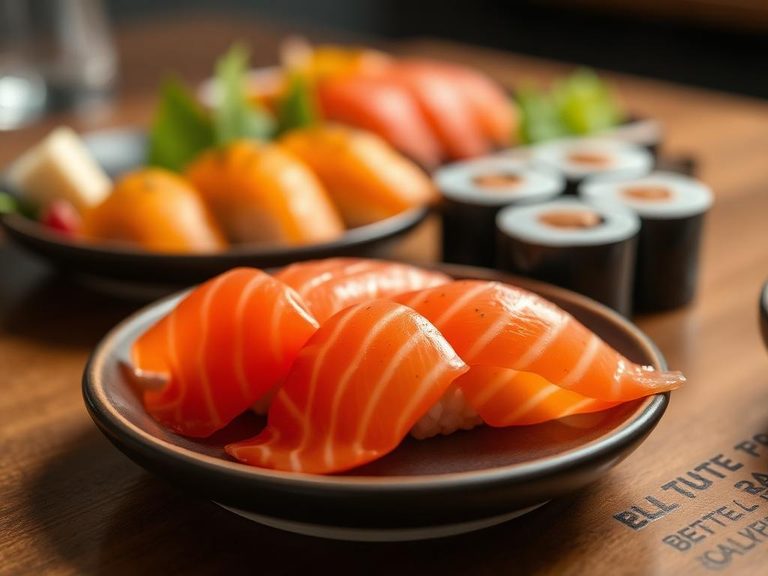
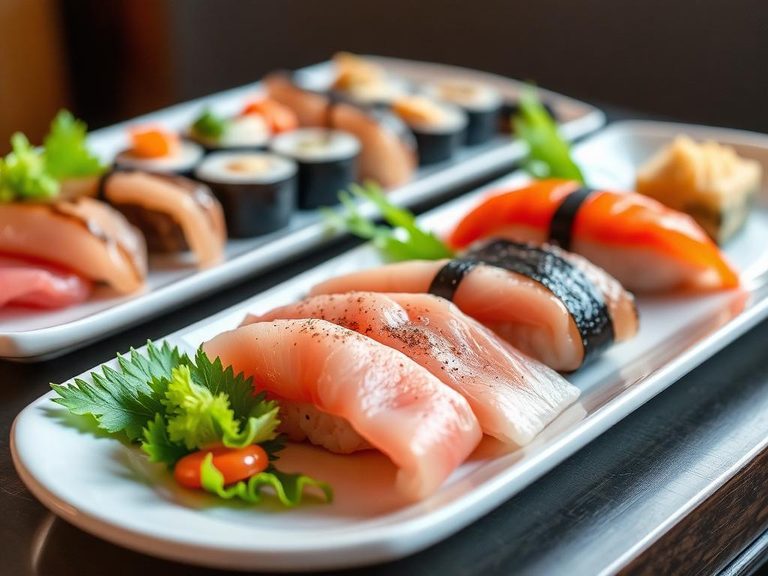
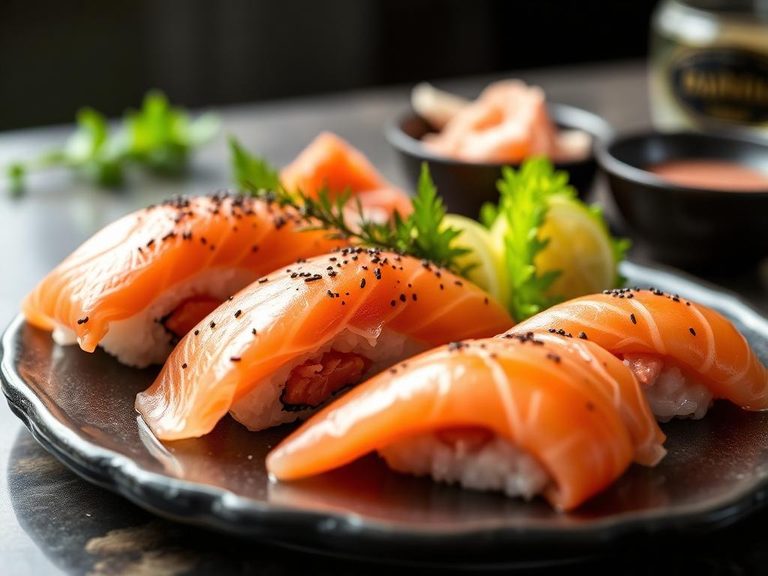
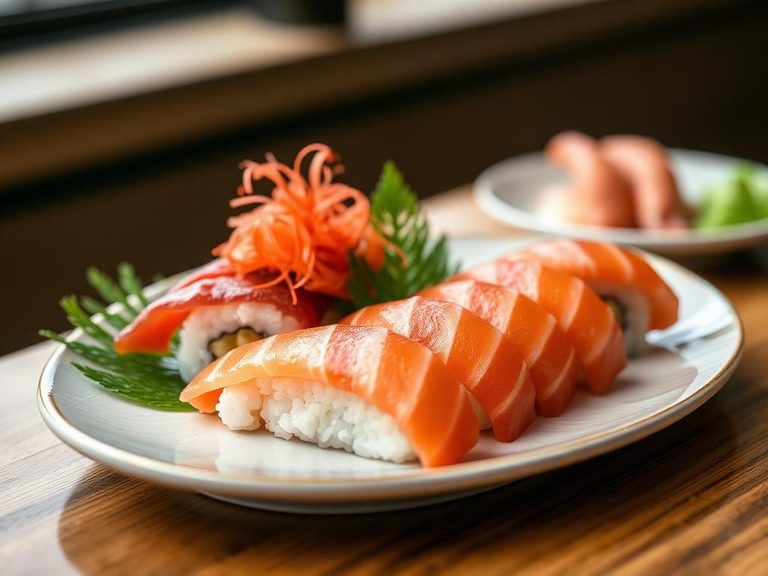
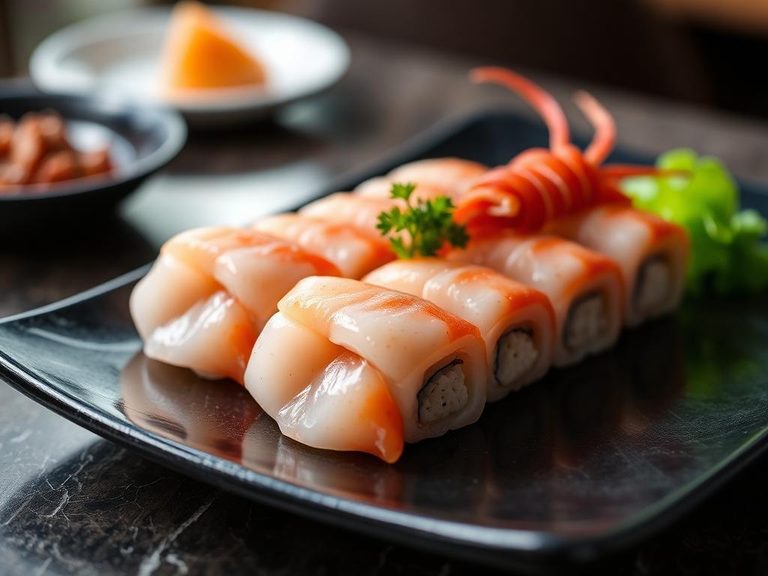
Mackerel sushi or sashimi, known as 'saba' in Japan, features fresh, fatty mackerel served either atop vinegared rice (nigiri) or as pristine slices (sashimi). The fish is often cured in salt and vinegar, a traditional technique that enhances its flavor and preserves its texture, making it a staple in sushi restaurants worldwide.
🍽️ Nutrition at a glance
This dish is an excellent source of high-quality protein and heart-healthy omega-3 fatty acids, with virtually no carbohydrates. A typical serving of two nigiri pieces provides roughly 150-200 calories, along with significant amounts of vitamin B12 and selenium.
Nutrition breakdown
| Calories | 220 kcal |
| Protein | 22 g |
| Carbs | 8 g |
| Fat | 10 g |
| Fiber | 0.5 g |
| Sugar | 1 g |
| Sodium | 480 mg |
| Vitamin D | 4.2 mcg |
| Vitamin B12 | 7.1 mcg |
| Selenium | 44 mcg |
| Phosphorus | 210 mg |
| Niacin (B3) | 6.5 mg |
| Omega-3 (EPA+DHA) | 1.1 g |
| Sodium | 480 mg |
| Iron | 1.3 mg |
Per 4 pieces (120 g) · estimated, varies by recipe
💡 What's interesting
The salt-vinegar curing process for mackerel, called 'shime-saba', is a centuries-old Japanese preservation method that transforms the oily fish into a delicacy with a unique tangy flavor. Nutritionally, mackerel is one of the richest dietary sources of omega-3s, which are linked to numerous health benefits.