

Salt, table
Whole food · Spices and Herbs
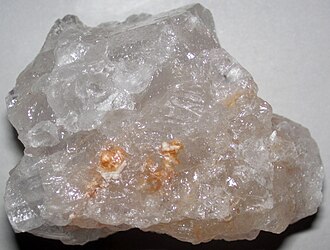
Photo: Wikipedia
Table salt is the crystalline mineral sodium chloride, harvested from seawater or underground deposits. Its sharp, clean, and intensely salty taste is the foundational flavor enhancer in global cuisine, with no calories, protein, or carbohydrates.
💚 Why it's loved
People love salt for its unparalleled ability to make food taste more like itself—brightening sweetness, rounding out bitterness, and adding a savory depth. Its universal presence makes it a cultural cornerstone, from finishing a steak to rimming a margarita glass.
⚠️ Watch-outs & how to enjoy it better
Excessive intake is linked to high blood pressure and cardiovascular strain, particularly for those with sodium sensitivity. To counteract this, use salt as a finishing touch rather than during cooking, pair it with potassium-rich foods like bananas or spinach, and measure with a teaspoon instead of shaking freely.
Key benefits
- Essential for nerve function and muscle contraction
- Helps maintain fluid balance in the body
- Iodized versions prevent iodine deficiency disorders
- Enhances the natural flavors of other ingredients
- Used in food preservation for millennia
🍽️ Popular dishes




🌍 Where it's eaten
💡 Did you know?
The word 'salary' comes from the Latin 'salarium,' which may have been money given to Roman soldiers to buy salt, highlighting its ancient value as a form of currency.
Full nutrition (USDA data · scales with serving)
| Water | 0.20 g |
| Energy | 0.00 kcal |
| Energy | 0.00 kj |
| Protein | 0.00 g |
| Total lipid (fat) | 0.00 g |
| Ash | 99.8 g |
| Carbohydrate, by difference | 0.00 g |
| Fiber, total dietary | 0.00 g |
| Total Sugars | 0.00 g |
| Calcium, Ca | 24.0 mg |
| Iron, Fe | 0.33 mg |
| Magnesium, Mg | 1.0 mg |
| Phosphorus, P | 0.00 mg |
| Potassium, K | 8.0 mg |
| Sodium, Na | 38758 mg |
| Zinc, Zn | 0.10 mg |
| Copper, Cu | 0.03 mg |
| Manganese, Mn | 0.10 mg |
| Selenium, Se | 0.10 ug |
| Fluoride, F | 2.0 ug |
| Vitamin C, total ascorbic acid | 0.00 mg |
| Thiamin | 0.00 mg |
| Riboflavin | 0.00 mg |
| Niacin | 0.00 mg |
| Pantothenic acid | 0.00 mg |
| Vitamin B-6 | 0.00 mg |
| Folate, total | 0.00 ug |
| Folic acid | 0.00 ug |
| Folate, food | 0.00 ug |
| Folate, DFE | 0.00 ug |
| Choline, total | 0.00 mg |
| Vitamin B-12 | 0.00 ug |
| Vitamin B-12, added | 0.00 ug |
| Vitamin A, RAE | 0.00 ug |
| Retinol | 0.00 ug |
| Carotene, beta | 0.00 ug |
| Carotene, alpha | 0.00 ug |
| Cryptoxanthin, beta | 0.00 ug |
| Vitamin A, IU | 0.00 iu |
| Lycopene | 0.00 ug |
| Lutein + zeaxanthin | 0.00 ug |
| Vitamin E (alpha-tocopherol) | 0.00 mg |
| Vitamin E, added | 0.00 mg |
| Vitamin D (D2 + D3), International Units | 0.00 iu |
| Vitamin D (D2 + D3) | 0.00 ug |
| Vitamin K (phylloquinone) | 0.00 ug |
| Alcohol, ethyl | 0.00 g |
| Caffeine | 0.00 mg |
| Theobromine | 0.00 mg |
Fat & fatty acid profile (per 100g)
| Fatty acids, total saturated | 0.00 g |
| SFA 4:0 | 0.00 g |
| SFA 6:0 | 0.00 g |
| SFA 8:0 | 0.00 g |
| SFA 10:0 | 0.00 g |
| SFA 12:0 | 0.00 g |
| SFA 14:0 | 0.00 g |
| SFA 16:0 | 0.00 g |
| SFA 18:0 | 0.00 g |
| Fatty acids, total monounsaturated | 0.00 g |
| MUFA 16:1 | 0.00 g |
| MUFA 18:1 | 0.00 g |
| MUFA 20:1 | 0.00 g |
| MUFA 22:1 | 0.00 g |
| Fatty acids, total polyunsaturated | 0.00 g |
| PUFA 18:2 | 0.00 g |
| PUFA 18:3 | 0.00 g |
| PUFA 18:4 | 0.00 g |
| PUFA 20:4 | 0.00 g |
| PUFA 20:5 n-3 (EPA) | 0.00 g |
| PUFA 22:5 n-3 (DPA) | 0.00 g |
| PUFA 22:6 n-3 (DHA) | 0.00 g |
| Fatty acids, total trans | 0.00 g |
| Cholesterol | 0.00 mg |
| Phytosterols | 0.00 mg |
Amino acid profile (per 100g)
| Tryptophan | 0.00 g |
| Threonine | 0.00 g |
| Isoleucine | 0.00 g |
| Leucine | 0.00 g |
| Lysine | 0.00 g |
| Methionine | 0.00 g |
| Cystine | 0.00 g |
| Phenylalanine | 0.00 g |
| Tyrosine | 0.00 g |
| Valine | 0.00 g |
| Arginine | 0.00 g |
| Histidine | 0.00 g |
| Alanine | 0.00 g |
| Aspartic acid | 0.00 g |
| Glutamic acid | 0.00 g |
| Glycine | 0.00 g |
| Proline | 0.00 g |
| Serine | 0.00 g |
FAQ
What is the difference between table salt and sea salt?
Table salt is typically mined, refined to remove minerals, and often iodized. Sea salt is evaporated from seawater and may retain trace minerals and a coarser texture, but nutritionally, both are primarily sodium chloride.
Why is iodine added to table salt?
Iodine is an essential nutrient added to prevent iodine deficiency, which can lead to thyroid issues like goiter. It's a public health measure that has virtually eliminated such disorders in many countries.
How much salt per day is recommended?
Most health guidelines recommend limiting sodium intake to under 2,300 milligrams per day, which is about one teaspoon of table salt. This is especially important for managing blood pressure.
Dietary load (calculated from USDA values)
Potential renal acid load. Positive = acid-forming, negative = alkaline-forming.
Sodium-to-potassium ratio: 4844.75 (lower is better — aim for ≤ 1)
Sodium:potassium per WHO potassium guidance. Computed from USDA nutrients.