

Spices, cinnamon, ground
Whole food · Spices and Herbs
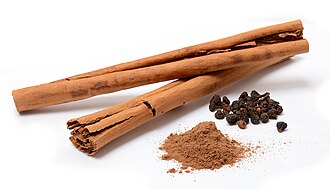
Photo: Wikipedia
Ground cinnamon is the finely milled powder from the dried inner bark of Cinnamomum trees, offering a warm, sweet, and woody aroma with a subtly spicy, slightly astringent taste. Its nutrition is dominated by an exceptionally high fiber content (53.1g per 100g), which contributes to its calorie count despite being used in tiny amounts. It is a potent source of antioxidants, particularly polyphenols like cinnamaldehyde.
Calorie split: 5% protein · 92% carbs · 3% fat
↓ Full nutrition💚 Why it's loved
People love cinnamon for its ability to instantly transform a dish with its complex, warming sweetness, bridging the gap between savory and sweet. Its cultural resonance in holiday baking, spiced drinks, and global cuisines makes it a beloved symbol of comfort and celebration.
⚠️ Watch-outs & how to enjoy it better
While generally safe in culinary amounts, high doses of cassia cinnamon (the common variety) contain coumarin, which can be harmful to the liver in sensitive individuals. To minimize risk, opt for Ceylon cinnamon for regular high-dose use, or simply enjoy standard cinnamon in typical recipe quantities. Its strong flavor can also overpower delicate dishes if used excessively.
Key benefits
- Rich in antioxidant polyphenols like cinnamaldehyde.
- May support healthy blood sugar levels when consumed regularly.
- Contains anti-inflammatory properties.
- Provides a significant amount of dietary fiber per gram.
- Used traditionally to aid digestion.
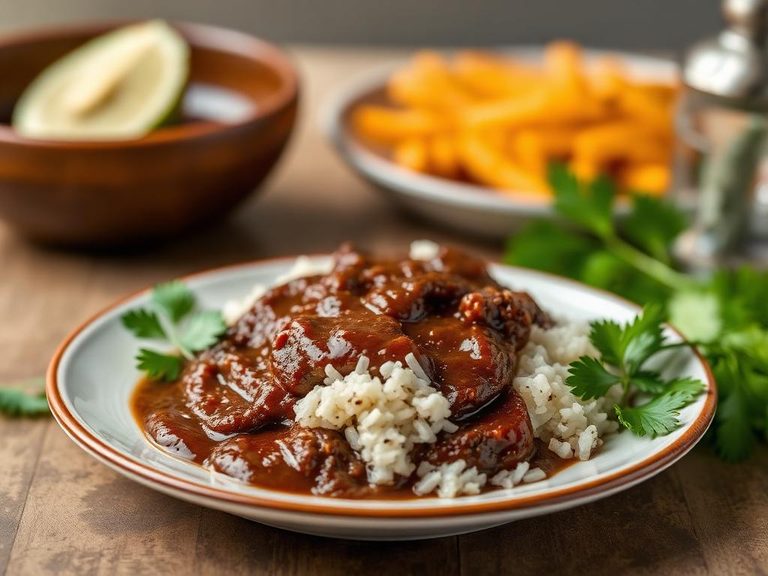
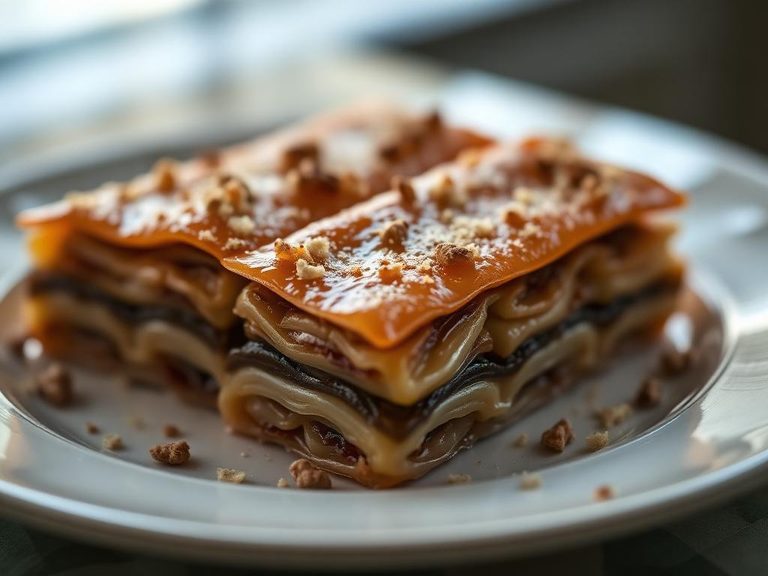
🍽️ Popular dishes




🌍 Where it's eaten
💡 Did you know?
The 'sticks' of cinnamon are actually the dried inner bark of the tree, which naturally curls into a quill as it dries.
Full nutrition (USDA data · scales with serving)
| Water | 10.6 g |
| Energy | 247 kcal |
| Energy | 1035 kj |
| Protein | 4.0 g |
| Total lipid (fat) | 1.2 g |
| Ash | 3.6 g |
| Carbohydrate, by difference | 80.6 g |
| Fiber, total dietary | 53.1 g |
| Total Sugars | 2.2 g |
| Sucrose | 0.02 g |
| Glucose | 1.0 g |
| Fructose | 1.1 g |
| Lactose | 0.00 g |
| Maltose | 0.00 g |
| Galactose | 0.00 g |
| Calcium, Ca | 1002 mg |
| Iron, Fe | 8.3 mg |
| Magnesium, Mg | 60.0 mg |
| Phosphorus, P | 64.0 mg |
| Potassium, K | 431 mg |
| Sodium, Na | 10.0 mg |
| Zinc, Zn | 1.8 mg |
| Copper, Cu | 0.34 mg |
| Manganese, Mn | 17.5 mg |
| Selenium, Se | 3.1 ug |
| Vitamin C, total ascorbic acid | 3.8 mg |
| Thiamin | 0.02 mg |
| Riboflavin | 0.04 mg |
| Niacin | 1.3 mg |
| Pantothenic acid | 0.36 mg |
| Vitamin B-6 | 0.16 mg |
| Folate, total | 6.0 ug |
| Folic acid | 0.00 ug |
| Folate, food | 6.0 ug |
| Folate, DFE | 6.0 ug |
| Choline, total | 11.0 mg |
| Betaine | 3.9 mg |
| Vitamin B-12 | 0.00 ug |
| Vitamin B-12, added | 0.00 ug |
| Vitamin A, RAE | 15.0 ug |
| Retinol | 0.00 ug |
| Carotene, beta | 112 ug |
| Carotene, alpha | 1.0 ug |
| Cryptoxanthin, beta | 129 ug |
| Vitamin A, IU | 295 iu |
| Lycopene | 15.0 ug |
| Lutein + zeaxanthin | 222 ug |
| Vitamin E (alpha-tocopherol) | 2.3 mg |
| Vitamin E, added | 0.00 mg |
| Tocopherol, beta | 0.00 mg |
| Tocopherol, gamma | 10.4 mg |
| Tocopherol, delta | 0.26 mg |
| Tocotrienol, alpha | 0.00 mg |
| Tocotrienol, beta | 0.00 mg |
| Tocotrienol, gamma | 0.00 mg |
| Tocotrienol, delta | 0.00 mg |
| Vitamin D (D2 + D3), International Units | 0.00 iu |
| Vitamin D (D2 + D3) | 0.00 ug |
| Vitamin K (phylloquinone) | 31.2 ug |
| Vitamin K (Dihydrophylloquinone) | 0.00 ug |
| Alcohol, ethyl | 0.00 g |
| Caffeine | 0.00 mg |
| Theobromine | 0.00 mg |
Fat & fatty acid profile (per 100g)
| Fatty acids, total saturated | 0.34 g |
| SFA 4:0 | 0.00 g |
| SFA 6:0 | 0.00 g |
| SFA 8:0 | 0.00 g |
| SFA 10:0 | 0.00 g |
| SFA 12:0 | 0.01 g |
| SFA 13:0 | 0.00 g |
| SFA 14:0 | 0.01 g |
| SFA 15:0 | 0.00 g |
| SFA 16:0 | 0.10 g |
| SFA 17:0 | 0.14 g |
| SFA 18:0 | 0.08 g |
| SFA 20:0 | 0.00 g |
| SFA 22:0 | 0.00 g |
| SFA 24:0 | 0.00 g |
| Fatty acids, total monounsaturated | 0.25 g |
| MUFA 14:1 | 0.00 g |
| MUFA 15:1 | 0.00 g |
| MUFA 16:1 | 0.00 g |
| MUFA 17:1 | 0.00 g |
| MUFA 18:1 | 0.25 g |
| MUFA 18:1 c | 0.25 g |
| MUFA 20:1 | 0.00 g |
| MUFA 22:1 | 0.00 g |
| MUFA 24:1 c | 0.00 g |
| Fatty acids, total polyunsaturated | 0.07 g |
| PUFA 18:2 | 0.04 g |
| PUFA 18:3 | 0.01 g |
| PUFA 18:3 n-3 c,c,c (ALA) | 0.01 g |
| PUFA 18:3 n-6 c,c,c | 0.00 g |
| PUFA 18:4 | 0.00 g |
| PUFA 20:2 n-6 c,c | 0.00 g |
| PUFA 20:3 | 0.00 g |
| PUFA 20:4 | 0.00 g |
| PUFA 20:5 n-3 (EPA) | 0.00 g |
| PUFA 22:5 n-3 (DPA) | 0.00 g |
| PUFA 22:6 n-3 (DHA) | 0.00 g |
| Fatty acids, total trans | 0.00 g |
| Fatty acids, total trans-monoenoic | 0.00 g |
| TFA 18:1 t | 0.00 g |
| Cholesterol | 0.00 mg |
| Phytosterols | 26.0 mg |
Amino acid profile (per 100g)
| Tryptophan | 0.05 g |
| Threonine | 0.14 g |
| Isoleucine | 0.15 g |
| Leucine | 0.25 g |
| Lysine | 0.24 g |
| Methionine | 0.08 g |
| Cystine | 0.06 g |
| Phenylalanine | 0.15 g |
| Tyrosine | 0.14 g |
| Valine | 0.22 g |
| Arginine | 0.17 g |
| Histidine | 0.12 g |
| Alanine | 0.17 g |
| Aspartic acid | 0.44 g |
| Glutamic acid | 0.37 g |
| Glycine | 0.20 g |
| Proline | 0.42 g |
| Serine | 0.20 g |
| Hydroxyproline | 0.00 g |
FAQ
What's the difference between Ceylon and Cassia cinnamon?
Ceylon ('true') cinnamon has a lighter, more complex flavor and contains negligible coumarin. Cassia is stronger, spicier, more common, and has higher coumarin levels.
Can I eat cinnamon straight from the jar?
While safe in small pinches, eating large amounts dry is difficult and can irritate the throat. It's best incorporated into foods or liquids.
Why does cinnamon sometimes taste 'hot' or slightly bitter?
This is from cinnamaldehyde and other volatile oils. Over-toasting ground cinnamon can amplify this bitterness.
Nutrient density (calculated · NRF9.3)
Nutrient Rich Foods index: beneficial nutrients (protein, fiber, vitamins, minerals) minus saturated fat, added sugar & sodium, per 100 kcal.
NRF9.3 index — Fulgoni, Keast & Drewnowski, 2009. Computed from USDA nutrients.
Weight-loss friendliness (composite index)
Energy density 2.47 kcal/g · 6% calories from protein · 53.1 g fiber · 2.2 g sugar per 100 g.
Composite of energy density (Rolls et al., 1999), protein & fiber satiety, minus sugar. A calculated heuristic — ranks satiety-per-calorie, not a clinical measure.
Dietary load (calculated from USDA values)
Potential renal acid load. Positive = acid-forming, negative = alkaline-forming.
Sodium-to-potassium ratio: 0.02 (lower is better — aim for ≤ 1)
Sodium:potassium per WHO potassium guidance. Computed from USDA nutrients.