

Baklava
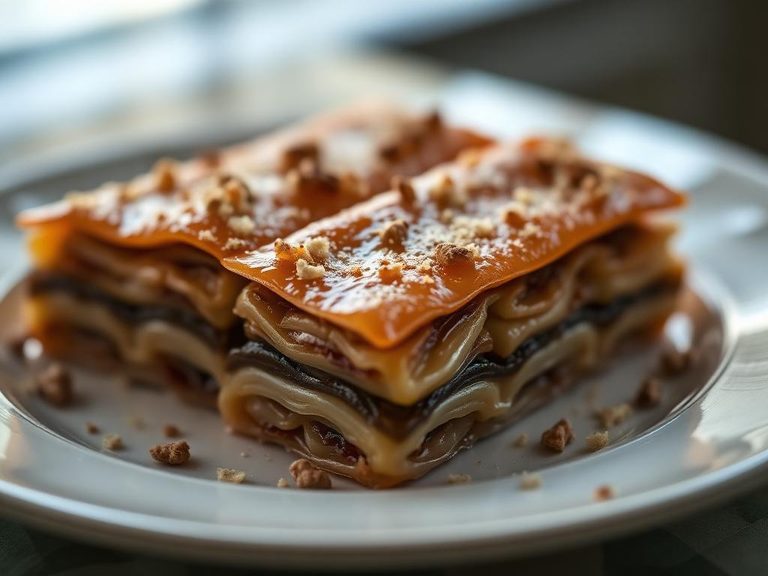
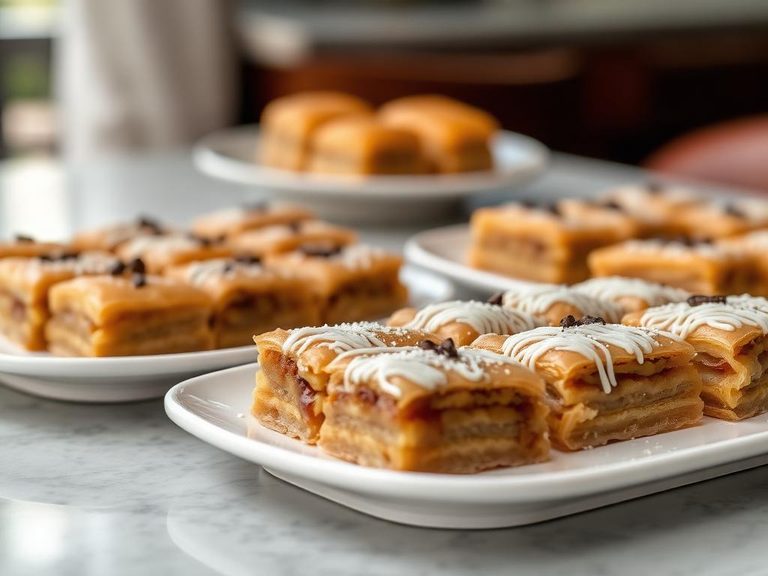
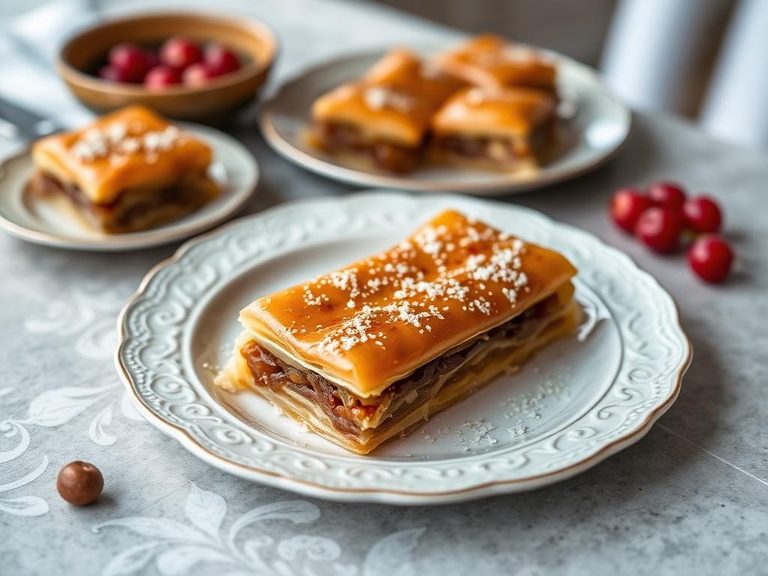
Baklava is a rich, sweet pastry made of layers of thin filo dough, filled with chopped nuts (like pistachios, walnuts, or almonds), and sweetened with syrup or honey. It's a beloved dessert with roots in the Ottoman Empire, and its popularity spans from the Middle East to the Balkans and Mediterranean.
🍳 View the full Baklava recipe →
🍽️ Nutrition at a glance
Baklava is high in carbohydrates and fat, primarily from the nuts, butter, and sweet syrup. A typical small piece provides a quick energy boost and some minerals like magnesium from the nuts, but it's calorie-dense, with around 300-400 calories per serving.
Nutrition breakdown
| Calories | 230 kcal |
| Protein | 3.5 g |
| Carbs | 24 g |
| Fat | 14 g |
| Fiber | 1.5 g |
| Sugar | 16 g |
| Sodium | 90 mg |
| Iron | 1.2 mg |
| Magnesium | 25 mg |
| Phosphorus | 50 mg |
| Zinc | 0.6 mg |
| Copper | 0.15 mg |
| Manganese | 0.4 mg |
| Vitamin B6 | 0.05 mg |
| Folate | 12 µg |
Per 1 piece (approx. 50 g) · estimated, varies by recipe
💡 What's interesting
Culturally, baklava is often associated with celebrations and hospitality, like Eid or weddings. Nutritionally, while it's a treat, the nuts offer healthy fats and protein, making it more nutrient-dense than many other sweets.
🍽️ Related dishes

AI estimate may be inaccurate · Terms