

Baklava Cheesecake
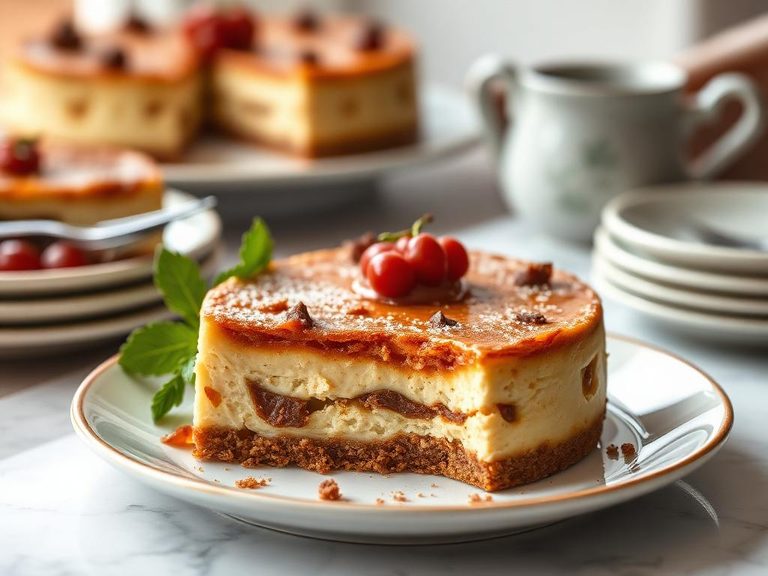
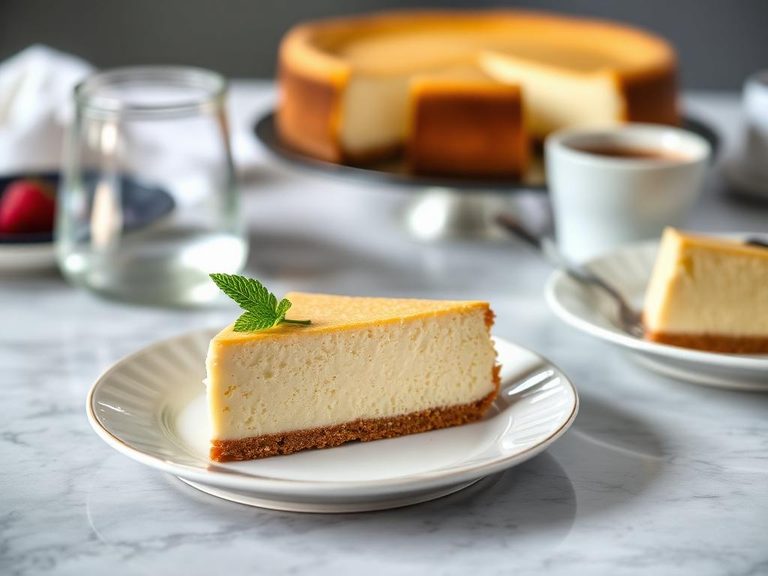
Baklava Cheesecake is a decadent fusion dessert that combines the creamy, dense texture of a New York-style cheesecake with the sweet, nutty layers of Middle Eastern baklava. It typically features a graham cracker or phyllo dough crust, a rich cream cheese filling, and is generously topped with chopped pistachios, walnuts, or almonds, all drenched in a honey or sugar syrup. This modern creation draws inspiration from traditional Greek, Turkish, and Levantine pastry traditions.
🍳 View the full Baklava Cheesecake recipe →
🍽️ Nutrition at a glance
This is a very high-calorie, high-fat, and high-sugar dessert, with a single slice easily containing 500-800 calories. It provides a significant amount of fat and carbohydrates, along with some protein from the nuts and dairy, but is best considered an occasional indulgence rather than a nutrient-dense food.
Nutrition breakdown
| Calories | 420 kcal |
| Protein | 6 g |
| Carbs | 42 g |
| Fat | 26 g |
| Fiber | 1.5 g |
| Sugar | 28 g |
| Sodium | 250 mg |
| Calcium | 80 mg |
| Iron | 1.8 mg |
| Potassium | 120 mg |
| Vitamin A | 150 µg RAE |
| Vitamin D | 0.2 µg |
| Vitamin B12 | 0.3 µg |
| Phosphorus | 90 mg |
| Selenium | 4 µg |
Per 1 slice (120 g) · estimated, varies by recipe
💡 What's interesting
Culturally, it's a fascinating example of culinary globalization, merging a classic American cheesecake with an ancient Mediterranean and Middle Eastern pastry. Nutritionally, while the nuts offer some healthy fats and minerals, the overall profile is dominated by sugar and saturated fat from the syrup and cream cheese.
🍽️ Related dishes

AI estimate may be inaccurate · Terms