

Turkish Baklava
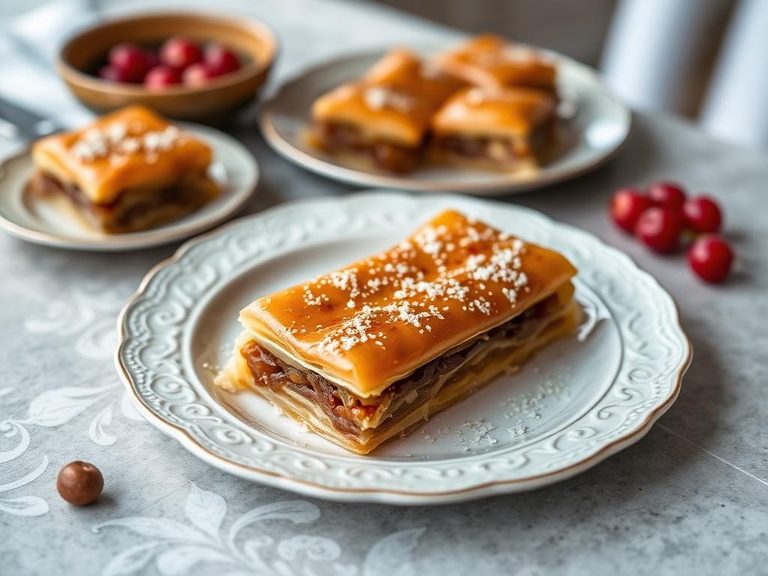
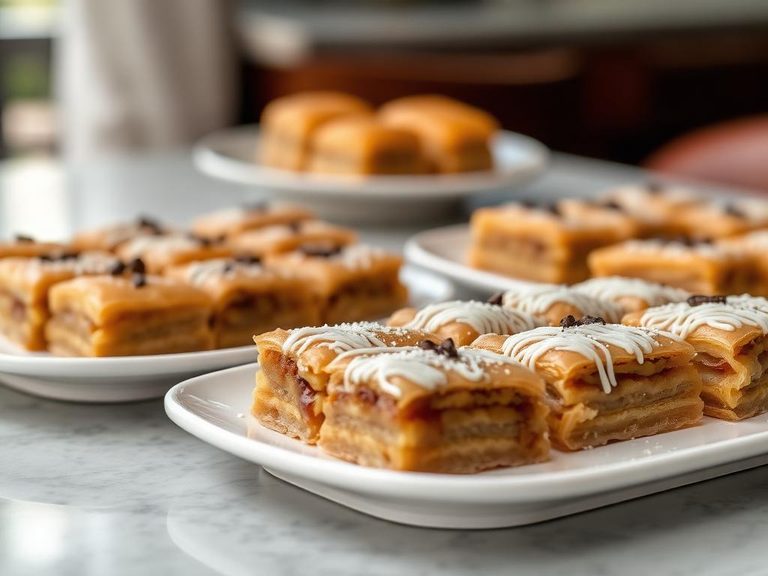
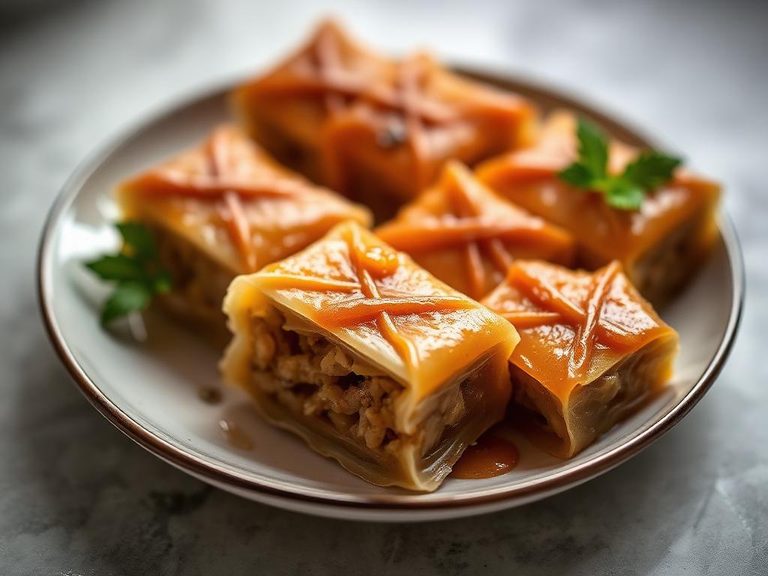
Turkish baklava is a rich, sweet pastry made from layers of thin, flaky filo dough filled with chopped nuts and sweetened with syrup or honey. It's a cornerstone of Turkish cuisine, often flavored with lemon, cinnamon, or rosewater, and is a staple at celebrations and in traditional sweet shops.
🍳 View the full Turkish Baklava recipe →
🍽️ Nutrition at a glance
This dessert is very high in carbohydrates and fat, providing a significant amount of energy. It offers some protein and minerals from the nuts, with a typical serving containing around 300-400 calories.
Nutrition breakdown
| Calories | 330 kcal |
| Protein | 5 g |
| Carbs | 35 g |
| Fat | 20 g |
| Fiber | 2 g |
| Sugar | 22 g |
| Sodium | 110 mg |
| Manganese | 0.4 mg |
| Magnesium | 25 mg |
| Copper | 0.15 mg |
| Phosphorus | 60 mg |
| Iron | 1.2 mg |
| Zinc | 0.7 mg |
| Vitamin E | 1.5 mg |
| Thiamin (B1) | 0.05 mg |
Per 1 piece (approx. 50 g) · estimated, varies by recipe
💡 What's interesting
The unique texture of Turkish baklava comes from the skillful layering of paper-thin filo dough, which is brushed with melted butter or oil before baking to achieve its signature crispness. Culturally, it's a symbol of hospitality and is often served with Turkish coffee or tea.
🍽️ Related dishes


AI estimate may be inaccurate · Terms