

Coffee, brewed
Common food
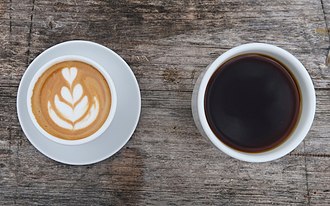
Photo: Wikipedia
Brewed coffee is a dark, aromatic beverage made by steeping roasted coffee beans in hot water, resulting in a complex, slightly bitter liquid with a thin, watery texture. Nutritionally, it is virtually a zero-calorie drink, providing negligible protein, fat, and carbohydrates. Its primary contribution to a diet is not from macronutrients but from bioactive compounds like caffeine and antioxidants.
Calorie split: 73% protein · 0% carbs · 27% fat
↓ Full nutrition💚 Why it's loved
People love coffee for its rich, robust flavor profile that can range from fruity and acidic to deep and chocolatey, and for its ritualistic role in daily life. It serves as a social catalyst and a personal moment of focus, deeply embedded in cultures worldwide.
⚠️ Watch-outs & how to enjoy it better
The caffeine in coffee can cause jitteriness, increased heart rate, or sleep disruption in sensitive individuals or when consumed in excess. To mitigate this, opt for decaffeinated versions, limit intake to the morning, or consume it with a small amount of fat or protein (like a handful of nuts) to slow caffeine absorption. Those with acid reflux may find it aggravates symptoms; choosing a low-acid roast or cold brew can help.
Key benefits
- Rich source of antioxidants, including chlorogenic acid.
- Contains caffeine, which can enhance alertness and cognitive function.
- May support metabolic rate and physical performance.
- Linked in studies to a lower risk of certain neurodegenerative diseases.
- Often consumed as a low-calorie alternative to sugary beverages.
🍽️ Popular dishes





🌍 Where it's eaten
💡 Did you know?
The world's most expensive coffee, Kopi Luwak, is made from beans that have been eaten, digested, and excreted by the Asian palm civet cat.
Full nutrition (USDA data · scales with serving)
| Water | 99.4 g |
| Energy | 1.0 kcal |
| Protein | 0.12 g |
| Total lipid (fat) | 0.02 g |
| Carbohydrate, by difference | 0.00 g |
| Fiber, total dietary | 0.00 g |
| Total Sugars | 0.00 g |
| Calcium, Ca | 2.0 mg |
| Iron, Fe | 0.01 mg |
| Magnesium, Mg | 3.0 mg |
| Phosphorus, P | 3.0 mg |
| Potassium, K | 49.0 mg |
| Sodium, Na | 2.0 mg |
| Zinc, Zn | 0.02 mg |
| Copper, Cu | 0.00 mg |
| Selenium, Se | 0.00 ug |
| Vitamin C, total ascorbic acid | 0.00 mg |
| Thiamin | 0.01 mg |
| Riboflavin | 0.08 mg |
| Niacin | 0.19 mg |
| Vitamin B-6 | 0.00 mg |
| Folate, total | 2.0 ug |
| Folic acid | 0.00 ug |
| Folate, food | 2.0 ug |
| Folate, DFE | 2.0 ug |
| Choline, total | 2.6 mg |
| Vitamin B-12 | 0.00 ug |
| Vitamin B-12, added | 0.00 ug |
| Vitamin A, RAE | 0.00 ug |
| Retinol | 0.00 ug |
| Carotene, beta | 0.00 ug |
| Carotene, alpha | 0.00 ug |
| Cryptoxanthin, beta | 0.00 ug |
| Lycopene | 0.00 ug |
| Lutein + zeaxanthin | 0.00 ug |
| Vitamin E (alpha-tocopherol) | 0.01 mg |
| Vitamin E, added | 0.00 mg |
| Vitamin D (D2 + D3) | 0.00 ug |
| Vitamin K (phylloquinone) | 0.10 ug |
| Alcohol, ethyl | 0.00 g |
| Caffeine | 40.0 mg |
| Theobromine | 0.00 mg |
Fat & fatty acid profile (per 100g)
| Fatty acids, total saturated | 0.00 g |
| SFA 4:0 | 0.00 g |
| SFA 6:0 | 0.00 g |
| SFA 8:0 | 0.00 g |
| SFA 10:0 | 0.00 g |
| SFA 12:0 | 0.00 g |
| SFA 14:0 | 0.00 g |
| SFA 16:0 | 0.00 g |
| SFA 18:0 | 0.00 g |
| Fatty acids, total monounsaturated | 0.01 g |
| MUFA 16:1 | 0.00 g |
| MUFA 18:1 | 0.00 g |
| MUFA 20:1 | 0.00 g |
| MUFA 22:1 | 0.00 g |
| Fatty acids, total polyunsaturated | 0.00 g |
| PUFA 18:2 | 0.00 g |
| PUFA 18:3 | 0.00 g |
| PUFA 18:4 | 0.00 g |
| PUFA 20:4 | 0.00 g |
| PUFA 20:5 n-3 (EPA) | 0.00 g |
| PUFA 22:5 n-3 (DPA) | 0.00 g |
| PUFA 22:6 n-3 (DHA) | 0.00 g |
| Cholesterol | 0.00 mg |
Amino acid profile (per 100g)
Estimated from Cream, fluid, light (coffee cream or table cream) — USDA does not publish this profile for Coffee.
| Tryptophan | 0.07 g |
| Threonine | 0.13 g |
| Isoleucine | 0.15 g |
| Leucine | 0.24 g |
| Lysine | 0.13 g |
| Methionine | 0.07 g |
| Cystine | 0.01 g |
| Phenylalanine | 0.14 g |
| Tyrosine | 0.14 g |
| Valine | 0.18 g |
| Arginine | 0.07 g |
| Histidine | 0.07 g |
| Alanine | 0.09 g |
| Aspartic acid | 0.22 g |
| Glutamic acid | 0.59 g |
| Glycine | 0.07 g |
| Proline | 0.31 g |
| Serine | 0.10 g |
FAQ
Does brewed coffee have any calories?
Black brewed coffee is extremely low in calories, typically containing only 2-5 calories per 8-ounce (240ml) serving, which is rounded to 0 on many nutrition labels.
Is the caffeine content the same in all brewed coffee?
No, it varies widely based on the bean type (Robusta has roughly double the caffeine of Arabica), roast level (lighter roasts have slightly more), and brewing method. A typical 8oz cup has 80-100mg of caffeine.
Can brewed coffee be part of a healthy diet?
Yes, for most people. It is calorie-free, rich in antioxidants, and associated with several health benefits. Moderation is key, and it's best consumed without added sugars or high-calorie creams.
Nutrient density (calculated · NRF9.3)
Nutrient Rich Foods index: beneficial nutrients (protein, fiber, vitamins, minerals) minus saturated fat, added sugar & sodium, per 100 kcal.
NRF9.3 index — Fulgoni, Keast & Drewnowski, 2009. Computed from USDA nutrients.
Weight-loss friendliness (composite index)
Energy density 0.01 kcal/g · 48% calories from protein · 0.0 g fiber · 0.0 g sugar per 100 g.
Composite of energy density (Rolls et al., 1999), protein & fiber satiety, minus sugar. A calculated heuristic — ranks satiety-per-calorie, not a clinical measure.
Dietary load (calculated from USDA values)
Potential renal acid load. Positive = acid-forming, negative = alkaline-forming.
Sodium-to-potassium ratio: 0.04 (lower is better — aim for ≤ 1)
Sodium:potassium per WHO potassium guidance. Computed from USDA nutrients.