

Walnuts, excluding honey roasted
Common food
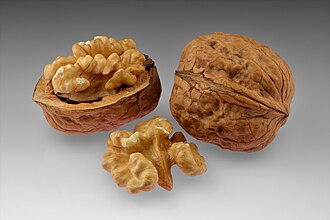
Photo: Wikipedia
Walnuts are the edible kernels of drupes from the Juglans genus, prized for their distinctively wrinkled, brain-like appearance and rich, earthy flavor. Their texture is a satisfying combination of a firm, crisp bite and a creamy, buttery finish when chewed. Nutritionally, they are a powerhouse of healthy fats, particularly omega-3 fatty acids, and provide a substantial amount of protein and fiber.
Calorie split: 8% protein · 6% carbs · 86% fat
↓ Full nutrition💚 Why it's loved
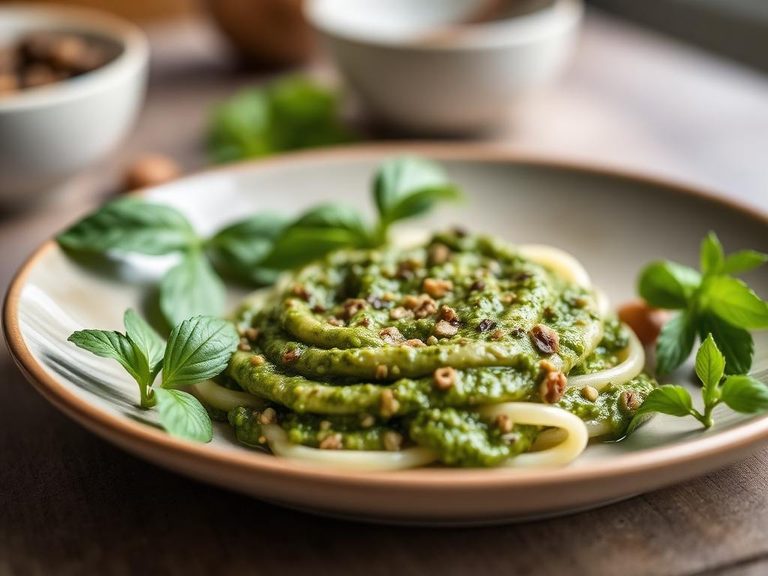
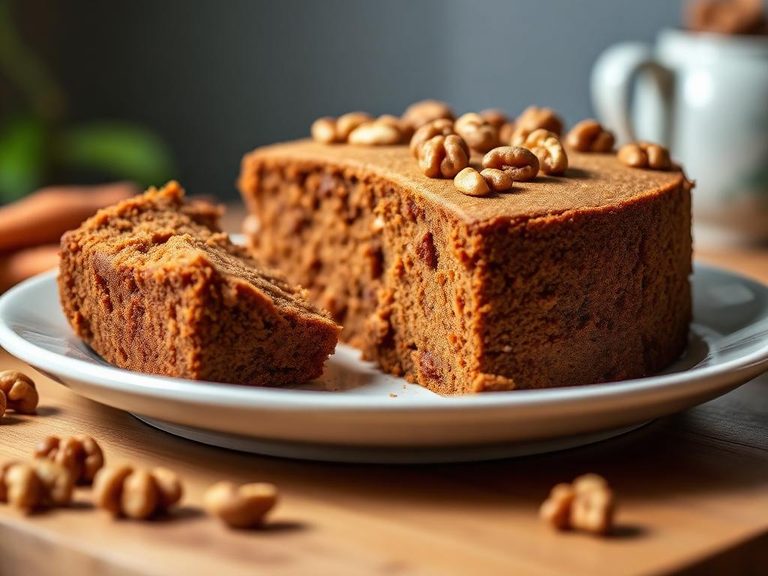
People love walnuts for their deep, slightly tannic flavor and satisfying crunch, which adds complexity to both sweet and savory dishes. Their versatility makes them a staple in everything from salads and baked goods to pesto and charcuterie boards.
⚠️ Watch-outs & how to enjoy it better
Walnuts are a common tree nut allergen, and their high fat content can lead to digestive discomfort or weight gain if consumed in excess. The tannins in the skin can be astringent for some, and they contain moderate levels of oxalates, which may be a concern for individuals prone to certain kidney stones. To counteract this, practice portion control (a small handful is sufficient) and consider pairing them with other foods to balance the meal; for those sensitive to tannins, lightly toasting can mellow the flavor.
Key benefits
- Rich in alpha-linolenic acid (ALA), a plant-based omega-3 fatty acid.
- Excellent source of antioxidants, including polyphenols and vitamin E.
- Provides a good amount of plant-based protein and dietary fiber.
- Contains minerals like magnesium, phosphorus, and copper.
🍽️ Popular dishes
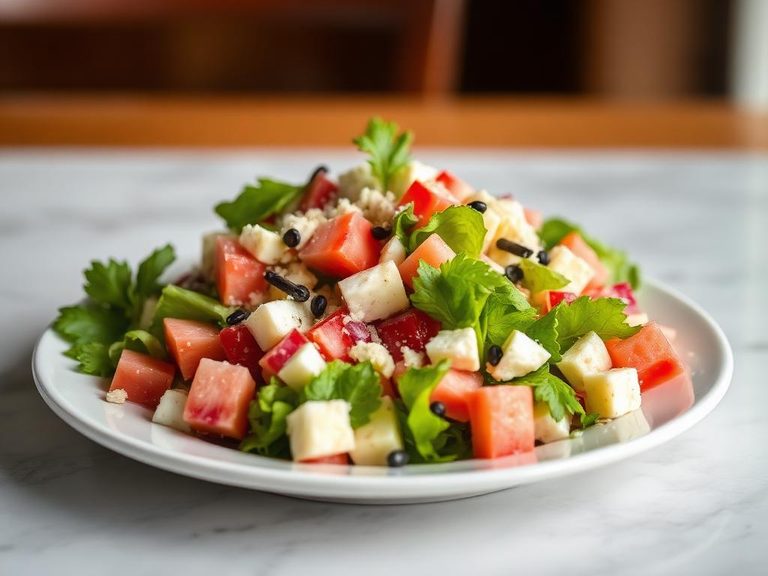
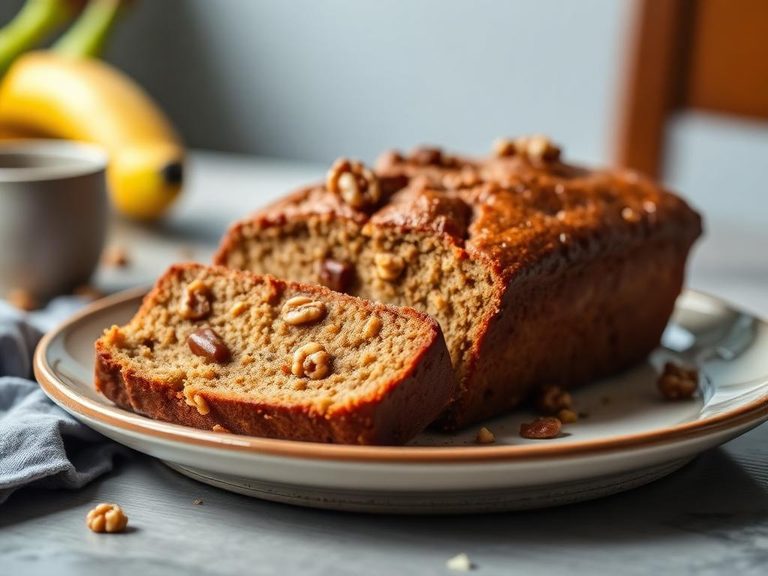

🌍 Where it's eaten
💡 Did you know?
The English walnut (Juglans regia) is not native to England; it was introduced to Europe via Persia and was called 'English' to distinguish it from the native black walnut (Juglans nigra) in North America.
Full nutrition (USDA data · scales with serving)
| Water | 3.1 g |
| Energy | 730 kcal |
| Protein | 14.6 g |
| Total lipid (fat) | 69.7 g |
| Carbohydrate, by difference | 10.9 g |
| Fiber, total dietary | 5.2 g |
| Total Sugars | 2.6 g |
| Calcium, Ca | 88.0 mg |
| Iron, Fe | 2.2 mg |
| Magnesium, Mg | 142 mg |
| Phosphorus, P | 365 mg |
| Potassium, K | 424 mg |
| Sodium, Na | 0.00 mg |
| Zinc, Zn | 2.8 mg |
| Copper, Cu | 1.2 mg |
| Selenium, Se | 4.9 ug |
| Vitamin C, total ascorbic acid | 1.3 mg |
| Thiamin | 0.23 mg |
| Riboflavin | 0.15 mg |
| Niacin | 1.2 mg |
| Vitamin B-6 | 0.66 mg |
| Folate, total | 98.0 ug |
| Folic acid | 0.00 ug |
| Folate, food | 98.0 ug |
| Folate, DFE | 98.0 ug |
| Choline, total | 39.2 mg |
| Vitamin B-12 | 0.00 ug |
| Vitamin B-12, added | 0.00 ug |
| Vitamin A, RAE | 1.0 ug |
| Retinol | 0.00 ug |
| Carotene, beta | 12.0 ug |
| Carotene, alpha | 0.00 ug |
| Cryptoxanthin, beta | 0.00 ug |
| Lycopene | 0.00 ug |
| Lutein + zeaxanthin | 9.0 ug |
| Vitamin E (alpha-tocopherol) | 0.70 mg |
| Vitamin E, added | 0.00 mg |
| Vitamin D (D2 + D3) | 0.00 ug |
| Vitamin K (phylloquinone) | 1.7 ug |
| Alcohol, ethyl | 0.00 g |
| Caffeine | 0.00 mg |
| Theobromine | 0.00 mg |
Fat & fatty acid profile (per 100g)
| Fatty acids, total saturated | 6.0 g |
| SFA 4:0 | 0.00 g |
| SFA 6:0 | 0.00 g |
| SFA 8:0 | 0.00 g |
| SFA 10:0 | 0.00 g |
| SFA 12:0 | 0.00 g |
| SFA 14:0 | 0.00 g |
| SFA 16:0 | 4.4 g |
| SFA 18:0 | 1.7 g |
| Fatty acids, total monounsaturated | 9.6 g |
| MUFA 16:1 | 0.00 g |
| MUFA 18:1 | 8.8 g |
| MUFA 20:1 | 0.13 g |
| MUFA 22:1 | 0.00 g |
| Fatty acids, total polyunsaturated | 49.3 g |
| PUFA 18:2 | 38.1 g |
| PUFA 18:3 | 9.1 g |
| PUFA 18:4 | 0.00 g |
| PUFA 20:4 | 0.00 g |
| PUFA 20:5 n-3 (EPA) | 0.00 g |
| PUFA 22:5 n-3 (DPA) | 0.00 g |
| PUFA 22:6 n-3 (DHA) | 0.00 g |
| Cholesterol | 0.00 mg |
Amino acid profile (per 100g)
Estimated from Nuts, walnuts, black, dried — USDA does not publish this profile for Walnuts.
| Tryptophan | 0.32 g |
| Threonine | 0.72 g |
| Isoleucine | 0.97 g |
| Leucine | 1.7 g |
| Lysine | 0.71 g |
| Methionine | 0.47 g |
| Cystine | 0.46 g |
| Phenylalanine | 1.1 g |
| Tyrosine | 0.74 g |
| Valine | 1.3 g |
| Arginine | 3.6 g |
| Histidine | 0.67 g |
| Alanine | 1.0 g |
| Aspartic acid | 2.4 g |
| Glutamic acid | 5.2 g |
| Glycine | 1.2 g |
| Proline | 0.93 g |
| Serine | 1.2 g |
FAQ
What is the difference between English and black walnuts?
English walnuts (Juglans regia) have a milder, sweeter flavor and a thinner shell, while black walnuts (Juglans nigra) are native to North America and have a stronger, more earthy, and pungent flavor with a harder shell.
How should I store walnuts to keep them fresh?
Store walnuts in an airtight container in a cool, dark place for up to a month, or in the refrigerator for up to six months, and in the freezer for up to a year to prevent the oils from going rancid.
Are walnuts good for brain health?
Walnuts are often associated with brain health due to their high content of omega-3 fatty acids (ALA) and antioxidants, which may support cognitive function, though they are not a cure or treatment for any medical condition.
Nutrient density (calculated · NRF9.3)
Nutrient Rich Foods index: beneficial nutrients (protein, fiber, vitamins, minerals) minus saturated fat, added sugar & sodium, per 100 kcal.
NRF9.3 index — Fulgoni, Keast & Drewnowski, 2009. Computed from USDA nutrients.
Weight-loss friendliness (composite index)
Energy density 7.30 kcal/g · 8% calories from protein · 5.2 g fiber · 2.6 g sugar per 100 g.
Composite of energy density (Rolls et al., 1999), protein & fiber satiety, minus sugar. A calculated heuristic — ranks satiety-per-calorie, not a clinical measure.
Dietary load (calculated from USDA values)
Potential renal acid load. Positive = acid-forming, negative = alkaline-forming.
Sodium-to-potassium ratio: 0.00 (lower is better — aim for ≤ 1)
Sodium:potassium per WHO potassium guidance. Computed from USDA nutrients.