

Nuts, walnuts, English, halves, raw
Whole food · Nut and Seed Products
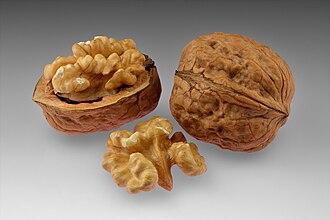
Photo: Wikipedia
Raw English walnut halves are the pale, brain-shaped kernels from the common walnut, prized for their rich, buttery flavor and satisfyingly crisp yet tender texture. They are a nutritional powerhouse, packed with heart-healthy monounsaturated fats and plant-based protein, making them a dense source of energy. Their distinctive, slightly tannic skin adds a pleasant complexity to their deep, earthy taste.
Calorie split: 8% protein · 6% carbs · 86% fat
↓ Full nutrition💚 Why it's loved
People love walnuts for their robust, sophisticated flavor that elevates both sweet and savory dishes, from brownies to salads. Their cultural significance as a symbol of intellect and their versatility in global cuisines make them a beloved pantry staple.
⚠️ Watch-outs & how to enjoy it better
The tannins in the skin can impart a mild bitterness or astringency, which some find overpowering. As a tree nut, they are a common allergen, and their high calorie density requires mindful portioning. To counteract bitterness, you can lightly toast them to mellow the flavor; for allergy concerns, always check labels for cross-contamination and practice strict portion control (about 1 ounce or a small handful).
Key benefits
- Excellent source of alpha-linolenic acid (ALA), a plant-based omega-3 fatty acid.
- High in antioxidants, particularly polyphenols, which help combat oxidative stress.
- Provides a good amount of plant-based protein and dietary fiber for satiety.
- Rich in minerals like manganese and copper, essential for bone health and metabolism.
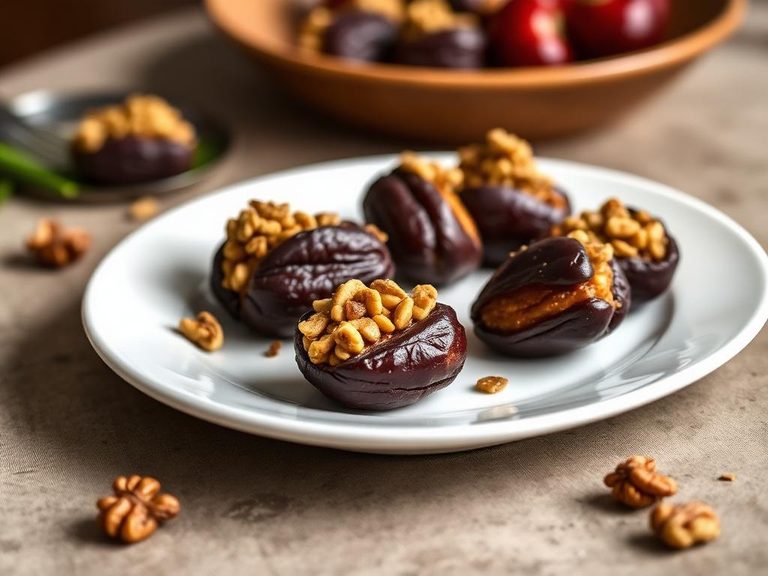
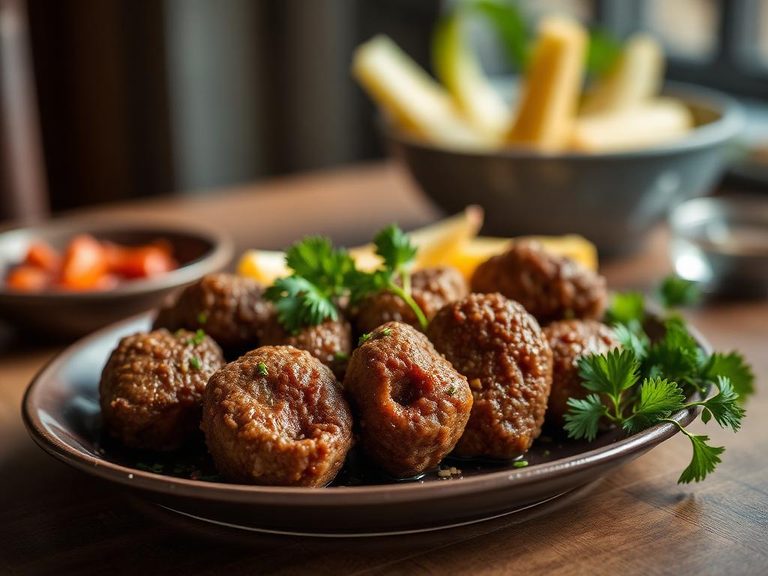
🍽️ Popular dishes
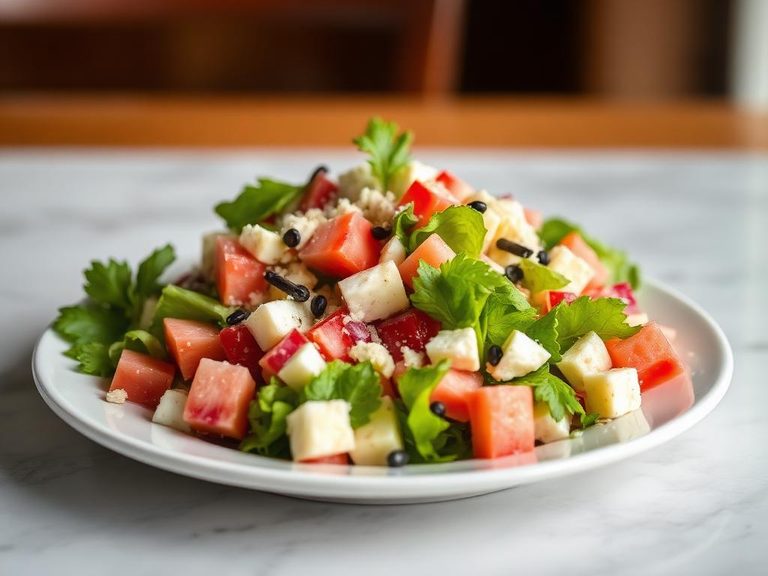
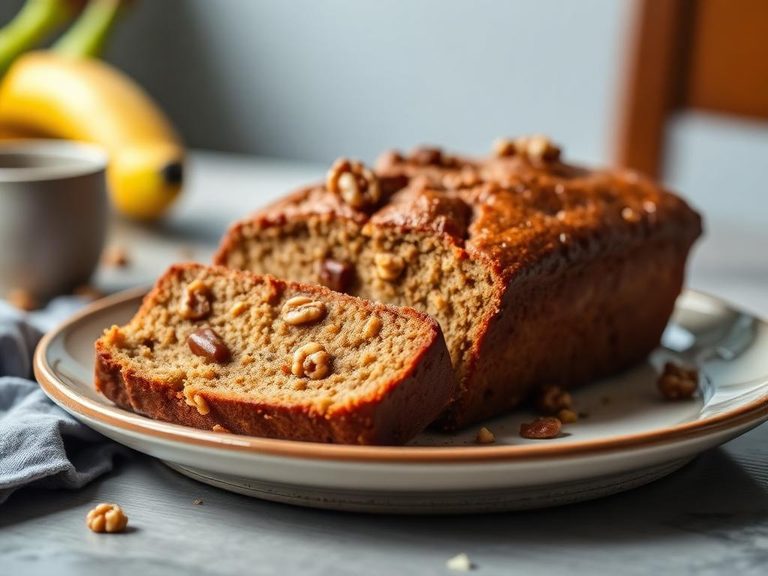
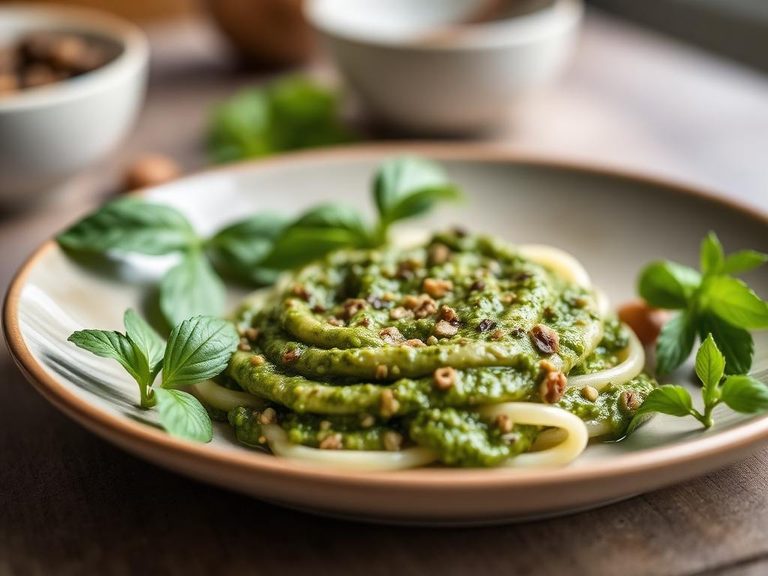

🌍 Where it's eaten
💡 Did you know?
The English walnut (Juglans regia) is not actually native to England but was brought to Europe via the Silk Road from ancient Persia, where it was known as 'royal nut'.
Full nutrition (USDA data · scales with serving)
| Water | 3.1 g |
| Energy (Atwater General Factors) | 730 kcal |
| Energy (Atwater Specific Factors) | 679 kcal |
| Nitrogen | 2.7 g |
| Protein | 14.6 g |
| Total lipid (fat) | 69.7 g |
| Ash | 1.6 g |
| Carbohydrate, by difference | 10.9 g |
| Fiber, total dietary | 5.2 g |
| Calcium, Ca | 88.3 mg |
| Iron, Fe | 2.2 mg |
| Magnesium, Mg | 142 mg |
| Phosphorus, P | 365 mg |
| Potassium, K | 424 mg |
| Sodium, Na | 0.00 mg |
| Zinc, Zn | 2.8 mg |
| Copper, Cu | 1.2 mg |
| Manganese, Mn | 3.0 mg |
| Molybdenum, Mo | 21.0 ug |
| Thiamin | 0.23 mg |
| Niacin | 1.2 mg |
| Vitamin B-6 | 0.66 mg |
| Biotin | 17.3 ug |
| Vitamin K (phylloquinone) | 1.7 ug |
| Vitamin K (Dihydrophylloquinone) | 0.00 ug |
| Vitamin K (Menaquinone-4) | 0.00 ug |
Fat & fatty acid profile (per 100g)
| Fatty acids, total saturated | 6.1 g |
| Fatty acids, total monounsaturated | 9.6 g |
| Fatty acids, total polyunsaturated | 49.3 g |
Amino acid profile (per 100g)
| Tryptophan | 0.13 g |
| Threonine | 0.44 g |
| Isoleucine | 0.52 g |
| Leucine | 1.00 g |
| Lysine | 0.38 g |
| Methionine | 0.19 g |
| Phenylalanine | 0.61 g |
| Tyrosine | 0.43 g |
| Valine | 0.60 g |
| Arginine | 2.0 g |
| Histidine | 0.34 g |
| Alanine | 0.59 g |
| Aspartic acid | 1.3 g |
| Glutamic acid | 3.0 g |
| Glycine | 0.69 g |
| Proline | 0.78 g |
| Serine | 0.78 g |
| Hydroxyproline | 0.00 g |
| Cysteine | 0.38 g |
FAQ
What's the difference between English and Black walnuts?
English walnuts have a milder, sweeter flavor and thinner shell, making them more common in stores. Black walnuts have a much bolder, earthier, and more pungent taste, with a harder shell.
How should I store raw walnut halves?
For short-term use (a few weeks), store in an airtight container in a cool, dark pantry. For longer storage (several months), keep them in the refrigerator or freezer to prevent the high oil content from going rancid.
Can I remove the bitterness from the skin?
Yes. Lightly toasting the walnuts in a dry pan or oven at a low temperature (300-325°F/150-160°C) for 5-10 minutes can significantly reduce the tannic bitterness and enhance their nutty flavor.
Nutrient density (calculated · NRF9.3)
Nutrient Rich Foods index: beneficial nutrients (protein, fiber, vitamins, minerals) minus saturated fat, added sugar & sodium, per 100 kcal.
NRF9.3 index — Fulgoni, Keast & Drewnowski, 2009. Computed from USDA nutrients.
Weight-loss friendliness (composite index)
Energy density 7.30 kcal/g · 8% calories from protein · 5.2 g fiber · 0.0 g sugar per 100 g.
Composite of energy density (Rolls et al., 1999), protein & fiber satiety, minus sugar. A calculated heuristic — ranks satiety-per-calorie, not a clinical measure.
Dietary load (calculated from USDA values)
Potential renal acid load. Positive = acid-forming, negative = alkaline-forming.
Sodium-to-potassium ratio: 0.00 (lower is better — aim for ≤ 1)
Sodium:potassium per WHO potassium guidance. Computed from USDA nutrients.