

Cereals ready-to-eat, POST, HONEY BUNCHES OF OATS, honey roasted
Whole food · Breakfast Cereals
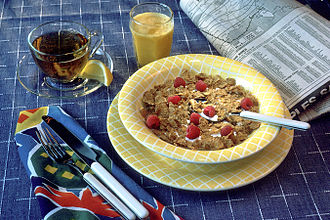
Photo: Wikipedia
A crunchy, golden cereal of toasted whole grain oat flakes and crispy rice, generously coated in a sweet, caramelized honey glaze. Each bite delivers a satisfying crunch with a warm, toasty sweetness and a hint of roasted flavor. It's a moderate source of dietary fiber, offering 4.2g per 100g to support digestive health.
Calorie split: 7% protein · 81% carbs · 12% fat
↓ Full nutrition💚 Why it's loved
People adore its addictive honey-roasted sweetness and the perfect textural contrast between the hearty oat clusters and lighter, crispy rice pieces. It's a nostalgic, comforting staple that works just as well as a crunchy snack straight from the box as it does in a bowl with milk.
⚠️ Watch-outs & how to enjoy it better
With 19.79g of sugar per 100g, it can cause a rapid blood-sugar spike, especially if eaten alone. To counteract this, pair it with a source of protein and fat like Greek yogurt, milk, or a handful of nuts, and practice portion control by sticking to a measured serving. It also contains common allergens like wheat (in the malt flavoring) and may be processed in facilities that handle soy, almonds, and other nuts.
Key benefits
- Provides quick energy from complex carbohydrates
- Contains dietary fiber for digestive support
- Offers a convenient, no-cook breakfast option
- Source of iron and B vitamins often added during fortification
- Lightweight and easy to portion for on-the-go meals
🍽️ Popular dishes
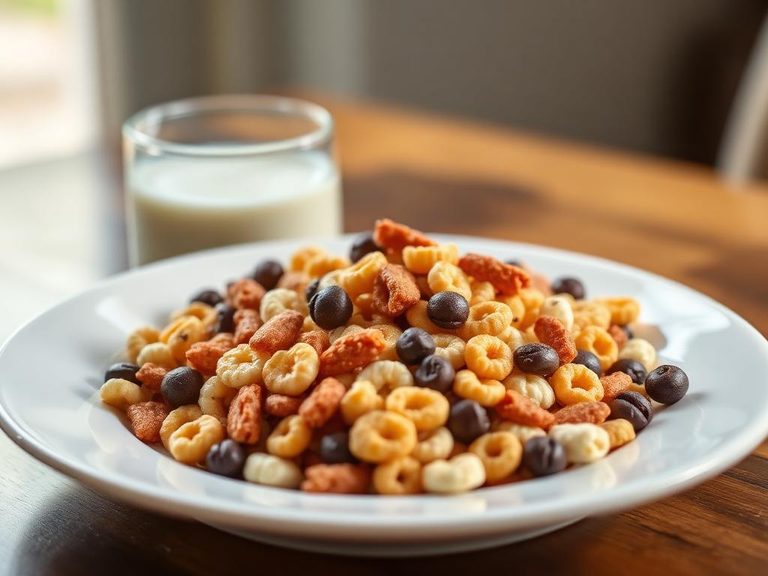

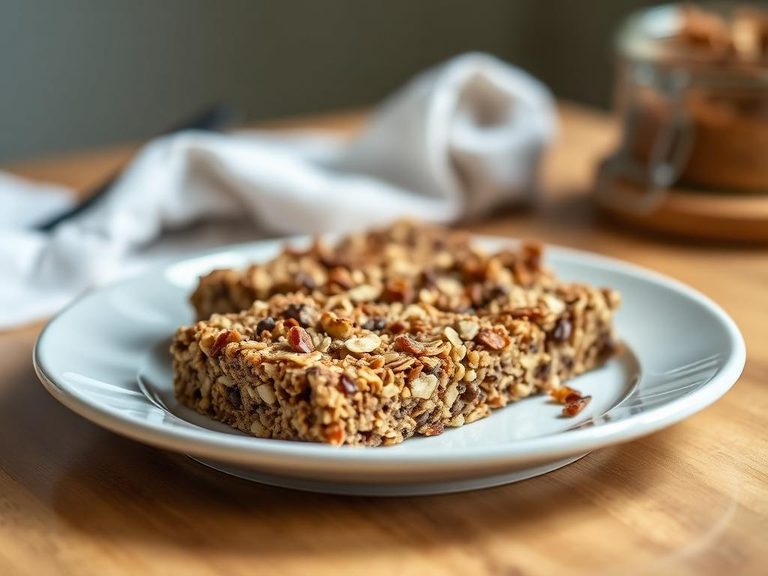
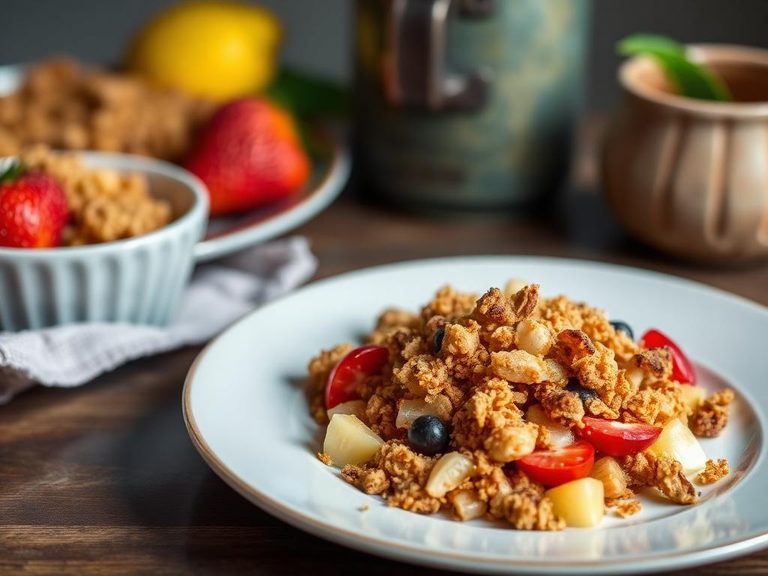
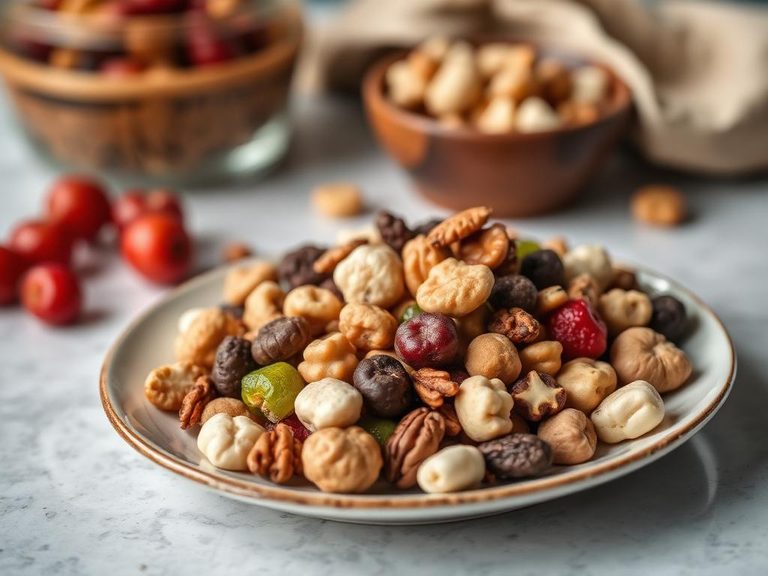
🌍 Where it's eaten
💡 Did you know?
The 'Honey Bunches' concept was invented by a Post Foods employee in the 1980s who was trying to create a cereal that combined the best textures of several different cereals into one.
Full nutrition (USDA data · scales with serving)
| Water | 5.0 g |
| Energy | 401 kcal |
| Energy | 1677 kj |
| Protein | 7.1 g |
| Total lipid (fat) | 5.5 g |
| Ash | 1.2 g |
| Carbohydrate, by difference | 81.2 g |
| Fiber, total dietary | 4.2 g |
| Total Sugars | 19.8 g |
| Sucrose | 16.7 g |
| Glucose | 0.90 g |
| Fructose | 0.57 g |
| Lactose | 0.16 g |
| Maltose | 1.5 g |
| Galactose | 0.00 g |
| Starch | 52.9 g |
| Calcium, Ca | 23.0 mg |
| Iron, Fe | 34.8 mg |
| Magnesium, Mg | 50.0 mg |
| Phosphorus, P | 156 mg |
| Potassium, K | 209 mg |
| Sodium, Na | 454 mg |
| Zinc, Zn | 5.0 mg |
| Copper, Cu | 0.59 mg |
| Manganese, Mn | 1.3 mg |
| Selenium, Se | 7.3 ug |
| Vitamin C, total ascorbic acid | 0.00 mg |
| Thiamin | 1.2 mg |
| Riboflavin | 1.3 mg |
| Niacin | 17.8 mg |
| Vitamin B-6 | 2.6 mg |
| Folate, total | 667 ug |
| Folic acid | 648 ug |
| Folate, food | 19.0 ug |
| Folate, DFE | 1120 ug |
| Choline, total | 13.4 mg |
| Vitamin B-12 | 9.7 ug |
| Vitamin B-12, added | 9.7 ug |
| Vitamin A, RAE | 806 ug |
| Retinol | 803 ug |
| Carotene, beta | 16.0 ug |
| Carotene, alpha | 4.0 ug |
| Cryptoxanthin, beta | 28.0 ug |
| Vitamin A, IU | 2731 iu |
| Lycopene | 0.00 ug |
| Lutein + zeaxanthin | 445 ug |
| Vitamin E (alpha-tocopherol) | 1.2 mg |
| Vitamin E, added | 0.00 mg |
| Tocopherol, beta | 0.09 mg |
| Tocopherol, gamma | 1.6 mg |
| Tocopherol, delta | 0.06 mg |
| Tocotrienol, alpha | 0.51 mg |
| Tocotrienol, beta | 0.65 mg |
| Tocotrienol, gamma | 0.26 mg |
| Tocotrienol, delta | 0.03 mg |
| Vitamin D (D2 + D3), International Units | 183 iu |
| Vitamin D (D2 + D3) | 4.6 ug |
| Vitamin D2 (ergocalciferol) | 0.00 ug |
| Vitamin D3 (cholecalciferol) | 4.6 ug |
| Vitamin K (phylloquinone) | 3.0 ug |
| Alcohol, ethyl | 0.00 g |
| Caffeine | 0.00 mg |
| Theobromine | 0.00 mg |
Fat & fatty acid profile (per 100g)
| Fatty acids, total saturated | 0.64 g |
| SFA 4:0 | 0.00 g |
| SFA 6:0 | 0.00 g |
| SFA 8:0 | 0.00 g |
| SFA 10:0 | 0.00 g |
| SFA 12:0 | 0.01 g |
| SFA 14:0 | 0.01 g |
| SFA 15:0 | 0.00 g |
| SFA 16:0 | 0.43 g |
| SFA 17:0 | 0.00 g |
| SFA 18:0 | 0.13 g |
| SFA 20:0 | 0.02 g |
| SFA 22:0 | 0.01 g |
| SFA 24:0 | 0.01 g |
| Fatty acids, total monounsaturated | 2.8 g |
| MUFA 14:1 | 0.00 g |
| MUFA 15:1 | 0.00 g |
| MUFA 16:1 | 0.01 g |
| MUFA 16:1 c | 0.01 g |
| MUFA 17:1 | 0.00 g |
| MUFA 18:1 | 2.8 g |
| MUFA 18:1 c | 2.8 g |
| MUFA 20:1 | 0.05 g |
| MUFA 22:1 | 0.00 g |
| MUFA 22:1 c | 0.00 g |
| MUFA 24:1 c | 0.00 g |
| Fatty acids, total polyunsaturated | 1.3 g |
| PUFA 18:2 | 1.2 g |
| PUFA 18:2 n-6 c,c | 1.2 g |
| PUFA 18:2 CLAs | 0.00 g |
| PUFA 18:3 | 0.09 g |
| PUFA 18:3 n-3 c,c,c (ALA) | 0.09 g |
| PUFA 18:3 n-6 c,c,c | 0.00 g |
| PUFA 18:4 | 0.00 g |
| PUFA 20:2 n-6 c,c | 0.00 g |
| PUFA 20:3 | 0.00 g |
| PUFA 20:3 n-3 | 0.00 g |
| PUFA 20:3 n-6 | 0.00 g |
| PUFA 20:4 | 0.00 g |
| PUFA 20:5 n-3 (EPA) | 0.00 g |
| PUFA 22:4 | 0.00 g |
| PUFA 22:5 n-3 (DPA) | 0.00 g |
| PUFA 22:6 n-3 (DHA) | 0.00 g |
| Fatty acids, total trans | 0.02 g |
| Fatty acids, total trans-monoenoic | 0.01 g |
| TFA 16:1 t | 0.00 g |
| TFA 18:1 t | 0.01 g |
| TFA 22:1 t | 0.00 g |
| TFA 18:2 t not further defined | 0.01 g |
| Fatty acids, total trans-polyenoic | 0.01 g |
| Cholesterol | 0.00 mg |
Amino acid profile (per 100g)
| Tryptophan | 0.09 g |
| Threonine | 0.24 g |
| Isoleucine | 0.26 g |
| Leucine | 0.80 g |
| Lysine | 0.12 g |
| Methionine | 0.10 g |
| Cystine | 0.11 g |
| Phenylalanine | 0.39 g |
| Tyrosine | 0.21 g |
| Valine | 0.34 g |
| Arginine | 0.24 g |
| Histidine | 0.18 g |
| Alanine | 0.46 g |
| Aspartic acid | 0.48 g |
| Glutamic acid | 1.9 g |
| Glycine | 0.27 g |
| Proline | 0.49 g |
| Serine | 0.38 g |
FAQ
Is this cereal considered healthy?
It provides whole grains and fiber but is also high in added sugar. It can be part of a balanced diet when eaten in moderation and paired with protein-rich foods like milk or yogurt to slow sugar absorption.
Can I eat this cereal if I'm gluten-free?
While oats are naturally gluten-free, this product is likely not certified gluten-free due to potential cross-contamination and the use of malt flavoring (derived from barley). Check the packaging for a specific gluten-free certification.
What's the best way to store it to keep it crunchy?
Keep the cereal in its original sealed bag inside the box, or transfer it to an airtight container. Store in a cool, dry pantry away from moisture to prevent it from becoming stale or soft.
Nutrient density (calculated · NRF9.3)
Nutrient Rich Foods index: beneficial nutrients (protein, fiber, vitamins, minerals) minus saturated fat, added sugar & sodium, per 100 kcal.
NRF9.3 index — Fulgoni, Keast & Drewnowski, 2009. Computed from USDA nutrients.
Weight-loss friendliness (composite index)
Energy density 4.01 kcal/g · 7% calories from protein · 4.2 g fiber · 19.8 g sugar per 100 g.
Composite of energy density (Rolls et al., 1999), protein & fiber satiety, minus sugar. A calculated heuristic — ranks satiety-per-calorie, not a clinical measure.
Dietary load (calculated from USDA values)
Potential renal acid load. Positive = acid-forming, negative = alkaline-forming.
Sodium-to-potassium ratio: 2.17 (lower is better — aim for ≤ 1)
Sodium:potassium per WHO potassium guidance. Computed from USDA nutrients.