

Mustard, prepared, yellow
Whole food · Spices and Herbs
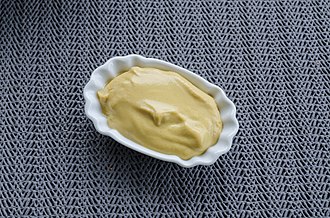
Photo: Wikipedia
Yellow prepared mustard is a vibrant, tangy condiment made from ground mustard seeds, water, vinegar, and turmeric for its signature hue. It delivers a sharp, pungent kick that awakens the palate, with a smooth, slightly gritty texture. Nutritionally, it's a low-calorie, high-fiber flavor booster that adds minimal sugar and fat.
Calorie split: 22% protein · 34% carbs · 44% fat
↓ Full nutrition💚 Why it's loved
People adore its fiery, acidic punch that cuts through rich, fatty foods like burgers and sausages. Its versatility as a marinade, dip, or dressing ingredient makes it a pantry staple across many cuisines.
⚠️ Watch-outs & how to enjoy it better
The strong, pungent flavor can be overwhelming for some, and it's often high in sodium. Those monitoring blood pressure or sodium intake should use it sparingly. To counteract, look for low-sodium versions or dilute it with yogurt or olive oil to mellow the saltiness and add healthy fats.
Key benefits
- Low in calories and sugar, making it a diet-friendly flavor enhancer.
- Contains dietary fiber, which aids digestion.
- Turmeric provides curcumin, a compound with antioxidant properties.
- Capsaicin and allyl isothiocyanate from mustard seeds may boost metabolism.
- Adds bold flavor without relying on excess salt or fat.
🍽️ Popular dishes
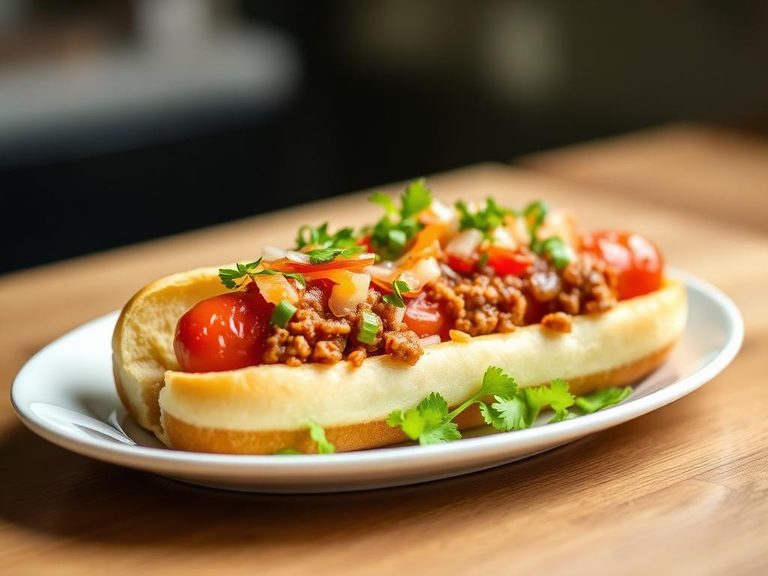

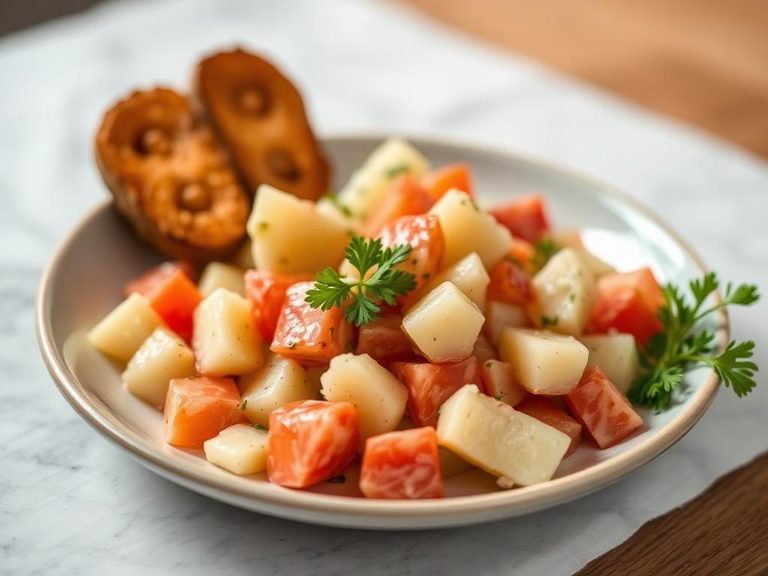
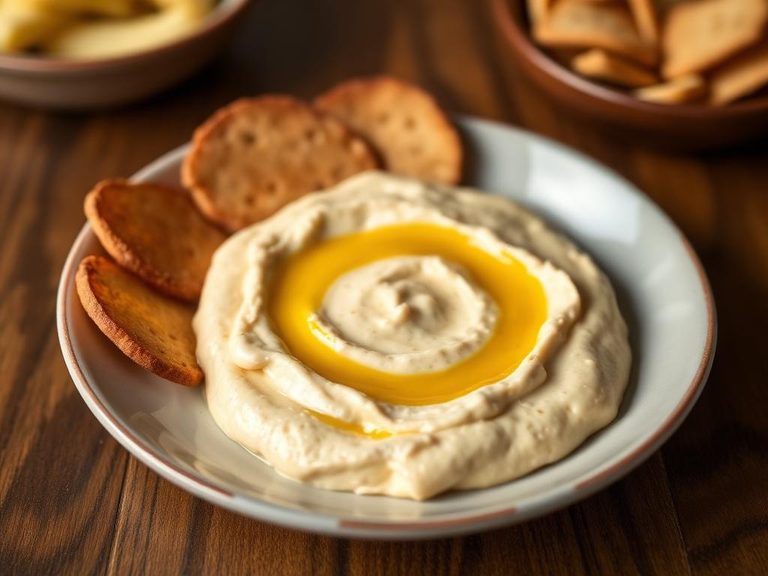
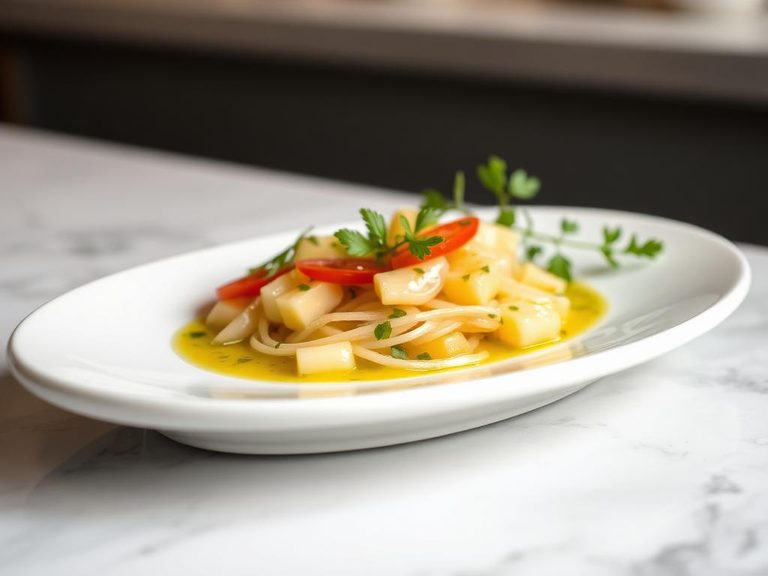
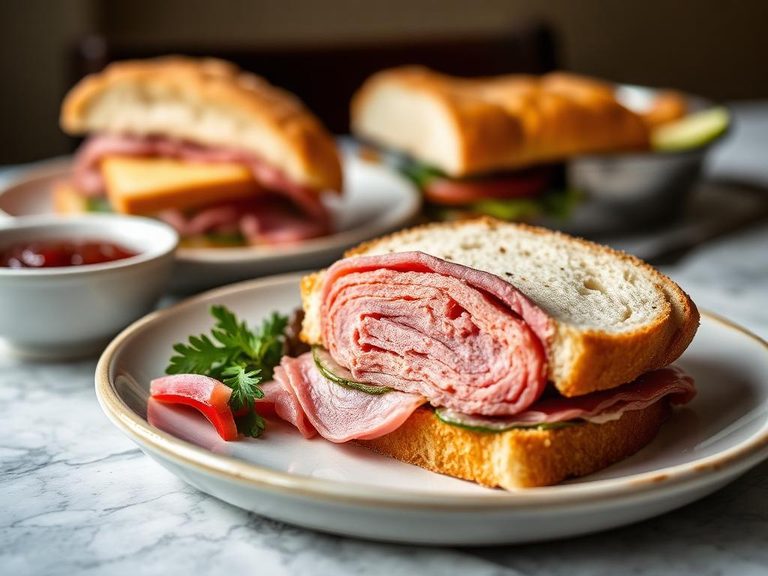
🌍 Where it's eaten
💡 Did you know?
The heat from mustard comes from a chemical reaction: when the seeds are crushed and mixed with liquid, enzymes convert glucosinolates into pungent isothiocyanates, which is why mustard loses its kick if boiled.
Full nutrition (USDA data · scales with serving)
| Water | 83.7 g |
| Energy | 60.0 kcal |
| Energy | 253 kj |
| Protein | 3.7 g |
| Total lipid (fat) | 3.3 g |
| Ash | 3.4 g |
| Carbohydrate, by difference | 5.8 g |
| Fiber, total dietary | 4.0 g |
| Total Sugars | 0.92 g |
| Sucrose | 0.21 g |
| Glucose | 0.47 g |
| Fructose | 0.23 g |
| Lactose | 0.00 g |
| Maltose | 0.00 g |
| Galactose | 0.00 g |
| Starch | 0.64 g |
| Calcium, Ca | 63.0 mg |
| Iron, Fe | 1.6 mg |
| Magnesium, Mg | 48.0 mg |
| Phosphorus, P | 108 mg |
| Potassium, K | 152 mg |
| Sodium, Na | 1104 mg |
| Zinc, Zn | 0.64 mg |
| Copper, Cu | 0.07 mg |
| Manganese, Mn | 0.42 mg |
| Selenium, Se | 33.5 ug |
| Fluoride, F | 1.5 ug |
| Vitamin C, total ascorbic acid | 0.30 mg |
| Thiamin | 0.18 mg |
| Riboflavin | 0.07 mg |
| Niacin | 0.56 mg |
| Pantothenic acid | 0.25 mg |
| Vitamin B-6 | 0.07 mg |
| Folate, total | 7.0 ug |
| Folic acid | 0.00 ug |
| Folate, food | 7.0 ug |
| Folate, DFE | 7.0 ug |
| Choline, total | 22.4 mg |
| Betaine | 0.20 mg |
| Vitamin B-12 | 0.00 ug |
| Vitamin B-12, added | 0.00 ug |
| Vitamin A, RAE | 5.0 ug |
| Retinol | 0.00 ug |
| Carotene, beta | 51.0 ug |
| Carotene, alpha | 1.0 ug |
| Cryptoxanthin, beta | 27.0 ug |
| Vitamin A, IU | 109 iu |
| Lycopene | 0.00 ug |
| Lutein + zeaxanthin | 113 ug |
| Vitamin E (alpha-tocopherol) | 0.36 mg |
| Vitamin E, added | 0.00 mg |
| Tocopherol, beta | 0.00 mg |
| Tocopherol, gamma | 2.1 mg |
| Tocopherol, delta | 0.08 mg |
| Tocotrienol, alpha | 0.02 mg |
| Tocotrienol, beta | 0.00 mg |
| Tocotrienol, gamma | 0.00 mg |
| Tocotrienol, delta | 0.00 mg |
| Vitamin D (D2 + D3), International Units | 0.00 iu |
| Vitamin D (D2 + D3) | 0.00 ug |
| Vitamin K (phylloquinone) | 1.4 ug |
| Vitamin K (Dihydrophylloquinone) | 0.00 ug |
| Vitamin K (Menaquinone-4) | 0.00 ug |
| Alcohol, ethyl | 0.00 g |
| Caffeine | 0.00 mg |
| Theobromine | 0.00 mg |
Fat & fatty acid profile (per 100g)
| Fatty acids, total saturated | 0.21 g |
| SFA 4:0 | 0.00 g |
| SFA 6:0 | 0.00 g |
| SFA 8:0 | 0.00 g |
| SFA 10:0 | 0.01 g |
| SFA 12:0 | 0.00 g |
| SFA 14:0 | 0.00 g |
| SFA 15:0 | 0.00 g |
| SFA 16:0 | 0.12 g |
| SFA 17:0 | 0.00 g |
| SFA 18:0 | 0.04 g |
| SFA 20:0 | 0.02 g |
| SFA 22:0 | 0.02 g |
| SFA 24:0 | 0.01 g |
| Fatty acids, total monounsaturated | 2.2 g |
| MUFA 14:1 | 0.00 g |
| MUFA 15:1 | 0.00 g |
| MUFA 16:1 | 0.01 g |
| MUFA 16:1 c | 0.01 g |
| MUFA 17:1 | 0.00 g |
| MUFA 18:1 | 0.78 g |
| MUFA 18:1 c | 0.77 g |
| MUFA 20:1 | 0.29 g |
| MUFA 22:1 | 1.1 g |
| MUFA 22:1 c | 1.1 g |
| MUFA 24:1 c | 0.05 g |
| Fatty acids, total polyunsaturated | 0.77 g |
| PUFA 18:2 | 0.36 g |
| PUFA 18:2 n-6 c,c | 0.36 g |
| PUFA 18:2 CLAs | 0.00 g |
| PUFA 18:3 | 0.37 g |
| PUFA 18:3 n-3 c,c,c (ALA) | 0.37 g |
| PUFA 18:3 n-6 c,c,c | 0.00 g |
| PUFA 18:3i | 0.00 g |
| PUFA 18:4 | 0.00 g |
| PUFA 20:2 n-6 c,c | 0.01 g |
| PUFA 20:3 | 0.02 g |
| PUFA 20:3 n-3 | 0.02 g |
| PUFA 20:3 n-6 | 0.00 g |
| PUFA 20:4 | 0.00 g |
| PUFA 20:5 n-3 (EPA) | 0.00 g |
| PUFA 22:4 | 0.00 g |
| PUFA 22:5 n-3 (DPA) | 0.00 g |
| PUFA 22:6 n-3 (DHA) | 0.00 g |
| Fatty acids, total trans | 0.01 g |
| Fatty acids, total trans-monoenoic | 0.00 g |
| TFA 16:1 t | 0.00 g |
| TFA 18:1 t | 0.00 g |
| TFA 22:1 t | 0.00 g |
| TFA 18:2 t not further defined | 0.01 g |
| Fatty acids, total trans-polyenoic | 0.01 g |
| Cholesterol | 0.00 mg |
Amino acid profile (per 100g)
| Tryptophan | 0.01 g |
| Threonine | 0.17 g |
| Isoleucine | 0.15 g |
| Leucine | 0.29 g |
| Lysine | 0.26 g |
| Methionine | 0.08 g |
| Cystine | 0.07 g |
| Phenylalanine | 0.16 g |
| Tyrosine | 0.13 g |
| Valine | 0.19 g |
| Arginine | 0.25 g |
| Histidine | 0.12 g |
| Alanine | 0.16 g |
| Aspartic acid | 0.39 g |
| Glutamic acid | 0.72 g |
| Glycine | 0.23 g |
| Proline | 0.35 g |
| Serine | 0.20 g |
| Hydroxyproline | 0.00 g |
FAQ
Is yellow mustard the same as American mustard?
Yes, 'yellow mustard' typically refers to the mild, bright yellow condiment common in North America, made primarily from white mustard seeds.
Why is it yellow?
The bright yellow color comes from the addition of turmeric, a spice that also adds a subtle earthy flavor.
Can mustard go bad?
Yes, but it has a long shelf life. Unopened, it can last for years. Once opened, it's best used within a year for optimal flavor, though it remains safe to eat beyond that.
Nutrient density (calculated · NRF9.3)
Nutrient Rich Foods index: beneficial nutrients (protein, fiber, vitamins, minerals) minus saturated fat, added sugar & sodium, per 100 kcal.
NRF9.3 index — Fulgoni, Keast & Drewnowski, 2009. Computed from USDA nutrients.
Weight-loss friendliness (composite index)
Energy density 0.60 kcal/g · 25% calories from protein · 4.0 g fiber · 0.9 g sugar per 100 g.
Composite of energy density (Rolls et al., 1999), protein & fiber satiety, minus sugar. A calculated heuristic — ranks satiety-per-calorie, not a clinical measure.
Dietary load (calculated from USDA values)
Potential renal acid load. Positive = acid-forming, negative = alkaline-forming.
Sodium-to-potassium ratio: 7.26 (lower is better — aim for ≤ 1)
Sodium:potassium per WHO potassium guidance. Computed from USDA nutrients.