

Mollusks, clam, mixed species, raw
Whole food · Finfish and Shellfish Products
Raw mixed clams are briny, plump bivalves with a tender, slightly chewy texture and a sweet, oceanic flavor that tastes like the sea in its purest form. They are a lean protein powerhouse, packing nearly 15 grams of protein per 100 grams with minimal fat and calories, making them a nutrient-dense choice.
Calorie split: 72% protein · 18% carbs · 11% fat
↓ Full nutrition💚 Why it's loved
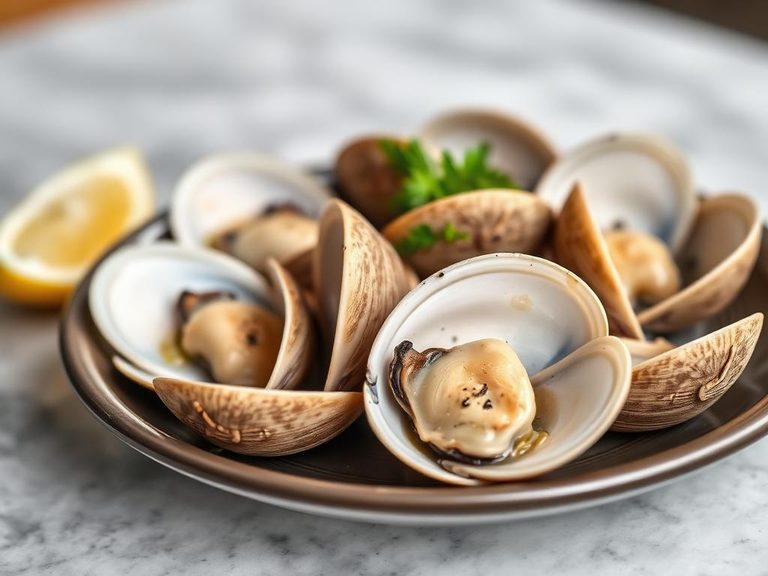
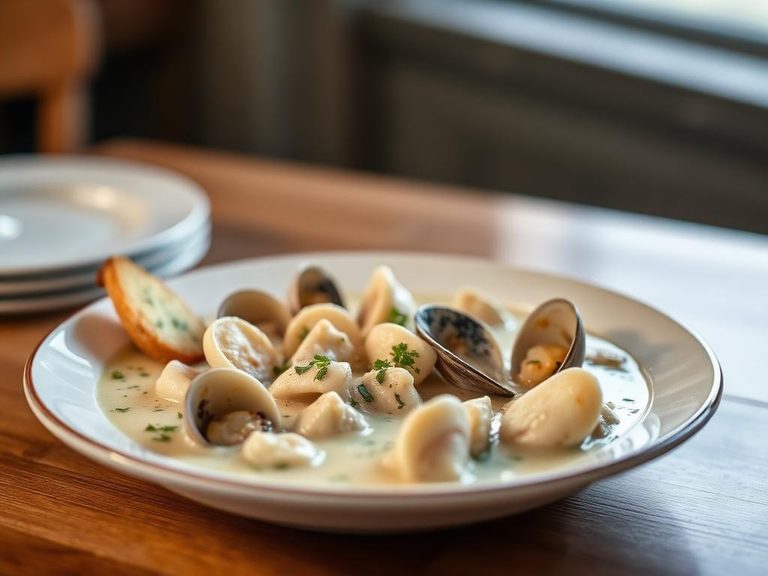
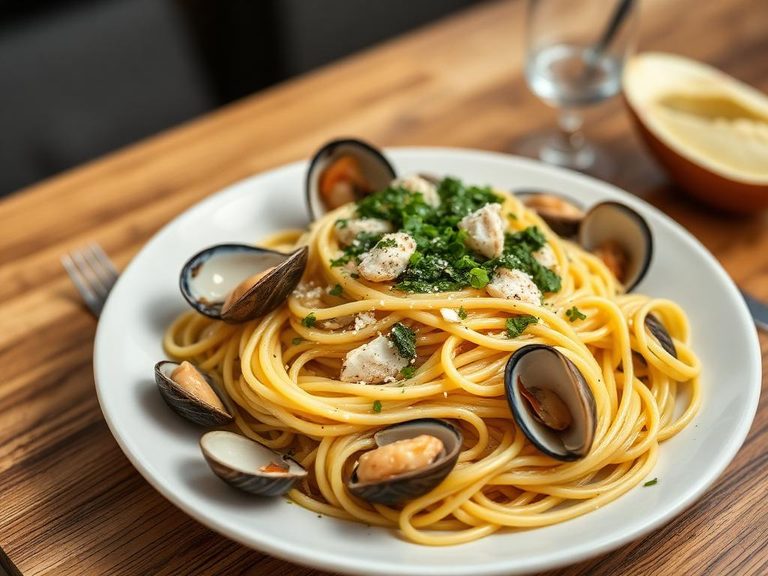
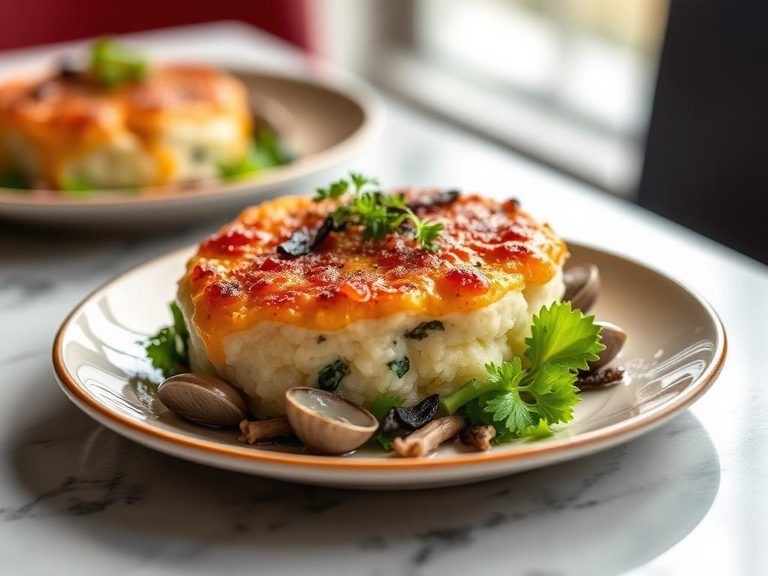
People love raw clams for their clean, sweet, and briny flavor that evokes a fresh ocean breeze, often enjoyed simply on the half shell with a squeeze of lemon. Their versatility allows them to be the star of elegant appetizers, hearty chowders, or rustic pasta dishes across many coastal cuisines.
⚠️ Watch-outs & how to enjoy it better
Raw shellfish carries a risk of bacterial or viral contamination, so pregnant individuals, young children, the elderly, and immunocompromised people should avoid them. They are also a common allergen and can be high in sodium; to mitigate, ensure they are sourced from reputable, safe waters and consider pairing with low-sodium ingredients if watching salt intake.
Key benefits
- Excellent source of high-quality, complete protein
- Very low in calories and fat
- Rich in essential minerals like iron, zinc, and selenium
- Provides vitamin B12 and omega-3 fatty acids
- Naturally low in carbohydrates
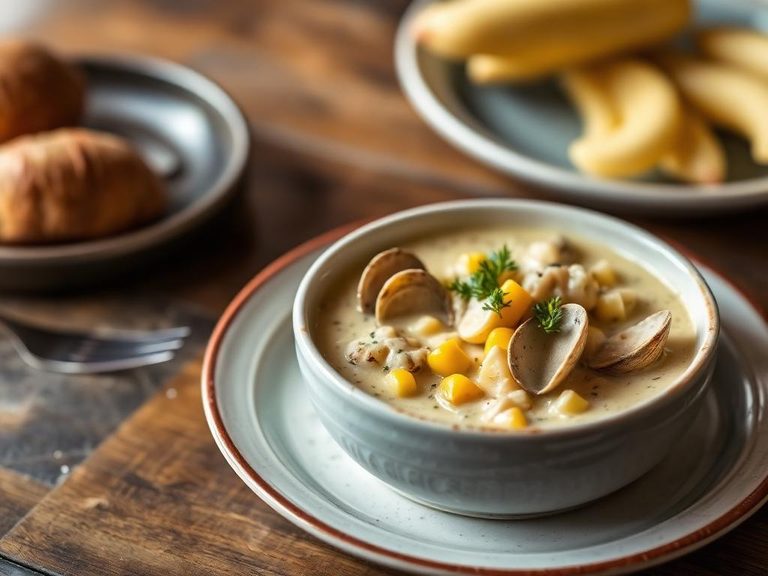
🍽️ Popular dishes
🌍 Where it's eaten
💡 Did you know?
Clams are filter feeders, and a single clam can filter up to 10 gallons of water a day, which is why they must be purged of sand before eating.
Full nutrition (USDA data · scales with serving)
| Water | 79.0 g |
| Energy | 86.0 kcal |
| Energy | 360 kj |
| Protein | 14.7 g |
| Total lipid (fat) | 0.96 g |
| Ash | 1.8 g |
| Carbohydrate, by difference | 3.6 g |
| Fiber, total dietary | 0.00 g |
| Total Sugars | 0.00 g |
| Sucrose | 0.00 g |
| Glucose | 0.00 g |
| Fructose | 0.00 g |
| Lactose | 0.00 g |
| Maltose | 0.00 g |
| Galactose | 0.00 g |
| Starch | 1.4 g |
| Calcium, Ca | 39.0 mg |
| Iron, Fe | 1.6 mg |
| Magnesium, Mg | 19.0 mg |
| Phosphorus, P | 198 mg |
| Potassium, K | 46.0 mg |
| Sodium, Na | 601 mg |
| Zinc, Zn | 0.51 mg |
| Copper, Cu | 0.05 mg |
| Manganese, Mn | 0.09 mg |
| Selenium, Se | 30.6 ug |
| Vitamin C, total ascorbic acid | 0.00 mg |
| Thiamin | 0.01 mg |
| Riboflavin | 0.04 mg |
| Niacin | 0.35 mg |
| Pantothenic acid | 0.15 mg |
| Vitamin B-6 | 0.01 mg |
| Folate, total | 5.0 ug |
| Folic acid | 0.00 ug |
| Folate, food | 5.0 ug |
| Folate, DFE | 5.0 ug |
| Choline, total | 65.0 mg |
| Vitamin B-12 | 11.3 ug |
| Vitamin B-12, added | 0.00 ug |
| Vitamin A, RAE | 90.0 ug |
| Retinol | 90.0 ug |
| Carotene, beta | 0.00 ug |
| Carotene, alpha | 0.00 ug |
| Cryptoxanthin, beta | 0.00 ug |
| Vitamin A, IU | 300 iu |
| Lycopene | 0.00 ug |
| Lutein + zeaxanthin | 0.00 ug |
| Vitamin E (alpha-tocopherol) | 0.68 mg |
| Vitamin E, added | 0.00 mg |
| Tocopherol, beta | 0.02 mg |
| Tocopherol, gamma | 0.89 mg |
| Tocopherol, delta | 0.38 mg |
| Tocotrienol, alpha | 0.03 mg |
| Tocotrienol, beta | 0.00 mg |
| Tocotrienol, gamma | 0.01 mg |
| Tocotrienol, delta | 0.00 mg |
| Vitamin D (D2 + D3), International Units | 1.0 iu |
| Vitamin D (D2 + D3) | 0.00 ug |
| Vitamin D3 (cholecalciferol) | 0.00 ug |
| Vitamin K (phylloquinone) | 0.20 ug |
| Vitamin K (Dihydrophylloquinone) | 0.00 ug |
| Vitamin K (Menaquinone-4) | 0.00 ug |
| Alcohol, ethyl | 0.00 g |
| Caffeine | 0.00 mg |
| Theobromine | 0.00 mg |
Fat & fatty acid profile (per 100g)
| Fatty acids, total saturated | 0.19 g |
| SFA 4:0 | 0.00 g |
| SFA 6:0 | 0.00 g |
| SFA 8:0 | 0.00 g |
| SFA 10:0 | 0.00 g |
| SFA 12:0 | 0.00 g |
| SFA 14:0 | 0.01 g |
| SFA 15:0 | 0.00 g |
| SFA 16:0 | 0.11 g |
| SFA 17:0 | 0.01 g |
| SFA 18:0 | 0.05 g |
| SFA 20:0 | 0.00 g |
| SFA 22:0 | 0.00 g |
| SFA 24:0 | 0.00 g |
| Fatty acids, total monounsaturated | 0.12 g |
| MUFA 14:1 | 0.00 g |
| MUFA 15:1 | 0.00 g |
| MUFA 16:1 | 0.02 g |
| MUFA 16:1 c | 0.01 g |
| MUFA 17:1 | 0.03 g |
| MUFA 18:1 | 0.06 g |
| MUFA 18:1 c | 0.05 g |
| MUFA 20:1 | 0.01 g |
| MUFA 22:1 | 0.00 g |
| MUFA 22:1 c | 0.00 g |
| MUFA 24:1 c | 0.00 g |
| Fatty acids, total polyunsaturated | 0.19 g |
| PUFA 18:2 | 0.04 g |
| PUFA 18:2 n-6 c,c | 0.03 g |
| PUFA 18:2 CLAs | 0.01 g |
| PUFA 18:3 | 0.01 g |
| PUFA 18:3 n-3 c,c,c (ALA) | 0.01 g |
| PUFA 18:3 n-6 c,c,c | 0.00 g |
| PUFA 18:4 | 0.00 g |
| PUFA 20:2 n-6 c,c | 0.00 g |
| PUFA 20:3 | 0.00 g |
| PUFA 20:3 n-3 | 0.00 g |
| PUFA 20:3 n-6 | 0.00 g |
| PUFA 20:4 | 0.01 g |
| PUFA 20:5 n-3 (EPA) | 0.04 g |
| PUFA 22:4 | 0.01 g |
| PUFA 22:5 n-3 (DPA) | 0.01 g |
| PUFA 22:6 n-3 (DHA) | 0.06 g |
| Fatty acids, total trans | 0.01 g |
| Fatty acids, total trans-monoenoic | 0.01 g |
| TFA 16:1 t | 0.01 g |
| TFA 18:1 t | 0.01 g |
| TFA 22:1 t | 0.00 g |
| TFA 18:2 t not further defined | 0.00 g |
| Fatty acids, total trans-polyenoic | 0.00 g |
| Cholesterol | 30.0 mg |
Amino acid profile (per 100g)
| Tryptophan | 0.20 g |
| Threonine | 0.70 g |
| Isoleucine | 0.69 g |
| Leucine | 1.2 g |
| Lysine | 1.1 g |
| Methionine | 0.42 g |
| Cystine | 0.17 g |
| Phenylalanine | 0.56 g |
| Tyrosine | 0.60 g |
| Valine | 0.74 g |
| Arginine | 1.2 g |
| Histidine | 0.30 g |
| Alanine | 0.89 g |
| Aspartic acid | 1.6 g |
| Glutamic acid | 2.2 g |
| Glycine | 0.64 g |
| Proline | 0.50 g |
| Serine | 0.69 g |
FAQ
How do I know if raw clams are safe to eat?
Only eat clams from reputable sources. Before cooking, discard any clams that don't close when tapped. After cooking, discard any that remain open.
What's the difference between hard-shell and soft-shell clams?
Hard-shell clams (like quahogs) have a thicker, hinged shell and are often used in chowders. Soft-shell clams (like steamers) have a thinner, brittle shell and are typically steamed and eaten whole.
Can I eat the dark part of the clam?
The dark, crescent-shaped part is the clam's digestive gland (or 'belly'). While edible, it can contain sand and grit, so some people prefer to remove it for a cleaner taste.
Nutrient density (calculated · NRF9.3)
Nutrient Rich Foods index: beneficial nutrients (protein, fiber, vitamins, minerals) minus saturated fat, added sugar & sodium, per 100 kcal.
NRF9.3 index — Fulgoni, Keast & Drewnowski, 2009. Computed from USDA nutrients.
Weight-loss friendliness (composite index)
Energy density 0.86 kcal/g · 68% calories from protein · 0.0 g fiber · 0.0 g sugar per 100 g.
Composite of energy density (Rolls et al., 1999), protein & fiber satiety, minus sugar. A calculated heuristic — ranks satiety-per-calorie, not a clinical measure.
Dietary load (calculated from USDA values)
Potential renal acid load. Positive = acid-forming, negative = alkaline-forming.
Sodium-to-potassium ratio: 13.07 (lower is better — aim for ≤ 1)
Sodium:potassium per WHO potassium guidance. Computed from USDA nutrients.