Milk, lowfat, fluid, 1% milkfat, with added vitamin A and vitamin D
Whole food · Dairy and Egg Products

Photo: Wikipedia
Lowfat 1% milk is a lean, fluid dairy product with a clean, slightly sweet taste and a lighter, less creamy mouthfeel than whole milk. Fortified with vitamins A and D, it offers a solid nutritional punch with 3.38g of protein and 43 kcal per 100g. It's a staple for those seeking a balance between dairy nutrition and lower fat content.
💚 Why it's loved
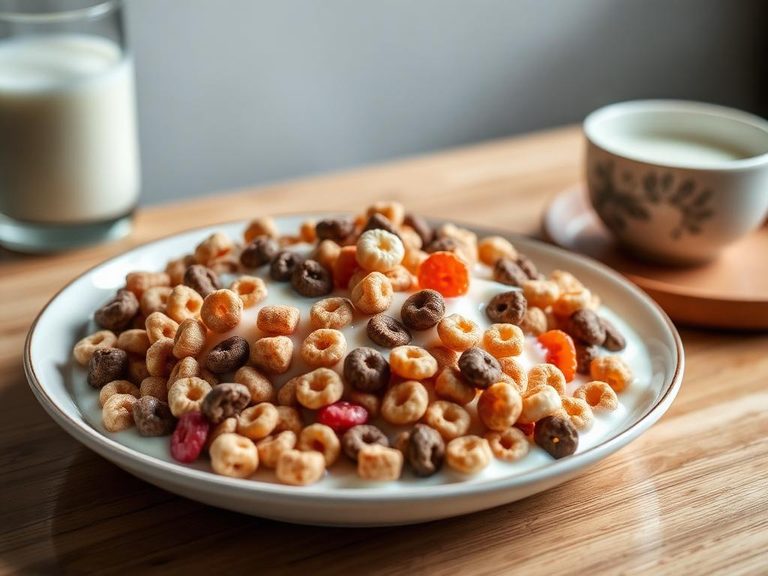
People love it as a versatile, everyday beverage that pairs well with everything from cereal to coffee, offering a familiar, comforting taste without excessive calories. It's a cultural staple in many households, symbolizing health and simplicity.
⚠️ Watch-outs & how to enjoy it better
Some find its texture too thin or watery compared to creamier milks, and it can cause digestive issues for those with lactose intolerance. To counteract this, pair it with fiber-rich foods like oats or nuts to slow sugar absorption, or choose lactose-free versions if sensitive. For those monitoring blood sugar, consume it with a meal rather than alone.
Key benefits
- Excellent source of calcium for bone health
- High-quality protein supports muscle maintenance
- Fortified with Vitamin D for immune function
- Lower in saturated fat than whole milk
- Provides essential nutrients like phosphorus and potassium
🍽️ Popular dishes

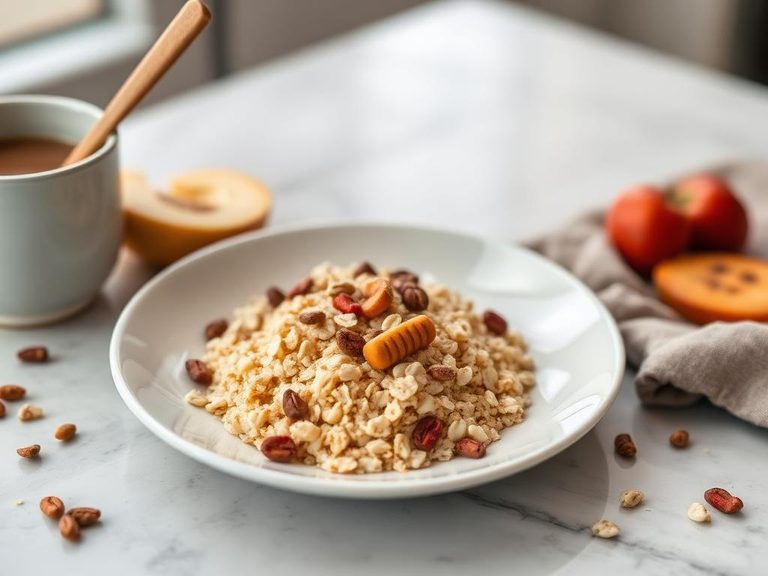
🌍 Where it's eaten
💡 Did you know?
In the U.S., the fortification of milk with Vitamin D began in the 1930s to combat rickets, and it's estimated that over 90% of the milk supply is now fortified.
Full nutrition (scales with serving)
| Water | 89.7 g |
| Energy | 43.0 kcal |
| Energy | 179 kj |
| Nitrogen | 0.53 g |
| Protein | 3.4 g |
| Total lipid (fat) | 0.95 g |
| Total fat (NLEA) | 0.85 g |
| Ash | 0.80 g |
| Carbohydrate, by difference | 5.2 g |
| Sugars, Total | 5.0 g |
| Sucrose | 0.00 g |
| Glucose | 0.00 g |
| Fructose | 0.00 g |
| Lactose | 5.0 g |
| Maltose | 0.00 g |
| Galactose | 0.00 g |
| Calcium, Ca | 126 mg |
| Iron, Fe | 0.00 mg |
| Magnesium, Mg | 12.0 mg |
| Phosphorus, P | 103 mg |
| Potassium, K | 159 mg |
| Sodium, Na | 39.0 mg |
| Zinc, Zn | 0.43 mg |
| Copper, Cu | 0.00 mg |
| Manganese, Mn | 0.00 mg |
| Iodine, I | 36.2 ug |
| Selenium, Se | 2.1 ug |
| Thiamin | 0.06 mg |
| Riboflavin | 0.14 mg |
| Niacin | 0.11 mg |
| Pantothenic acid | 0.37 mg |
| Vitamin B-6 | 0.06 mg |
| Folate, total | 2.0 ug |
| Choline, total | 17.4 mg |
| Choline, free | 3.0 mg |
| Choline, from phosphocholine | 0.90 mg |
| Choline, from phosphotidyl choline | 1.7 mg |
| Choline, from glycerophosphocholine | 10.9 mg |
| Choline, from sphingomyelin | 0.80 mg |
| Betaine | 0.90 mg |
| Vitamin B-12 | 0.61 ug |
| Vitamin A, RAE | 58.0 ug |
| Retinol | 58.0 ug |
| Carotene, beta | 1.0 ug |
| cis-beta-Carotene | 0.00 ug |
| trans-beta-Carotene | 1.0 ug |
| Carotene, alpha | 0.00 ug |
| Cryptoxanthin, beta | 0.00 ug |
| Cryptoxanthin, alpha | 0.00 ug |
| Lycopene | 0.00 ug |
| cis-Lycopene | 0.00 ug |
| trans-Lycopene | 0.00 ug |
| cis-Lutein/Zeaxanthin | 0.00 ug |
| Lutein | 0.00 ug |
| Zeaxanthin | 0.00 ug |
| Vitamin E (alpha-tocopherol) | 0.02 mg |
| Tocopherol, beta | 0.00 mg |
| Tocopherol, gamma | 0.00 mg |
| Tocopherol, delta | 0.00 mg |
| Tocotrienol, alpha | 0.00 mg |
| Tocotrienol, beta | 0.00 mg |
| Tocotrienol, gamma | 0.00 mg |
| Tocotrienol, delta | 0.00 mg |
| Vitamin D (D2 + D3), International Units | 43.0 iu |
| Vitamin D (D2 + D3) | 1.1 ug |
| Vitamin D2 (ergocalciferol) | 0.00 ug |
| Vitamin D3 (cholecalciferol) | 1.1 ug |
| 25-hydroxycholecalciferol | 0.00 ug |
| Fatty acids, total saturated | 0.57 g |
| SFA 4:0 | 0.02 g |
| SFA 5:0 | 0.00 g |
| SFA 6:0 | 0.01 g |
| SFA 7:0 | 0.00 g |
| SFA 8:0 | 0.01 g |
| SFA 9:0 | 0.00 g |
| SFA 10:0 | 0.02 g |
| SFA 11:0 | 0.00 g |
| SFA 12:0 | 0.03 g |
| SFA 14:0 | 0.09 g |
| SFA 15:0 | 0.01 g |
| SFA 16:0 | 0.27 g |
| SFA 17:0 | 0.01 g |
| SFA 18:0 | 0.10 g |
| SFA 20:0 | 0.00 g |
| SFA 21:0 | 0.00 g |
| SFA 22:0 | 0.00 g |
| SFA 23:0 | 0.00 g |
| SFA 24:0 | 0.00 g |
| Fatty acids, total monounsaturated | 0.21 g |
| MUFA 12:1 | 0.00 g |
| MUFA 14:1 c | 0.01 g |
| MUFA 15:1 | 0.00 g |
| MUFA 16:1 c | 0.01 g |
| MUFA 17:1 | 0.00 g |
| MUFA 17:1 c | 0.00 g |
| MUFA 18:1 c | 0.19 g |
| MUFA 20:1 c | 0.00 g |
| MUFA 22:1 c | 0.00 g |
| MUFA 22:1 n-9 | 0.00 g |
| MUFA 22:1 n-11 | 0.00 g |
| MUFA 24:1 c | 0.00 g |
| Fatty acids, total polyunsaturated | 0.03 g |
| PUFA 18:2 c | 0.03 g |
| PUFA 18:2 n-6 c,c | 0.03 g |
| PUFA 18:2 CLAs | 0.00 g |
| PUFA 18:3 c | 0.00 g |
| PUFA 18:3 n-3 c,c,c (ALA) | 0.00 g |
| PUFA 18:3 n-6 c,c,c | 0.00 g |
| PUFA 18:4 | 0.00 g |
| PUFA 20:2 c | 0.00 g |
| PUFA 20:2 n-6 c,c | 0.00 g |
| PUFA 20:3 c | 0.00 g |
| PUFA 20:3 n-3 | 0.00 g |
| PUFA 20:3 n-6 | 0.00 g |
| PUFA 20:3 n-9 | 0.00 g |
| PUFA 22:3 | 0.00 g |
| PUFA 20:4 | 0.00 g |
| PUFA 20:4c | 0.00 g |
| PUFA 20:5c | 0.00 g |
| PUFA 20:5 n-3 (EPA) | 0.00 g |
| PUFA 22:2 | 0.00 g |
| PUFA 22:5 c | 0.00 g |
| PUFA 22:4 | 0.00 g |
| PUFA 22:5 n-3 (DPA) | 0.00 g |
| PUFA 22:6 c | 0.00 g |
| PUFA 22:6 n-3 (DHA) | 0.00 g |
| Fatty acids, total trans | 0.04 g |
| Fatty acids, total trans-monoenoic | 0.03 g |
| TFA 14:1 t | 0.00 g |
| TFA 16:1 t | 0.00 g |
| TFA 18:1 t | 0.03 g |
| TFA 20:1 t | 0.00 g |
| TFA 22:1 t | 0.00 g |
| Fatty acids, total trans-dienoic | 0.00 g |
| TFA 18:2 t not further defined | 0.00 g |
| Fatty acids, total trans-polyenoic | 0.00 g |
| TFA 18:3 t | 0.00 g |
| Cholesterol | 5.0 mg |
| Tryptophan | 0.04 g |
| Threonine | 0.16 g |
| Isoleucine | 0.17 g |
| Leucine | 0.34 g |
| Lysine | 0.31 g |
| Methionine | 0.09 g |
| Phenylalanine | 0.17 g |
| Tyrosine | 0.17 g |
| Valine | 0.21 g |
| Arginine | 0.13 g |
| Histidine | 0.10 g |
| Alanine | 0.11 g |
| Aspartic acid | 0.29 g |
| Glutamic acid | 0.81 g |
| Glycine | 0.07 g |
| Proline | 0.35 g |
| Serine | 0.19 g |
| Hydroxyproline | 0.00 g |
| Cysteine | 0.04 g |
FAQ
Is lowfat 1% milk a good source of protein?
Yes, it provides about 3.38g of protein per 100g, which is comparable to whole milk and supports muscle health.
Can I use lowfat 1% milk in cooking?
Absolutely, it works well in sauces, soups, and baking, though it may yield a slightly thinner texture than whole milk.
Is lowfat 1% milk suitable for people with lactose intolerance?
It contains lactose, so those with intolerance may experience discomfort; lactose-free versions are available as an alternative.