

Smoothies
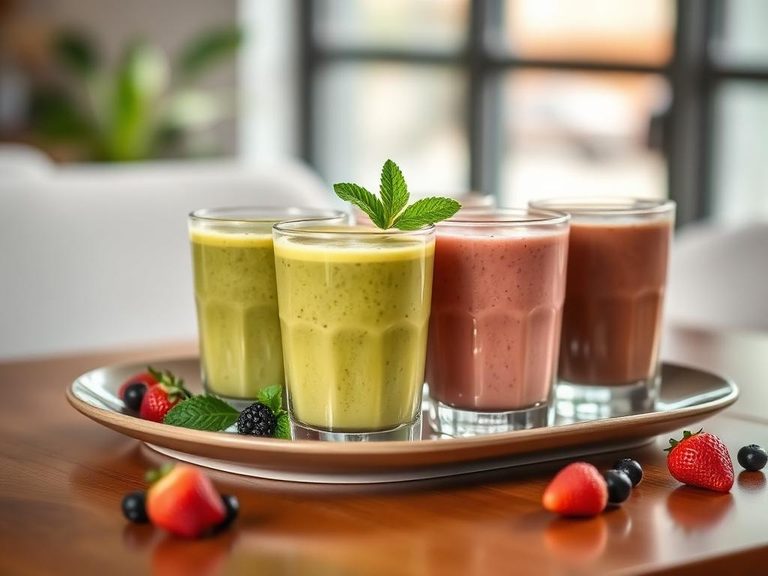
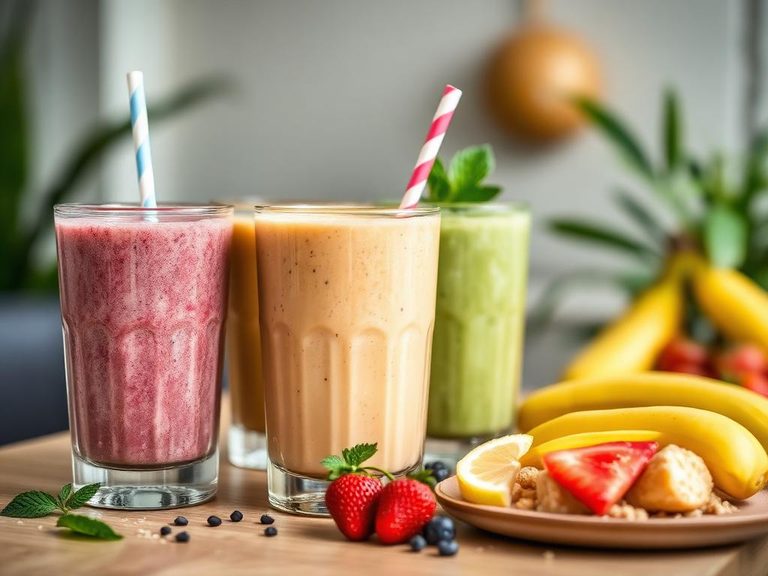
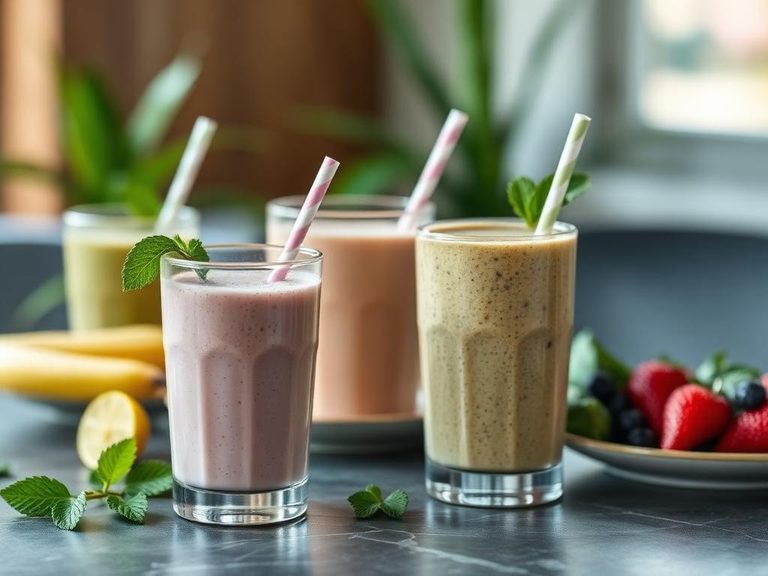
A smoothie is a thick, creamy beverage typically made by blending raw fruits or vegetables with a liquid base like water, juice, or milk, and often enhanced with yogurt, ice, or sweeteners. While its roots can be traced to health food movements, it has become a global staple, especially popular in modern cafes and as a quick breakfast option.
🍳 View the full Smoothies recipe →
🍽️ Nutrition at a glance
Smoothies are generally high in carbohydrates, primarily from natural sugars in fruits, and can be a good source of dietary fiber, vitamins (like C and A), and minerals (like potassium). A typical homemade smoothie ranges from 150 to 300 calories per serving, depending heavily on the ingredients and portion sizes.
Nutrition breakdown
| Calories | 150 kcal |
| Protein | 3 g |
| Carbs | 30 g |
| Fat | 2 g |
| Fiber | 4 g |
| Sugar | 20 g |
| Sodium | 30 mg |
| Potassium | 400 mg |
| Vitamin C | 45 mg |
| Vitamin A | 150 mcg |
| Calcium | 100 mg |
| Iron | 1.5 mg |
| Magnesium | 40 mg |
| Folate | 60 mcg |
| Vitamin K | 15 mcg |
Per 1 cup (240 g) · estimated, varies by recipe
💡 What's interesting
Culturally, the smoothie represents the fusion of convenience and wellness, evolving from a niche health drink in the 1960s to a ubiquitous, customizable trend. Nutritionally, it's unique because it allows for the easy consumption of whole fruits and vegetables, but can also become a high-sugar drink if not balanced with protein, healthy fats, or fiber-rich ingredients.
🍽️ Related dishes

AI estimate may be inaccurate · Terms