

Chicken, broilers or fryers, rotisserie, original seasoning, breast, meat only, cooked
Whole food · Poultry Products
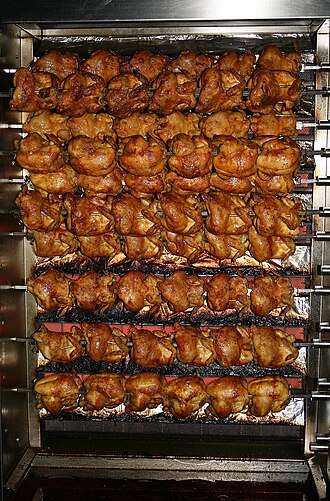
Photo: Wikipedia
This is the lean, white breast meat from a whole rotisserie chicken, cooked with a classic blend of herbs and spices. It offers a firm yet tender texture with a savory, subtly seasoned flavor that's less fatty than dark meat. Nutritionally, it's a protein powerhouse, delivering 28 grams of high-quality protein per 100 grams with virtually no fat or carbohydrates.
Calorie split: 82% protein · 0% carbs · 18% fat
↓ Full nutrition💚 Why it's loved
People love it for its incredible convenience and versatile, savory flavor that serves as a perfect blank canvas for salads, wraps, or bowls. The rotisserie method keeps the breast meat juicy and infuses it with a comforting, aromatic taste that's hard to replicate at home.
⚠️ Watch-outs & how to enjoy it better
The primary downside is its potential high sodium content from the seasoning and cooking process, which can be a concern for those monitoring salt intake. To counteract this, rinse the meat briefly under water before use or pair it with potassium-rich foods like leafy greens or avocado to help balance electrolytes.
Key benefits
- Excellent source of complete, lean protein for muscle maintenance.
- Very low in fat and contains no carbohydrates or sugar.
- A convenient, pre-cooked meal component for quick preparation.
- Naturally rich in niacin and vitamin B6 for energy metabolism.
🍽️ Popular dishes
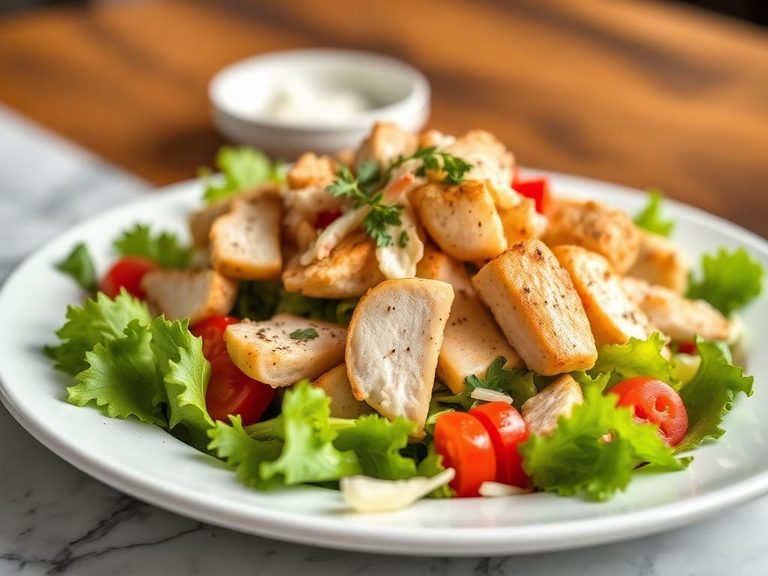
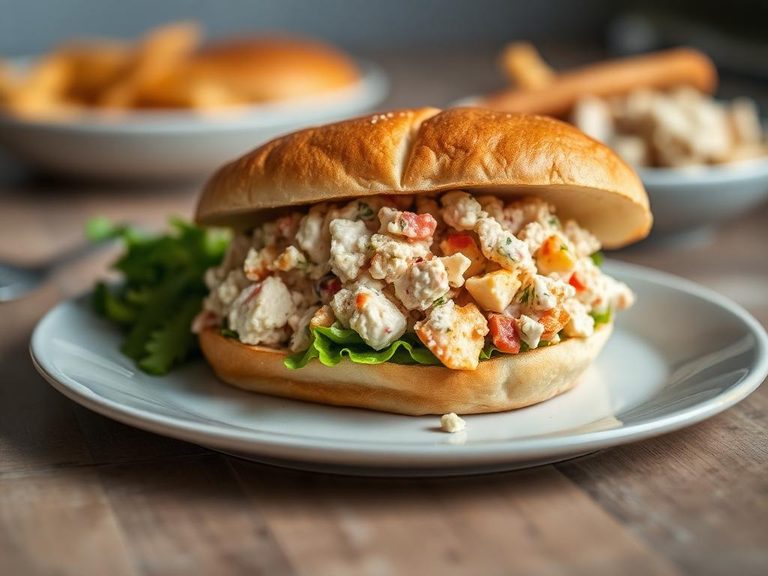
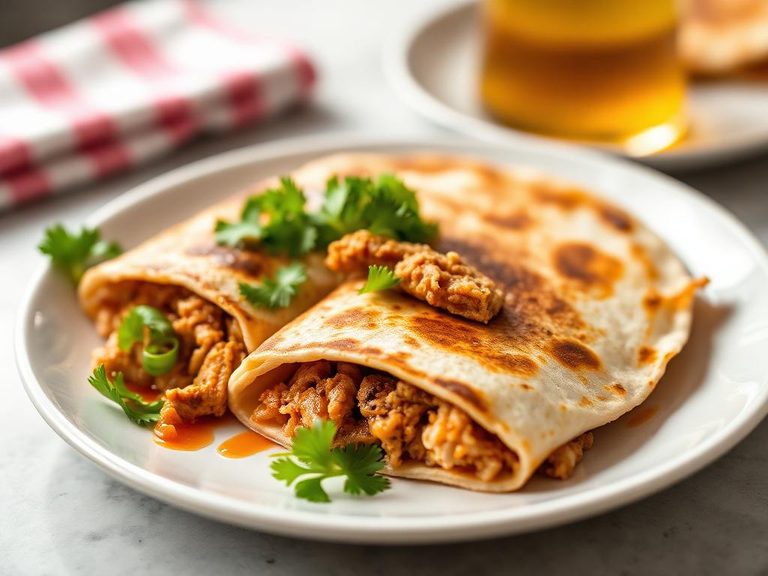
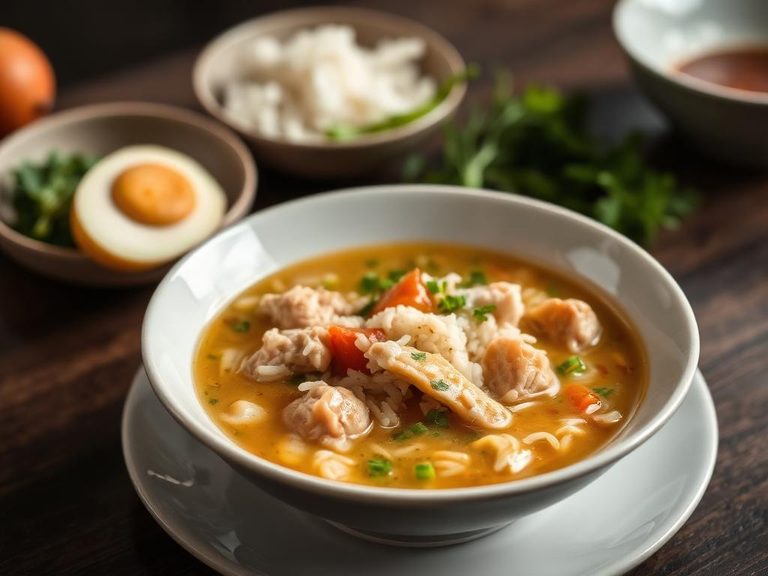
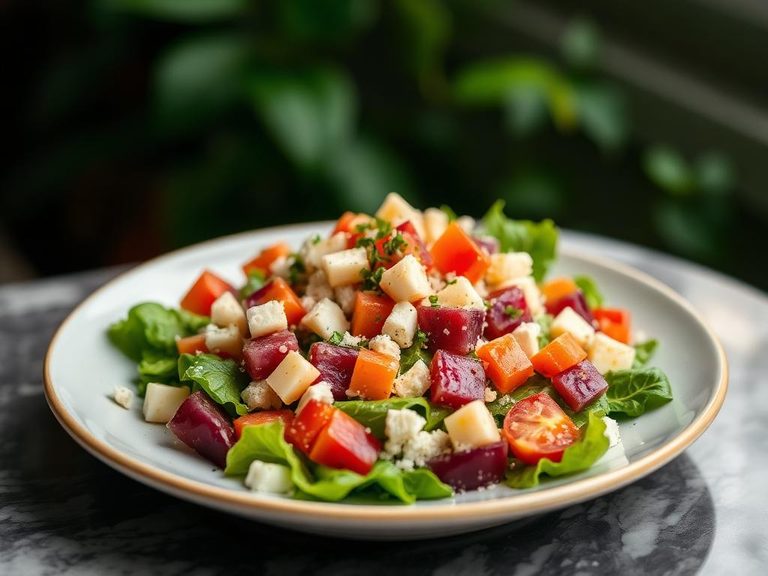
🌍 Where it's eaten
💡 Did you know?
The term 'broiler' refers to a chicken bred specifically for meat production, typically slaughtered at just 6-8 weeks of age, making it one of the most efficiently produced animal proteins globally.
Full nutrition (USDA data · scales with serving)
| Water | 68.2 g |
| Energy | 137 kcal |
| Energy | 574 kj |
| Protein | 28.0 g |
| Total lipid (fat) | 2.8 g |
| Ash | 1.7 g |
| Carbohydrate, by difference | 0.00 g |
| Fiber, total dietary | 0.00 g |
| Total Sugars | 0.00 g |
| Sucrose | 0.00 g |
| Glucose | 0.00 g |
| Fructose | 0.00 g |
| Lactose | 0.00 g |
| Maltose | 0.00 g |
| Galactose | 0.00 g |
| Calcium, Ca | 13.0 mg |
| Iron, Fe | 0.45 mg |
| Magnesium, Mg | 25.0 mg |
| Phosphorus, P | 235 mg |
| Potassium, K | 303 mg |
| Sodium, Na | 313 mg |
| Zinc, Zn | 0.86 mg |
| Copper, Cu | 0.04 mg |
| Manganese, Mn | 0.01 mg |
| Selenium, Se | 39.1 ug |
| Vitamin C, total ascorbic acid | 0.00 mg |
| Thiamin | 0.04 mg |
| Riboflavin | 0.21 mg |
| Niacin | 9.2 mg |
| Pantothenic acid | 1.4 mg |
| Vitamin B-6 | 0.24 mg |
| Folate, total | 11.0 ug |
| Folic acid | 0.00 ug |
| Folate, food | 11.0 ug |
| Folate, DFE | 11.0 ug |
| Choline, total | 68.7 mg |
| Betaine | 5.8 mg |
| Vitamin B-12 | 0.27 ug |
| Vitamin B-12, added | 0.00 ug |
| Vitamin A, RAE | 5.0 ug |
| Retinol | 5.0 ug |
| Carotene, beta | 0.00 ug |
| Carotene, alpha | 0.00 ug |
| Cryptoxanthin, beta | 0.00 ug |
| Vitamin A, IU | 17.0 iu |
| Lycopene | 0.00 ug |
| Lutein + zeaxanthin | 0.00 ug |
| Vitamin E (alpha-tocopherol) | 0.33 mg |
| Vitamin E, added | 0.00 mg |
| Tocopherol, beta | 0.00 mg |
| Tocopherol, gamma | 0.09 mg |
| Tocopherol, delta | 0.00 mg |
| Tocotrienol, alpha | 0.00 mg |
| Tocotrienol, beta | 0.00 mg |
| Tocotrienol, gamma | 0.00 mg |
| Tocotrienol, delta | 0.00 mg |
| Vitamin D (D2 + D3), International Units | 1.0 iu |
| Vitamin D (D2 + D3) | 0.00 ug |
| Vitamin D3 (cholecalciferol) | 0.00 ug |
| Vitamin K (phylloquinone) | 3.4 ug |
| Alcohol, ethyl | 0.00 g |
| Caffeine | 0.00 mg |
| Theobromine | 0.00 mg |
Fat & fatty acid profile (per 100g)
| Fatty acids, total saturated | 0.78 g |
| SFA 4:0 | 0.01 g |
| SFA 6:0 | 0.00 g |
| SFA 8:0 | 0.00 g |
| SFA 10:0 | 0.02 g |
| SFA 12:0 | 0.00 g |
| SFA 14:0 | 0.01 g |
| SFA 15:0 | 0.00 g |
| SFA 16:0 | 0.55 g |
| SFA 17:0 | 0.00 g |
| SFA 18:0 | 0.18 g |
| SFA 20:0 | 0.00 g |
| SFA 22:0 | 0.00 g |
| SFA 24:0 | 0.00 g |
| Fatty acids, total monounsaturated | 0.97 g |
| MUFA 14:1 | 0.00 g |
| MUFA 15:1 | 0.00 g |
| MUFA 16:1 | 0.12 g |
| MUFA 16:1 c | 0.12 g |
| MUFA 17:1 | 0.00 g |
| MUFA 18:1 | 0.83 g |
| MUFA 18:1 c | 0.82 g |
| MUFA 20:1 | 0.01 g |
| MUFA 22:1 | 0.00 g |
| MUFA 22:1 c | 0.00 g |
| MUFA 24:1 c | 0.00 g |
| Fatty acids, total polyunsaturated | 0.55 g |
| PUFA 18:2 | 0.42 g |
| PUFA 18:2 n-6 c,c | 0.42 g |
| PUFA 18:2 CLAs | 0.00 g |
| PUFA 18:3 | 0.01 g |
| PUFA 18:3 n-3 c,c,c (ALA) | 0.01 g |
| PUFA 18:3 n-6 c,c,c | 0.00 g |
| PUFA 18:3i | 0.00 g |
| PUFA 18:4 | 0.00 g |
| PUFA 20:2 n-6 c,c | 0.01 g |
| PUFA 20:3 | 0.02 g |
| PUFA 20:3 n-3 | 0.00 g |
| PUFA 20:3 n-6 | 0.02 g |
| PUFA 20:4 | 0.06 g |
| PUFA 20:5 n-3 (EPA) | 0.00 g |
| PUFA 22:4 | 0.01 g |
| PUFA 22:5 n-3 (DPA) | 0.01 g |
| PUFA 22:6 n-3 (DHA) | 0.00 g |
| Fatty acids, total trans | 0.01 g |
| Fatty acids, total trans-monoenoic | 0.01 g |
| TFA 16:1 t | 0.00 g |
| TFA 18:1 t | 0.01 g |
| TFA 22:1 t | 0.00 g |
| TFA 18:2 t not further defined | 0.00 g |
| Fatty acids, total trans-polyenoic | 0.00 g |
| Cholesterol | 86.0 mg |
Amino acid profile (per 100g)
| Tryptophan | 0.31 g |
| Threonine | 0.71 g |
| Isoleucine | 1.3 g |
| Leucine | 2.4 g |
| Lysine | 2.9 g |
| Methionine | 0.86 g |
| Cystine | 0.31 g |
| Phenylalanine | 1.2 g |
| Tyrosine | 0.99 g |
| Valine | 1.3 g |
| Arginine | 1.9 g |
| Histidine | 1.1 g |
| Alanine | 1.4 g |
| Aspartic acid | 1.7 g |
| Glutamic acid | 3.3 g |
| Glycine | 1.2 g |
| Proline | 1.1 g |
| Serine | 0.96 g |
| Hydroxyproline | 0.01 g |
FAQ
Is rotisserie chicken breast healthy?
Yes, it's an excellent source of lean protein and is low in fat and carbs. The main health consideration is sodium from the seasoning, which can be managed by rinsing the meat or choosing low-sodium versions when available.
How does it differ from baked or grilled chicken breast?
Rotisserie cooking involves slow-roasting on a spit, which often results in juicier meat due to constant rotation and self-basting. The flavor profile is typically more savory and herb-forward from the applied seasoning blend compared to plain baked chicken.
Can I eat this on a low-carb or keto diet?
Absolutely. With 0 grams of carbs and sugar, it's a perfect protein source for low-carb and ketogenic diets. Just be mindful of any sugary glazes or high-sugar sauces you might add to it.
Nutrient density (calculated · NRF9.3)
Nutrient Rich Foods index: beneficial nutrients (protein, fiber, vitamins, minerals) minus saturated fat, added sugar & sodium, per 100 kcal.
NRF9.3 index — Fulgoni, Keast & Drewnowski, 2009. Computed from USDA nutrients.
Weight-loss friendliness (composite index)
Energy density 1.37 kcal/g · 82% calories from protein · 0.0 g fiber · 0.0 g sugar per 100 g.
Composite of energy density (Rolls et al., 1999), protein & fiber satiety, minus sugar. A calculated heuristic — ranks satiety-per-calorie, not a clinical measure.
Dietary load (calculated from USDA values)
Potential renal acid load. Positive = acid-forming, negative = alkaline-forming.
Sodium-to-potassium ratio: 1.03 (lower is better — aim for ≤ 1)
Sodium:potassium per WHO potassium guidance. Computed from USDA nutrients.