

Chicken, broiler or fryers, breast, skinless, boneless, meat only, cooked, braised
Whole food · Poultry Products
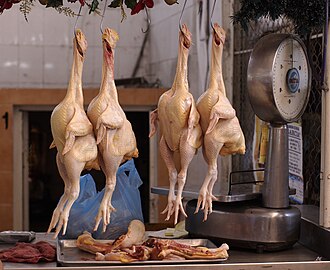
Photo: Wikipedia
This is lean, boneless, skinless chicken breast that has been gently simmered in liquid until tender and juicy. The braising process yields a moist, tender texture that is less prone to drying out than high-heat methods, with a mild, clean flavor that readily absorbs seasonings. Nutritionally, it is a powerhouse of complete protein with very little fat and no carbohydrates.
Calorie split: 81% protein · 0% carbs · 19% fat
↓ Full nutrition💚 Why it's loved
People love it for its incredible versatility and mild canvas, which acts like a blank slate for global flavors—from savory herbs to spicy marinades. It's a foundational ingredient for healthy eating, allowing for satisfying, protein-rich meals that are easy to prepare and portion.
⚠️ Watch-outs & how to enjoy it better
The primary downside is its potential for being bland or dry if overcooked, which can make meals feel monotonous. To counteract this, braise it in flavorful liquids (broth, wine, coconut milk) with aromatics, and avoid overcooking by using a meat thermometer (aim for 165°F/74°C). Those watching sodium intake should be mindful of added salts in braising liquids or pre-made marinades.
Key benefits
- Excellent source of complete, high-quality protein for muscle maintenance and repair.
- Very low in fat, especially saturated fat, making it heart-healthy.
- Zero carbohydrates and sugars, suitable for low-carb and ketogenic diets.
- Provides essential nutrients like niacin, vitamin B6, and phosphorus.
🍽️ Popular dishes
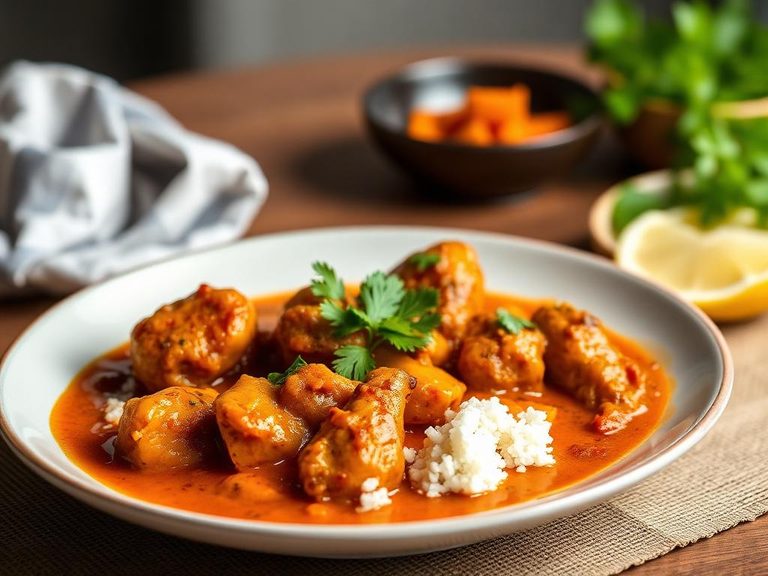
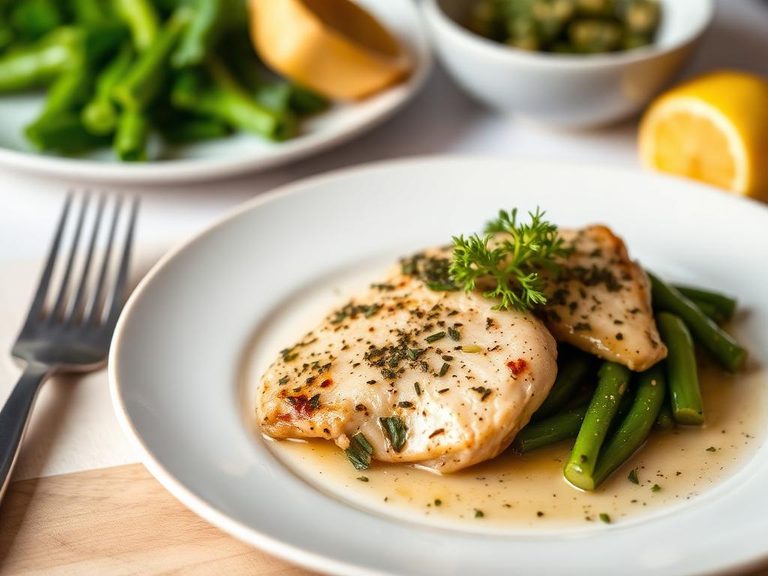
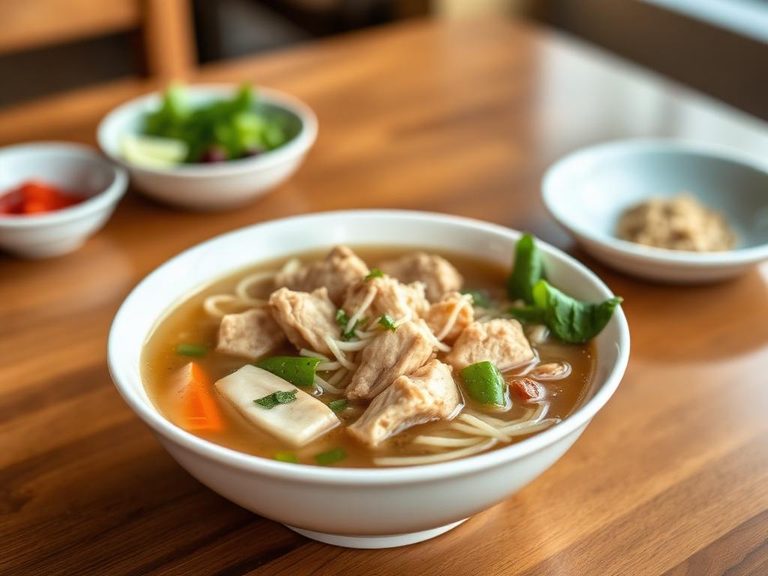
🌍 Where it's eaten
💡 Did you know?
A single 100g serving of braised chicken breast provides over 60% of the daily recommended intake of niacin (vitamin B3), a nutrient crucial for converting food into energy and maintaining healthy skin and nerves.
Full nutrition (USDA data · scales with serving)
| Water | 65.3 g |
| Energy | 157 kcal |
| Energy | 659 kj |
| Protein | 32.1 g |
| Total lipid (fat) | 3.2 g |
| Ash | 1.2 g |
| Carbohydrate, by difference | 0.00 g |
| Fiber, total dietary | 0.00 g |
| Total Sugars | 0.00 g |
| Calcium, Ca | 6.0 mg |
| Iron, Fe | 0.49 mg |
| Magnesium, Mg | 32.0 mg |
| Phosphorus, P | 241 mg |
| Potassium, K | 343 mg |
| Sodium, Na | 47.0 mg |
| Zinc, Zn | 0.96 mg |
| Copper, Cu | 0.04 mg |
| Manganese, Mn | 0.01 mg |
| Selenium, Se | 31.9 ug |
| Vitamin C, total ascorbic acid | 0.00 mg |
| Thiamin | 0.10 mg |
| Riboflavin | 0.19 mg |
| Niacin | 9.4 mg |
| Pantothenic acid | 1.6 mg |
| Vitamin B-6 | 0.92 mg |
| Choline, total | 117 mg |
| Betaine | 10.0 mg |
| Vitamin B-12 | 0.20 ug |
| Vitamin B-12, added | 0.00 ug |
| Vitamin A, RAE | 10.0 ug |
| Retinol | 10.0 ug |
| Carotene, beta | 0.00 ug |
| Carotene, alpha | 0.00 ug |
| Cryptoxanthin, beta | 0.00 ug |
| Vitamin A, IU | 33.0 iu |
| Lycopene | 0.00 ug |
| Lutein + zeaxanthin | 0.00 ug |
| Vitamin E (alpha-tocopherol) | 0.33 mg |
| Vitamin E, added | 0.00 mg |
| Tocopherol, beta | 0.00 mg |
| Tocopherol, gamma | 0.07 mg |
| Tocopherol, delta | 0.01 mg |
| Tocotrienol, alpha | 0.00 mg |
| Tocotrienol, beta | 0.00 mg |
| Tocotrienol, gamma | 0.00 mg |
| Tocotrienol, delta | 0.00 mg |
| Vitamin D (D2 + D3), International Units | 1.0 iu |
| Vitamin D (D2 + D3) | 0.00 ug |
| Vitamin D3 (cholecalciferol) | 0.00 ug |
| Vitamin K (phylloquinone) | 4.3 ug |
| Alcohol, ethyl | 0.00 g |
| Caffeine | 0.00 mg |
| Theobromine | 0.00 mg |
Fat & fatty acid profile (per 100g)
| Fatty acids, total saturated | 1.0 g |
| SFA 4:0 | 0.00 g |
| SFA 6:0 | 0.00 g |
| SFA 8:0 | 0.00 g |
| SFA 10:0 | 0.01 g |
| SFA 12:0 | 0.01 g |
| SFA 14:0 | 0.02 g |
| SFA 15:0 | 0.00 g |
| SFA 16:0 | 0.75 g |
| SFA 17:0 | 0.00 g |
| SFA 18:0 | 0.21 g |
| SFA 20:0 | 0.00 g |
| SFA 22:0 | 0.01 g |
| SFA 24:0 | 0.00 g |
| Fatty acids, total monounsaturated | 1.3 g |
| MUFA 14:1 | 0.01 g |
| MUFA 15:1 | 0.00 g |
| MUFA 16:1 | 0.15 g |
| MUFA 16:1 c | 0.15 g |
| MUFA 17:1 | 0.00 g |
| MUFA 18:1 | 1.1 g |
| MUFA 18:1 c | 1.1 g |
| MUFA 20:1 | 0.02 g |
| MUFA 22:1 | 0.00 g |
| MUFA 22:1 c | 0.00 g |
| MUFA 24:1 c | 0.00 g |
| Fatty acids, total polyunsaturated | 0.79 g |
| PUFA 18:2 | 0.60 g |
| PUFA 18:2 n-6 c,c | 0.60 g |
| PUFA 18:2 CLAs | 0.00 g |
| PUFA 18:3 | 0.03 g |
| PUFA 18:3 n-3 c,c,c (ALA) | 0.03 g |
| PUFA 18:3 n-6 c,c,c | 0.00 g |
| PUFA 18:3i | 0.00 g |
| PUFA 18:4 | 0.00 g |
| PUFA 20:2 n-6 c,c | 0.01 g |
| PUFA 20:3 | 0.02 g |
| PUFA 20:3 n-3 | 0.00 g |
| PUFA 20:3 n-6 | 0.02 g |
| PUFA 20:4 | 0.09 g |
| PUFA 20:5 n-3 (EPA) | 0.00 g |
| PUFA 22:4 | 0.02 g |
| PUFA 22:5 n-3 (DPA) | 0.01 g |
| PUFA 22:6 n-3 (DHA) | 0.01 g |
| Fatty acids, total trans | 0.01 g |
| Fatty acids, total trans-monoenoic | 0.01 g |
| TFA 16:1 t | 0.00 g |
| TFA 18:1 t | 0.01 g |
| TFA 22:1 t | 0.00 g |
| TFA 18:2 t not further defined | 0.00 g |
| Fatty acids, total trans-polyenoic | 0.00 g |
| Cholesterol | 116 mg |
Amino acid profile (per 100g)
| Tryptophan | 0.40 g |
| Threonine | 1.4 g |
| Isoleucine | 1.6 g |
| Leucine | 2.7 g |
| Lysine | 3.1 g |
| Methionine | 0.83 g |
| Cystine | 0.34 g |
| Phenylalanine | 1.3 g |
| Tyrosine | 1.2 g |
| Valine | 1.7 g |
| Arginine | 2.2 g |
| Histidine | 1.2 g |
| Alanine | 1.9 g |
| Aspartic acid | 3.0 g |
| Glutamic acid | 4.7 g |
| Glycine | 1.4 g |
| Proline | 1.0 g |
| Serine | 1.2 g |
FAQ
How is braised chicken different from roasted or grilled chicken?
Braising involves first searing the chicken and then simmering it slowly in a small amount of liquid (like broth or wine) in a covered pot. This method uses moist heat, resulting in a very tender, juicy texture that is less prone to drying out compared to the dry heat of roasting or grilling.
Is braised chicken breast healthy?
Yes, it is an exceptionally healthy protein source. It's very low in fat, high in complete protein, and contains no carbs or sugars. The braising method itself doesn't add significant fat if you use a minimal amount of oil for searing and a flavorful, low-sodium liquid.
How do I prevent braised chicken from becoming stringy?
Stringiness is often a sign of overcooking. Use a meat thermometer and remove the chicken from the braising liquid as soon as it reaches an internal temperature of 165°F (74°C). Letting it rest in the liquid for a few minutes off the heat before slicing also helps retain juices.
Nutrient density (calculated · NRF9.3)
Nutrient Rich Foods index: beneficial nutrients (protein, fiber, vitamins, minerals) minus saturated fat, added sugar & sodium, per 100 kcal.
NRF9.3 index — Fulgoni, Keast & Drewnowski, 2009. Computed from USDA nutrients.
Weight-loss friendliness (composite index)
Energy density 1.57 kcal/g · 82% calories from protein · 0.0 g fiber · 0.0 g sugar per 100 g.
Composite of energy density (Rolls et al., 1999), protein & fiber satiety, minus sugar. A calculated heuristic — ranks satiety-per-calorie, not a clinical measure.
Dietary load (calculated from USDA values)
Potential renal acid load. Positive = acid-forming, negative = alkaline-forming.
Sodium-to-potassium ratio: 0.14 (lower is better — aim for ≤ 1)
Sodium:potassium per WHO potassium guidance. Computed from USDA nutrients.