

Chicken, broiler or fryers, breast, skinless, boneless, meat only, raw
Whole food · Poultry Products
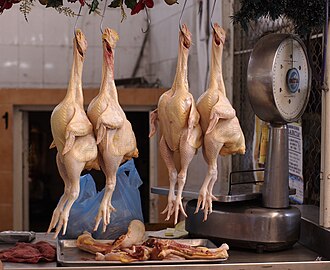
Photo: Wikipedia
This is the lean, pale pink muscle from the front of a chicken, prized for its mild flavor and remarkably tender, fine-grained texture when cooked properly. Nutritionally, it's a powerhouse of high-quality, complete protein with virtually no fat or carbohydrates, making it a foundational ingredient for muscle building and calorie-conscious diets.
Calorie split: 79% protein · 0% carbs · 21% fat
↓ Full nutrition💚 Why it's loved
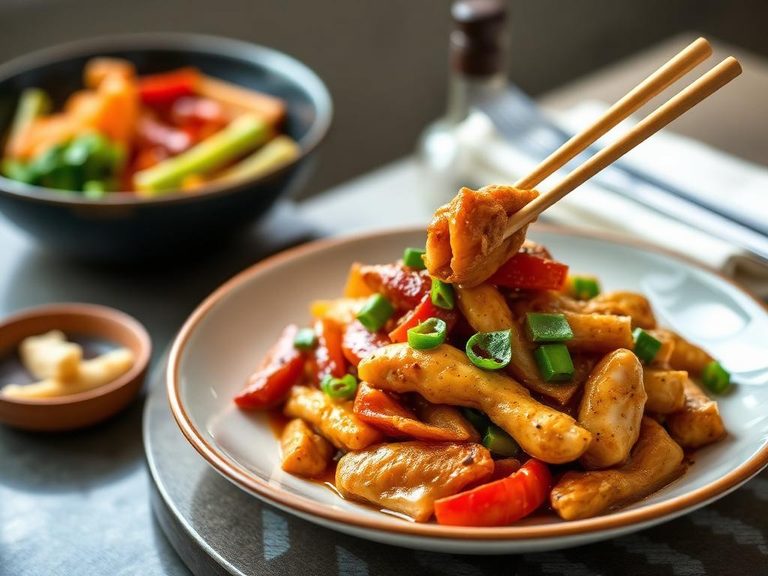
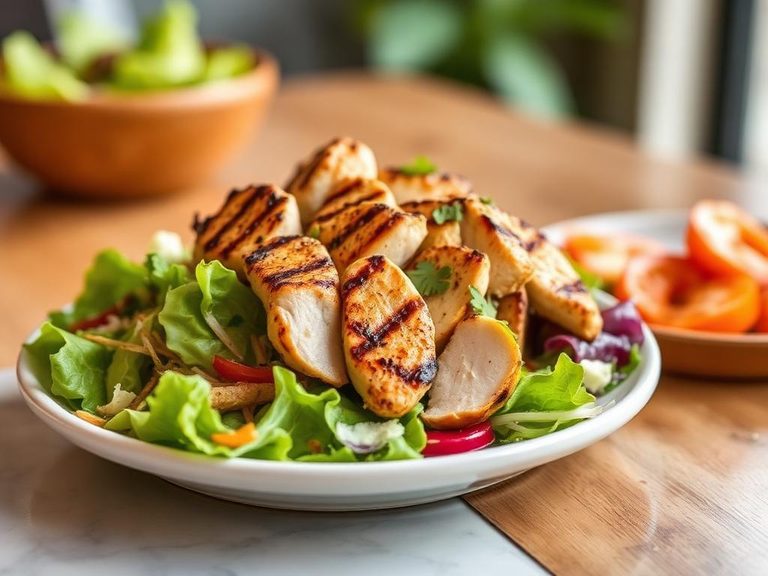
People love it for its incredible versatility—it acts as a blank canvas that readily absorbs marinades, spices, and sauces from any cuisine. It's also a reliable, quick-cooking staple for healthy weeknight meals, from stir-fries to salads.
⚠️ Watch-outs & how to enjoy it better
Its extreme leanness means it can easily become dry and chalky if overcooked, which is a common complaint. To counteract this, brine it in saltwater for 30 minutes before cooking, use a meat thermometer to pull it at 160°F (71°C), and always let it rest for 5 minutes after cooking to redistribute juices.
Key benefits
- Excellent source of complete, high-quality protein
- Very low in fat and contains zero carbohydrates
- Highly versatile for countless cooking methods
- Lean protein source supports muscle maintenance
- Low-calorie density aids in weight management
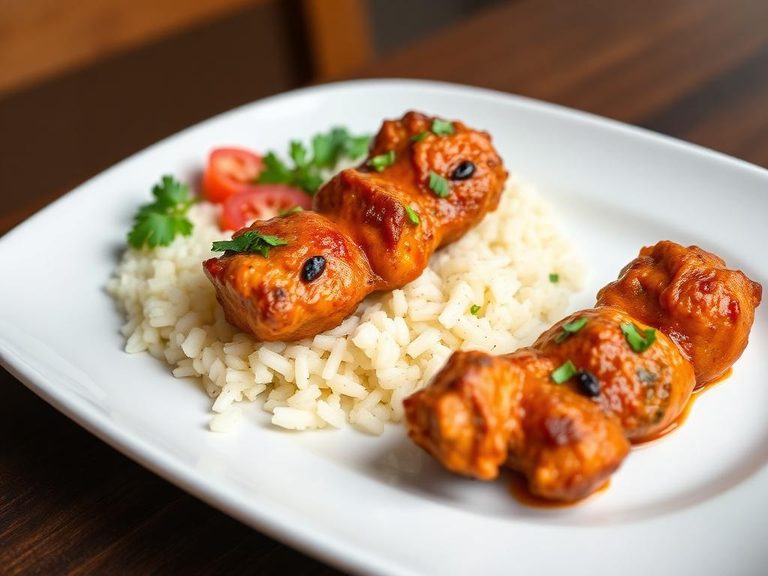
🍽️ Popular dishes
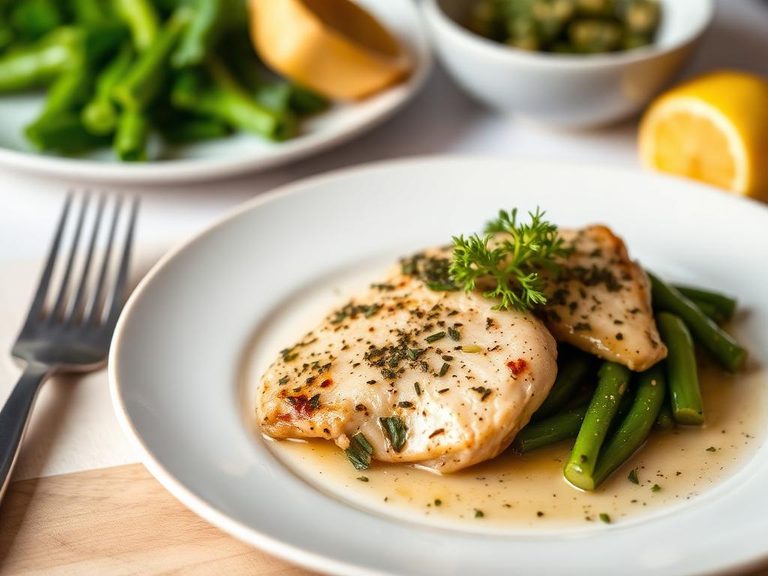
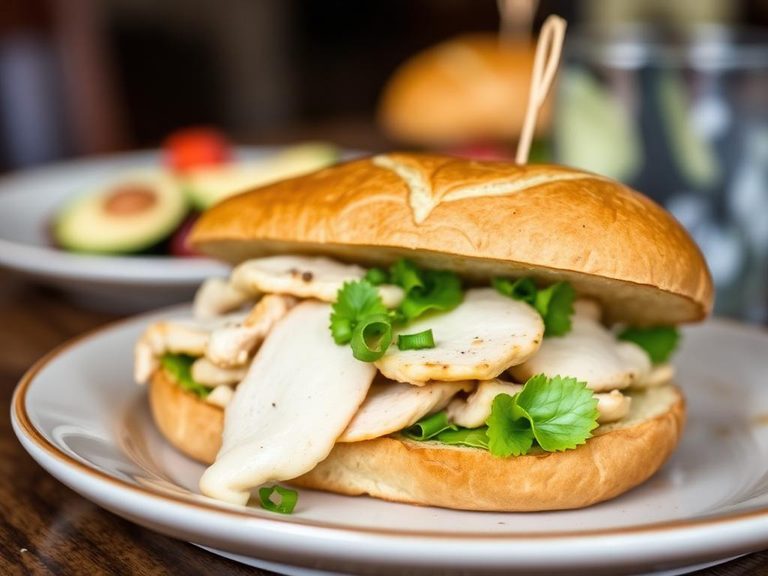
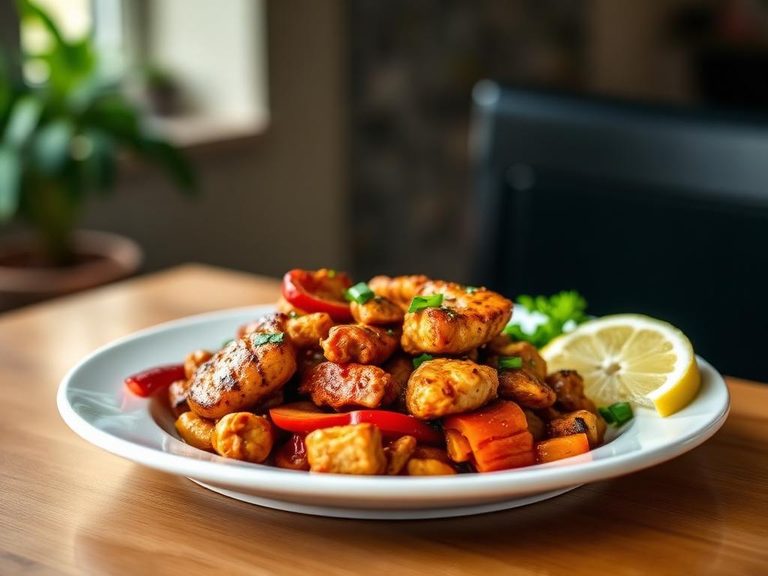
🌍 Where it's eaten
💡 Did you know?
A single raw, skinless chicken breast (about 172g) can provide over 50 grams of protein, which is more than the recommended daily intake for many adults.
Full nutrition (USDA data · scales with serving)
| Water | 73.9 g |
| Energy | 120 kcal |
| Energy | 501 kj |
| Protein | 22.5 g |
| Total lipid (fat) | 2.6 g |
| Ash | 1.1 g |
| Carbohydrate, by difference | 0.00 g |
| Fiber, total dietary | 0.00 g |
| Total Sugars | 0.00 g |
| Calcium, Ca | 5.0 mg |
| Iron, Fe | 0.37 mg |
| Magnesium, Mg | 28.0 mg |
| Phosphorus, P | 213 mg |
| Potassium, K | 334 mg |
| Sodium, Na | 45.0 mg |
| Zinc, Zn | 0.68 mg |
| Copper, Cu | 0.04 mg |
| Manganese, Mn | 0.01 mg |
| Selenium, Se | 22.8 ug |
| Vitamin C, total ascorbic acid | 0.00 mg |
| Thiamin | 0.09 mg |
| Riboflavin | 0.18 mg |
| Niacin | 9.6 mg |
| Pantothenic acid | 1.5 mg |
| Vitamin B-6 | 0.81 mg |
| Folate, total | 9.0 ug |
| Folic acid | 0.00 ug |
| Folate, food | 9.0 ug |
| Folate, DFE | 9.0 ug |
| Choline, total | 82.1 mg |
| Betaine | 7.0 mg |
| Vitamin B-12 | 0.21 ug |
| Vitamin B-12, added | 0.00 ug |
| Vitamin A, RAE | 9.0 ug |
| Retinol | 9.0 ug |
| Carotene, beta | 0.00 ug |
| Carotene, alpha | 0.00 ug |
| Cryptoxanthin, beta | 0.00 ug |
| Vitamin A, IU | 30.0 iu |
| Lycopene | 0.00 ug |
| Lutein + zeaxanthin | 0.00 ug |
| Vitamin E (alpha-tocopherol) | 0.56 mg |
| Vitamin E, added | 0.00 mg |
| Tocopherol, beta | 0.00 mg |
| Tocopherol, gamma | 0.09 mg |
| Tocopherol, delta | 0.00 mg |
| Tocotrienol, alpha | 0.00 mg |
| Tocotrienol, beta | 0.00 mg |
| Tocotrienol, gamma | 0.00 mg |
| Tocotrienol, delta | 0.00 mg |
| Vitamin D (D2 + D3), International Units | 1.0 iu |
| Vitamin D (D2 + D3) | 0.00 ug |
| Vitamin D3 (cholecalciferol) | 0.00 ug |
| Vitamin K (phylloquinone) | 0.00 ug |
| Vitamin K (Dihydrophylloquinone) | 0.00 ug |
| Vitamin K (Menaquinone-4) | 8.4 ug |
| Alcohol, ethyl | 0.00 g |
| Caffeine | 0.00 mg |
| Theobromine | 0.00 mg |
Fat & fatty acid profile (per 100g)
| Fatty acids, total saturated | 0.56 g |
| SFA 4:0 | 0.00 g |
| SFA 6:0 | 0.00 g |
| SFA 8:0 | 0.00 g |
| SFA 10:0 | 0.02 g |
| SFA 12:0 | 0.00 g |
| SFA 14:0 | 0.01 g |
| SFA 15:0 | 0.00 g |
| SFA 16:0 | 0.39 g |
| SFA 17:0 | 0.00 g |
| SFA 18:0 | 0.13 g |
| SFA 20:0 | 0.00 g |
| SFA 22:0 | 0.00 g |
| SFA 24:0 | 0.00 g |
| Fatty acids, total monounsaturated | 0.69 g |
| MUFA 14:1 | 0.00 g |
| MUFA 15:1 | 0.00 g |
| MUFA 16:1 | 0.08 g |
| MUFA 16:1 c | 0.08 g |
| MUFA 17:1 | 0.00 g |
| MUFA 18:1 | 0.59 g |
| MUFA 18:1 c | 0.58 g |
| MUFA 20:1 | 0.01 g |
| MUFA 22:1 | 0.00 g |
| MUFA 22:1 c | 0.00 g |
| MUFA 24:1 c | 0.00 g |
| Fatty acids, total polyunsaturated | 0.42 g |
| PUFA 18:2 | 0.32 g |
| PUFA 18:2 n-6 c,c | 0.32 g |
| PUFA 18:2 CLAs | 0.00 g |
| PUFA 18:3 | 0.01 g |
| PUFA 18:3 n-3 c,c,c (ALA) | 0.01 g |
| PUFA 18:3 n-6 c,c,c | 0.00 g |
| PUFA 18:3i | 0.00 g |
| PUFA 18:4 | 0.00 g |
| PUFA 20:2 n-6 c,c | 0.01 g |
| PUFA 20:3 | 0.01 g |
| PUFA 20:3 n-3 | 0.00 g |
| PUFA 20:3 n-6 | 0.01 g |
| PUFA 20:4 | 0.05 g |
| PUFA 20:5 n-3 (EPA) | 0.00 g |
| PUFA 22:4 | 0.01 g |
| PUFA 22:5 n-3 (DPA) | 0.01 g |
| PUFA 22:6 n-3 (DHA) | 0.00 g |
| Fatty acids, total trans | 0.01 g |
| Fatty acids, total trans-monoenoic | 0.01 g |
| TFA 16:1 t | 0.00 g |
| TFA 18:1 t | 0.01 g |
| TFA 22:1 t | 0.00 g |
| TFA 18:2 t not further defined | 0.00 g |
| Fatty acids, total trans-polyenoic | 0.00 g |
| Cholesterol | 73.0 mg |
Amino acid profile (per 100g)
| Tryptophan | 0.28 g |
| Threonine | 1.0 g |
| Isoleucine | 1.1 g |
| Leucine | 1.9 g |
| Lysine | 2.2 g |
| Methionine | 0.58 g |
| Cystine | 0.24 g |
| Phenylalanine | 0.91 g |
| Tyrosine | 0.81 g |
| Valine | 1.2 g |
| Arginine | 1.5 g |
| Histidine | 0.84 g |
| Alanine | 1.3 g |
| Aspartic acid | 2.1 g |
| Glutamic acid | 3.3 g |
| Glycine | 1.00 g |
| Proline | 0.71 g |
| Serine | 0.86 g |
FAQ
Why does my chicken breast turn out dry and rubbery?
This is almost always from overcooking. Chicken breast is very lean and cooks quickly. Use a meat thermometer and remove it from heat when the internal temperature reaches 160°F (71°C). Let it rest for 5 minutes before cutting, as the temperature will rise a few more degrees while resting.
What's the best way to add flavor to this lean meat?
Marinating is key. Even a 30-minute soak in an acidic mixture (like yogurt, citrus juice, or vinegar) with oil and spices will tenderize and infuse flavor. Dry rubs applied before grilling or pan-searing also create a flavorful crust.
Is it safe to eat chicken breast that's still slightly pink inside?
The USDA recommends cooking poultry to an internal temperature of 165°F (74°C) to ensure all harmful bacteria are destroyed. Relying on color is unreliable; a meat thermometer is the only safe way to check doneness.
Nutrient density (calculated · NRF9.3)
Nutrient Rich Foods index: beneficial nutrients (protein, fiber, vitamins, minerals) minus saturated fat, added sugar & sodium, per 100 kcal.
NRF9.3 index — Fulgoni, Keast & Drewnowski, 2009. Computed from USDA nutrients.
Weight-loss friendliness (composite index)
Energy density 1.20 kcal/g · 75% calories from protein · 0.0 g fiber · 0.0 g sugar per 100 g.
Composite of energy density (Rolls et al., 1999), protein & fiber satiety, minus sugar. A calculated heuristic — ranks satiety-per-calorie, not a clinical measure.
Dietary load (calculated from USDA values)
Potential renal acid load. Positive = acid-forming, negative = alkaline-forming.
Sodium-to-potassium ratio: 0.13 (lower is better — aim for ≤ 1)
Sodium:potassium per WHO potassium guidance. Computed from USDA nutrients.