

Cheese, mozzarella, low moisture, part-skim, shredded
Whole food · Dairy and Egg Products
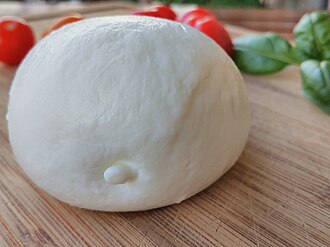
Photo: Wikipedia
Low-moisture, part-skim mozzarella is the workhorse of the pizza world, offering a firm, sliceable texture and a satisfying, milky chew. Its reduced moisture content means it browns beautifully without making your pizza soggy, delivering that iconic, stretchy cheese pull. With nearly 24g of protein per 100g, it's a surprisingly robust protein source for a cheese.
Calorie split: 31% protein · 11% carbs · 58% fat
↓ Full nutrition💚 Why it's loved
People adore it for its perfect balance of flavor and function—it melts into a glorious, stretchy blanket without overwhelming other ingredients, making it the ultimate team player in dishes from pizza to lasagna. Its mild, milky taste is a crowd-pleaser, and its cultural association with comfort foods like pizza gives it a nostalgic, satisfying appeal.
⚠️ Watch-outs & how to enjoy it better
As a dairy product, it's a common allergen and can be high in sodium, which may concern those monitoring blood pressure. The saturated fat content, while lower than whole-milk versions, is still significant. To counteract, pair it with fiber-rich vegetables on pizza or in salads, and practice portion control—use it as a flavorful accent rather than the main event.
Key benefits
- Excellent source of high-quality protein
- Good source of calcium for bone health
- Lower in fat than whole-milk mozzarella
- Provides phosphorus and B vitamins
- Melts and browns exceptionally well
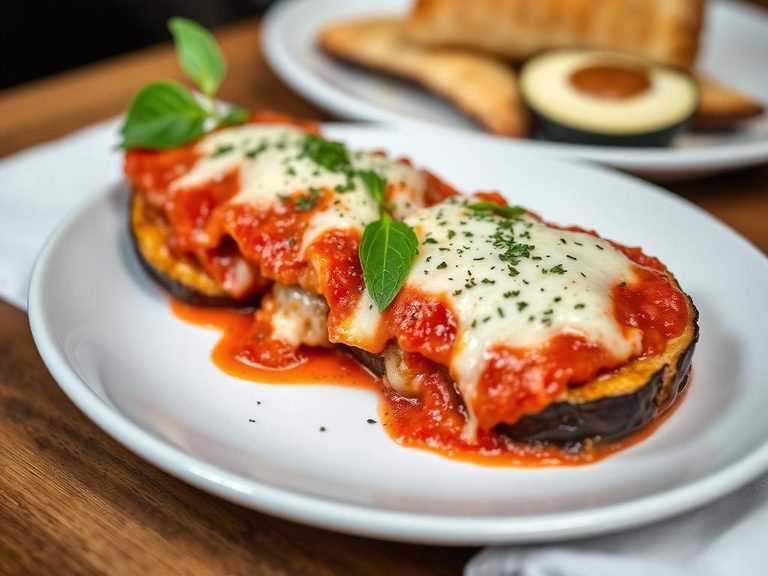
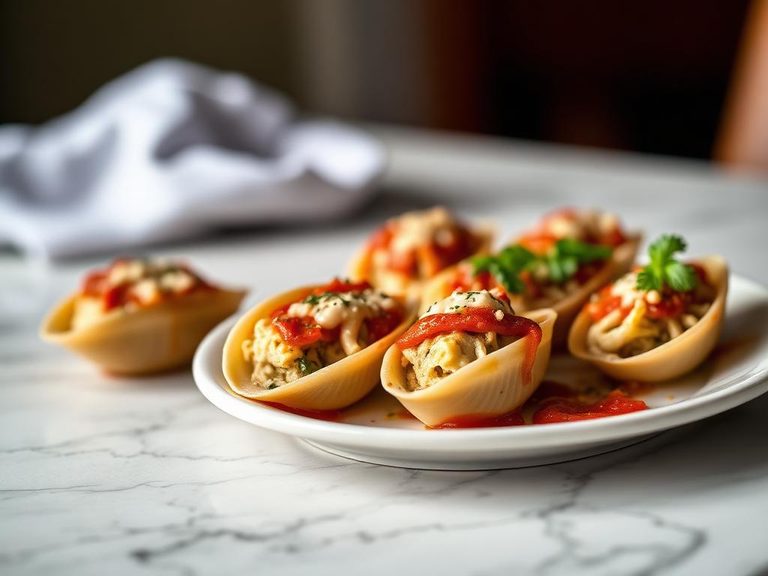
🍽️ Popular dishes
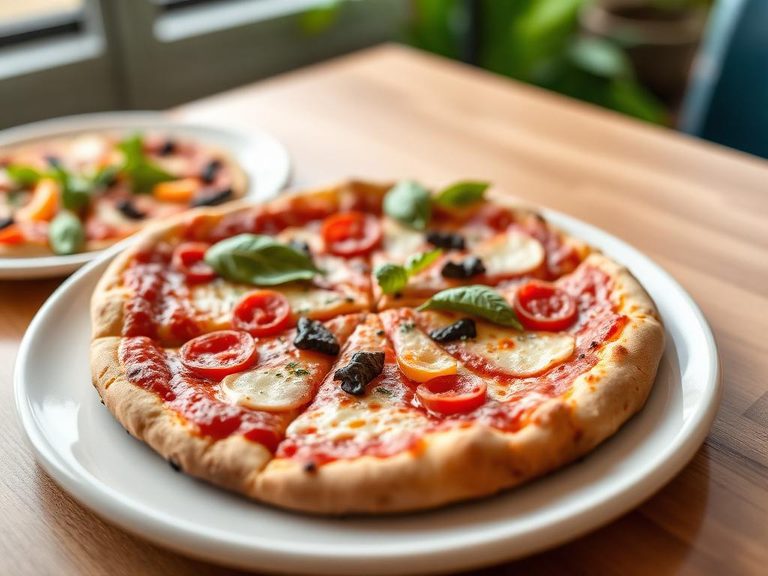
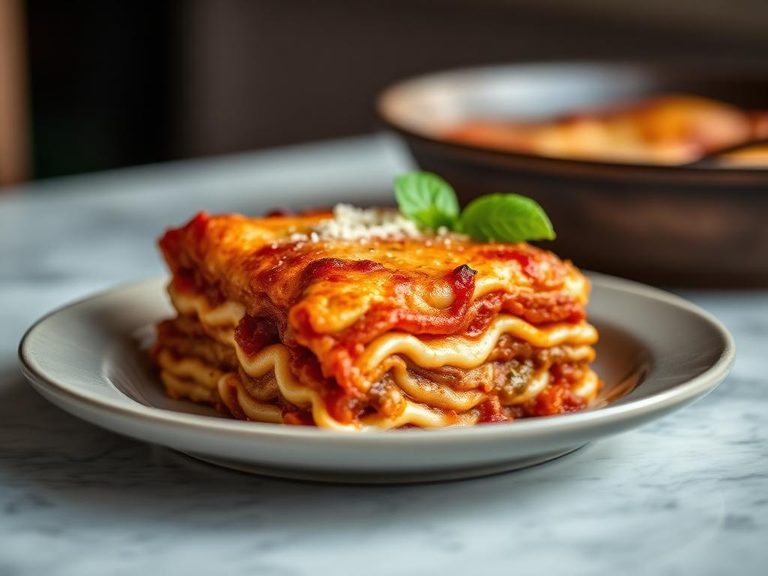
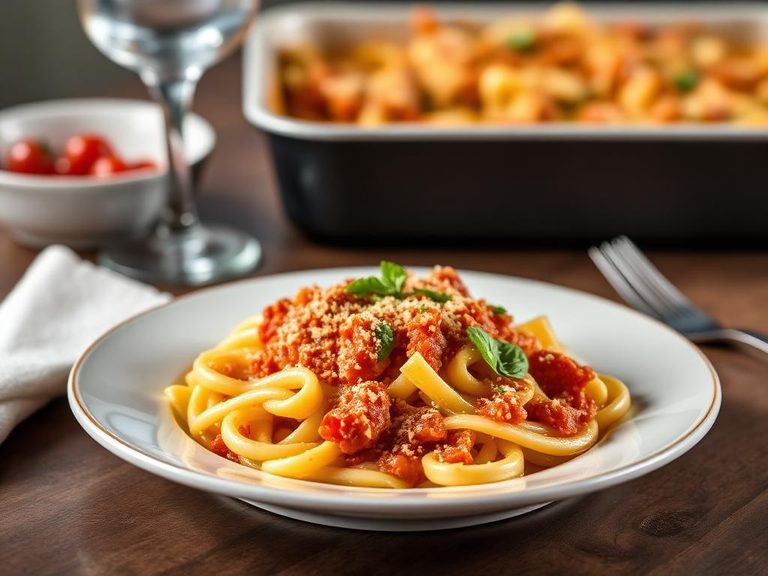

🌍 Where it's eaten
💡 Did you know?
The 'low-moisture' version was actually developed in the United States in the early 20th century to create a cheese with a longer shelf life that could withstand shipping, diverging from the fresh, soft mozzarella di bufala of Italy.
Full nutrition (USDA data · scales with serving)
| Water | 44.8 g |
| Energy | 304 kcal |
| Energy | 1273 kj |
| Protein | 23.6 g |
| Total lipid (fat) | 19.7 g |
| Ash | 3.8 g |
| Carbohydrate, by difference | 8.1 g |
| Fiber, total dietary | 0.00 g |
| Total Sugars | 2.2 g |
| Sucrose | 0.00 g |
| Glucose | 0.00 g |
| Fructose | 0.00 g |
| Lactose | 1.4 g |
| Maltose | 0.00 g |
| Galactose | 0.75 g |
| Calcium, Ca | 716 mg |
| Iron, Fe | 0.23 mg |
| Magnesium, Mg | 29.0 mg |
| Phosphorus, P | 537 mg |
| Potassium, K | 131 mg |
| Sodium, Na | 682 mg |
| Zinc, Zn | 3.6 mg |
| Copper, Cu | 0.03 mg |
| Manganese, Mn | 0.04 mg |
| Selenium, Se | 26.8 ug |
| Vitamin C, total ascorbic acid | 0.00 mg |
| Thiamin | 0.03 mg |
| Riboflavin | 0.37 mg |
| Niacin | 0.15 mg |
| Pantothenic acid | 0.51 mg |
| Vitamin B-6 | 0.11 mg |
| Folate, total | 27.0 ug |
| Folic acid | 0.00 ug |
| Folate, food | 27.0 ug |
| Folate, DFE | 27.0 ug |
| Choline, total | 14.2 mg |
| Betaine | 0.70 mg |
| Vitamin B-12 | 1.3 ug |
| Vitamin B-12, added | 0.00 ug |
| Vitamin A, RAE | 254 ug |
| Retinol | 254 ug |
| Carotene, beta | 0.00 ug |
| Carotene, alpha | 0.00 ug |
| Cryptoxanthin, beta | 0.00 ug |
| Vitamin A, IU | 846 iu |
| Lycopene | 0.00 ug |
| Lutein + zeaxanthin | 0.00 ug |
| Vitamin E (alpha-tocopherol) | 0.49 mg |
| Vitamin E, added | 0.00 mg |
| Tocopherol, beta | 0.00 mg |
| Tocopherol, gamma | 0.02 mg |
| Tocopherol, delta | 0.00 mg |
| Tocotrienol, alpha | 0.00 mg |
| Tocotrienol, beta | 0.00 mg |
| Tocotrienol, gamma | 0.00 mg |
| Tocotrienol, delta | 0.00 mg |
| Vitamin D (D2 + D3), International Units | 14.0 iu |
| Vitamin D (D2 + D3) | 0.40 ug |
| Vitamin D3 (cholecalciferol) | 0.40 ug |
| Vitamin K (phylloquinone) | 1.3 ug |
| Vitamin K (Dihydrophylloquinone) | 0.00 ug |
| Vitamin K (Menaquinone-4) | 4.1 ug |
| Alcohol, ethyl | 0.00 g |
| Caffeine | 0.00 mg |
| Theobromine | 0.00 mg |
Fat & fatty acid profile (per 100g)
| Fatty acids, total saturated | 11.5 g |
| SFA 4:0 | 0.40 g |
| SFA 6:0 | 0.34 g |
| SFA 8:0 | 0.21 g |
| SFA 10:0 | 0.50 g |
| SFA 12:0 | 0.57 g |
| SFA 14:0 | 1.8 g |
| SFA 15:0 | 0.19 g |
| SFA 16:0 | 5.2 g |
| SFA 17:0 | 0.12 g |
| SFA 18:0 | 2.1 g |
| SFA 20:0 | 0.03 g |
| SFA 22:0 | 0.01 g |
| SFA 24:0 | 0.01 g |
| Fatty acids, total monounsaturated | 5.1 g |
| MUFA 14:1 | 0.18 g |
| MUFA 15:1 | 0.00 g |
| MUFA 16:1 | 0.29 g |
| MUFA 16:1 c | 0.24 g |
| MUFA 17:1 | 0.04 g |
| MUFA 18:1 | 4.6 g |
| MUFA 18:1 c | 4.0 g |
| MUFA 20:1 | 0.04 g |
| MUFA 22:1 | 0.00 g |
| MUFA 22:1 c | 0.00 g |
| MUFA 24:1 c | 0.00 g |
| Fatty acids, total polyunsaturated | 0.86 g |
| PUFA 18:2 | 0.71 g |
| PUFA 18:2 n-6 c,c | 0.47 g |
| PUFA 18:2 CLAs | 0.10 g |
| PUFA 18:3 | 0.08 g |
| PUFA 18:3 n-3 c,c,c (ALA) | 0.07 g |
| PUFA 18:3 n-6 c,c,c | 0.00 g |
| PUFA 18:3i | 0.00 g |
| PUFA 18:4 | 0.00 g |
| PUFA 20:2 n-6 c,c | 0.01 g |
| PUFA 20:3 | 0.02 g |
| PUFA 20:3 n-3 | 0.00 g |
| PUFA 20:3 n-6 | 0.02 g |
| PUFA 20:4 | 0.03 g |
| PUFA 20:5 n-3 (EPA) | 0.01 g |
| PUFA 22:4 | 0.01 g |
| PUFA 22:5 n-3 (DPA) | 0.01 g |
| PUFA 22:6 n-3 (DHA) | 0.00 g |
| Fatty acids, total trans | 0.71 g |
| Fatty acids, total trans-monoenoic | 0.57 g |
| TFA 16:1 t | 0.05 g |
| TFA 18:1 t | 0.52 g |
| TFA 22:1 t | 0.00 g |
| TFA 18:2 t not further defined | 0.14 g |
| Fatty acids, total trans-polyenoic | 0.14 g |
| Cholesterol | 65.0 mg |
Amino acid profile (per 100g)
| Tryptophan | 0.31 g |
| Threonine | 1.1 g |
| Isoleucine | 1.3 g |
| Leucine | 2.4 g |
| Lysine | 2.0 g |
| Methionine | 0.57 g |
| Cystine | 0.14 g |
| Phenylalanine | 1.2 g |
| Tyrosine | 1.3 g |
| Valine | 1.6 g |
| Arginine | 1.1 g |
| Histidine | 0.69 g |
| Alanine | 0.82 g |
| Aspartic acid | 1.9 g |
| Glutamic acid | 5.5 g |
| Glycine | 0.47 g |
| Proline | 2.6 g |
| Serine | 1.4 g |
FAQ
What's the difference between this and fresh mozzarella?
Low-moisture, part-skim mozzarella is aged longer and pressed to remove whey, giving it a firmer texture, lower moisture, and better melting properties for browning. Fresh mozzarella is softer, wetter, and has a milky, delicate flavor, ideal for Caprese salads.
Can I use this in a Caprese salad?
You can, but it's not ideal. Its firm, dense texture and milder flavor won't provide the same soft, creamy, milky contrast to tomatoes and basil that fresh mozzarella does. It's designed for cooking and melting.
Why does it brown so well on pizza?
Its low moisture content allows the surface to dehydrate quickly in a hot oven, facilitating the Maillard reaction—the chemical process that creates browning and complex flavors—without making the pizza soggy.
Nutrient density (calculated · NRF9.3)
Nutrient Rich Foods index: beneficial nutrients (protein, fiber, vitamins, minerals) minus saturated fat, added sugar & sodium, per 100 kcal.
NRF9.3 index — Fulgoni, Keast & Drewnowski, 2009. Computed from USDA nutrients.
Weight-loss friendliness (composite index)
Energy density 3.04 kcal/g · 31% calories from protein · 0.0 g fiber · 2.2 g sugar per 100 g.
Composite of energy density (Rolls et al., 1999), protein & fiber satiety, minus sugar. A calculated heuristic — ranks satiety-per-calorie, not a clinical measure.
Dietary load (calculated from USDA values)
Potential renal acid load. Positive = acid-forming, negative = alkaline-forming.
Sodium-to-potassium ratio: 5.21 (lower is better — aim for ≤ 1)
Sodium:potassium per WHO potassium guidance. Computed from USDA nutrients.