

Lasagna

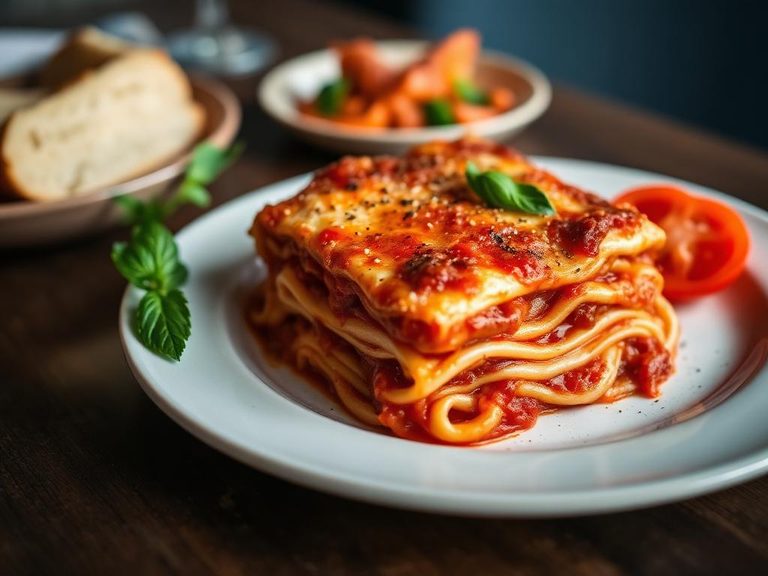
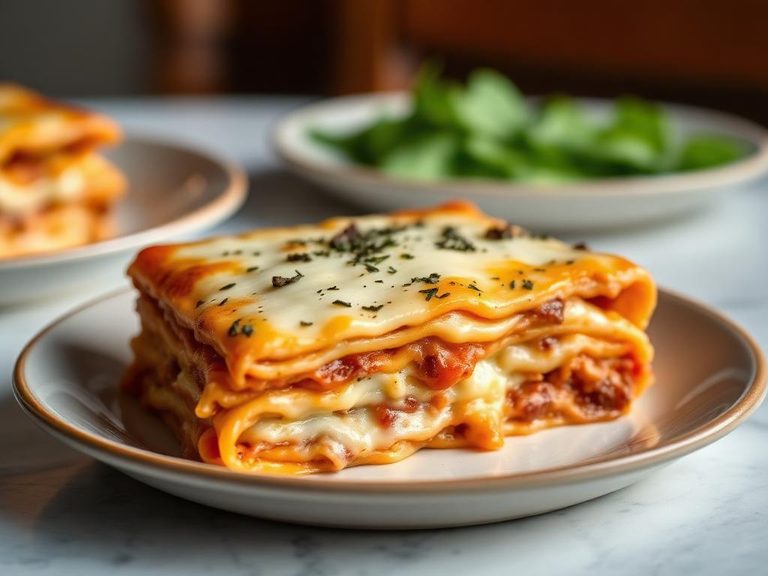
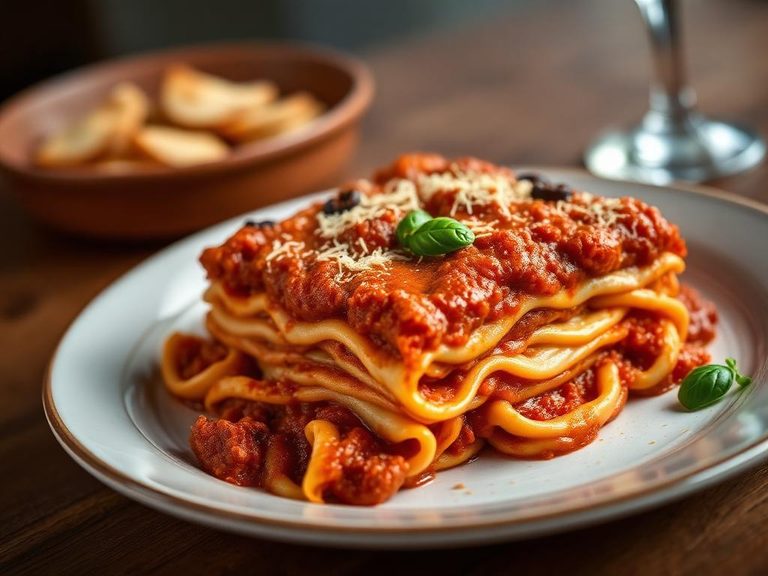
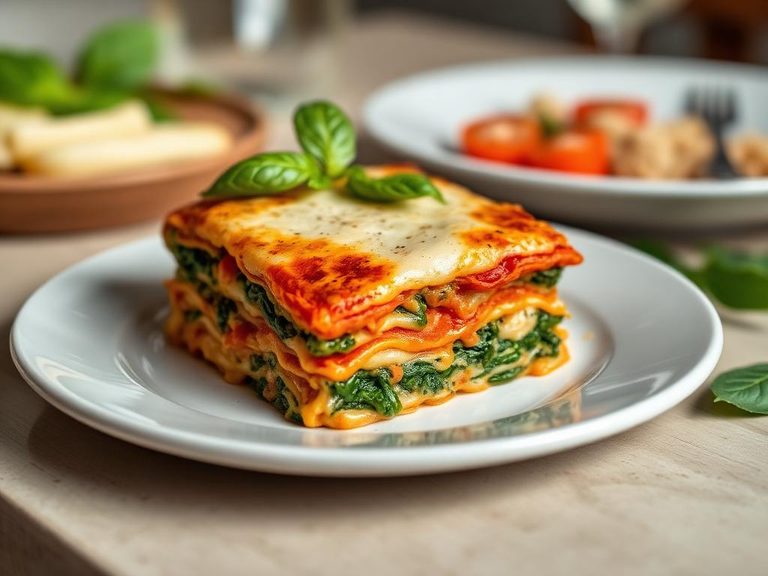
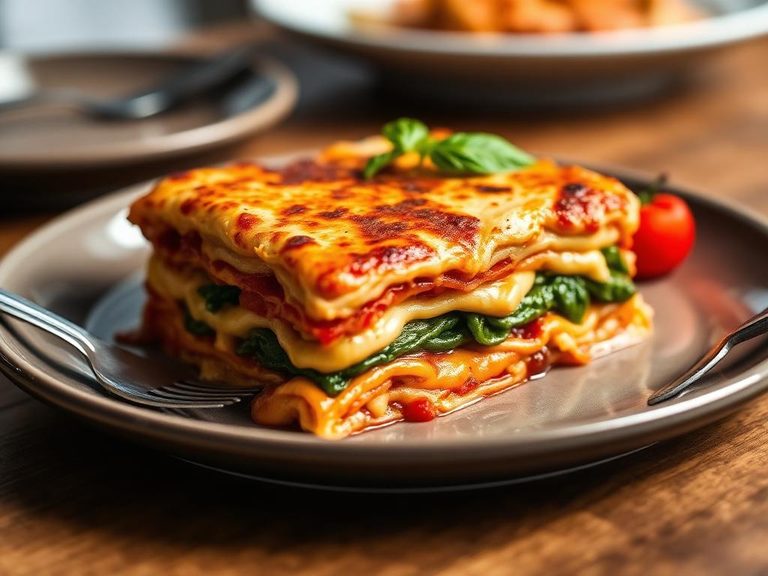
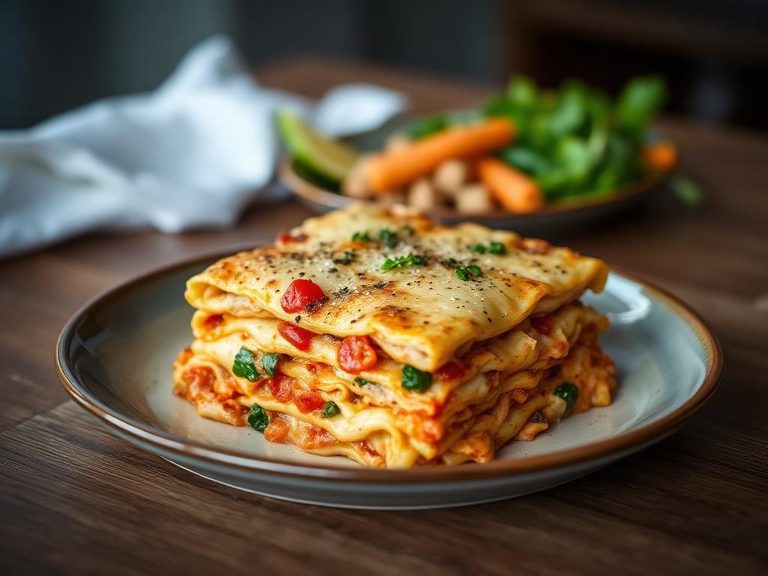
Lasagna is a classic Italian baked pasta dish made by layering flat pasta sheets with rich meat sauce (often Bolognese), creamy béchamel or ricotta cheese, and melted mozzarella, then baking until bubbly and golden. It originates from Italy, with regional variations like the creamy Lasagna alla Bolognese from Emilia-Romagna or the richer, meat-heavy versions from Naples. The dish is a staple of Italian comfort food, celebrated for its hearty, layered structure and deep, savory flavors.
🍳 View the full Lasagna recipe →
🍽️ Nutrition at a glance
Lasagna is typically high in both carbohydrates from the pasta and fat from the cheese and meat sauce, making it a calorie-dense meal—roughly 400-700 calories per serving depending on portion size and recipe. It provides significant protein from the meat and dairy, along with calcium, iron, and B vitamins, though it can be high in sodium and saturated fat.
Nutrition breakdown
| Calories | 375 kcal |
| Protein | 20 g |
| Carbs | 30 g |
| Fat | 20 g |
| Fiber | 3 g |
| Sugar | 6 g |
| Sodium | 850 mg |
| Calcium | 300 mg |
| Iron | 2.5 mg |
| Potassium | 350 mg |
| Vitamin A | 150 µg |
| Vitamin C | 8 mg |
| Vitamin B12 | 1.5 µg |
| Phosphorus | 250 mg |
| Zinc | 3 mg |
Per 1 piece (about 240 g) · estimated, varies by recipe
💡 What's interesting
Culturally, lasagna is often associated with family gatherings and holidays in Italy, symbolizing warmth and abundance. Nutritionally, its layered design allows for customizable ingredients, making it adaptable to lighter or vegetarian versions while still delivering a satisfying, nutrient-rich meal.
🍽️ Related dishes

AI estimate may be inaccurate · Terms