

Turkey, whole, meat and skin, raw
Whole food · Poultry Products
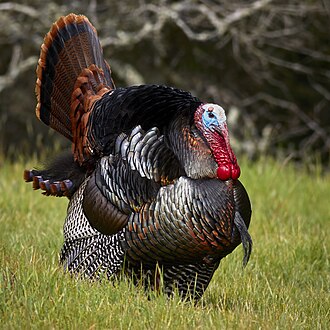
Photo: Wikipedia
A whole, raw turkey, complete with skin, is the centerpiece of festive feasts and a powerhouse of lean protein. Its flesh is mild, tender, and slightly sweet, while the skin promises a rich, crispy layer when roasted. Nutritionally, it's a standout for its high protein-to-fat ratio, making it a foundational ingredient for muscle-building and satisfying meals.
Calorie split: 63% protein · 0% carbs · 37% fat
↓ Full nutrition💚 Why it's loved
People adore turkey for its mild, adaptable flavor that serves as a perfect canvas for herbs, spices, and brines. It's deeply woven into cultural traditions, especially as the centerpiece of Thanksgiving and Christmas dinners in North America and Europe, symbolizing celebration and abundance.
⚠️ Watch-outs & how to enjoy it better
The primary downside is its potential to become dry and tough if overcooked, which is a common concern for inexperienced cooks. Those monitoring saturated fat intake should be mindful of the skin, which concentrates the fat content. To counteract dryness, brining the bird before cooking is highly effective, and removing the skin before eating reduces fat consumption.
Key benefits
- Excellent source of complete, high-quality protein
- Very low in carbohydrates and sugars
- Rich in B vitamins, especially niacin and B6
- Good source of minerals like selenium and phosphorus
- Provides dietary fat, primarily from the skin
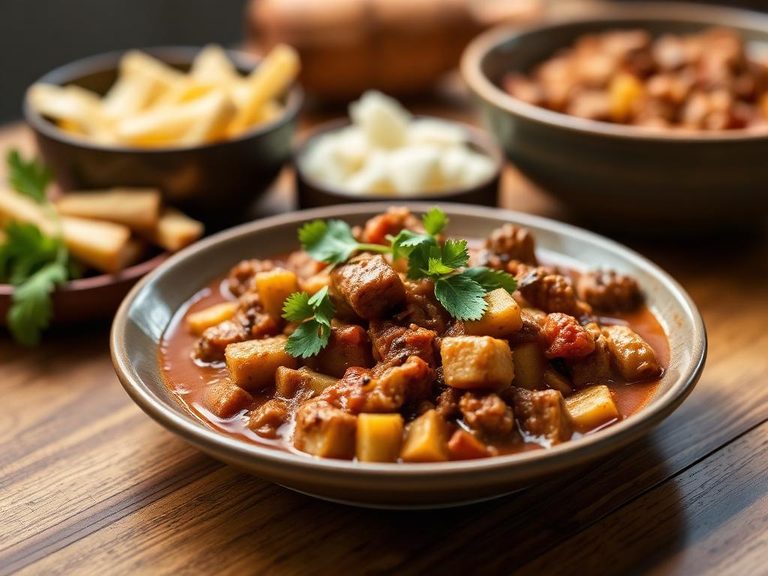
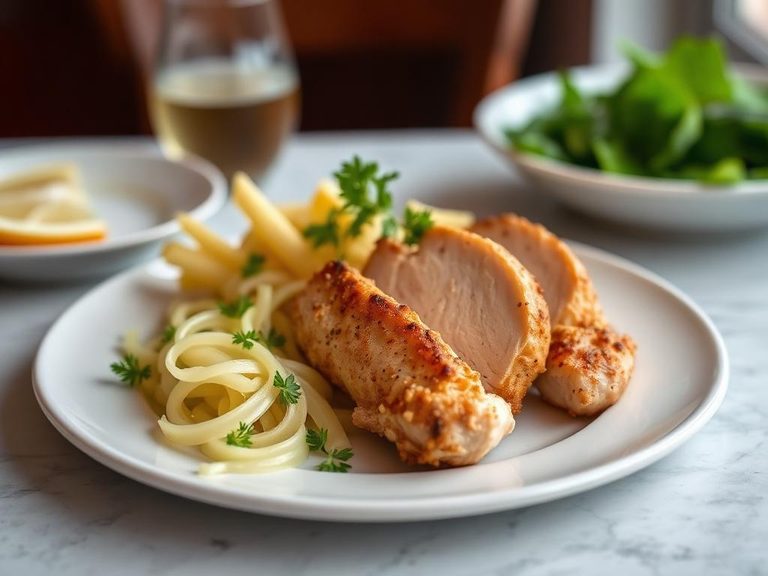
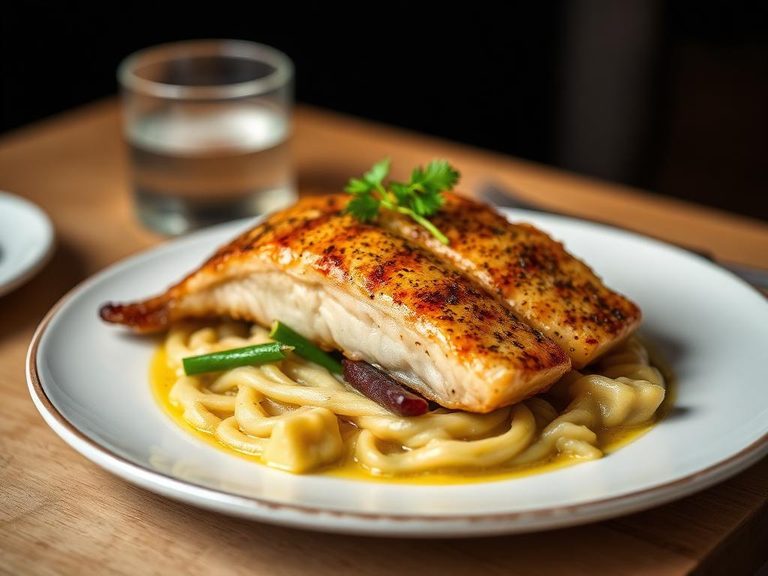
🍽️ Popular dishes
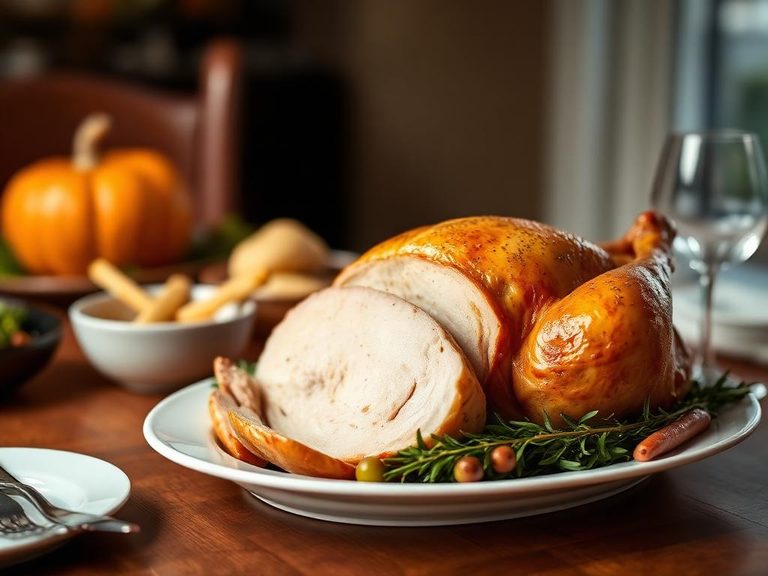
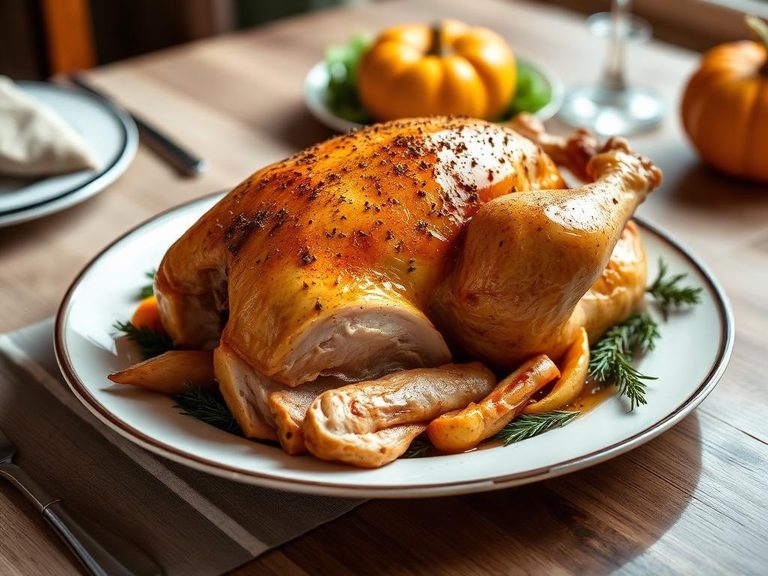
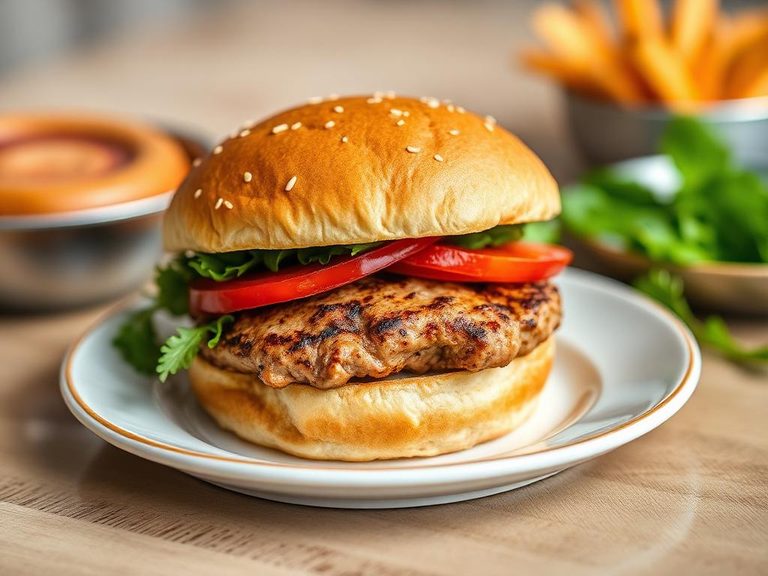
🌍 Where it's eaten
💡 Did you know?
Benjamin Franklin once suggested the turkey would have been a more fitting national bird for the United States than the bald eagle, calling it 'a Bird of Courage.'
Full nutrition (USDA data · scales with serving)
| Water | 72.7 g |
| Energy | 144 kcal |
| Energy | 602 kj |
| Protein | 21.6 g |
| Total lipid (fat) | 5.6 g |
| Ash | 0.98 g |
| Carbohydrate, by difference | 0.14 g |
| Fiber, total dietary | 0.00 g |
| Total Sugars | 0.07 g |
| Sucrose | 0.07 g |
| Glucose | 0.00 g |
| Fructose | 0.00 g |
| Lactose | 0.00 g |
| Maltose | 0.00 g |
| Galactose | 0.00 g |
| Starch | 0.07 g |
| Calcium, Ca | 11.0 mg |
| Iron, Fe | 0.86 mg |
| Magnesium, Mg | 25.0 mg |
| Phosphorus, P | 183 mg |
| Potassium, K | 224 mg |
| Sodium, Na | 112 mg |
| Zinc, Zn | 1.8 mg |
| Copper, Cu | 0.08 mg |
| Manganese, Mn | 0.01 mg |
| Selenium, Se | 21.3 ug |
| Vitamin C, total ascorbic acid | 0.00 mg |
| Thiamin | 0.05 mg |
| Riboflavin | 0.18 mg |
| Niacin | 7.6 mg |
| Pantothenic acid | 0.81 mg |
| Vitamin B-6 | 0.60 mg |
| Folate, total | 7.0 ug |
| Folic acid | 0.00 ug |
| Folate, food | 7.0 ug |
| Folate, DFE | 7.0 ug |
| Choline, total | 58.0 mg |
| Vitamin B-12 | 1.2 ug |
| Vitamin B-12, added | 0.00 ug |
| Vitamin A, RAE | 17.0 ug |
| Retinol | 17.0 ug |
| Carotene, beta | 0.00 ug |
| Carotene, alpha | 0.00 ug |
| Cryptoxanthin, beta | 0.00 ug |
| Vitamin A, IU | 56.0 iu |
| Lycopene | 0.00 ug |
| Lutein + zeaxanthin | 0.00 ug |
| Vitamin E (alpha-tocopherol) | 0.09 mg |
| Vitamin E, added | 0.00 mg |
| Tocopherol, beta | 0.00 mg |
| Tocopherol, gamma | 0.02 mg |
| Tocopherol, delta | 0.00 mg |
| Tocotrienol, alpha | 0.00 mg |
| Tocotrienol, beta | 0.00 mg |
| Tocotrienol, gamma | 0.01 mg |
| Tocotrienol, delta | 0.00 mg |
| Vitamin D (D2 + D3), International Units | 12.0 iu |
| Vitamin D (D2 + D3) | 0.30 ug |
| Vitamin D3 (cholecalciferol) | 0.30 ug |
| Vitamin K (phylloquinone) | 0.00 ug |
| Vitamin K (Dihydrophylloquinone) | 0.00 ug |
| Alcohol, ethyl | 0.00 g |
| Caffeine | 0.00 mg |
| Theobromine | 0.00 mg |
Fat & fatty acid profile (per 100g)
| Fatty acids, total saturated | 1.5 g |
| SFA 4:0 | 0.00 g |
| SFA 6:0 | 0.00 g |
| SFA 8:0 | 0.00 g |
| SFA 10:0 | 0.00 g |
| SFA 12:0 | 0.02 g |
| SFA 14:0 | 0.05 g |
| SFA 15:0 | 0.01 g |
| SFA 16:0 | 0.98 g |
| SFA 17:0 | 0.01 g |
| SFA 18:0 | 0.36 g |
| SFA 20:0 | 0.00 g |
| SFA 22:0 | 0.00 g |
| SFA 24:0 | 0.00 g |
| Fatty acids, total monounsaturated | 1.8 g |
| MUFA 14:1 | 0.01 g |
| MUFA 15:1 | 0.00 g |
| MUFA 16:1 | 0.18 g |
| MUFA 16:1 c | 0.14 g |
| MUFA 17:1 | 0.01 g |
| MUFA 18:1 | 1.6 g |
| MUFA 18:1 c | 1.3 g |
| MUFA 20:1 | 0.02 g |
| MUFA 22:1 | 0.00 g |
| MUFA 22:1 c | 0.00 g |
| MUFA 24:1 c | 0.00 g |
| Fatty acids, total polyunsaturated | 1.5 g |
| PUFA 18:2 | 1.3 g |
| PUFA 18:2 n-6 c,c | 1.1 g |
| PUFA 18:2 CLAs | 0.01 g |
| PUFA 18:3 | 0.08 g |
| PUFA 18:3 n-3 c,c,c (ALA) | 0.07 g |
| PUFA 18:3 n-6 c,c,c | 0.00 g |
| PUFA 18:4 | 0.00 g |
| PUFA 20:2 n-6 c,c | 0.01 g |
| PUFA 20:3 | 0.01 g |
| PUFA 20:3 n-3 | 0.00 g |
| PUFA 20:3 n-6 | 0.01 g |
| PUFA 20:4 | 0.04 g |
| PUFA 20:5 n-3 (EPA) | 0.00 g |
| PUFA 22:4 | 0.01 g |
| PUFA 22:5 n-3 (DPA) | 0.00 g |
| PUFA 22:6 n-3 (DHA) | 0.00 g |
| Fatty acids, total trans | 0.06 g |
| Fatty acids, total trans-monoenoic | 0.05 g |
| TFA 16:1 t | 0.00 g |
| TFA 18:1 t | 0.04 g |
| TFA 22:1 t | 0.00 g |
| TFA 18:2 t not further defined | 0.01 g |
| Fatty acids, total trans-polyenoic | 0.01 g |
| Cholesterol | 72.0 mg |
Amino acid profile (per 100g)
| Tryptophan | 0.22 g |
| Threonine | 0.77 g |
| Isoleucine | 0.61 g |
| Leucine | 1.5 g |
| Lysine | 1.7 g |
| Methionine | 0.55 g |
| Cystine | 0.20 g |
| Phenylalanine | 0.69 g |
| Tyrosine | 0.63 g |
| Valine | 0.69 g |
| Arginine | 1.2 g |
| Histidine | 0.57 g |
| Alanine | 1.2 g |
| Aspartic acid | 1.7 g |
| Glutamic acid | 2.9 g |
| Glycine | 1.0 g |
| Proline | 1.2 g |
| Serine | 0.85 g |
| Hydroxyproline | 0.14 g |
FAQ
What's the best way to ensure a juicy turkey?
Brining the turkey in a saltwater solution for 12-24 hours before cooking is the most reliable method. It seasons the meat deeply and helps it retain moisture during the long roasting process.
Is turkey skin healthy to eat?
Turkey skin is high in fat, particularly saturated fat, and calories. While it adds great flavor and crispiness, it's best enjoyed in moderation. Removing it before eating significantly reduces the fat content of your meal.
How does the nutrition of white meat differ from dark meat with skin?
White meat (like the breast) is leaner and higher in protein per calorie. Dark meat (like thighs and legs) has a slightly higher fat content, which can make it more flavorful and moist, but also increases the calorie count.
Nutrient density (calculated · NRF9.3)
Nutrient Rich Foods index: beneficial nutrients (protein, fiber, vitamins, minerals) minus saturated fat, added sugar & sodium, per 100 kcal.
NRF9.3 index — Fulgoni, Keast & Drewnowski, 2009. Computed from USDA nutrients.
Weight-loss friendliness (composite index)
Energy density 1.44 kcal/g · 60% calories from protein · 0.0 g fiber · 0.1 g sugar per 100 g.
Composite of energy density (Rolls et al., 1999), protein & fiber satiety, minus sugar. A calculated heuristic — ranks satiety-per-calorie, not a clinical measure.
Dietary load (calculated from USDA values)
Potential renal acid load. Positive = acid-forming, negative = alkaline-forming.
Sodium-to-potassium ratio: 0.50 (lower is better — aim for ≤ 1)
Sodium:potassium per WHO potassium guidance. Computed from USDA nutrients.