

Seeds, pumpkin and squash seed kernels, roasted, with salt added
Whole food · Nut and Seed Products

Photo: Wikipedia
These are the hulled, roasted kernels of pumpkin and squash seeds, delivering a satisfyingly crunchy, nutty, and subtly salty bite. With nearly 50g of fat and almost 30g of protein per 100g, they are a calorie-dense powerhouse of plant-based nutrition and healthy fats.
Calorie split: 19% protein · 9% carbs · 71% fat
↓ Full nutrition💚 Why it's loved
People adore them for their addictive, savory crunch and versatile, nutty flavor that elevates everything from salads to trail mix. They are a beloved, protein-packed snack across many cultures, especially during autumn harvests.
⚠️ Watch-outs & how to enjoy it better
The added salt can be a concern for those monitoring sodium intake, and the high calorie density means portion control is key. To counteract, look for low-sodium versions and measure out a single serving (about a handful) to avoid overeating.
Key benefits
- Excellent source of plant-based protein and healthy monounsaturated fats.
- Rich in magnesium, zinc, and iron, supporting muscle and immune function.
- High in fiber, promoting digestive health and satiety.
- Contains antioxidants like vitamin E and carotenoids.
🍽️ Popular dishes
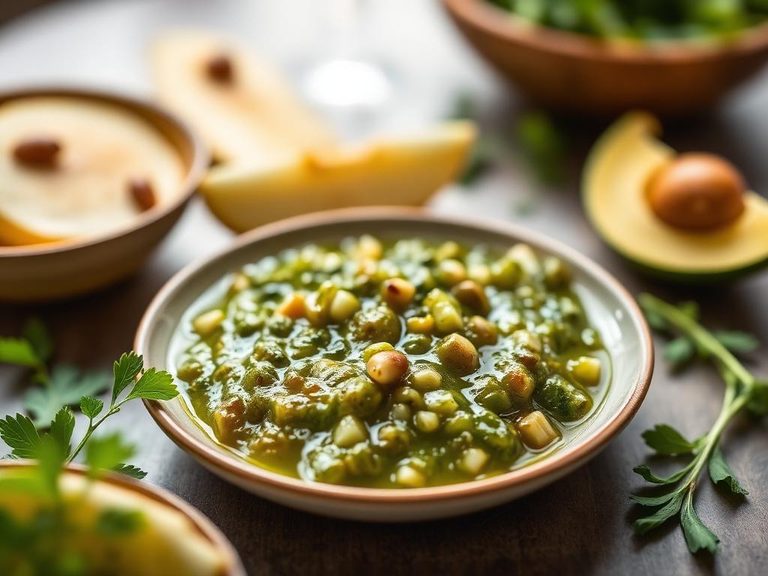
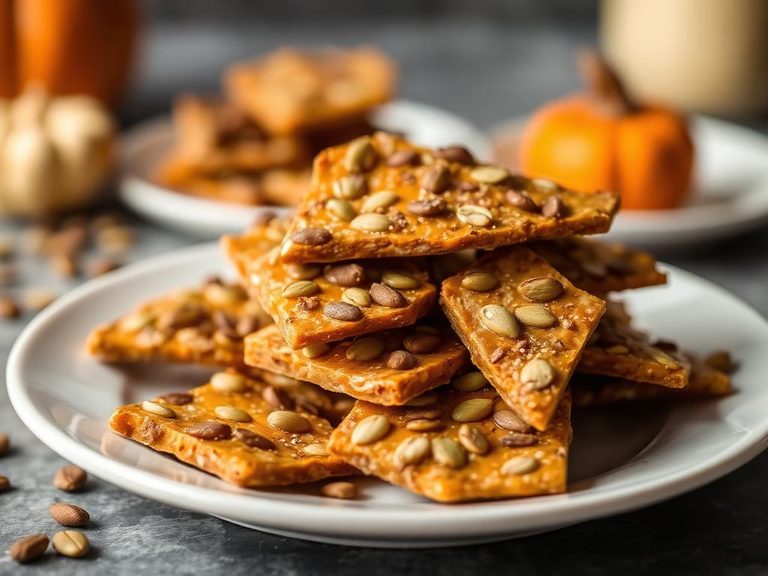
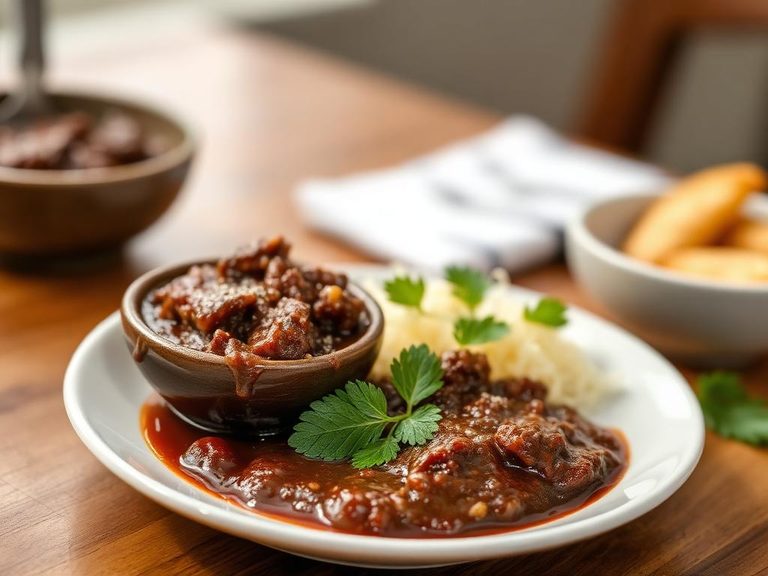
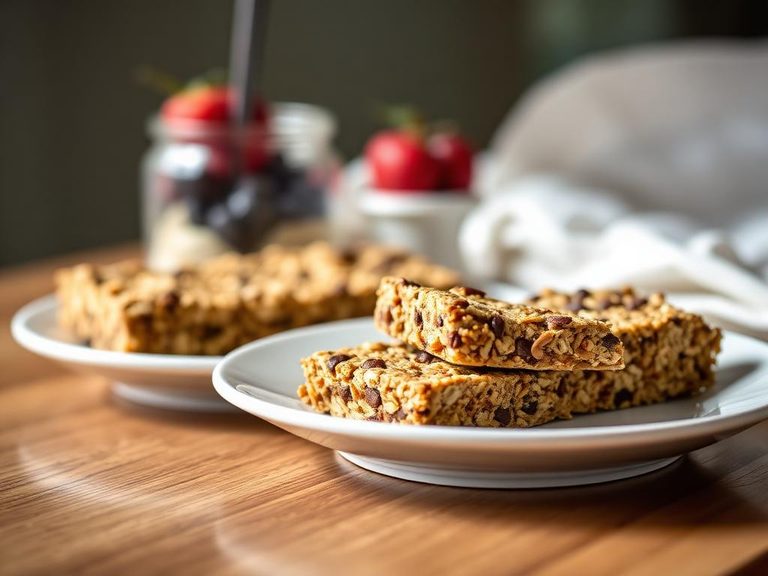
🌍 Where it's eaten
💡 Did you know?
The word 'pepita' is Spanish for 'little squash seed' and specifically refers to the green, hulled kernel inside a pumpkin or squash seed.
Full nutrition (USDA data · scales with serving)
| Water | 2.0 g |
| Energy | 574 kcal |
| Energy | 2401 kj |
| Protein | 29.8 g |
| Total lipid (fat) | 49.0 g |
| Ash | 4.4 g |
| Carbohydrate, by difference | 14.7 g |
| Fiber, total dietary | 6.5 g |
| Total Sugars | 1.3 g |
| Sucrose | 1.1 g |
| Glucose | 0.07 g |
| Fructose | 0.07 g |
| Lactose | 0.00 g |
| Maltose | 0.00 g |
| Galactose | 0.00 g |
| Starch | 0.74 g |
| Calcium, Ca | 52.0 mg |
| Iron, Fe | 8.1 mg |
| Magnesium, Mg | 550 mg |
| Phosphorus, P | 1174 mg |
| Potassium, K | 788 mg |
| Sodium, Na | 256 mg |
| Zinc, Zn | 7.6 mg |
| Copper, Cu | 1.3 mg |
| Manganese, Mn | 4.5 mg |
| Selenium, Se | 9.4 ug |
| Vitamin C, total ascorbic acid | 1.8 mg |
| Thiamin | 0.07 mg |
| Riboflavin | 0.15 mg |
| Niacin | 4.4 mg |
| Pantothenic acid | 0.57 mg |
| Vitamin B-6 | 0.10 mg |
| Folate, total | 57.0 ug |
| Folic acid | 0.00 ug |
| Folate, food | 57.0 ug |
| Folate, DFE | 57.0 ug |
| Choline, total | 63.0 mg |
| Betaine | 1.5 mg |
| Vitamin B-12 | 0.00 ug |
| Vitamin B-12, added | 0.00 ug |
| Vitamin A, RAE | 0.00 ug |
| Retinol | 0.00 ug |
| Carotene, beta | 5.0 ug |
| Carotene, alpha | 1.0 ug |
| Cryptoxanthin, beta | 0.00 ug |
| Vitamin A, IU | 8.0 iu |
| Lycopene | 0.00 ug |
| Lutein + zeaxanthin | 30.0 ug |
| Vitamin E (alpha-tocopherol) | 0.56 mg |
| Vitamin E, added | 0.00 mg |
| Tocopherol, beta | 0.09 mg |
| Tocopherol, gamma | 12.7 mg |
| Tocopherol, delta | 0.28 mg |
| Tocotrienol, alpha | 0.00 mg |
| Tocotrienol, beta | 0.00 mg |
| Tocotrienol, gamma | 0.00 mg |
| Tocotrienol, delta | 0.00 mg |
| Vitamin D (D2 + D3), International Units | 0.00 iu |
| Vitamin D (D2 + D3) | 0.00 ug |
| Vitamin K (phylloquinone) | 4.5 ug |
| Vitamin K (Dihydrophylloquinone) | 0.00 ug |
| Vitamin K (Menaquinone-4) | 0.00 ug |
| Alcohol, ethyl | 0.00 g |
| Caffeine | 0.00 mg |
| Theobromine | 0.00 mg |
Fat & fatty acid profile (per 100g)
| Fatty acids, total saturated | 8.5 g |
| SFA 4:0 | 0.00 g |
| SFA 6:0 | 0.01 g |
| SFA 8:0 | 0.00 g |
| SFA 10:0 | 0.00 g |
| SFA 12:0 | 0.01 g |
| SFA 14:0 | 0.06 g |
| SFA 15:0 | 0.01 g |
| SFA 16:0 | 5.2 g |
| SFA 17:0 | 0.04 g |
| SFA 18:0 | 2.9 g |
| SFA 20:0 | 0.22 g |
| SFA 22:0 | 0.06 g |
| SFA 24:0 | 0.04 g |
| Fatty acids, total monounsaturated | 15.7 g |
| MUFA 14:1 | 0.00 g |
| MUFA 15:1 | 0.00 g |
| MUFA 16:1 | 0.04 g |
| MUFA 16:1 c | 0.04 g |
| MUFA 17:1 | 0.00 g |
| MUFA 18:1 | 15.6 g |
| MUFA 18:1 c | 15.6 g |
| MUFA 20:1 | 0.05 g |
| MUFA 22:1 | 0.00 g |
| MUFA 22:1 c | 0.00 g |
| MUFA 24:1 c | 0.01 g |
| Fatty acids, total polyunsaturated | 19.9 g |
| PUFA 18:2 | 19.6 g |
| PUFA 18:2 n-6 c,c | 19.6 g |
| PUFA 18:2 CLAs | 0.01 g |
| PUFA 18:3 | 0.11 g |
| PUFA 18:3 n-3 c,c,c (ALA) | 0.11 g |
| PUFA 18:3 n-6 c,c,c | 0.00 g |
| PUFA 18:4 | 0.00 g |
| PUFA 20:2 n-6 c,c | 0.01 g |
| PUFA 20:3 | 0.00 g |
| PUFA 20:3 n-3 | 0.00 g |
| PUFA 20:3 n-6 | 0.00 g |
| PUFA 20:4 | 0.12 g |
| PUFA 20:5 n-3 (EPA) | 0.00 g |
| PUFA 22:4 | 0.01 g |
| PUFA 22:5 n-3 (DPA) | 0.00 g |
| PUFA 22:6 n-3 (DHA) | 0.00 g |
| Fatty acids, total trans | 0.04 g |
| Fatty acids, total trans-monoenoic | 0.02 g |
| TFA 16:1 t | 0.00 g |
| TFA 18:1 t | 0.01 g |
| TFA 22:1 t | 0.00 g |
| TFA 18:2 t not further defined | 0.03 g |
| Fatty acids, total trans-polyenoic | 0.03 g |
| Cholesterol | 0.00 mg |
| Stigmasterol | 0.00 mg |
| Campesterol | 3.0 mg |
| Beta-sitosterol | 13.0 mg |
Amino acid profile (per 100g)
| Tryptophan | 0.57 g |
| Threonine | 0.98 g |
| Isoleucine | 1.3 g |
| Leucine | 2.4 g |
| Lysine | 1.2 g |
| Methionine | 0.59 g |
| Cystine | 0.33 g |
| Phenylalanine | 1.7 g |
| Tyrosine | 1.1 g |
| Valine | 1.6 g |
| Arginine | 5.3 g |
| Histidine | 0.77 g |
| Alanine | 1.5 g |
| Aspartic acid | 2.9 g |
| Glutamic acid | 6.1 g |
| Glycine | 1.8 g |
| Proline | 1.3 g |
| Serine | 1.7 g |
FAQ
Are pumpkin seeds and pepitas the same thing?
Not exactly. 'Pumpkin seeds' can refer to the whole seed with the white shell. 'Pepitas' are the green, hulled kernel inside, which is what this product is.
Why are they so high in calories?
They are naturally dense in healthy fats (about 49g per 100g) and protein, which are energy-rich macronutrients, making them a potent source of fuel.
How should I store them to keep them fresh?
Store in an airtight container in a cool, dark place for up to 3 months, or in the refrigerator for up to 6 months to prevent the oils from going rancid.
Nutrient density (calculated · NRF9.3)
Nutrient Rich Foods index: beneficial nutrients (protein, fiber, vitamins, minerals) minus saturated fat, added sugar & sodium, per 100 kcal.
NRF9.3 index — Fulgoni, Keast & Drewnowski, 2009. Computed from USDA nutrients.
Weight-loss friendliness (composite index)
Energy density 5.74 kcal/g · 21% calories from protein · 6.5 g fiber · 1.3 g sugar per 100 g.
Composite of energy density (Rolls et al., 1999), protein & fiber satiety, minus sugar. A calculated heuristic — ranks satiety-per-calorie, not a clinical measure.
Dietary load (calculated from USDA values)
Potential renal acid load. Positive = acid-forming, negative = alkaline-forming.
Sodium-to-potassium ratio: 0.32 (lower is better — aim for ≤ 1)
Sodium:potassium per WHO potassium guidance. Computed from USDA nutrients.