

Olives, green, Manzanilla, stuffed with pimiento
Whole food · Fruits and Fruit Juices

Photo: Wikipedia
Manzanilla olives are plump, bright green Spanish olives, typically stuffed with a vibrant red pimiento strip. They offer a firm, meaty texture with a distinct briny, slightly tangy flavor and a mild, sweet finish from the pepper. Nutritionally, they are a dense source of healthy monounsaturated fats, providing nearly 13 grams per 100g serving.
Calorie split: 3% protein · 14% carbs · 83% fat
↓ Full nutrition💚 Why it's loved
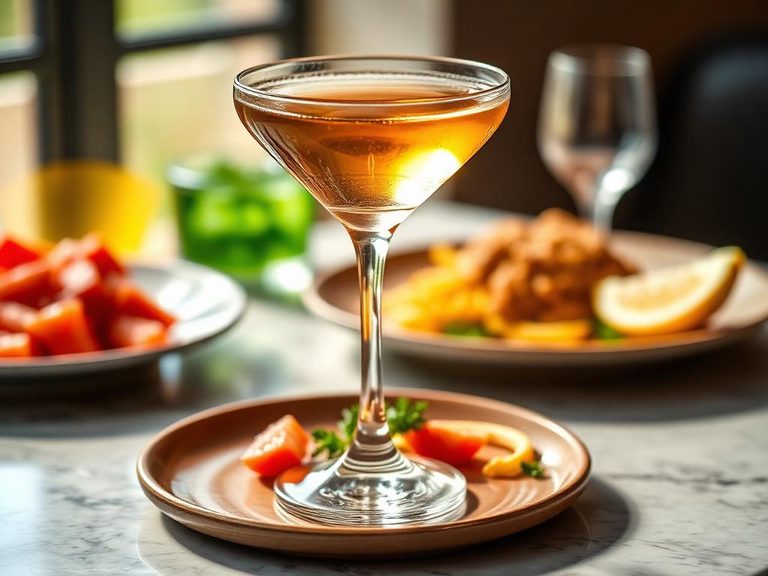
People adore them for their perfect balance of salty, savory, and slightly fruity notes, making them an irresistible snack or garnish. They are the quintessential component of classic cocktails and tapas, embodying the convivial spirit of Mediterranean dining.
⚠️ Watch-outs & how to enjoy it better
Their primary downside is high sodium content from the brine, which can be a concern for those managing blood pressure. To mitigate this, rinse them briefly before use or pair them with other low-sodium, potassium-rich foods like fresh vegetables. Those watching fat intake should also practice portion control, as the calories are dense.
Key benefits
- Rich in heart-healthy monounsaturated fats (oleic acid)
- Good source of dietary fiber (4g per 100g)
- Contains antioxidant compounds like vitamin E and polyphenols
- Provides a savory, low-sugar flavor boost to dishes
- No sugar added in their natural preparation
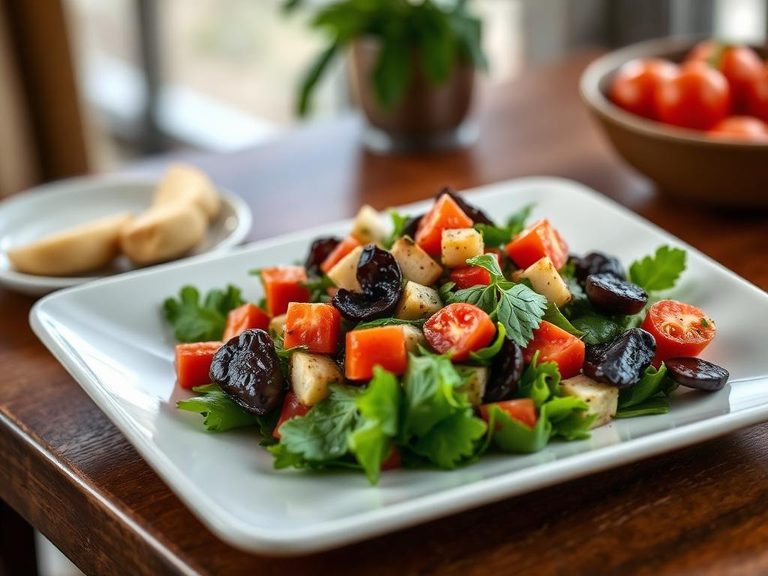
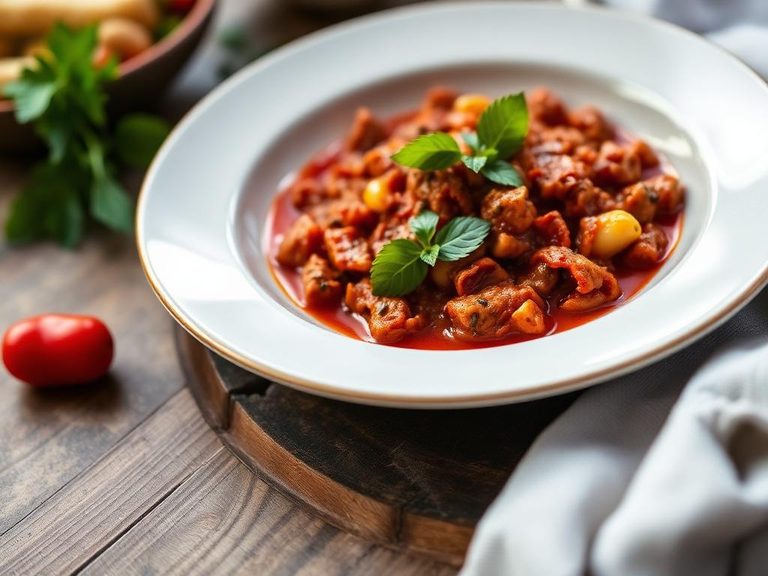
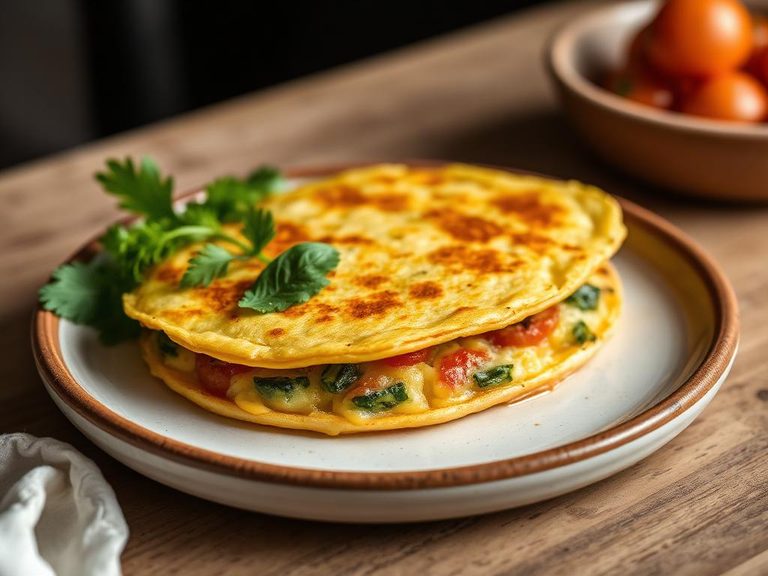
🍽️ Popular dishes

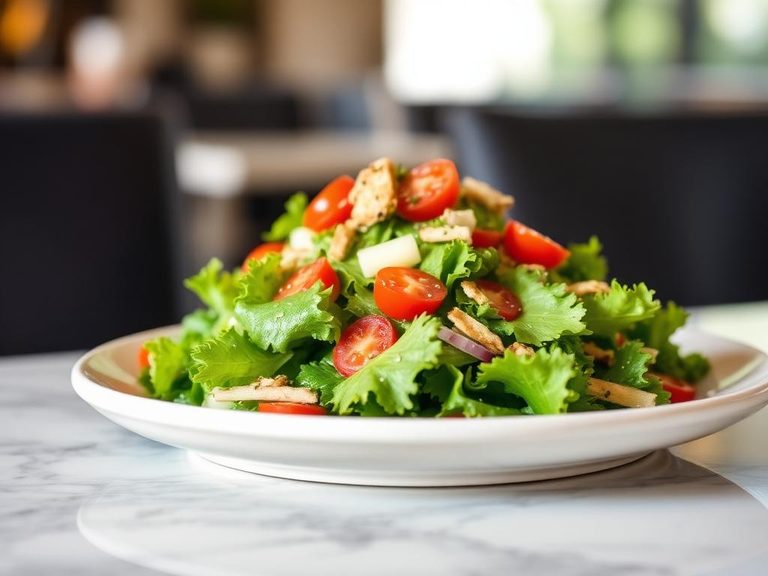
🌍 Where it's eaten
💡 Did you know?
The name 'Manzanilla' means 'little apple' in Spanish, referring to the olive's round, apple-like shape.
Full nutrition (USDA data · scales with serving)
| Water | 76.7 g |
| Energy (Atwater General Factors) | 141 kcal |
| Energy (Atwater Specific Factors) | 130 kcal |
| Energy | 130 kcal |
| Energy | 543 kj |
| Nitrogen | 0.18 g |
| Protein | 1.1 g |
| Total lipid (fat) | 12.9 g |
| Total fat (NLEA) | 11.8 g |
| Ash | 4.3 g |
| Carbohydrate, by difference | 5.0 g |
| Carbohydrate, by summation | 4.3 g |
| Fiber, total dietary | 4.0 g |
| Sugars, Total | 0.00 g |
| Sucrose | 0.00 g |
| Glucose | 0.00 g |
| Fructose | 0.00 g |
| Lactose | 0.00 g |
| Maltose | 0.00 g |
| Galactose | 0.00 g |
| Starch | 0.33 g |
| Calcium, Ca | 121 mg |
| Iron, Fe | 0.31 mg |
| Magnesium, Mg | 12.4 mg |
| Phosphorus, P | 7.0 mg |
| Potassium, K | 43.0 mg |
| Sodium, Na | 1620 mg |
| Zinc, Zn | 0.09 mg |
| Copper, Cu | 0.11 mg |
| Manganese, Mn | 0.05 mg |
| Vitamin C, total ascorbic acid | 0.00 mg |
| Thiamin | 0.04 mg |
| Riboflavin | 0.00 mg |
| Niacin | 0.10 mg |
| Pantothenic acid | 0.00 mg |
| Vitamin B-6 | 0.00 mg |
| Folate, total | 0.00 ug |
| Choline, total | 1.6 mg |
| Choline, free | 0.60 mg |
| Choline, from phosphocholine | 0.70 mg |
| Choline, from phosphotidyl choline | 0.00 mg |
| Choline, from glycerophosphocholine | 0.30 mg |
| Choline, from sphingomyelin | 0.00 mg |
| Betaine | 0.10 mg |
| Vitamin A, RAE | 25.0 ug |
| Carotene, beta | 272 ug |
| Carotene, alpha | 2.0 ug |
| Cryptoxanthin, beta | 48.0 ug |
| Lycopene | 0.00 ug |
| Lutein + zeaxanthin | 340 ug |
| Vitamin E (alpha-tocopherol) | 3.8 mg |
| Tocopherol, beta | 0.02 mg |
| Tocopherol, gamma | 0.10 mg |
| Tocopherol, delta | 0.00 mg |
| Tocotrienol, alpha | 0.00 mg |
| Tocotrienol, beta | 0.00 mg |
| Tocotrienol, gamma | 0.00 mg |
| Tocotrienol, delta | 0.00 mg |
| Vitamin K (phylloquinone) | 16.6 ug |
| Vitamin K (Dihydrophylloquinone) | 0.00 ug |
| Vitamin K (Menaquinone-4) | 0.00 ug |
Fat & fatty acid profile (per 100g)
| Fatty acids, total saturated | 2.3 g |
| SFA 4:0 | 0.01 g |
| SFA 6:0 | 0.00 g |
| SFA 8:0 | 0.00 g |
| SFA 10:0 | 0.00 g |
| SFA 11:0 | 0.00 g |
| SFA 12:0 | 0.00 g |
| SFA 14:0 | 0.00 g |
| SFA 15:0 | 0.00 g |
| SFA 16:0 | 1.9 g |
| SFA 17:0 | 0.02 g |
| SFA 18:0 | 0.32 g |
| SFA 20:0 | 0.05 g |
| SFA 22:0 | 0.01 g |
| SFA 24:0 | 0.01 g |
| Fatty acids, total monounsaturated | 8.9 g |
| MUFA 14:1 c | 0.00 g |
| MUFA 15:1 | 0.00 g |
| MUFA 16:1 c | 0.15 g |
| MUFA 17:1 | 0.03 g |
| MUFA 17:1 c | 0.03 g |
| MUFA 18:1 c | 8.6 g |
| MUFA 20:1 c | 0.03 g |
| MUFA 22:1 c | 0.00 g |
| MUFA 22:1 n-9 | 0.00 g |
| MUFA 24:1 c | 0.00 g |
| Fatty acids, total polyunsaturated | 0.66 g |
| PUFA 18:2 c | 0.56 g |
| PUFA 18:2 n-6 c,c | 0.56 g |
| PUFA 18:2 CLAs | 0.00 g |
| PUFA 18:3 c | 0.10 g |
| PUFA 18:3 n-3 c,c,c (ALA) | 0.10 g |
| PUFA 18:3 n-6 c,c,c | 0.00 g |
| PUFA 18:4 | 0.00 g |
| PUFA 20:2 c | 0.00 g |
| PUFA 20:2 n-6 c,c | 0.00 g |
| PUFA 20:3 c | 0.00 g |
| PUFA 20:3 n-3 | 0.00 g |
| PUFA 20:3 n-6 | 0.00 g |
| PUFA 20:3 n-9 | 0.00 g |
| PUFA 20:4 | 0.00 g |
| PUFA 20:4c | 0.00 g |
| PUFA 20:5c | 0.00 g |
| PUFA 20:5 n-3 (EPA) | 0.00 g |
| PUFA 22:2 | 0.00 g |
| PUFA 22:5 c | 0.00 g |
| PUFA 22:4 | 0.00 g |
| PUFA 22:5 n-3 (DPA) | 0.00 g |
| PUFA 22:6 c | 0.00 g |
| PUFA 22:6 n-3 (DHA) | 0.00 g |
| Fatty acids, total trans | 0.00 g |
| Fatty acids, total trans-monoenoic | 0.00 g |
| TFA 16:1 t | 0.00 g |
| TFA 18:1 t | 0.00 g |
| TFA 22:1 t | 0.00 g |
| Fatty acids, total trans-dienoic | 0.00 g |
| TFA 18:2 t not further defined | 0.00 g |
| Fatty acids, total trans-polyenoic | 0.00 g |
| TFA 18:3 t | 0.00 g |
Amino acid profile (per 100g)
Estimated from Olives, ripe, canned (small-extra large) — USDA does not publish this profile for Olives.
| Threonine | 0.03 g |
| Isoleucine | 0.03 g |
| Leucine | 0.05 g |
| Lysine | 0.03 g |
| Methionine | 0.01 g |
| Phenylalanine | 0.03 g |
| Tyrosine | 0.02 g |
| Valine | 0.04 g |
| Arginine | 0.07 g |
| Histidine | 0.02 g |
| Alanine | 0.04 g |
| Aspartic acid | 0.09 g |
| Glutamic acid | 0.09 g |
| Glycine | 0.05 g |
| Proline | 0.04 g |
| Serine | 0.03 g |
FAQ
What is the red stuff inside a green olive?
It is a pimiento, which is a mild, sweet red cherry pepper. It is removed, stuffed into the olive, and the olive is then re-brined.
Are stuffed green olives healthy?
They can be part of a healthy diet. They are a good source of healthy fats and fiber but are high in sodium. Enjoying them in moderation is key.
What's the difference between Manzanilla and other green olives?
Manzanilla is a specific Spanish cultivar prized for its large size, firm texture, and mild flavor, making it ideal for stuffing. Other green olives may come from different varieties like Sevillano or Castelvetrano.
Nutrient density (calculated · NRF9.3)
Nutrient Rich Foods index: beneficial nutrients (protein, fiber, vitamins, minerals) minus saturated fat, added sugar & sodium, per 100 kcal.
NRF9.3 index — Fulgoni, Keast & Drewnowski, 2009. Computed from USDA nutrients.
Weight-loss friendliness (composite index)
Energy density 1.30 kcal/g · 4% calories from protein · 4.0 g fiber · 0.0 g sugar per 100 g.
Composite of energy density (Rolls et al., 1999), protein & fiber satiety, minus sugar. A calculated heuristic — ranks satiety-per-calorie, not a clinical measure.
Dietary load (calculated from USDA values)
Potential renal acid load. Positive = acid-forming, negative = alkaline-forming.
Sodium-to-potassium ratio: 37.67 (lower is better — aim for ≤ 1)
Sodium:potassium per WHO potassium guidance. Computed from USDA nutrients.