

Oranges, raw, all commercial varieties
Whole food · Fruits and Fruit Juices
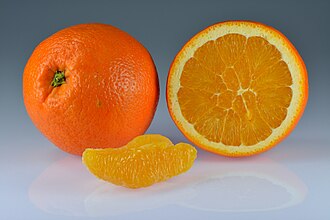
Photo: Wikipedia
A vibrant, juicy citrus fruit prized for its sweet-tart flavor and refreshing, pulpy texture. Its bright orange flesh is packed with vitamin C and a notable amount of dietary fiber, making it a classic, hydrating snack. The natural sugars provide a quick energy boost, balanced by the fruit's fibrous structure.
Calorie split: 7% protein · 91% carbs · 2% fat
↓ Full nutrition💚 Why it's loved
People adore oranges for their perfect balance of sweet and tangy flavors, their satisfying juiciness, and the simple ritual of peeling one. They are a universally beloved snack, a staple in holiday traditions, and a symbol of sunshine and vitality across many cultures.
⚠️ Watch-outs & how to enjoy it better
The high natural sugar content (9.35g per 100g) can cause blood sugar spikes if consumed in large quantities, especially by those with insulin sensitivity. To counteract this, pair orange segments with a source of protein or healthy fat (like a handful of nuts or yogurt) to slow sugar absorption and promote satiety.
Key benefits
- Excellent source of immune-supporting vitamin C.
- Provides 2.4g of dietary fiber per 100g, aiding digestion.
- Low in fat and a good source of hydration.
- Contains natural sugars for quick energy.
- Rich in antioxidants like flavonoids.
🍽️ Popular dishes


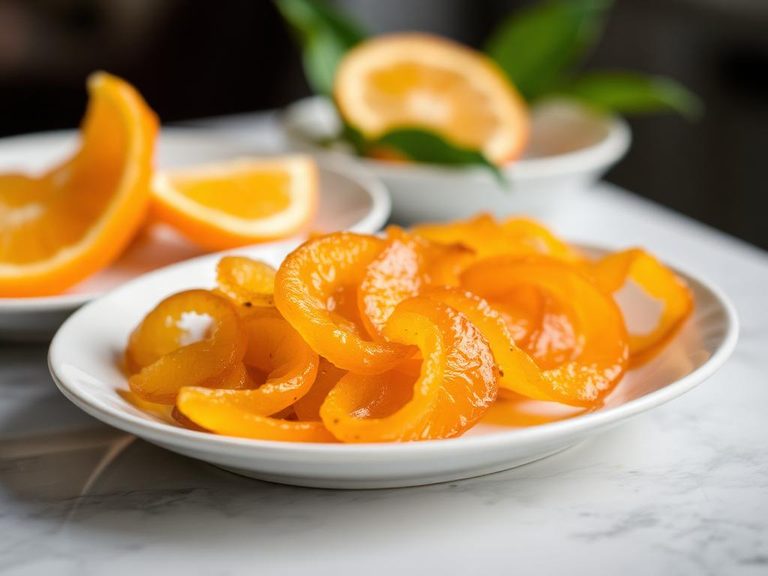
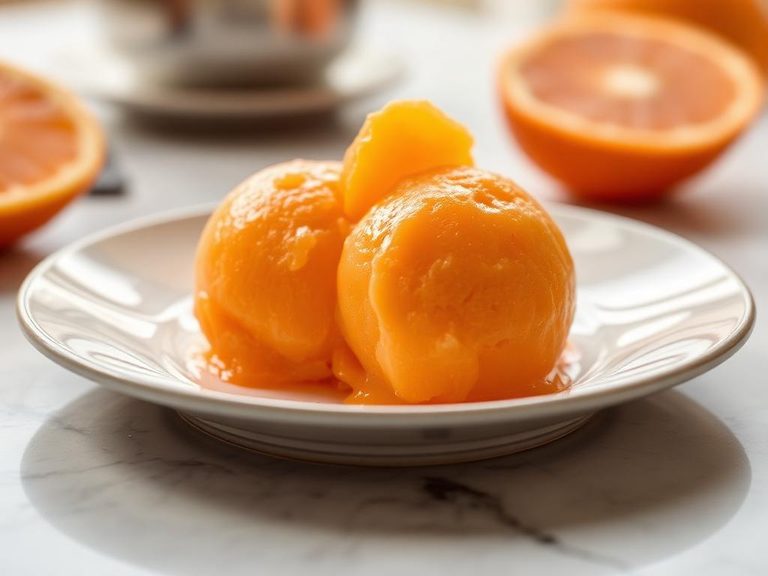


🌍 Where it's eaten
💡 Did you know?
The color orange is named after the fruit, not the other way around; before the fruit was introduced to Europe, the color was typically called 'geoluhread' (yellow-red) in Old English.
Full nutrition (USDA data · scales with serving)
| Water | 86.8 g |
| Energy | 47.0 kcal |
| Energy | 197 kj |
| Protein | 0.94 g |
| Total lipid (fat) | 0.12 g |
| Ash | 0.44 g |
| Carbohydrate, by difference | 11.8 g |
| Fiber, total dietary | 2.4 g |
| Total Sugars | 9.3 g |
| Calcium, Ca | 40.0 mg |
| Iron, Fe | 0.10 mg |
| Magnesium, Mg | 10.0 mg |
| Phosphorus, P | 14.0 mg |
| Potassium, K | 181 mg |
| Sodium, Na | 0.00 mg |
| Zinc, Zn | 0.07 mg |
| Copper, Cu | 0.04 mg |
| Manganese, Mn | 0.03 mg |
| Selenium, Se | 0.50 ug |
| Vitamin C, total ascorbic acid | 53.2 mg |
| Thiamin | 0.09 mg |
| Riboflavin | 0.04 mg |
| Niacin | 0.28 mg |
| Pantothenic acid | 0.25 mg |
| Vitamin B-6 | 0.06 mg |
| Folate, total | 30.0 ug |
| Folic acid | 0.00 ug |
| Folate, food | 30.0 ug |
| Folate, DFE | 30.0 ug |
| Choline, total | 8.4 mg |
| Vitamin B-12 | 0.00 ug |
| Vitamin B-12, added | 0.00 ug |
| Vitamin A, RAE | 11.0 ug |
| Retinol | 0.00 ug |
| Carotene, beta | 71.0 ug |
| Carotene, alpha | 11.0 ug |
| Cryptoxanthin, beta | 116 ug |
| Vitamin A, IU | 225 iu |
| Lycopene | 0.00 ug |
| Lutein + zeaxanthin | 129 ug |
| Vitamin E (alpha-tocopherol) | 0.18 mg |
| Vitamin E, added | 0.00 mg |
| Vitamin D (D2 + D3), International Units | 0.00 iu |
| Vitamin D (D2 + D3) | 0.00 ug |
| Vitamin K (phylloquinone) | 0.00 ug |
| Alcohol, ethyl | 0.00 g |
| Caffeine | 0.00 mg |
| Theobromine | 0.00 mg |
Fat & fatty acid profile (per 100g)
| Fatty acids, total saturated | 0.01 g |
| SFA 4:0 | 0.00 g |
| SFA 6:0 | 0.00 g |
| SFA 8:0 | 0.00 g |
| SFA 10:0 | 0.00 g |
| SFA 12:0 | 0.00 g |
| SFA 14:0 | 0.00 g |
| SFA 16:0 | 0.01 g |
| SFA 18:0 | 0.00 g |
| Fatty acids, total monounsaturated | 0.02 g |
| MUFA 16:1 | 0.00 g |
| MUFA 18:1 | 0.02 g |
| MUFA 20:1 | 0.00 g |
| MUFA 22:1 | 0.00 g |
| Fatty acids, total polyunsaturated | 0.03 g |
| PUFA 18:2 | 0.02 g |
| PUFA 18:3 | 0.01 g |
| PUFA 18:4 | 0.00 g |
| PUFA 20:4 | 0.00 g |
| PUFA 20:5 n-3 (EPA) | 0.00 g |
| PUFA 22:5 n-3 (DPA) | 0.00 g |
| PUFA 22:6 n-3 (DHA) | 0.00 g |
| Fatty acids, total trans | 0.00 g |
| Cholesterol | 0.00 mg |
Amino acid profile (per 100g)
| Tryptophan | 0.01 g |
| Threonine | 0.01 g |
| Isoleucine | 0.03 g |
| Leucine | 0.02 g |
| Lysine | 0.05 g |
| Methionine | 0.02 g |
| Cystine | 0.01 g |
| Phenylalanine | 0.03 g |
| Tyrosine | 0.02 g |
| Valine | 0.04 g |
| Arginine | 0.07 g |
| Histidine | 0.02 g |
| Alanine | 0.05 g |
| Aspartic acid | 0.11 g |
| Glutamic acid | 0.09 g |
| Glycine | 0.09 g |
| Proline | 0.05 g |
| Serine | 0.03 g |
FAQ
Are oranges good for vitamin C?
Yes, oranges are an excellent source of vitamin C. A medium orange provides over 100% of the recommended daily intake, which is crucial for immune function, collagen synthesis, and antioxidant protection.
How does the fiber in oranges help?
The 2.4g of fiber per 100g, primarily in the pith and membranes, aids in digestion, helps regulate blood sugar levels by slowing sugar absorption, and contributes to a feeling of fullness.
Is the sugar in oranges unhealthy?
The sugar in oranges is natural (fructose) and comes packaged with fiber, water, and nutrients, which moderates its impact on blood sugar compared to added sugars. However, portion control is still important for those monitoring sugar intake.
What's the best way to store oranges?
Whole oranges can be stored at room temperature for a week or in the refrigerator for up to two weeks. Once peeled, they should be consumed quickly or stored in an airtight container in the fridge.
Nutrient density (calculated · NRF9.3)
Nutrient Rich Foods index: beneficial nutrients (protein, fiber, vitamins, minerals) minus saturated fat, added sugar & sodium, per 100 kcal.
NRF9.3 index — Fulgoni, Keast & Drewnowski, 2009. Computed from USDA nutrients.
Weight-loss friendliness (composite index)
Energy density 0.47 kcal/g · 8% calories from protein · 2.4 g fiber · 9.3 g sugar per 100 g.
Composite of energy density (Rolls et al., 1999), protein & fiber satiety, minus sugar. A calculated heuristic — ranks satiety-per-calorie, not a clinical measure.
Dietary load (calculated from USDA values)
Potential renal acid load. Positive = acid-forming, negative = alkaline-forming.
Sodium-to-potassium ratio: 0.00 (lower is better — aim for ≤ 1)
Sodium:potassium per WHO potassium guidance. Computed from USDA nutrients.