

Grapes, red, seedless, raw
Whole food · Fruits and Fruit Juices
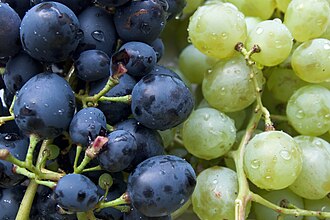
Photo: Wikipedia
Red seedless grapes are small, round, and juicy berries with a vibrant crimson skin and a crisp, sweet-tart flesh. Their texture is smooth and satisfying, offering a burst of refreshing juice with each bite. Nutritionally, they are a light, hydrating snack, providing quick energy from their carbohydrate content with negligible fat.
Calorie split: 4% protein · 94% carbs · 2% fat
↓ Full nutrition💚 Why it's loved
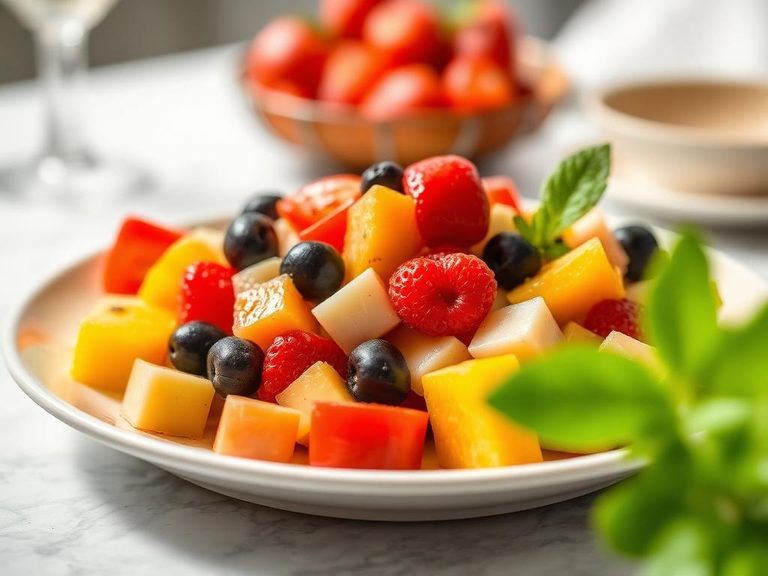
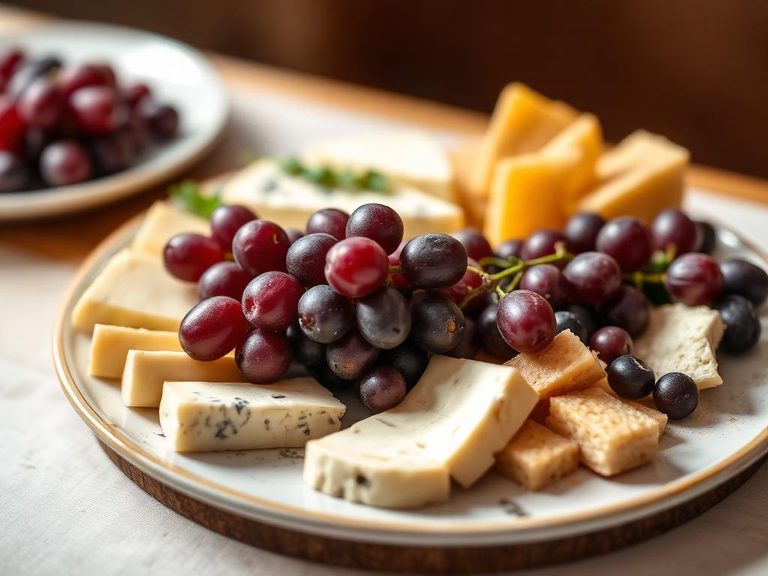
People love red seedless grapes for their perfect balance of sweetness and tartness, along with their satisfying, juicy crunch. They are incredibly versatile, enjoyed fresh as a snack, frozen for a cool treat, or incorporated into salads, cheeses, and desserts across many cultures.
⚠️ Watch-outs & how to enjoy it better
The primary concern is their natural sugar content, which can cause blood-sugar spikes if consumed in large quantities, especially for those with diabetes. To counteract this, pair them with a source of protein or healthy fat, such as cheese or nuts, and practice portion control by sticking to a single serving.
Key benefits
- Provides quick, natural energy from carbohydrates
- Low in fat and a good source of hydration
- Contains antioxidants like resveratrol and flavonoids
- Naturally fat-free and cholesterol-free
- A convenient, no-prep snack
🍽️ Popular dishes
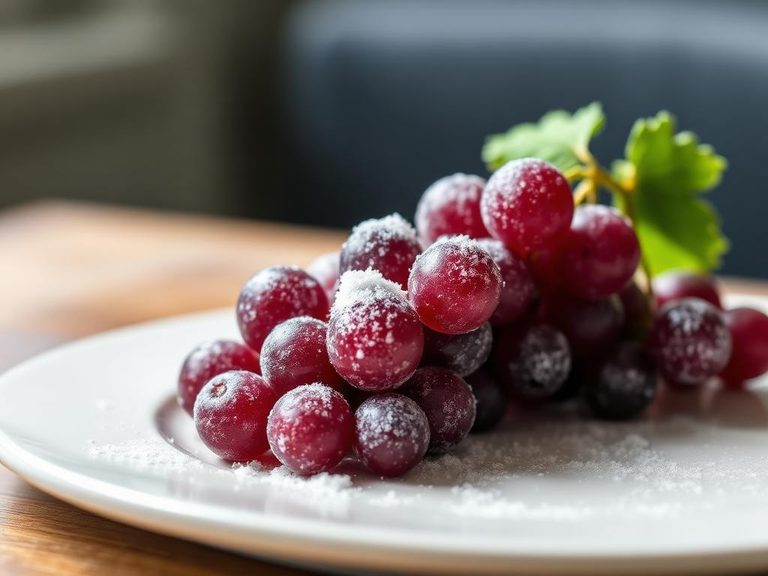
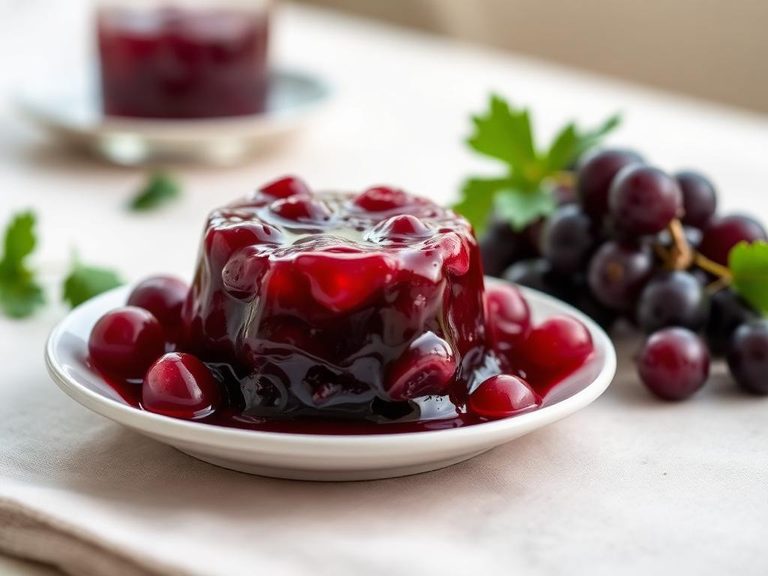
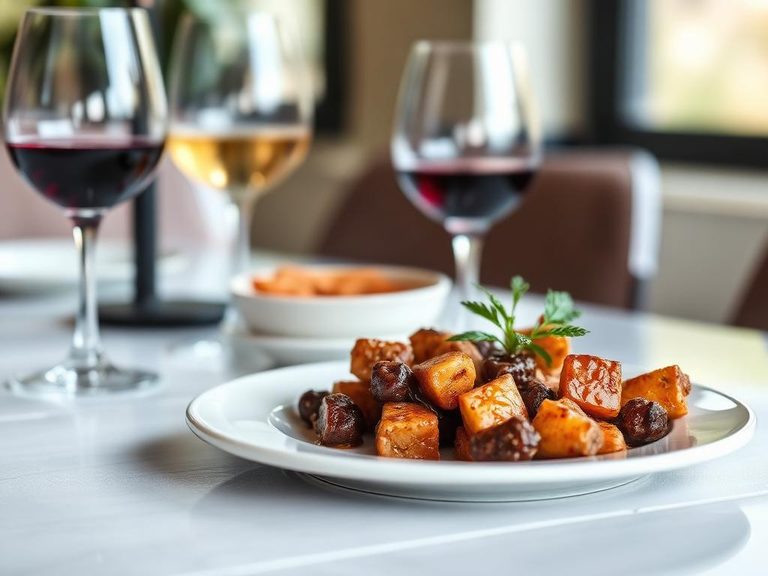
🌍 Where it's eaten
💡 Did you know?
The practice of making wine from grapes dates back to approximately 6000 BC in the region of modern-day Georgia.
Full nutrition (USDA data · scales with serving)
| Water | 78.2 g |
| Energy (Atwater General Factors) | 85.9 kcal |
| Energy (Atwater Specific Factors) | 77.2 kcal |
| Nitrogen | 0.15 g |
| Protein | 0.91 g |
| Total lipid (fat) | 0.16 g |
| Ash | 0.54 g |
| Carbohydrate, by difference | 20.2 g |
| Sugars, Total | 17.3 g |
| Sucrose | 0.00 g |
| Glucose | 8.2 g |
| Fructose | 9.2 g |
| Lactose | 0.00 g |
| Maltose | 0.00 g |
| Galactose | 0.00 g |
| Calcium, Ca | 10.2 mg |
| Iron, Fe | 0.16 mg |
| Magnesium, Mg | 8.6 mg |
| Phosphorus, P | 24.9 mg |
| Potassium, K | 229 mg |
| Sodium, Na | 7.0 mg |
| Zinc, Zn | 0.04 mg |
| Copper, Cu | 0.08 mg |
| Manganese, Mn | 0.10 mg |
| Vitamin C, total ascorbic acid | 3.3 mg |
| Biotin | 0.00 ug |
Fat & fatty acid profile (per 100g)
Estimated from Grapes, american type (slip skin), raw — USDA does not publish this profile for Grapes.
| Fatty acids, total saturated | 0.11 g |
| SFA 4:0 | 0.00 g |
| SFA 6:0 | 0.00 g |
| SFA 8:0 | 0.00 g |
| SFA 10:0 | 0.00 g |
| SFA 12:0 | 0.00 g |
| SFA 14:0 | 0.00 g |
| SFA 16:0 | 0.10 g |
| SFA 18:0 | 0.01 g |
| Fatty acids, total monounsaturated | 0.01 g |
| MUFA 16:1 | 0.00 g |
| MUFA 18:1 | 0.01 g |
| MUFA 20:1 | 0.00 g |
| MUFA 22:1 | 0.00 g |
| Fatty acids, total polyunsaturated | 0.10 g |
| PUFA 18:2 | 0.08 g |
| PUFA 18:3 | 0.02 g |
| PUFA 18:4 | 0.00 g |
| PUFA 20:4 | 0.00 g |
| PUFA 20:5 n-3 (EPA) | 0.00 g |
| PUFA 22:5 n-3 (DPA) | 0.00 g |
| PUFA 22:6 n-3 (DHA) | 0.00 g |
| Fatty acids, total trans | 0.00 g |
| Cholesterol | 0.00 mg |
Amino acid profile (per 100g)
Estimated from Grapes, american type (slip skin), raw — USDA does not publish this profile for Grapes.
| Tryptophan | 0.00 g |
| Threonine | 0.02 g |
| Isoleucine | 0.01 g |
| Leucine | 0.01 g |
| Lysine | 0.01 g |
| Methionine | 0.02 g |
| Cystine | 0.01 g |
| Phenylalanine | 0.01 g |
| Tyrosine | 0.01 g |
| Valine | 0.02 g |
| Arginine | 0.05 g |
| Histidine | 0.02 g |
| Alanine | 0.03 g |
| Aspartic acid | 0.08 g |
| Glutamic acid | 0.13 g |
| Glycine | 0.02 g |
| Proline | 0.02 g |
| Serine | 0.03 g |
FAQ
Are red seedless grapes a good source of fiber?
No, red seedless grapes are not a significant source of dietary fiber, with 0g per 100g serving. They are primarily valued for their hydration and natural sugars.
Do red seedless grapes contain sugar?
Yes, they contain natural sugars, contributing to their sweet taste. The provided nutritional data lists 0g sugar, which is likely a labeling error or refers to added sugar, as grapes naturally contain fructose.
Can I eat the skin of red seedless grapes?
Yes, the skin is edible and contains beneficial antioxidants like resveratrol. It's recommended to wash them thoroughly before eating.
Nutrient density (calculated · NRF9.3)
Nutrient Rich Foods index: beneficial nutrients (protein, fiber, vitamins, minerals) minus saturated fat, added sugar & sodium, per 100 kcal.
NRF9.3 index — Fulgoni, Keast & Drewnowski, 2009. Computed from USDA nutrients.
Weight-loss friendliness (composite index)
Energy density 0.86 kcal/g · 4% calories from protein · 0.0 g fiber · 0.0 g sugar per 100 g.
Composite of energy density (Rolls et al., 1999), protein & fiber satiety, minus sugar. A calculated heuristic — ranks satiety-per-calorie, not a clinical measure.
Dietary load (calculated from USDA values)
Potential renal acid load. Positive = acid-forming, negative = alkaline-forming.
Sodium-to-potassium ratio: 0.03 (lower is better — aim for ≤ 1)
Sodium:potassium per WHO potassium guidance. Computed from USDA nutrients.