

Cesar Salad
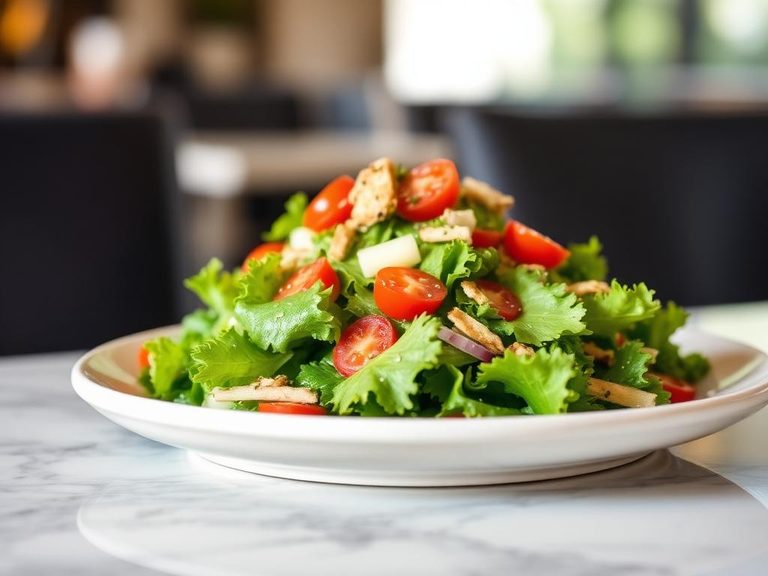
The Caesar Salad is a classic dish featuring crisp romaine lettuce, crunchy croutons, and a creamy dressing, traditionally topped with Parmesan cheese and often with added protein like grilled chicken or shrimp. It originates from Tijuana, Mexico, where it was invented by Italian-American restaurateur Caesar Cardini in the 1920s.
🍳 View the full Cesar Salad recipe →
🍽️ Nutrition at a glance
A typical serving is moderate in calories (around 300-500 kcal, depending on dressing and add-ins), with a balance of healthy fats from the dressing and cheese, some protein from the cheese and any added meat, and carbs primarily from the croutons. It provides key nutrients like vitamin K from romaine, calcium from Parmesan, and healthy fats from olive oil in the dressing.
Nutrition breakdown
| Calories | 420 kcal |
| Protein | 15 g |
| Carbs | 12 g |
| Fat | 35 g |
| Fiber | 4 g |
| Sugar | 3 g |
| Sodium | 950 mg |
| Vitamin A | 300 µg RAE |
| Vitamin K | 120 µg |
| Vitamin C | 15 mg |
| Calcium | 180 mg |
| Iron | 2.5 mg |
| Potassium | 450 mg |
| Folate | 100 µg |
| Magnesium | 40 mg |
Per 1 serving (approximately 300 g) · estimated, varies by recipe
💡 What's interesting
Culturally, the Caesar Salad is unique for being a Mexican-American creation that became a global staple, often customized with local ingredients. Nutritionally, romaine lettuce is a standout for its high vitamin A and K content, making it more nutrient-dense than many other salad greens.
AI estimate may be inaccurate · Terms