

Caesar salad, with romaine, no dressing
Common food
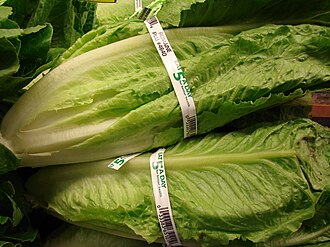
Photo: Wikipedia
This is the crisp, green foundation of a classic Caesar salad, stripped of its creamy dressing to reveal the pure, refreshing character of romaine lettuce. Its sturdy, ribbed leaves offer a satisfying crunch with a mild, slightly sweet and nutty flavor. Nutritionally, it's an ultra-light, low-calorie base packed with water and fiber.
Calorie split: 21% protein · 39% carbs · 40% fat
↓ Full nutrition💚 Why it's loved
People love it for its reliable, refreshing crunch that acts as a perfect canvas for bold flavors, from tangy vinaigrettes to savory proteins. It's a cultural staple of casual dining, symbolizing a quick, healthy, and satisfying meal.
⚠️ Watch-outs & how to enjoy it better
On its own, it can be perceived as bland or overly fibrous for some. Those with sensitive digestion might find the raw fiber challenging. To counteract this, always pair it with a source of fat (like olive oil or avocado) and protein (like chicken or egg) to create a balanced meal, enhance nutrient absorption, and improve satiety.
Key benefits
- Extremely low in calories, ideal for volume eating
- Good source of dietary fiber for digestive health
- Provides vitamins A and K from the dark green leaves
- High water content supports hydration
- Low in natural sugars, making it blood-sugar friendly
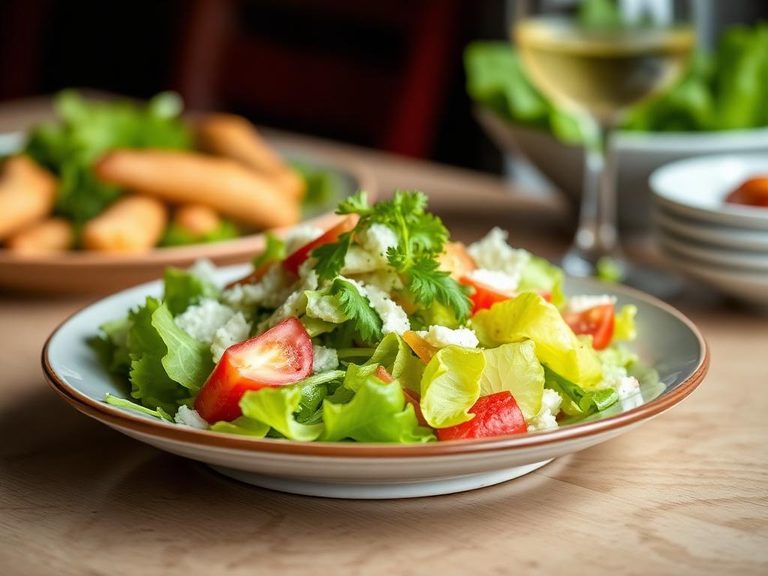
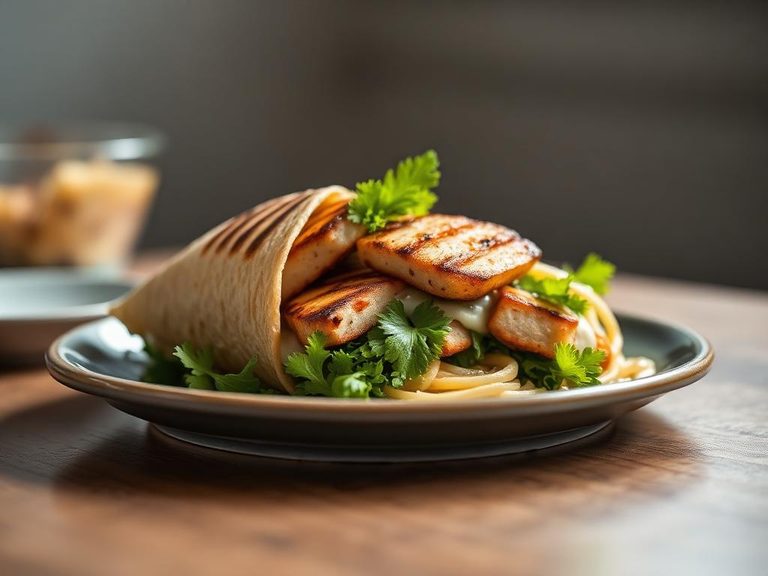
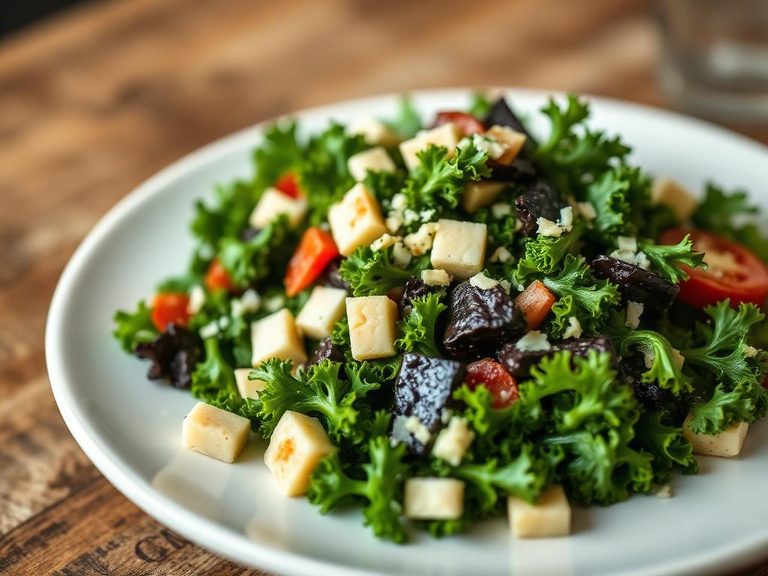
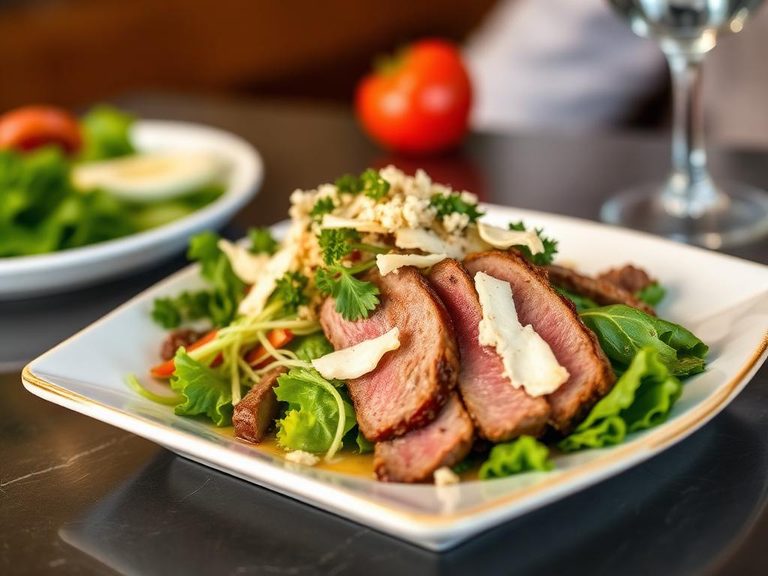
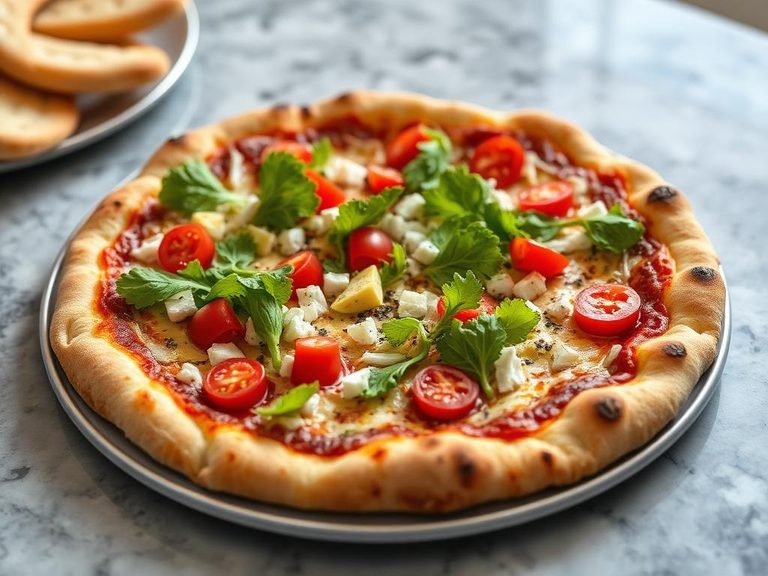
🍽️ Popular dishes
🌍 Where it's eaten
💡 Did you know?
The Caesar salad was invented in Tijuana, Mexico, by Italian-American restaurateur Caesar Cardini in 1924, reportedly during a Fourth of July rush when kitchen supplies were low.
Full nutrition (USDA data · scales with serving)
| Water | 83.8 g |
| Energy | 77.0 kcal |
| Protein | 4.0 g |
| Total lipid (fat) | 3.4 g |
| Carbohydrate, by difference | 7.5 g |
| Fiber, total dietary | 1.8 g |
| Total Sugars | 1.2 g |
| Calcium, Ca | 108 mg |
| Iron, Fe | 0.40 mg |
| Magnesium, Mg | 15.0 mg |
| Phosphorus, P | 83.0 mg |
| Potassium, K | 250 mg |
| Sodium, Na | 238 mg |
| Zinc, Zn | 0.65 mg |
| Copper, Cu | 0.05 mg |
| Selenium, Se | 4.8 ug |
| Vitamin C, total ascorbic acid | 4.0 mg |
| Thiamin | 0.08 mg |
| Riboflavin | 0.11 mg |
| Niacin | 0.54 mg |
| Vitamin B-6 | 0.07 mg |
| Folate, total | 49.0 ug |
| Folic acid | 3.0 ug |
| Folate, food | 46.0 ug |
| Folate, DFE | 51.0 ug |
| Choline, total | 10.5 mg |
| Vitamin B-12 | 0.13 ug |
| Vitamin B-12, added | 0.00 ug |
| Vitamin A, RAE | 398 ug |
| Retinol | 21.0 ug |
| Carotene, beta | 4524 ug |
| Carotene, alpha | 0.00 ug |
| Cryptoxanthin, beta | 0.00 ug |
| Lycopene | 0.00 ug |
| Lutein + zeaxanthin | 2000 ug |
| Vitamin E (alpha-tocopherol) | 0.18 mg |
| Vitamin E, added | 0.00 mg |
| Vitamin D (D2 + D3) | 0.00 ug |
| Vitamin K (phylloquinone) | 72.6 ug |
| Alcohol, ethyl | 0.00 g |
| Caffeine | 0.00 mg |
| Theobromine | 0.00 mg |
Fat & fatty acid profile (per 100g)
| Fatty acids, total saturated | 1.7 g |
| SFA 4:0 | 0.05 g |
| SFA 6:0 | 0.04 g |
| SFA 8:0 | 0.03 g |
| SFA 10:0 | 0.06 g |
| SFA 12:0 | 0.07 g |
| SFA 14:0 | 0.23 g |
| SFA 16:0 | 0.82 g |
| SFA 18:0 | 0.34 g |
| Fatty acids, total monounsaturated | 1.0 g |
| MUFA 16:1 | 0.04 g |
| MUFA 18:1 | 1.0 g |
| MUFA 20:1 | 0.01 g |
| MUFA 22:1 | 0.00 g |
| Fatty acids, total polyunsaturated | 0.35 g |
| PUFA 18:2 | 0.25 g |
| PUFA 18:3 | 0.11 g |
| PUFA 18:4 | 0.00 g |
| PUFA 20:4 | 0.00 g |
| PUFA 20:5 n-3 (EPA) | 0.00 g |
| PUFA 22:5 n-3 (DPA) | 0.00 g |
| PUFA 22:6 n-3 (DHA) | 0.00 g |
| Cholesterol | 8.0 mg |
FAQ
Is romaine lettuce healthier than iceberg?
Generally, yes. Romaine is higher in vitamins A, C, and K, as well as folate and fiber. However, iceberg is very low in calories and high in water content, so both can fit into a healthy diet.
Why is the outer part of romaine sometimes bitter?
The outer, darker green leaves are more exposed to sunlight, which increases the production of compounds like lactucaxanthin, which can impart a slightly bitter taste. They are also more fibrous. Many people prefer the milder, sweeter inner heart.
How do I keep romaine lettuce fresh longer?
Wash and thoroughly dry the leaves, then wrap them in a dry paper towel and store in a sealed container or bag in the crisper drawer. The paper towel absorbs excess moisture, which is the main cause of wilting and slime.
Nutrient density (calculated · NRF9.3)
Nutrient Rich Foods index: beneficial nutrients (protein, fiber, vitamins, minerals) minus saturated fat, added sugar & sodium, per 100 kcal.
NRF9.3 index — Fulgoni, Keast & Drewnowski, 2009. Computed from USDA nutrients.
Weight-loss friendliness (composite index)
Energy density 0.77 kcal/g · 21% calories from protein · 1.8 g fiber · 1.2 g sugar per 100 g.
Composite of energy density (Rolls et al., 1999), protein & fiber satiety, minus sugar. A calculated heuristic — ranks satiety-per-calorie, not a clinical measure.
Dietary load (calculated from USDA values)
Potential renal acid load. Positive = acid-forming, negative = alkaline-forming.
Sodium-to-potassium ratio: 0.95 (lower is better — aim for ≤ 1)
Sodium:potassium per WHO potassium guidance. Computed from USDA nutrients.