

Cheese, Parmesan, dry grated
Common food
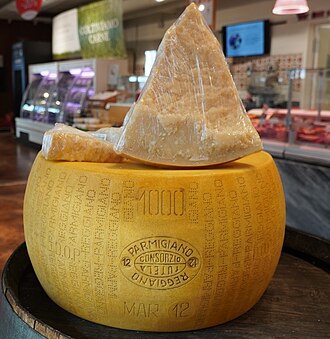
Photo: Wikipedia
Dry grated Parmesan is a hard, granular cheese with a deep, nutty, and salty flavor profile, often described as umami-rich. Its texture is powdery and free-flowing, designed to melt slowly and add a savory crust to dishes. Nutritionally, it is a protein powerhouse, delivering nearly 30 grams per 100 grams, with a significant fat content that carries its complex flavors.
Calorie split: 29% protein · 8% carbs · 63% fat
↓ Full nutrition💚 Why it's loved
People love it for its intense, concentrated flavor that can elevate a simple dish with just a sprinkle. Its versatility as a finishing touch—from pasta to popcorn—and its deep roots in Italian culinary tradition make it a beloved pantry staple.
⚠️ Watch-outs & how to enjoy it better
Its high sodium and saturated fat content means those with hypertension or heart concerns should use it sparingly. The strong flavor can also be overwhelming if over-applied. To counteract, use it as a targeted seasoning rather than a main ingredient, and pair it with fiber-rich vegetables or whole grains to balance the meal.
Key benefits
- Excellent source of high-quality protein
- Rich in calcium for bone health
- Contains vitamin A for immune function
- Low in lactose due to aging process
- Provides conjugated linoleic acid (CLA)
🍽️ Popular dishes
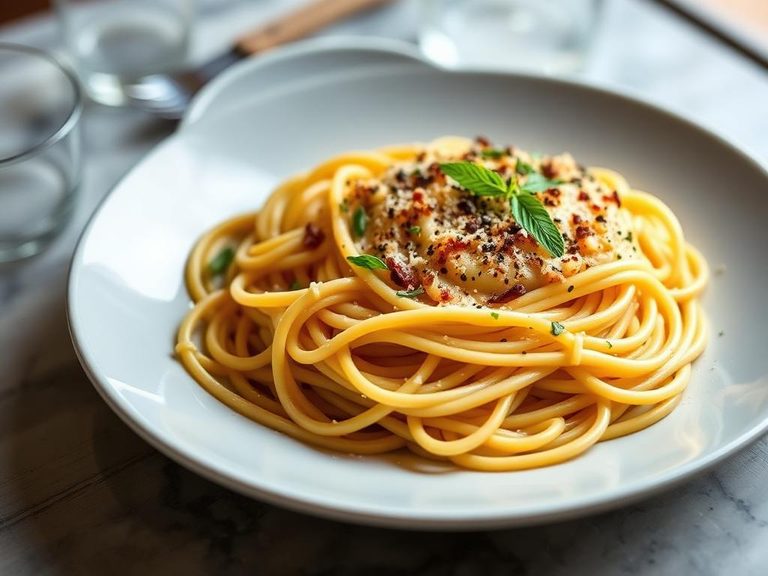
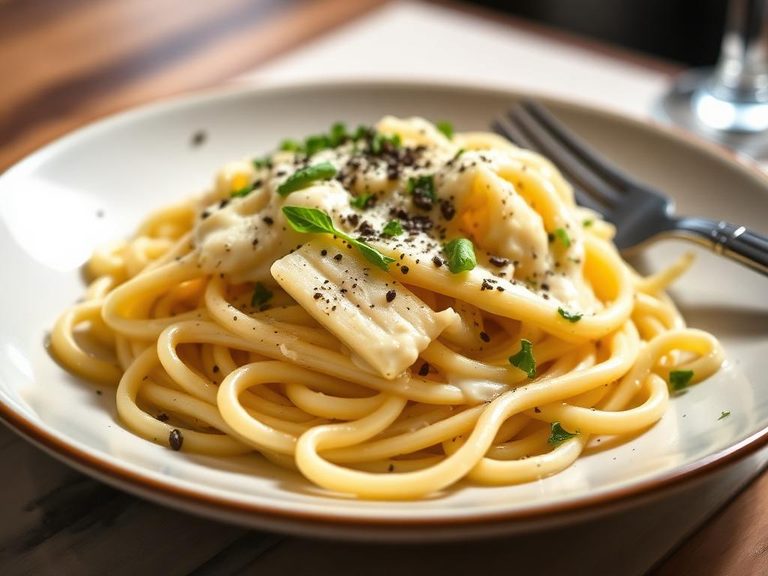
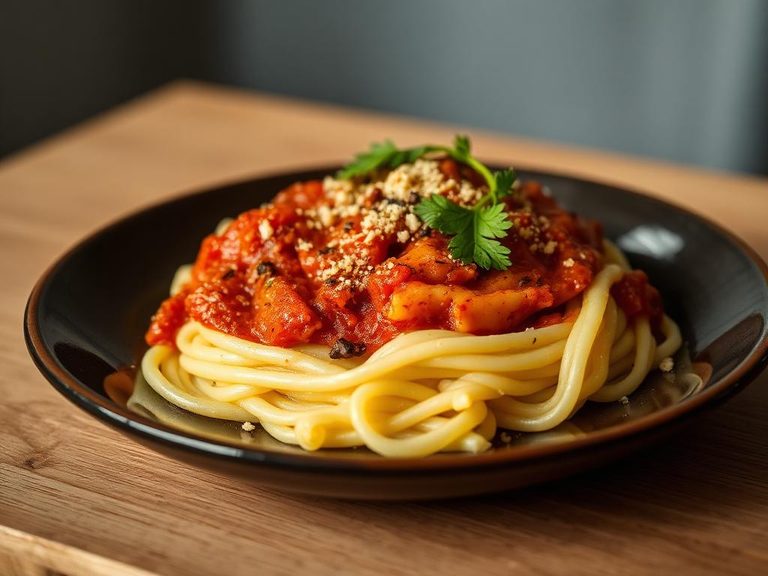
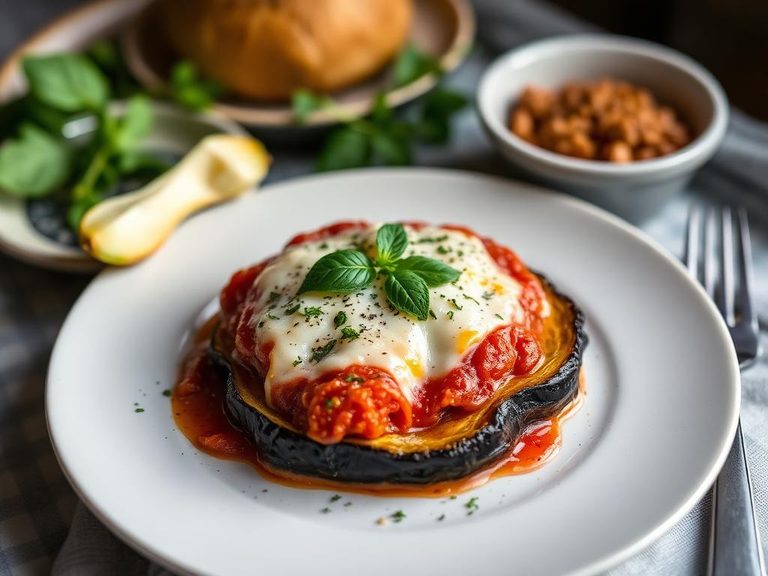
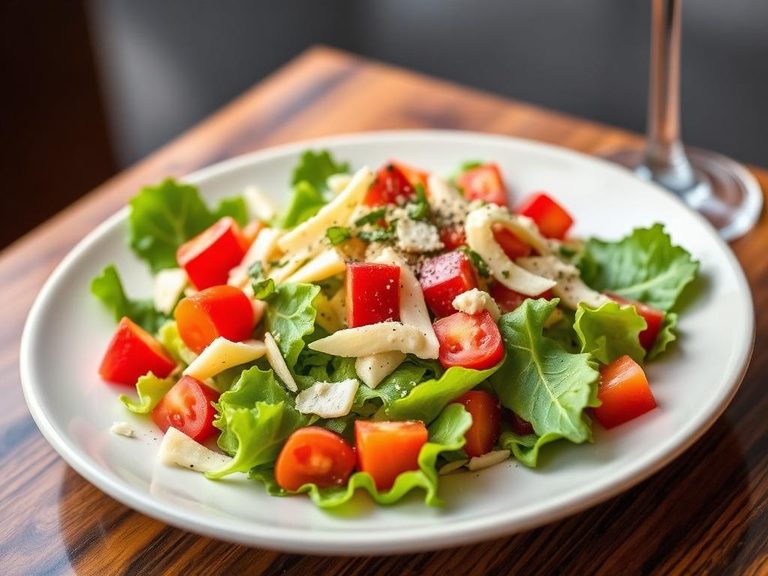
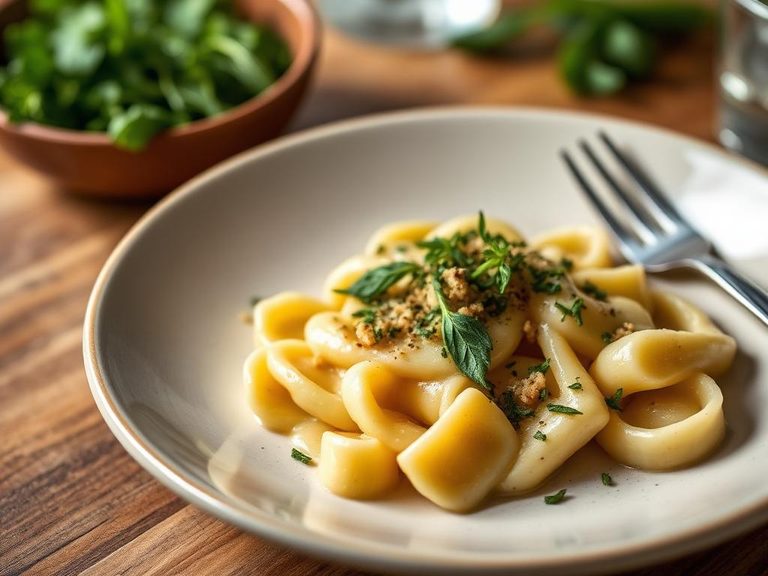
🌍 Where it's eaten
💡 Did you know?
Authentic Parmigiano-Reggiano is legally protected by the DOP (Protected Designation of Origin) and must be produced in a specific region of Italy using traditional methods, including a unique branding process with dotted lettering on the rind.
Full nutrition (USDA data · scales with serving)
| Water | 26.8 g |
| Energy | 412 kcal |
| Protein | 29.9 g |
| Total lipid (fat) | 28.8 g |
| Carbohydrate, by difference | 8.4 g |
| Fiber, total dietary | 0.00 g |
| Total Sugars | 0.36 g |
| Calcium, Ca | 917 mg |
| Iron, Fe | 0.30 mg |
| Magnesium, Mg | 35.0 mg |
| Phosphorus, P | 630 mg |
| Potassium, K | 129 mg |
| Sodium, Na | 1398 mg |
| Zinc, Zn | 4.5 mg |
| Copper, Cu | 0.04 mg |
| Selenium, Se | 29.4 ug |
| Vitamin C, total ascorbic acid | 0.00 mg |
| Thiamin | 0.03 mg |
| Riboflavin | 0.38 mg |
| Niacin | 0.11 mg |
| Vitamin B-6 | 0.05 mg |
| Folate, total | 7.0 ug |
| Folic acid | 0.00 ug |
| Folate, food | 7.0 ug |
| Folate, DFE | 7.0 ug |
| Choline, total | 14.8 mg |
| Vitamin B-12 | 1.4 ug |
| Vitamin B-12, added | 0.00 ug |
| Vitamin A, RAE | 230 ug |
| Retinol | 230 ug |
| Carotene, beta | 0.00 ug |
| Carotene, alpha | 0.00 ug |
| Cryptoxanthin, beta | 0.00 ug |
| Lycopene | 0.00 ug |
| Lutein + zeaxanthin | 0.00 ug |
| Vitamin E (alpha-tocopherol) | 0.38 mg |
| Vitamin E, added | 0.00 mg |
| Vitamin D (D2 + D3) | 0.20 ug |
| Vitamin K (phylloquinone) | 1.8 ug |
| Alcohol, ethyl | 0.00 g |
| Caffeine | 0.00 mg |
| Theobromine | 0.00 mg |
Fat & fatty acid profile (per 100g)
| Fatty acids, total saturated | 16.4 g |
| SFA 4:0 | 0.56 g |
| SFA 6:0 | 0.47 g |
| SFA 8:0 | 0.29 g |
| SFA 10:0 | 0.71 g |
| SFA 12:0 | 0.81 g |
| SFA 14:0 | 2.6 g |
| SFA 16:0 | 7.8 g |
| SFA 18:0 | 2.6 g |
| Fatty acids, total monounsaturated | 6.2 g |
| MUFA 16:1 | 0.40 g |
| MUFA 18:1 | 5.9 g |
| MUFA 20:1 | 0.11 g |
| MUFA 22:1 | 0.00 g |
| Fatty acids, total polyunsaturated | 0.93 g |
| PUFA 18:2 | 0.92 g |
| PUFA 18:3 | 0.23 g |
| PUFA 18:4 | 0.00 g |
| PUFA 20:4 | 0.02 g |
| PUFA 20:5 n-3 (EPA) | 0.00 g |
| PUFA 22:5 n-3 (DPA) | 0.01 g |
| PUFA 22:6 n-3 (DHA) | 0.00 g |
| Cholesterol | 86.0 mg |
Amino acid profile (per 100g)
Estimated from Crackers, cheese, sandwich-type with cheese filling — USDA does not publish this profile for Cheese.
| Tryptophan | 0.11 g |
| Threonine | 0.33 g |
| Isoleucine | 0.36 g |
| Leucine | 0.64 g |
| Lysine | 0.39 g |
| Methionine | 0.15 g |
| Cystine | 0.15 g |
| Phenylalanine | 0.35 g |
| Tyrosine | 0.25 g |
| Valine | 0.38 g |
| Arginine | 0.29 g |
| Histidine | 0.17 g |
| Alanine | 0.30 g |
| Aspartic acid | 0.52 g |
| Glutamic acid | 2.2 g |
| Glycine | 0.24 g |
| Proline | 0.77 g |
| Serine | 0.40 g |
FAQ
What's the difference between 'Parmesan' and 'Parmigiano-Reggiano'?
'Parmigiano-Reggiano' is the protected Italian original, aged for at least 12 months. 'Parmesan' is a generic term often used for similar-style cheeses made elsewhere, which may have different aging processes and flavor profiles.
Can lactose-intolerant people eat dry grated Parmesan?
Generally, yes. The aging process (typically 12+ months) breaks down most of the lactose, making it very low in lactose and often tolerable for those with sensitivities.
How should I store it to keep it fresh?
For pre-grated, keep it in an airtight container in the refrigerator to prevent drying and absorbing odors. For a block, wrap it in wax paper or cheese paper, then loosely in plastic, and refrigerate.
Nutrient density (calculated · NRF9.3)
Nutrient Rich Foods index: beneficial nutrients (protein, fiber, vitamins, minerals) minus saturated fat, added sugar & sodium, per 100 kcal.
NRF9.3 index — Fulgoni, Keast & Drewnowski, 2009. Computed from USDA nutrients.
Weight-loss friendliness (composite index)
Energy density 4.12 kcal/g · 29% calories from protein · 0.0 g fiber · 0.4 g sugar per 100 g.
Composite of energy density (Rolls et al., 1999), protein & fiber satiety, minus sugar. A calculated heuristic — ranks satiety-per-calorie, not a clinical measure.
Dietary load (calculated from USDA values)
Potential renal acid load. Positive = acid-forming, negative = alkaline-forming.
Sodium-to-potassium ratio: 10.84 (lower is better — aim for ≤ 1)
Sodium:potassium per WHO potassium guidance. Computed from USDA nutrients.