

Caesar Salad
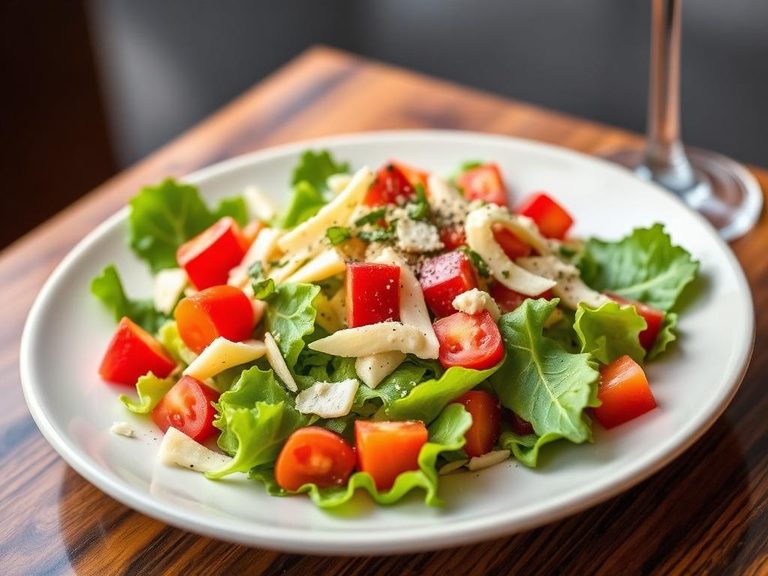
Caesar Salad is a classic salad consisting of romaine lettuce, croutons, and a creamy dressing, typically made with olive oil, lemon juice, egg, Worcestershire sauce, and Parmesan cheese. It is widely believed to have been invented by Italian-American restaurateur Caesar Cardini in Tijuana, Mexico, in the 1920s.
🍳 View the full Caesar Salad recipe →
🍽️ Nutrition at a glance
A typical Caesar Salad is moderate in fat and calories, primarily from the dressing and Parmesan, while offering a good source of vitamins A and K from the romaine lettuce. A standard serving generally ranges from 300 to 600 calories, depending on the portion size and dressing amount.
Nutrition breakdown
| Calories | 180 kcal |
| Protein | 8 g |
| Carbs | 9 g |
| Fat | 13 g |
| Fiber | 3 g |
| Sugar | 2 g |
| Sodium | 450 mg |
| Vitamin A | 350 mcg |
| Vitamin C | 15 mg |
| Vitamin K | 80 mcg |
| Calcium | 150 mg |
| Iron | 1.5 mg |
| Potassium | 300 mg |
| Folate | 70 mcg |
| Vitamin E | 1.5 mg |
Per 1 cup (170 g) · estimated, varies by recipe
💡 What's interesting
The salad's origin story is a popular piece of culinary lore, often tied to a Fourth of July rush when Cardini improvised with the ingredients he had on hand. Nutritionally, the raw romaine provides a crunchy, hydrating base that contrasts with the rich, savory dressing, making it a surprisingly balanced and satisfying dish.
🍽️ Related dishes





AI estimate may be inaccurate · Terms