

Soy milk, unsweetened, plain, shelf stable
Whole food · Legumes and Legume Products
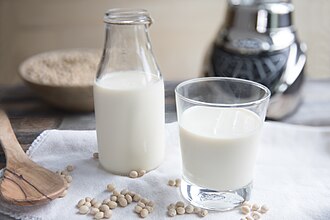
Photo: Wikipedia
A smooth, plant-based beverage made from whole soybeans, this unsweetened, shelf-stable version offers a clean, mildly nutty flavor and a thin, pourable texture similar to skim milk. It is a nutritional powerhouse, delivering a notable 3.5 grams of complete protein per 100 grams with a very low calorie count. Its long shelf life and simple ingredient list make it a reliable and convenient staple for various diets and culinary uses.
Calorie split: 37% protein · 13% carbs · 50% fat
↓ Full nutrition💚 Why it's loved
People love it for its neutral, versatile taste that blends seamlessly into smoothies, coffee, or cereal without overpowering other flavors. It's a beloved staple in East Asian cuisines, valued for its ability to be both a standalone drink and a foundational ingredient in savory and sweet dishes.
⚠️ Watch-outs & how to enjoy it better
Some find its flavor too beany or its texture thinner than dairy milk, and it is a common allergen for those with soy sensitivities. To counteract potential digestive issues, start with small portions and consider pairing it with fiber-rich foods; for a creamier texture, try shaking the container well or using it in cooked applications like sauces.
Key benefits
- Excellent source of complete plant protein
- Naturally low in calories and fat
- Shelf-stable, requiring no refrigeration until opened
- Lactose-free and suitable for vegan diets
- Contains no added sugars in its unsweetened form
🍽️ Popular dishes

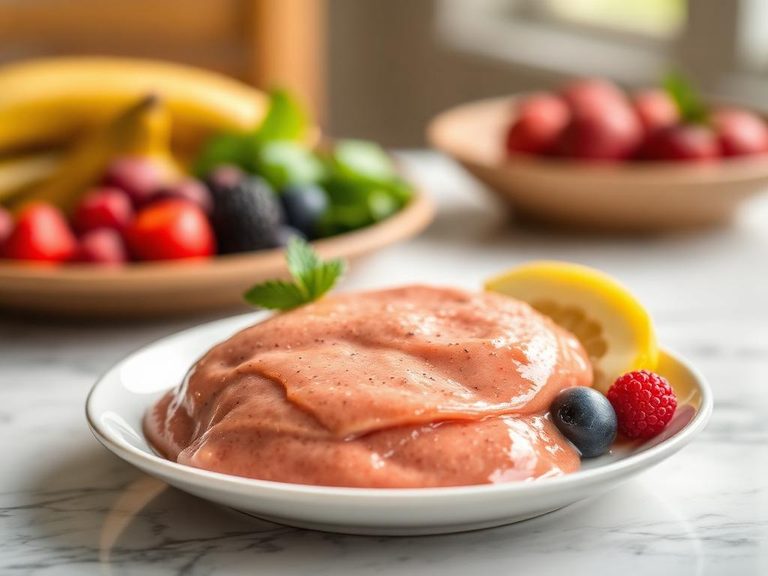
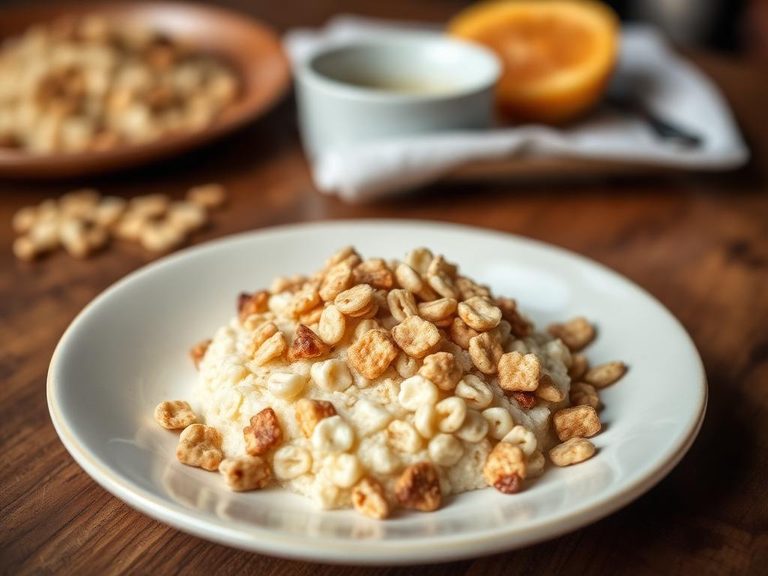
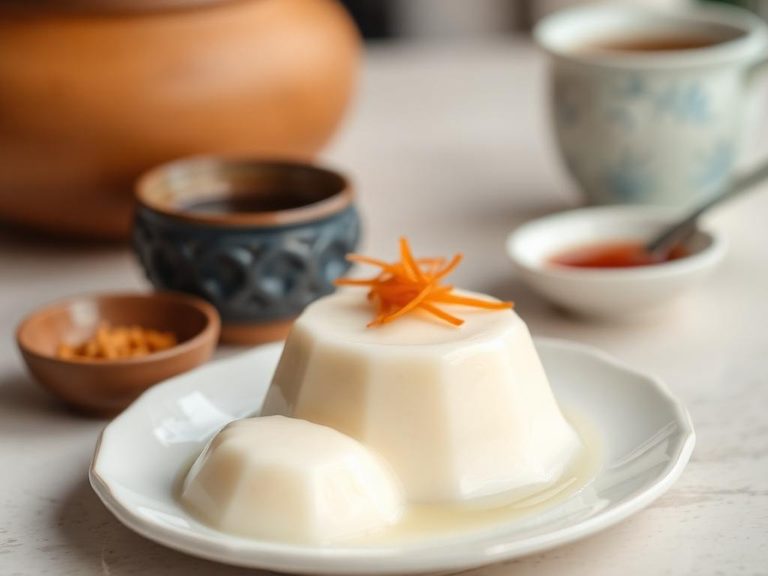
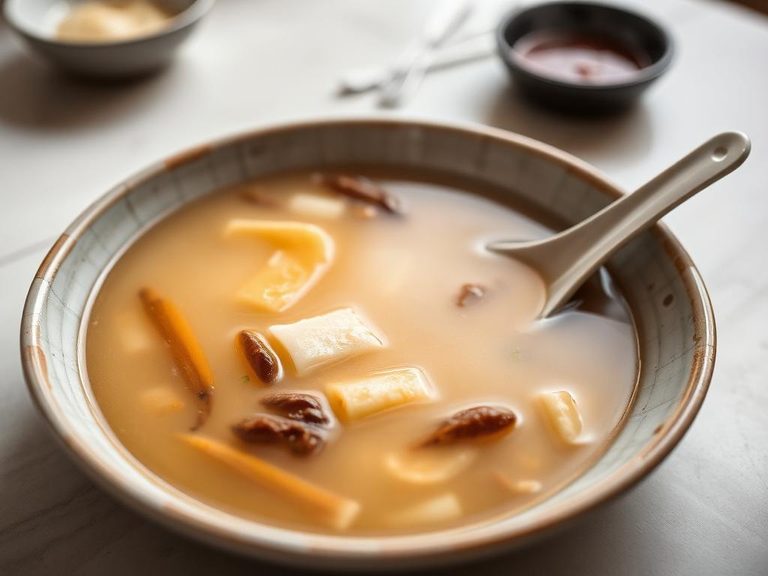
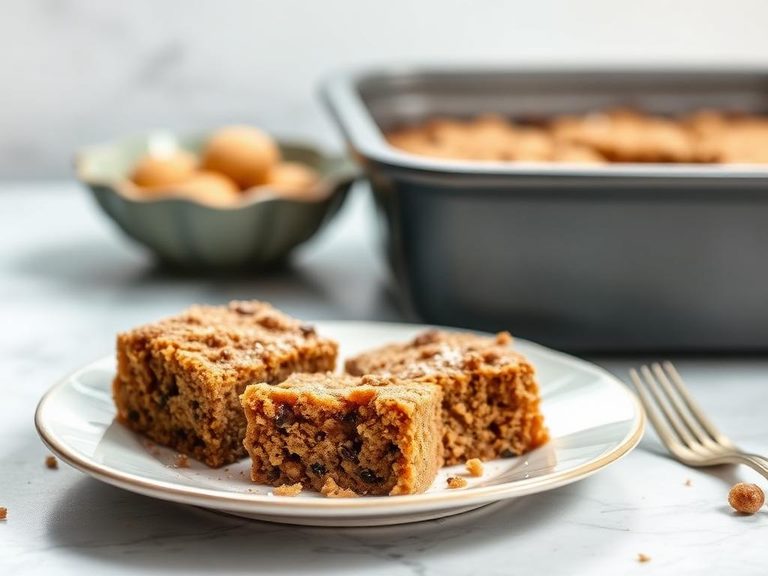
🌍 Where it's eaten
💡 Did you know?
The process of making soy milk dates back over 2,000 years to the Han Dynasty in China, where it was originally called 'doujiang' and considered a medicinal drink before becoming a dietary staple.
Full nutrition (USDA data · scales with serving)
| Water | 92.4 g |
| Energy (Atwater General Factors) | 38.5 kcal |
| Energy (Atwater Specific Factors) | 38.5 kcal |
| Nitrogen | 0.57 g |
| Protein | 3.5 g |
| Total lipid (fat) | 2.1 g |
| Total fat (NLEA) | 1.9 g |
| Ash | 0.64 g |
| Carbohydrate, by difference | 1.3 g |
| Fiber, total dietary | 0.00 g |
| Sugars, Total | 0.56 g |
| Sucrose | 0.56 g |
| Glucose | 0.00 g |
| Fructose | 0.00 g |
| Lactose | 0.00 g |
| Maltose | 0.00 g |
| Galactose | 0.00 g |
| Raffinose | 0.07 g |
| Stachyose | 0.43 g |
| Verbascose | 0.03 g |
| Calcium, Ca | 101 mg |
| Iron, Fe | 0.54 mg |
| Magnesium, Mg | 21.5 mg |
| Phosphorus, P | 68.7 mg |
| Potassium, K | 158 mg |
| Sodium, Na | 34.3 mg |
| Zinc, Zn | 0.31 mg |
| Copper, Cu | 0.11 mg |
| Manganese, Mn | 0.21 mg |
| Iodine, I | 0.00 ug |
| Selenium, Se | 1.9 ug |
| Molybdenum, Mo | 58.4 ug |
| Thiamin | 0.06 mg |
| Riboflavin | 0.08 mg |
| Niacin | 0.24 mg |
| Vitamin B-6 | 0.06 mg |
| Biotin | 3.3 ug |
| Folate, total | 19.7 ug |
| Vitamin B-12 | 0.39 ug |
| Vitamin A, RAE | 58.2 ug |
| Retinol | 58.2 ug |
| Carotene, beta | 0.00 ug |
| cis-beta-Carotene | 0.00 ug |
| trans-beta-Carotene | 0.00 ug |
| Carotene, alpha | 0.00 ug |
| Carotene, gamma | 0.00 ug |
| Cryptoxanthin, beta | 0.00 ug |
| Cryptoxanthin, alpha | 0.00 ug |
| Lycopene | 0.00 ug |
| cis-Lycopene | 0.00 ug |
| trans-Lycopene | 0.00 ug |
| Lutein + zeaxanthin | 8.2 ug |
| cis-Lutein/Zeaxanthin | 0.97 ug |
| Zeaxanthin | 7.3 ug |
| Vitamin E (alpha-tocopherol) | 0.16 mg |
| Tocopherol, beta | 0.00 mg |
| Tocopherol, gamma | 1.4 mg |
| Tocopherol, delta | 0.87 mg |
| Tocotrienol, alpha | 0.00 mg |
| Tocotrienol, beta | 0.00 mg |
| Tocotrienol, gamma | 0.00 mg |
| Tocotrienol, delta | 0.00 mg |
| Vitamin D (D2 + D3), International Units | 27.2 iu |
| Vitamin D (D2 + D3) | 0.68 ug |
| Vitamin D2 (ergocalciferol) | 0.68 ug |
| Vitamin D3 (cholecalciferol) | 0.00 ug |
| Daidzein | 0.46 mg |
| Genistein | 0.38 mg |
| Daidzin | 12.9 mg |
| Genistin | 18.8 mg |
| Glycitin | 1.4 mg |
Fat & fatty acid profile (per 100g)
| Fatty acids, total saturated | 0.31 g |
| SFA 4:0 | 0.00 g |
| SFA 5:0 | 0.00 g |
| SFA 6:0 | 0.00 g |
| SFA 7:0 | 0.00 g |
| SFA 8:0 | 0.00 g |
| SFA 9:0 | 0.00 g |
| SFA 10:0 | 0.00 g |
| SFA 11:0 | 0.00 g |
| SFA 12:0 | 0.00 g |
| SFA 14:0 | 0.00 g |
| SFA 15:0 | 0.00 g |
| SFA 16:0 | 0.22 g |
| SFA 17:0 | 0.00 g |
| SFA 18:0 | 0.07 g |
| SFA 20:0 | 0.01 g |
| SFA 21:0 | 0.00 g |
| SFA 22:0 | 0.01 g |
| SFA 23:0 | 0.00 g |
| SFA 24:0 | 0.00 g |
| Fatty acids, total monounsaturated | 0.42 g |
| MUFA 12:1 | 0.00 g |
| MUFA 14:1 c | 0.00 g |
| MUFA 15:1 | 0.00 g |
| MUFA 16:1 c | 0.00 g |
| MUFA 17:1 | 0.00 g |
| MUFA 17:1 c | 0.00 g |
| MUFA 18:1 c | 0.41 g |
| MUFA 20:1 c | 0.00 g |
| MUFA 22:1 c | 0.00 g |
| MUFA 22:1 n-9 | 0.00 g |
| MUFA 22:1 n-11 | 0.00 g |
| MUFA 24:1 c | 0.00 g |
| Fatty acids, total polyunsaturated | 1.2 g |
| PUFA 18:2 c | 0.99 g |
| PUFA 18:2 n-6 c,c | 0.99 g |
| PUFA 18:2 CLAs | 0.00 g |
| PUFA 18:3 c | 0.17 g |
| PUFA 18:3 n-3 c,c,c (ALA) | 0.17 g |
| PUFA 18:3 n-6 c,c,c | 0.00 g |
| PUFA 18:4 | 0.00 g |
| PUFA 20:2 c | 0.00 g |
| PUFA 20:2 n-6 c,c | 0.00 g |
| PUFA 20:3 c | 0.00 g |
| PUFA 20:3 n-3 | 0.00 g |
| PUFA 20:3 n-6 | 0.00 g |
| PUFA 20:3 n-9 | 0.00 g |
| PUFA 22:3 | 0.00 g |
| PUFA 20:4 | 0.00 g |
| PUFA 20:4c | 0.00 g |
| PUFA 20:5c | 0.00 g |
| PUFA 20:5 n-3 (EPA) | 0.00 g |
| PUFA 22:2 | 0.00 g |
| PUFA 22:5 c | 0.00 g |
| PUFA 22:4 | 0.00 g |
| PUFA 22:5 n-3 (DPA) | 0.00 g |
| PUFA 22:6 c | 0.00 g |
| PUFA 22:6 n-3 (DHA) | 0.00 g |
| Fatty acids, total trans | 0.00 g |
| Fatty acids, total trans-monoenoic | 0.00 g |
| TFA 14:1 t | 0.00 g |
| TFA 16:1 t | 0.00 g |
| TFA 18:1 t | 0.00 g |
| TFA 20:1 t | 0.00 g |
| TFA 22:1 t | 0.00 g |
| TFA 18:2 t not further defined | 0.00 g |
| TFA 18:2 t | 0.00 g |
| Fatty acids, total trans-polyenoic | 0.00 g |
| TFA 18:3 t | 0.00 g |
Amino acid profile (per 100g)
| Tryptophan | 0.05 g |
| Threonine | 0.13 g |
| Isoleucine | 0.14 g |
| Leucine | 0.25 g |
| Lysine | 0.22 g |
| Methionine | 0.05 g |
| Phenylalanine | 0.17 g |
| Tyrosine | 0.12 g |
| Valine | 0.14 g |
| Arginine | 0.27 g |
| Histidine | 0.10 g |
| Alanine | 0.14 g |
| Aspartic acid | 0.40 g |
| Glutamic acid | 0.62 g |
| Glycine | 0.14 g |
| Proline | 0.14 g |
| Serine | 0.17 g |
| Hydroxyproline | 0.00 g |
| Cysteine | 0.06 g |
FAQ
Is unsweetened soy milk a good source of calcium?
Plain, unsweetened soy milk is not naturally high in calcium, but many commercial brands are fortified with calcium and vitamin D to match dairy milk levels. Always check the nutrition label for 'fortified' or 'added calcium'.
Can I use this soy milk in baking?
Yes, it's an excellent 1:1 substitute for dairy milk in most baking recipes, especially since its neutral flavor won't alter the taste. For richer results, consider using it in recipes that also include fat like oil or butter.
How long does shelf-stable soy milk last?
Unopened, shelf-stable soy milk can last for several months to a year past its 'best by' date when stored in a cool, dark place. Once opened, it must be refrigerated and consumed within 7-10 days.
Nutrient density (calculated · NRF9.3)
Nutrient Rich Foods index: beneficial nutrients (protein, fiber, vitamins, minerals) minus saturated fat, added sugar & sodium, per 100 kcal.
NRF9.3 index — Fulgoni, Keast & Drewnowski, 2009. Computed from USDA nutrients.
Weight-loss friendliness (composite index)
Energy density 0.38 kcal/g · 37% calories from protein · 0.0 g fiber · 0.0 g sugar per 100 g.
Composite of energy density (Rolls et al., 1999), protein & fiber satiety, minus sugar. A calculated heuristic — ranks satiety-per-calorie, not a clinical measure.
Dietary load (calculated from USDA values)
Potential renal acid load. Positive = acid-forming, negative = alkaline-forming.
Sodium-to-potassium ratio: 0.22 (lower is better — aim for ≤ 1)
Sodium:potassium per WHO potassium guidance. Computed from USDA nutrients.