

Cheese, pasteurized process, American, without added vitamin D
Whole food · Dairy and Egg Products

Photo: Wikipedia
This is the classic, smooth-melting American cheese slice, engineered for perfect consistency on burgers and in grilled cheese sandwiches. Its texture is soft and creamy, with a mild, salty, and distinctly savory flavor profile that screams comfort food. Nutritionally, it's a calorie-dense powerhouse, delivering a significant amount of protein and fat per serving.
Calorie split: 19% protein · 4% carbs · 77% fat
↓ Full nutrition💚 Why it's loved
People adore it for its unparalleled melting ability and nostalgic, umami-rich flavor that perfectly complements burgers, eggs, and sandwiches. It's the ultimate comfort food staple, offering a reliable, creamy texture that's hard to replicate with natural cheeses.
⚠️ Watch-outs & how to enjoy it better
It's often high in sodium and contains emulsifying salts and additives, which some consumers prefer to avoid. Those monitoring sodium intake should use it sparingly; pairing it with potassium-rich foods like tomatoes or spinach can help balance electrolytes. As a common dairy product, it's unsuitable for those with lactose intolerance or milk allergies.
Key benefits
- Excellent source of high-quality protein for muscle maintenance.
- Very low in carbohydrates and sugar, suitable for low-carb diets.
- Provides a good dose of calcium for bone health.
- Melts exceptionally well without separating or becoming oily.
- Shelf-stable and convenient for quick meal preparation.
🍽️ Popular dishes
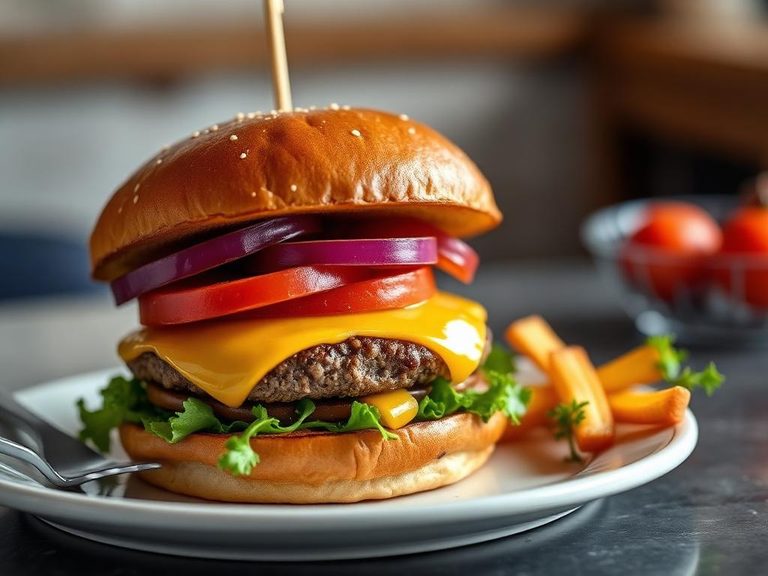
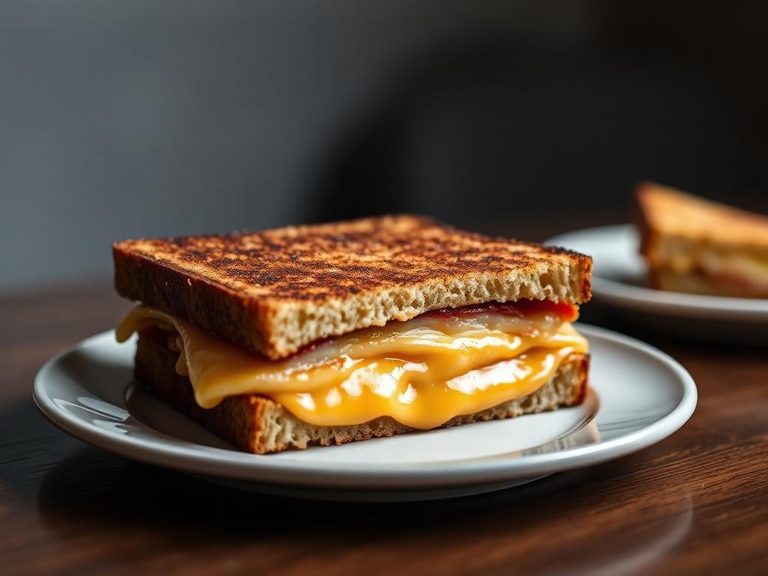
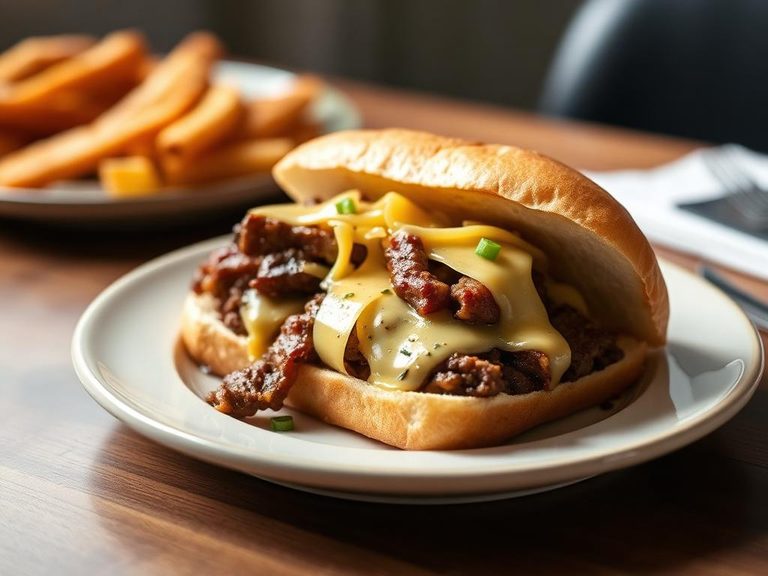



🌍 Where it's eaten
💡 Did you know?
American cheese was invented in 1916 by James L. Kraft, who patented the process of making it from a blend of cheeses and emulsifying salts, originally to extend its shelf life for the U.S. military.
Full nutrition (USDA data · scales with serving)
| Water | 39.6 g |
| Energy | 371 kcal |
| Energy | 1553 kj |
| Protein | 18.1 g |
| Total lipid (fat) | 31.8 g |
| Ash | 6.8 g |
| Carbohydrate, by difference | 3.7 g |
| Fiber, total dietary | 0.00 g |
| Total Sugars | 2.3 g |
| Sucrose | 0.00 g |
| Glucose | 0.00 g |
| Fructose | 0.00 g |
| Lactose | 2.1 g |
| Maltose | 0.00 g |
| Galactose | 0.11 g |
| Calcium, Ca | 1045 mg |
| Iron, Fe | 0.63 mg |
| Magnesium, Mg | 26.0 mg |
| Phosphorus, P | 641 mg |
| Potassium, K | 132 mg |
| Sodium, Na | 1671 mg |
| Zinc, Zn | 2.5 mg |
| Copper, Cu | 0.05 mg |
| Manganese, Mn | 0.04 mg |
| Selenium, Se | 20.2 ug |
| Fluoride, F | 35.0 ug |
| Vitamin C, total ascorbic acid | 0.00 mg |
| Thiamin | 0.01 mg |
| Riboflavin | 0.23 mg |
| Niacin | 0.08 mg |
| Pantothenic acid | 0.40 mg |
| Vitamin B-6 | 0.05 mg |
| Folate, total | 8.0 ug |
| Folic acid | 0.00 ug |
| Folate, food | 8.0 ug |
| Folate, DFE | 8.0 ug |
| Choline, total | 36.2 mg |
| Vitamin B-12 | 1.5 ug |
| Vitamin B-12, added | 0.00 ug |
| Vitamin A, RAE | 250 ug |
| Retinol | 243 ug |
| Carotene, beta | 80.0 ug |
| Carotene, alpha | 0.00 ug |
| Cryptoxanthin, beta | 0.00 ug |
| Vitamin A, IU | 945 iu |
| Lycopene | 0.00 ug |
| Lutein + zeaxanthin | 0.00 ug |
| Vitamin E (alpha-tocopherol) | 0.80 mg |
| Vitamin E, added | 0.00 mg |
| Tocopherol, beta | 0.00 mg |
| Tocopherol, gamma | 0.13 mg |
| Tocopherol, delta | 0.04 mg |
| Tocotrienol, alpha | 0.02 mg |
| Tocotrienol, beta | 0.02 mg |
| Tocotrienol, gamma | 0.03 mg |
| Tocotrienol, delta | 0.08 mg |
| Vitamin D (D2 + D3), International Units | 23.0 iu |
| Vitamin D (D2 + D3) | 0.60 ug |
| Vitamin D2 (ergocalciferol) | 0.00 ug |
| Vitamin D3 (cholecalciferol) | 0.60 ug |
| Vitamin K (phylloquinone) | 2.6 ug |
| Alcohol, ethyl | 0.00 g |
| Caffeine | 0.00 mg |
| Theobromine | 0.00 mg |
Fat & fatty acid profile (per 100g)
| Fatty acids, total saturated | 18.1 g |
| SFA 4:0 | 0.61 g |
| SFA 6:0 | 0.51 g |
| SFA 8:0 | 0.33 g |
| SFA 10:0 | 0.80 g |
| SFA 12:0 | 0.88 g |
| SFA 14:0 | 2.9 g |
| SFA 15:0 | 0.31 g |
| SFA 16:0 | 8.2 g |
| SFA 17:0 | 0.19 g |
| SFA 18:0 | 3.2 g |
| SFA 20:0 | 0.05 g |
| SFA 22:0 | 0.02 g |
| SFA 24:0 | 0.01 g |
| Fatty acids, total monounsaturated | 8.2 g |
| MUFA 14:1 | 0.24 g |
| MUFA 15:1 | 0.00 g |
| MUFA 16:1 | 0.50 g |
| MUFA 16:1 c | 0.39 g |
| MUFA 17:1 | 0.06 g |
| MUFA 18:1 | 7.2 g |
| MUFA 18:1 c | 6.4 g |
| MUFA 20:1 | 0.22 g |
| MUFA 22:1 | 0.00 g |
| MUFA 22:1 c | 0.00 g |
| MUFA 24:1 c | 0.00 g |
| Fatty acids, total polyunsaturated | 1.3 g |
| PUFA 18:2 | 1.0 g |
| PUFA 18:2 n-6 c,c | 0.79 g |
| PUFA 18:2 CLAs | 0.02 g |
| PUFA 18:3 | 0.14 g |
| PUFA 18:3 n-3 c,c,c (ALA) | 0.14 g |
| PUFA 18:3 n-6 c,c,c | 0.00 g |
| PUFA 18:4 | 0.01 g |
| PUFA 20:2 n-6 c,c | 0.01 g |
| PUFA 20:3 | 0.03 g |
| PUFA 20:3 n-3 | 0.00 g |
| PUFA 20:3 n-6 | 0.03 g |
| PUFA 20:4 | 0.04 g |
| PUFA 20:5 n-3 (EPA) | 0.01 g |
| PUFA 22:4 | 0.01 g |
| PUFA 22:5 n-3 (DPA) | 0.02 g |
| PUFA 22:6 n-3 (DHA) | 0.01 g |
| Fatty acids, total trans | 1.1 g |
| Fatty acids, total trans-monoenoic | 0.95 g |
| TFA 16:1 t | 0.11 g |
| TFA 18:1 t | 0.84 g |
| TFA 22:1 t | 0.00 g |
| TFA 18:2 t not further defined | 0.19 g |
| Fatty acids, total trans-polyenoic | 0.19 g |
| Cholesterol | 100 mg |
Amino acid profile (per 100g)
| Tryptophan | 0.23 g |
| Threonine | 0.77 g |
| Isoleucine | 0.94 g |
| Leucine | 1.7 g |
| Lysine | 1.5 g |
| Methionine | 0.47 g |
| Cystine | 0.11 g |
| Phenylalanine | 0.94 g |
| Tyrosine | 0.92 g |
| Valine | 1.2 g |
| Arginine | 0.52 g |
| Histidine | 0.55 g |
| Alanine | 0.61 g |
| Aspartic acid | 1.6 g |
| Glutamic acid | 4.1 g |
| Glycine | 0.36 g |
| Proline | 1.8 g |
| Serine | 1.1 g |
FAQ
Is American cheese real cheese?
It's a 'pasteurized process cheese product.' By law in the US, it must contain at least 2% milkfat, but it's made by blending natural cheeses (like cheddar, colby) with emulsifiers, salts, and sometimes milk, whey, or cream, then heating into a smooth, consistent product.
Why does it melt so perfectly without getting greasy or clumpy?
The added emulsifying salts (like sodium citrate) prevent the fat and protein from separating when heated. This creates a stable, creamy, and smooth melt ideal for sandwiches and sauces.
How does its nutrition compare to cheddar cheese?
Per 100g, American cheese typically has slightly fewer calories and fat but more sodium than cheddar. Cheddar has more protein and a more complex flavor, while American is optimized for melting and convenience.
Nutrient density (calculated · NRF9.3)
Nutrient Rich Foods index: beneficial nutrients (protein, fiber, vitamins, minerals) minus saturated fat, added sugar & sodium, per 100 kcal.
NRF9.3 index — Fulgoni, Keast & Drewnowski, 2009. Computed from USDA nutrients.
Weight-loss friendliness (composite index)
Energy density 3.71 kcal/g · 20% calories from protein · 0.0 g fiber · 2.3 g sugar per 100 g.
Composite of energy density (Rolls et al., 1999), protein & fiber satiety, minus sugar. A calculated heuristic — ranks satiety-per-calorie, not a clinical measure.
Dietary load (calculated from USDA values)
Potential renal acid load. Positive = acid-forming, negative = alkaline-forming.
Sodium-to-potassium ratio: 12.66 (lower is better — aim for ≤ 1)
Sodium:potassium per WHO potassium guidance. Computed from USDA nutrients.