

Turkey, drumstick, from whole bird, meat only, raw
Whole food · Poultry Products
The turkey drumstick, taken from the whole bird with only the meat, is a lean, dark-meat powerhouse with a robust, savory flavor and a firm, juicy texture when cooked properly. It is exceptionally high in protein while being virtually fat-free and carb-free, making it a staple for high-protein, low-calorie diets. This cut offers a rich, satisfying bite that is more flavorful than white meat, yet remains incredibly versatile for roasting, smoking, or stewing.
Calorie split: 87% protein · 1% carbs · 12% fat
↓ Full nutrition💚 Why it's loved
People love turkey drumsticks for their deep, savory flavor and satisfying, meaty texture that holds up beautifully in slow-cooked or roasted preparations. They are a cultural staple for holiday feasts and casual backyard cookouts, offering a hearty, comforting meal that is both economical and nutrient-dense.
⚠️ Watch-outs & how to enjoy it better
The primary downside is that drumsticks can become dry or tough if overcooked, which is a common issue for home cooks. To counteract this, use a meat thermometer to ensure an internal temperature of 165°F (74°C), and consider brining or marinating the meat beforehand to lock in moisture and enhance flavor.
Key benefits
- Exceptionally high protein density (23.66g per 100g) for muscle maintenance and satiety.
- Extremely low in fat (1.48g per 100g) and carbohydrates (0.14g per 100g).
- Rich in B vitamins, particularly niacin and B6, which support energy metabolism.
- Contains essential minerals like selenium and phosphorus for immune and bone health.
- A lean, affordable alternative to red meats for heart-healthy meal planning.
🍽️ Popular dishes
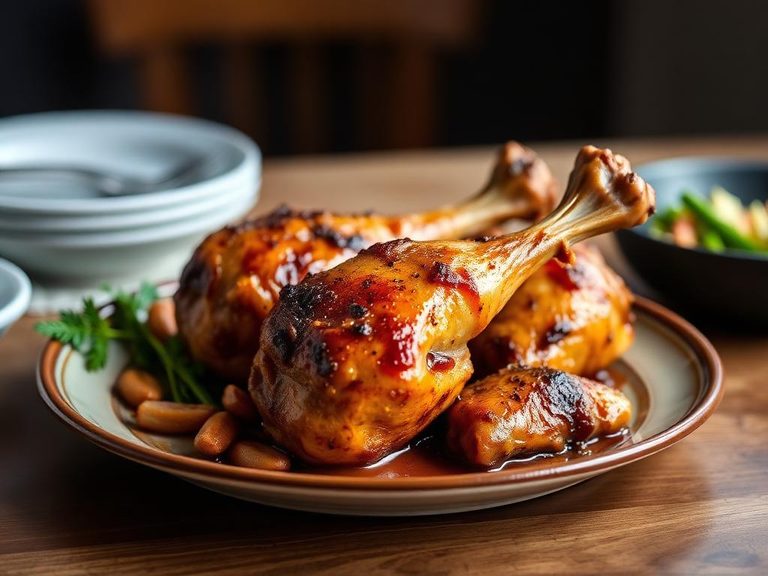

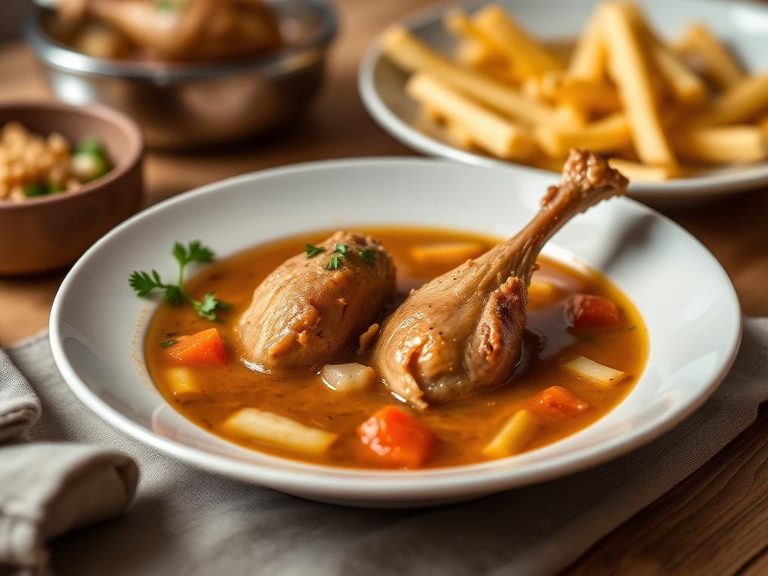

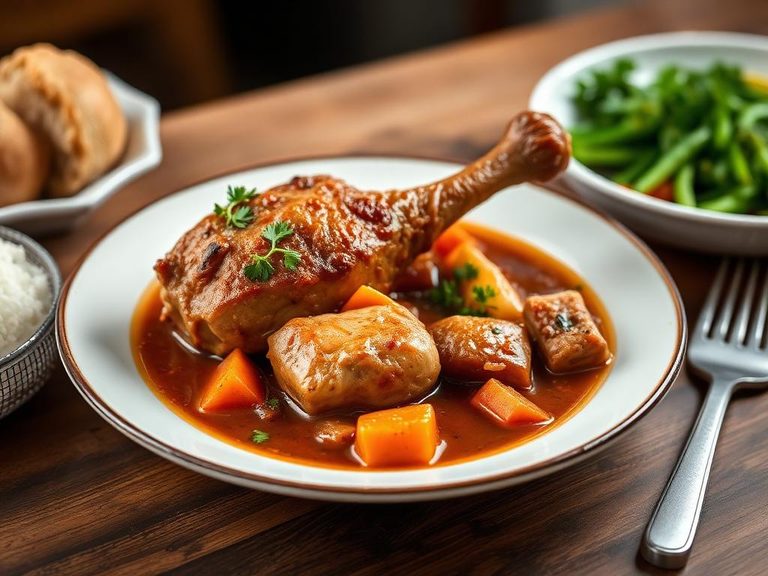
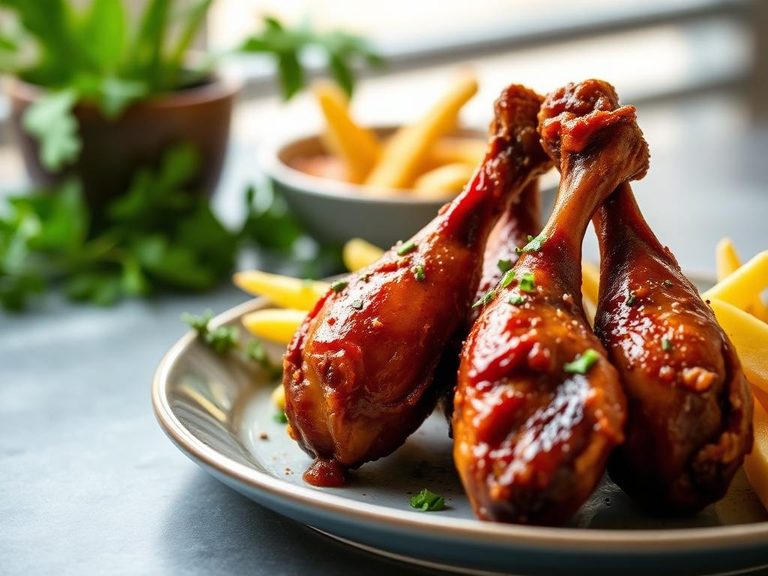
🌍 Where it's eaten
💡 Did you know?
A single raw turkey drumstick contains almost no fat, yet it is the most flavorful and moist part of the bird due to its higher myoglobin content, which gives dark meat its characteristic color and rich taste.
Full nutrition (USDA data · scales with serving)
| Water | 74.9 g |
| Energy | 109 kcal |
| Energy | 454 kj |
| Protein | 23.7 g |
| Total lipid (fat) | 1.5 g |
| Ash | 1.0 g |
| Carbohydrate, by difference | 0.14 g |
| Fiber, total dietary | 0.00 g |
| Total Sugars | 0.05 g |
| Sucrose | 0.05 g |
| Glucose | 0.00 g |
| Fructose | 0.00 g |
| Lactose | 0.00 g |
| Maltose | 0.00 g |
| Galactose | 0.00 g |
| Starch | 0.09 g |
| Calcium, Ca | 11.0 mg |
| Iron, Fe | 0.73 mg |
| Magnesium, Mg | 28.0 mg |
| Phosphorus, P | 201 mg |
| Potassium, K | 242 mg |
| Sodium, Na | 113 mg |
| Zinc, Zn | 1.3 mg |
| Copper, Cu | 0.07 mg |
| Manganese, Mn | 0.01 mg |
| Selenium, Se | 22.7 ug |
| Vitamin C, total ascorbic acid | 0.00 mg |
| Thiamin | 0.04 mg |
| Riboflavin | 0.14 mg |
| Niacin | 9.9 mg |
| Pantothenic acid | 0.78 mg |
| Vitamin B-6 | 0.81 mg |
| Folate, total | 7.0 ug |
| Folate, food | 7.0 ug |
| Choline, total | 65.5 mg |
| Vitamin B-12 | 0.63 ug |
| Vitamin B-12, added | 0.00 ug |
| Vitamin A, RAE | 6.0 ug |
| Retinol | 6.0 ug |
| Carotene, beta | 0.00 ug |
| Carotene, alpha | 0.00 ug |
| Cryptoxanthin, beta | 0.00 ug |
| Vitamin A, IU | 20.0 iu |
| Lycopene | 0.00 ug |
| Lutein + zeaxanthin | 0.00 ug |
| Vitamin E (alpha-tocopherol) | 0.06 mg |
| Vitamin E, added | 0.00 mg |
| Tocopherol, beta | 0.00 mg |
| Tocopherol, gamma | 0.01 mg |
| Tocopherol, delta | 0.00 mg |
| Tocotrienol, alpha | 0.00 mg |
| Tocotrienol, beta | 0.00 mg |
| Tocotrienol, gamma | 0.00 mg |
| Tocotrienol, delta | 0.00 mg |
| Vitamin D (D2 + D3), International Units | 5.0 iu |
| Vitamin D (D2 + D3) | 0.10 ug |
| Vitamin D3 (cholecalciferol) | 0.10 ug |
| Vitamin K (phylloquinone) | 0.00 ug |
| Alcohol, ethyl | 0.00 g |
| Caffeine | 0.00 mg |
| Theobromine | 0.00 mg |
Fat & fatty acid profile (per 100g)
| Fatty acids, total saturated | 0.29 g |
| SFA 4:0 | 0.00 g |
| SFA 6:0 | 0.00 g |
| SFA 8:0 | 0.00 g |
| SFA 10:0 | 0.00 g |
| SFA 12:0 | 0.00 g |
| SFA 14:0 | 0.00 g |
| SFA 15:0 | 0.00 g |
| SFA 16:0 | 0.18 g |
| SFA 17:0 | 0.00 g |
| SFA 18:0 | 0.09 g |
| SFA 20:0 | 0.00 g |
| SFA 22:0 | 0.00 g |
| SFA 24:0 | 0.00 g |
| Fatty acids, total monounsaturated | 0.26 g |
| MUFA 14:1 | 0.00 g |
| MUFA 15:1 | 0.00 g |
| MUFA 16:1 | 0.02 g |
| MUFA 16:1 c | 0.02 g |
| MUFA 17:1 | 0.00 g |
| MUFA 18:1 | 0.23 g |
| MUFA 18:1 c | 0.23 g |
| MUFA 20:1 | 0.00 g |
| MUFA 22:1 | 0.00 g |
| MUFA 22:1 c | 0.00 g |
| MUFA 24:1 c | 0.00 g |
| Fatty acids, total polyunsaturated | 0.26 g |
| PUFA 18:2 | 0.20 g |
| PUFA 18:2 n-6 c,c | 0.20 g |
| PUFA 18:2 CLAs | 0.00 g |
| PUFA 18:3 | 0.01 g |
| PUFA 18:3 n-3 c,c,c (ALA) | 0.01 g |
| PUFA 18:3 n-6 c,c,c | 0.00 g |
| PUFA 18:4 | 0.00 g |
| PUFA 20:2 n-6 c,c | 0.00 g |
| PUFA 20:3 | 0.01 g |
| PUFA 20:3 n-3 | 0.00 g |
| PUFA 20:3 n-6 | 0.01 g |
| PUFA 20:4 | 0.03 g |
| PUFA 20:5 n-3 (EPA) | 0.00 g |
| PUFA 22:4 | 0.01 g |
| PUFA 22:5 n-3 (DPA) | 0.00 g |
| PUFA 22:6 n-3 (DHA) | 0.00 g |
| Fatty acids, total trans | 0.01 g |
| Fatty acids, total trans-monoenoic | 0.01 g |
| TFA 16:1 t | 0.00 g |
| TFA 18:1 t | 0.01 g |
| TFA 22:1 t | 0.00 g |
| TFA 18:2 t not further defined | 0.00 g |
| Fatty acids, total trans-polyenoic | 0.00 g |
| Cholesterol | 57.0 mg |
Amino acid profile (per 100g)
| Tryptophan | 0.25 g |
| Threonine | 0.86 g |
| Isoleucine | 0.68 g |
| Leucine | 1.6 g |
| Lysine | 2.0 g |
| Methionine | 0.62 g |
| Cystine | 0.22 g |
| Phenylalanine | 0.76 g |
| Tyrosine | 0.70 g |
| Valine | 0.76 g |
| Arginine | 1.3 g |
| Histidine | 0.64 g |
| Alanine | 1.3 g |
| Aspartic acid | 1.9 g |
| Glutamic acid | 3.2 g |
| Glycine | 1.0 g |
| Proline | 1.3 g |
| Serine | 0.94 g |
| Hydroxyproline | 0.11 g |
FAQ
How does the nutrition of turkey drumstick meat compare to chicken drumstick meat?
Turkey drumstick meat is leaner and higher in protein than chicken drumstick meat, with about 23.66g protein per 100g versus chicken's 18g, and significantly less fat (1.48g vs. 3.5g). It also has a slightly more robust flavor profile.
Is turkey drumstick meat suitable for a low-carb or keto diet?
Yes, it is an excellent choice for low-carb and keto diets, as it contains only 0.14g of carbohydrates and 0g of fiber per 100g, while providing a substantial amount of high-quality protein.
What is the best way to cook turkey drumstick meat to keep it moist?
The best methods are slow-roasting, braising, or smoking, which allow the meat to become tender without drying out. Brining the drumsticks in a saltwater solution for 4-8 hours before cooking also helps retain moisture and enhance flavor.
Nutrient density (calculated · NRF9.3)
Nutrient Rich Foods index: beneficial nutrients (protein, fiber, vitamins, minerals) minus saturated fat, added sugar & sodium, per 100 kcal.
NRF9.3 index — Fulgoni, Keast & Drewnowski, 2009. Computed from USDA nutrients.
Weight-loss friendliness (composite index)
Energy density 1.09 kcal/g · 87% calories from protein · 0.0 g fiber · 0.1 g sugar per 100 g.
Composite of energy density (Rolls et al., 1999), protein & fiber satiety, minus sugar. A calculated heuristic — ranks satiety-per-calorie, not a clinical measure.
Dietary load (calculated from USDA values)
Potential renal acid load. Positive = acid-forming, negative = alkaline-forming.
Sodium-to-potassium ratio: 0.47 (lower is better — aim for ≤ 1)
Sodium:potassium per WHO potassium guidance. Computed from USDA nutrients.