

Salad dressing, mayonnaise type, regular, with salt
Whole food · Fats and Oils
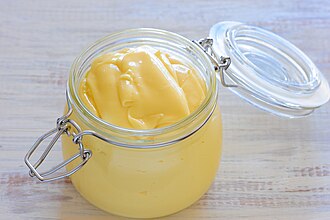
Photo: Wikipedia
This is the classic, creamy mayonnaise-style salad dressing—a smooth, pale yellow emulsion with a rich, tangy flavor and a luxuriously thick, spreadable texture. Nutritionally, it's a calorie-dense powerhouse, delivering over 200 kcal and 21.6g of fat per 100g, making it a significant source of dietary fat in small amounts.
Calorie split: 1% protein · 23% carbs · 76% fat
↓ Full nutrition💚 Why it's loved
People adore its rich, tangy creaminess that can transform a simple salad or sandwich into something indulgent. Its incredible versatility as a dip, spread, and binding agent makes it a kitchen staple across many cultures.
⚠️ Watch-outs & how to enjoy it better
Its high fat and calorie density can contribute to excess calorie intake if used liberally. The significant fat content, often from soybean or canola oil, may be a concern for those monitoring fat intake. To enjoy it mindfully, practice strict portion control (e.g., using a tablespoon as a guide), and pair it with high-fiber vegetables or lean protein to create a more balanced meal.
Key benefits
- Provides a concentrated source of dietary fat for energy.
- Enhances the palatability and mouthfeel of vegetables and proteins.
- A versatile base for countless other sauces and dressings.
- Contains small amounts of vitamin E from its oil content.
🍽️ Popular dishes
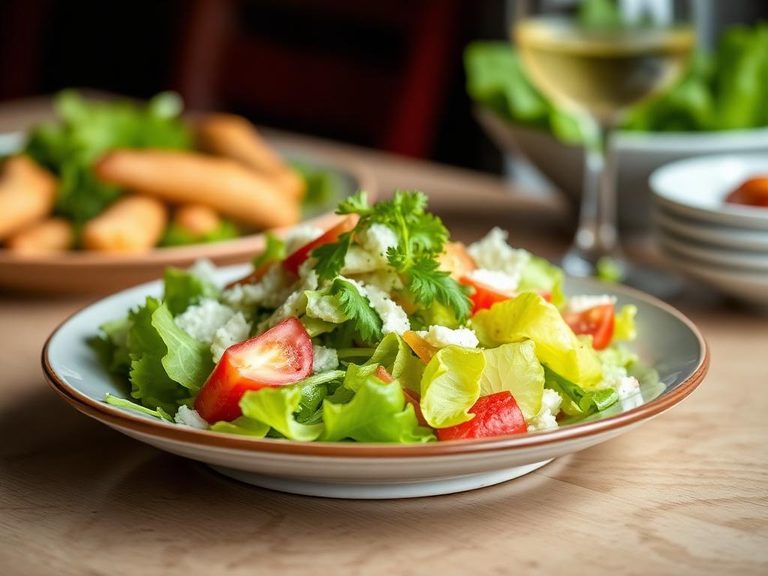
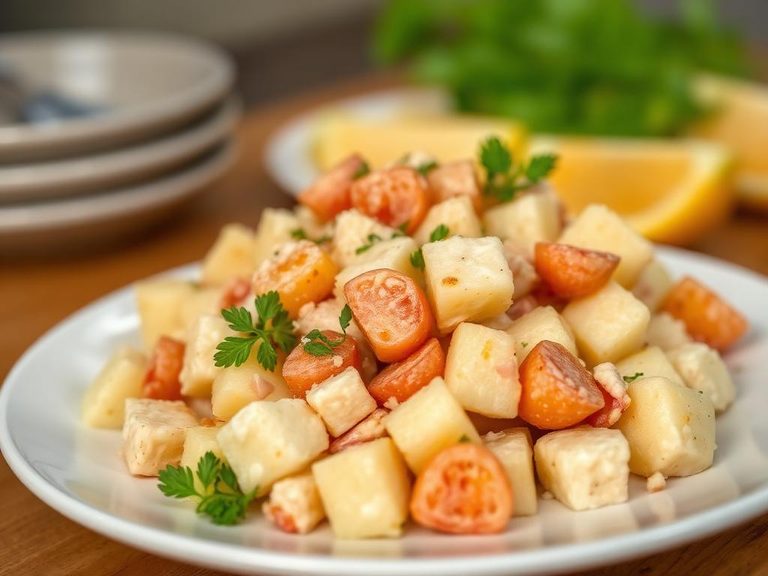
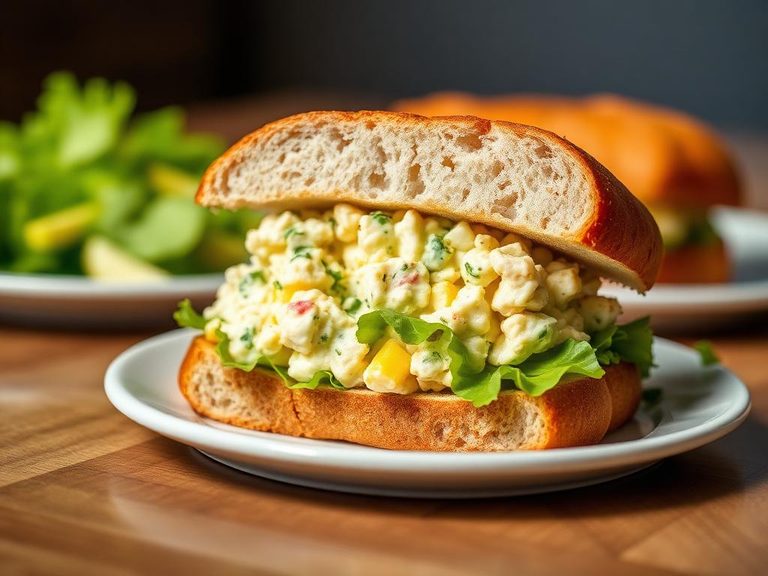
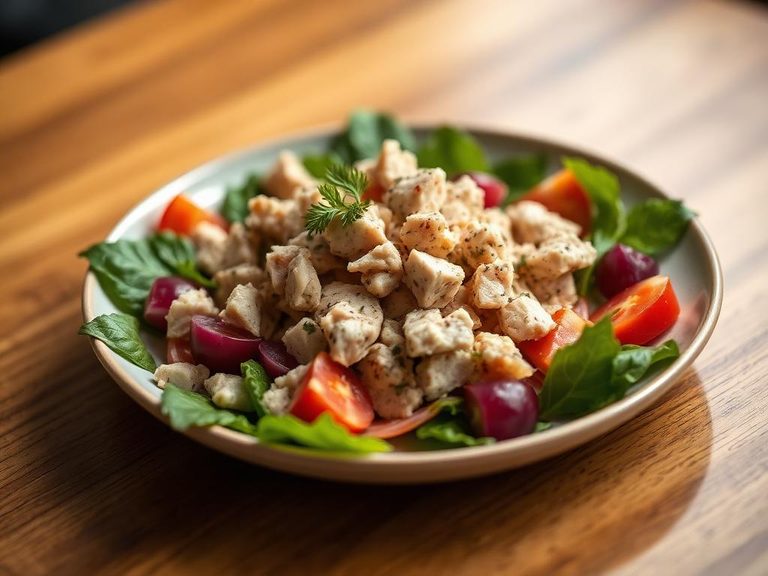
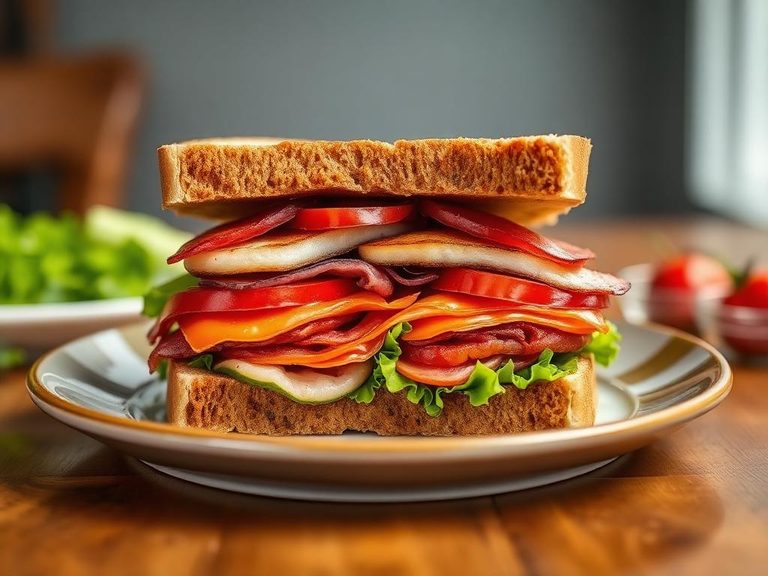

🌍 Where it's eaten
💡 Did you know?
Traditional mayonnaise is a stable emulsion of oil, egg yolk, and an acid like vinegar or lemon juice; the lecithin in the egg yolk acts as the natural emulsifier that keeps the oil and water from separating.
Full nutrition (USDA data · scales with serving)
| Water | 61.2 g |
| Energy | 250 kcal |
| Energy | 1046 kj |
| Protein | 0.65 g |
| Total lipid (fat) | 21.6 g |
| Ash | 1.8 g |
| Carbohydrate, by difference | 14.8 g |
| Fiber, total dietary | 0.00 g |
| Total Sugars | 10.0 g |
| Sucrose | 0.69 g |
| Glucose | 4.6 g |
| Fructose | 4.5 g |
| Lactose | 0.00 g |
| Maltose | 0.23 g |
| Galactose | 0.00 g |
| Starch | 4.4 g |
| Calcium, Ca | 5.0 mg |
| Iron, Fe | 0.12 mg |
| Magnesium, Mg | 2.0 mg |
| Phosphorus, P | 13.0 mg |
| Potassium, K | 36.0 mg |
| Sodium, Na | 653 mg |
| Zinc, Zn | 0.07 mg |
| Copper, Cu | 0.01 mg |
| Manganese, Mn | 0.01 mg |
| Selenium, Se | 0.40 ug |
| Vitamin C, total ascorbic acid | 0.00 mg |
| Thiamin | 0.01 mg |
| Riboflavin | 0.03 mg |
| Niacin | 0.00 mg |
| Pantothenic acid | 0.09 mg |
| Vitamin B-6 | 0.01 mg |
| Folate, total | 6.0 ug |
| Folic acid | 0.00 ug |
| Folate, food | 6.0 ug |
| Folate, DFE | 6.0 ug |
| Choline, total | 14.6 mg |
| Betaine | 0.30 mg |
| Vitamin B-12 | 0.04 ug |
| Vitamin B-12, added | 0.00 ug |
| Vitamin A, RAE | 5.0 ug |
| Retinol | 5.0 ug |
| Carotene, beta | 6.0 ug |
| Carotene, alpha | 0.00 ug |
| Cryptoxanthin, beta | 4.0 ug |
| Vitamin A, IU | 29.0 iu |
| Lycopene | 0.00 ug |
| Lutein + zeaxanthin | 28.0 ug |
| Vitamin E (alpha-tocopherol) | 1.6 mg |
| Vitamin E, added | 0.00 mg |
| Tocopherol, beta | 0.72 mg |
| Tocopherol, gamma | 11.1 mg |
| Tocopherol, delta | 4.7 mg |
| Tocotrienol, alpha | 0.09 mg |
| Tocotrienol, beta | 0.00 mg |
| Tocotrienol, gamma | 0.00 mg |
| Tocotrienol, delta | 0.00 mg |
| Vitamin D (D2 + D3), International Units | 0.00 iu |
| Vitamin D (D2 + D3) | 0.00 ug |
| Vitamin D2 (ergocalciferol) | 0.00 ug |
| Vitamin D3 (cholecalciferol) | 0.00 ug |
| Vitamin K (phylloquinone) | 42.2 ug |
| Alcohol, ethyl | 0.00 g |
| Caffeine | 0.00 mg |
| Theobromine | 0.00 mg |
Fat & fatty acid profile (per 100g)
| Fatty acids, total saturated | 3.4 g |
| SFA 4:0 | 0.00 g |
| SFA 6:0 | 0.00 g |
| SFA 8:0 | 0.00 g |
| SFA 10:0 | 0.00 g |
| SFA 12:0 | 0.00 g |
| SFA 14:0 | 0.02 g |
| SFA 15:0 | 0.00 g |
| SFA 16:0 | 2.2 g |
| SFA 17:0 | 0.02 g |
| SFA 18:0 | 0.99 g |
| SFA 20:0 | 0.07 g |
| SFA 22:0 | 0.07 g |
| SFA 24:0 | 0.03 g |
| Fatty acids, total monounsaturated | 5.1 g |
| MUFA 14:1 | 0.00 g |
| MUFA 15:1 | 0.00 g |
| MUFA 16:1 | 0.03 g |
| MUFA 16:1 c | 0.03 g |
| MUFA 17:1 | 0.01 g |
| MUFA 18:1 | 4.9 g |
| MUFA 18:1 c | 4.9 g |
| MUFA 20:1 | 0.07 g |
| MUFA 22:1 | 0.03 g |
| MUFA 22:1 c | 0.03 g |
| MUFA 24:1 c | 0.00 g |
| Fatty acids, total polyunsaturated | 12.2 g |
| PUFA 18:2 | 10.7 g |
| PUFA 18:2 n-6 c,c | 10.7 g |
| PUFA 18:2 CLAs | 0.01 g |
| PUFA 18:3 | 1.4 g |
| PUFA 18:3 n-3 c,c,c (ALA) | 1.4 g |
| PUFA 18:3 n-6 c,c,c | 0.06 g |
| PUFA 18:3i | 0.00 g |
| PUFA 18:4 | 0.00 g |
| PUFA 20:2 n-6 c,c | 0.01 g |
| PUFA 20:3 | 0.00 g |
| PUFA 20:3 n-3 | 0.00 g |
| PUFA 20:3 n-6 | 0.00 g |
| PUFA 20:4 | 0.02 g |
| PUFA 20:5 n-3 (EPA) | 0.00 g |
| PUFA 22:4 | 0.00 g |
| PUFA 22:5 n-3 (DPA) | 0.00 g |
| PUFA 22:6 n-3 (DHA) | 0.00 g |
| Fatty acids, total trans | 0.08 g |
| Fatty acids, total trans-monoenoic | 0.01 g |
| TFA 16:1 t | 0.00 g |
| TFA 18:1 t | 0.01 g |
| TFA 22:1 t | 0.00 g |
| TFA 18:2 t not further defined | 0.07 g |
| Fatty acids, total trans-polyenoic | 0.07 g |
| Cholesterol | 19.0 mg |
| Phytosterols | 97.0 mg |
Amino acid profile (per 100g)
| Tryptophan | 0.01 g |
| Threonine | 0.03 g |
| Isoleucine | 0.03 g |
| Leucine | 0.06 g |
| Lysine | 0.04 g |
| Methionine | 0.02 g |
| Cystine | 0.01 g |
| Phenylalanine | 0.03 g |
| Tyrosine | 0.03 g |
| Valine | 0.04 g |
| Arginine | 0.04 g |
| Histidine | 0.02 g |
| Alanine | 0.04 g |
| Aspartic acid | 0.07 g |
| Glutamic acid | 0.09 g |
| Glycine | 0.02 g |
| Proline | 0.03 g |
| Serine | 0.05 g |
FAQ
Is this the same as regular mayonnaise?
It is very similar and often used interchangeably, but 'salad dressing, mayonnaise type' is a specific USDA category. It may contain additional ingredients like sugar, corn syrup, or different oils compared to a standard 'mayonnaise' product.
Why is it so high in calories?
The primary ingredient is oil, which is pure fat. Fat contains 9 calories per gram, compared to 4 calories per gram for protein or carbohydrates, making it very energy-dense.
Can I use this for baking?
Yes, it can be used in some baking recipes (like chocolate cake) to add moisture and fat, though its tangy flavor profile might subtly alter the taste.
Nutrient density (calculated · NRF9.3)
Nutrient Rich Foods index: beneficial nutrients (protein, fiber, vitamins, minerals) minus saturated fat, added sugar & sodium, per 100 kcal.
NRF9.3 index — Fulgoni, Keast & Drewnowski, 2009. Computed from USDA nutrients.
Weight-loss friendliness (composite index)
Energy density 2.50 kcal/g · 1% calories from protein · 0.0 g fiber · 10.0 g sugar per 100 g.
Composite of energy density (Rolls et al., 1999), protein & fiber satiety, minus sugar. A calculated heuristic — ranks satiety-per-calorie, not a clinical measure.
Dietary load (calculated from USDA values)
Potential renal acid load. Positive = acid-forming, negative = alkaline-forming.
Sodium-to-potassium ratio: 18.14 (lower is better — aim for ≤ 1)
Sodium:potassium per WHO potassium guidance. Computed from USDA nutrients.