

Restaurant, Chinese, fried rice, without meat
Whole food · Restaurant Foods
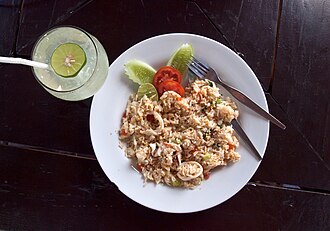
Photo: Wikipedia
This is a classic Chinese restaurant staple: fluffy, wok-fried rice grains tossed with eggs, scallions, and savory seasonings, creating a dish that's both comforting and subtly aromatic. The texture is typically light and slightly chewy, with each grain distinct rather than clumpy, offering a satisfying mouthfeel that pairs well with a variety of sauces. Nutritionally, it's a carb-dominant side dish with a modest protein boost from eggs, making it a quick energy source without being overly heavy.
Calorie split: 9% protein · 75% carbs · 15% fat
↓ Full nutrition💚 Why it's loved
People love it for its satisfying, savory flavor and the way it soaks up sauces like soy or oyster, making it a perfect companion to stir-fries or curries. Its cultural significance as a comfort food in Chinese cuisine, often served at family gatherings or as a quick meal, adds to its appeal.
⚠️ Watch-outs & how to enjoy it better
The high carbohydrate content can lead to blood-sugar spikes, especially for those with insulin resistance or diabetes, and it's often high in sodium from soy sauce and seasonings. To counteract this, pair it with a source of protein like grilled chicken or tofu, add fiber-rich vegetables like broccoli or peas, and practice portion control by limiting servings to about one cup.
Key benefits
- Quick energy source from complex carbohydrates
- Contains small amounts of protein from eggs
- Low in fat compared to many fried dishes
- Easy to digest and gentle on the stomach
- Versatile base for adding vegetables or lean proteins
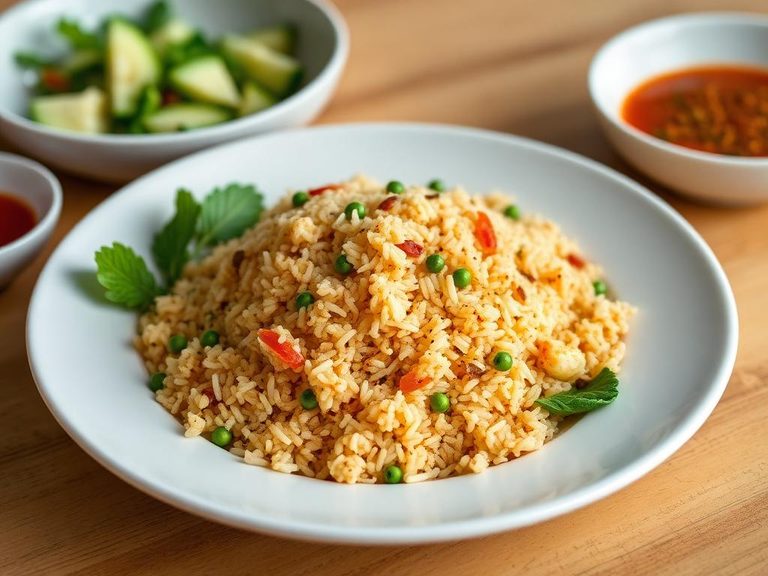
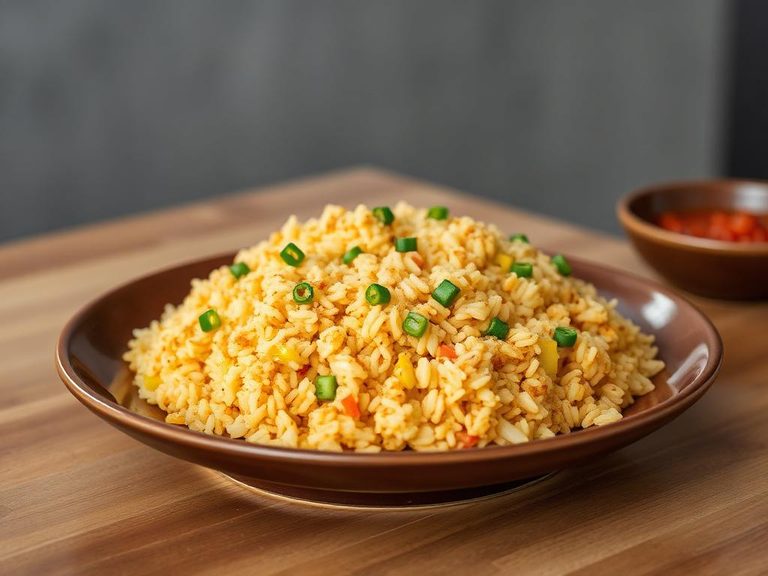
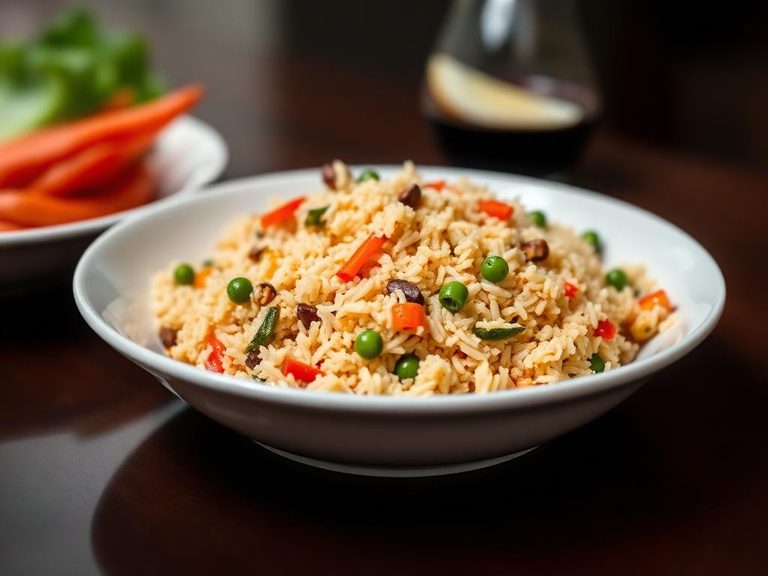
🍽️ Popular dishes
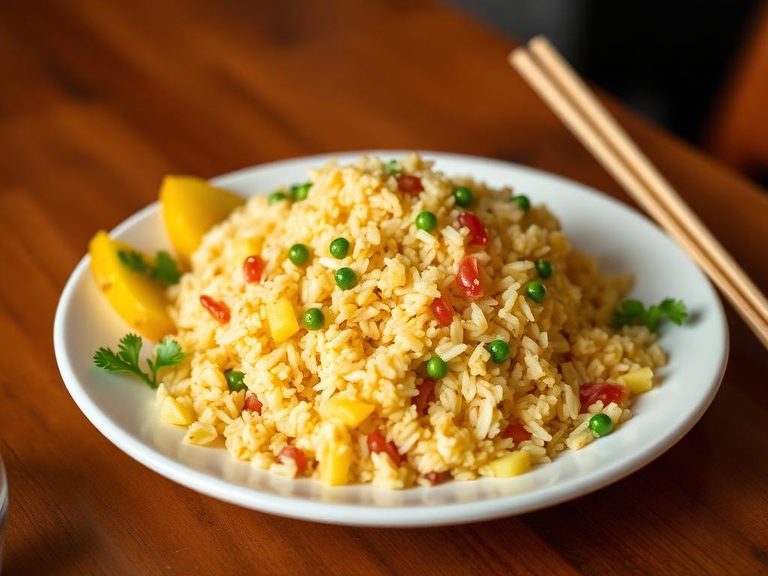
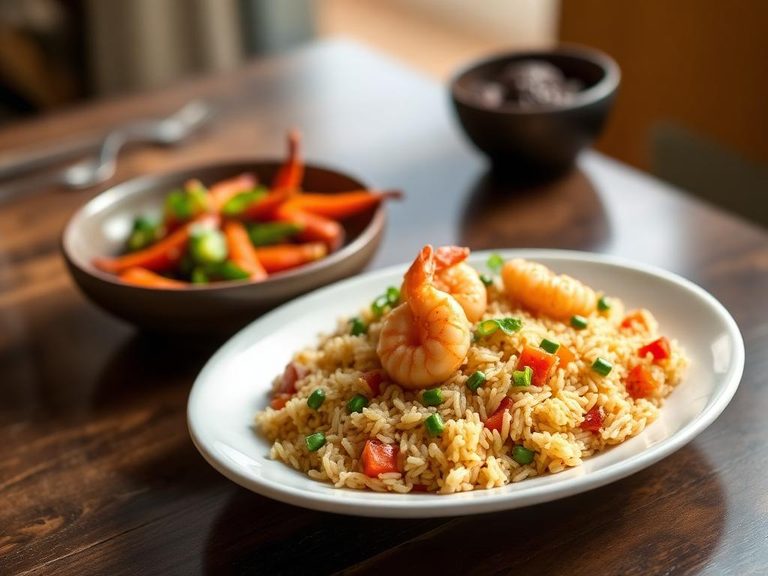
🌍 Where it's eaten
💡 Did you know?
Fried rice is believed to have originated during the Sui Dynasty (589–618 AD) as a way to use leftover rice and avoid waste, making it one of the earliest examples of 'upcycled' cuisine in history.
Full nutrition (USDA data · scales with serving)
| Water | 59.1 g |
| Energy | 174 kcal |
| Energy | 728 kj |
| Protein | 4.0 g |
| Total lipid (fat) | 3.0 g |
| Ash | 1.1 g |
| Carbohydrate, by difference | 32.8 g |
| Fiber, total dietary | 1.1 g |
| Total Sugars | 0.56 g |
| Sucrose | 0.37 g |
| Glucose | 0.13 g |
| Fructose | 0.05 g |
| Lactose | 0.00 g |
| Maltose | 0.00 g |
| Galactose | 0.00 g |
| Starch | 30.8 g |
| Calcium, Ca | 12.0 mg |
| Iron, Fe | 0.66 mg |
| Magnesium, Mg | 10.0 mg |
| Phosphorus, P | 51.0 mg |
| Potassium, K | 76.0 mg |
| Sodium, Na | 387 mg |
| Zinc, Zn | 0.72 mg |
| Copper, Cu | 0.10 mg |
| Manganese, Mn | 0.43 mg |
| Selenium, Se | 8.3 ug |
| Vitamin C, total ascorbic acid | 3.8 mg |
| Thiamin | 0.01 mg |
| Riboflavin | 0.03 mg |
| Niacin | 0.64 mg |
| Vitamin B-6 | 0.03 mg |
| Folate, total | 6.0 ug |
| Folic acid | 0.00 ug |
| Folate, food | 6.0 ug |
| Folate, DFE | 6.0 ug |
| Choline, total | 5.5 mg |
| Betaine | 0.20 mg |
| Vitamin B-12 | 0.00 ug |
| Vitamin B-12, added | 0.00 ug |
| Vitamin A, RAE | 22.0 ug |
| Retinol | 10.0 ug |
| Carotene, beta | 128 ug |
| Carotene, alpha | 38.0 ug |
| Cryptoxanthin, beta | 0.00 ug |
| Vitamin A, IU | 279 iu |
| Lycopene | 3.0 ug |
| Lutein + zeaxanthin | 103 ug |
| Vitamin E (alpha-tocopherol) | 0.13 mg |
| Vitamin E, added | 0.00 mg |
| Tocopherol, beta | 0.03 mg |
| Tocopherol, gamma | 1.3 mg |
| Tocopherol, delta | 0.28 mg |
| Tocotrienol, alpha | 0.31 mg |
| Tocotrienol, beta | 0.00 mg |
| Tocotrienol, gamma | 0.16 mg |
| Tocotrienol, delta | 0.00 mg |
| Vitamin D (D2 + D3), International Units | 0.00 iu |
| Vitamin D (D2 + D3) | 0.00 ug |
| Vitamin D2 (ergocalciferol) | 0.00 ug |
| Vitamin D3 (cholecalciferol) | 0.00 ug |
| Vitamin K (phylloquinone) | 2.8 ug |
| Vitamin K (Dihydrophylloquinone) | 0.00 ug |
| Vitamin K (Menaquinone-4) | 0.00 ug |
| Alcohol, ethyl | 0.00 g |
| Caffeine | 0.00 mg |
| Theobromine | 0.00 mg |
Fat & fatty acid profile (per 100g)
| Fatty acids, total saturated | 0.54 g |
| SFA 4:0 | 0.00 g |
| SFA 6:0 | 0.00 g |
| SFA 8:0 | 0.00 g |
| SFA 10:0 | 0.00 g |
| SFA 12:0 | 0.00 g |
| SFA 14:0 | 0.01 g |
| SFA 15:0 | 0.00 g |
| SFA 16:0 | 0.39 g |
| SFA 17:0 | 0.00 g |
| SFA 18:0 | 0.12 g |
| SFA 20:0 | 0.01 g |
| SFA 22:0 | 0.01 g |
| SFA 24:0 | 0.00 g |
| Fatty acids, total monounsaturated | 0.65 g |
| MUFA 14:1 | 0.00 g |
| MUFA 15:1 | 0.00 g |
| MUFA 16:1 | 0.01 g |
| MUFA 16:1 c | 0.01 g |
| MUFA 17:1 | 0.00 g |
| MUFA 18:1 | 0.63 g |
| MUFA 18:1 c | 0.62 g |
| MUFA 20:1 | 0.01 g |
| MUFA 22:1 | 0.00 g |
| MUFA 22:1 c | 0.00 g |
| MUFA 24:1 c | 0.00 g |
| Fatty acids, total polyunsaturated | 1.1 g |
| PUFA 18:2 | 0.99 g |
| PUFA 18:2 n-6 c,c | 0.98 g |
| PUFA 18:2 CLAs | 0.00 g |
| PUFA 18:3 | 0.11 g |
| PUFA 18:3 n-3 c,c,c (ALA) | 0.11 g |
| PUFA 18:3 n-6 c,c,c | 0.00 g |
| PUFA 18:3i | 0.00 g |
| PUFA 18:4 | 0.00 g |
| PUFA 20:2 n-6 c,c | 0.00 g |
| PUFA 20:3 | 0.00 g |
| PUFA 20:3 n-3 | 0.00 g |
| PUFA 20:3 n-6 | 0.00 g |
| PUFA 20:4 | 0.01 g |
| PUFA 20:5 n-3 (EPA) | 0.00 g |
| PUFA 22:4 | 0.00 g |
| PUFA 22:5 n-3 (DPA) | 0.00 g |
| PUFA 22:6 n-3 (DHA) | 0.00 g |
| Fatty acids, total trans | 0.01 g |
| Fatty acids, total trans-monoenoic | 0.01 g |
| TFA 16:1 t | 0.00 g |
| TFA 18:1 t | 0.01 g |
| TFA 22:1 t | 0.00 g |
| TFA 18:2 t not further defined | 0.01 g |
| Fatty acids, total trans-polyenoic | 0.01 g |
| Cholesterol | 18.0 mg |
Amino acid profile (per 100g)
| Tryptophan | 0.05 g |
| Threonine | 0.17 g |
| Isoleucine | 0.17 g |
| Leucine | 0.34 g |
| Lysine | 0.17 g |
| Methionine | 0.11 g |
| Cystine | 0.08 g |
| Phenylalanine | 0.23 g |
| Tyrosine | 0.15 g |
| Valine | 0.25 g |
| Arginine | 0.34 g |
| Histidine | 0.09 g |
| Alanine | 0.24 g |
| Aspartic acid | 0.41 g |
| Glutamic acid | 1.1 g |
| Glycine | 0.18 g |
| Proline | 0.19 g |
| Serine | 0.21 g |
FAQ
Is fried rice without meat healthy?
It can be part of a balanced diet, but it's high in carbs and often sodium. Pair it with protein and vegetables to make it more nutritious.
Can I make fried rice healthier at home?
Yes, use less oil, add plenty of vegetables, and choose low-sodium soy sauce. You can also use brown rice for more fiber.
Why is restaurant fried rice different from homemade?
Restaurants often use high heat, more oil, and day-old rice for better texture, which can make it richer and more flavorful but also higher in calories.
Is fried rice gluten-free?
Traditional fried rice uses soy sauce, which contains gluten. Use tamari or gluten-free soy sauce to make it safe for those with gluten intolerance.
Nutrient density (calculated · NRF9.3)
Nutrient Rich Foods index: beneficial nutrients (protein, fiber, vitamins, minerals) minus saturated fat, added sugar & sodium, per 100 kcal.
NRF9.3 index — Fulgoni, Keast & Drewnowski, 2009. Computed from USDA nutrients.
Weight-loss friendliness (composite index)
Energy density 1.74 kcal/g · 9% calories from protein · 1.1 g fiber · 0.6 g sugar per 100 g.
Composite of energy density (Rolls et al., 1999), protein & fiber satiety, minus sugar. A calculated heuristic — ranks satiety-per-calorie, not a clinical measure.
Dietary load (calculated from USDA values)
Potential renal acid load. Positive = acid-forming, negative = alkaline-forming.
Sodium-to-potassium ratio: 5.09 (lower is better — aim for ≤ 1)
Sodium:potassium per WHO potassium guidance. Computed from USDA nutrients.