

Pork sausage, link/patty, unprepared
Whole food · Sausages and Luncheon Meats
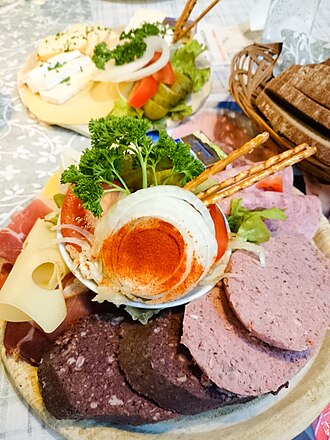
Photo: Wikipedia
Pork sausage, in link or patty form, is a coarse-ground, seasoned meat product known for its savory, rich flavor and juicy, sometimes snappy texture. Nutritionally, it's a dense source of protein and fat, with virtually no carbohydrates, making it a staple in high-protein, low-carb diets. Its high fat content is what delivers its signature mouthfeel and flavor during cooking.
Calorie split: 21% protein · 1% carbs · 77% fat
↓ Full nutrition💚 Why it's loved
People adore pork sausage for its robust, savory umami flavor and satisfying, juicy texture that elevates breakfast plates, pasta dishes, and sandwiches. Its versatility allows it to be seasoned in countless ways, from spicy Italian to sweet maple, making it a beloved comfort food across many cultures.
⚠️ Watch-outs & how to enjoy it better
Its high saturated fat and sodium content can be a concern for heart health and blood pressure management. To counteract this, practice strict portion control, choose leaner varieties when available, and always pair it with high-fiber, non-starchy vegetables like roasted broccoli or a fresh salad to balance the meal and aid digestion.
Key benefits
- Excellent source of complete protein for muscle maintenance.
- Very low in carbohydrates and sugars.
- Provides essential B vitamins like B12 and niacin.
- Contains minerals such as zinc and selenium.
- High satiety factor due to protein and fat content.
🍽️ Popular dishes
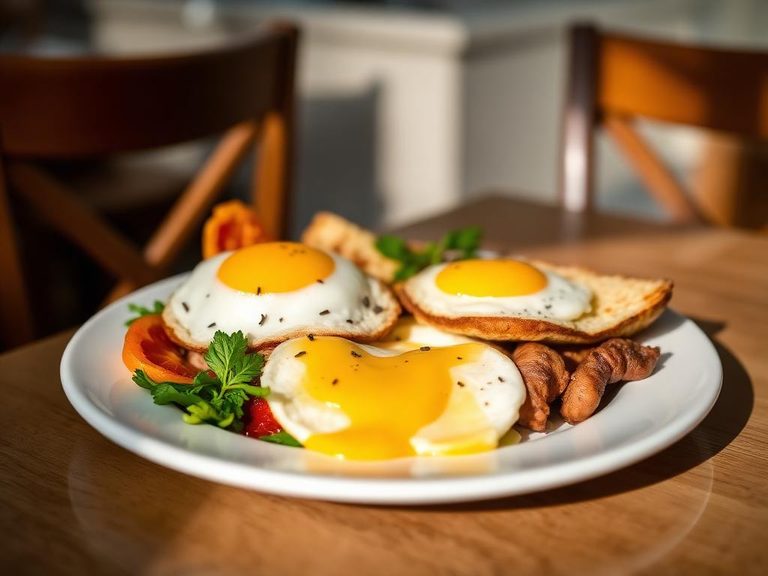
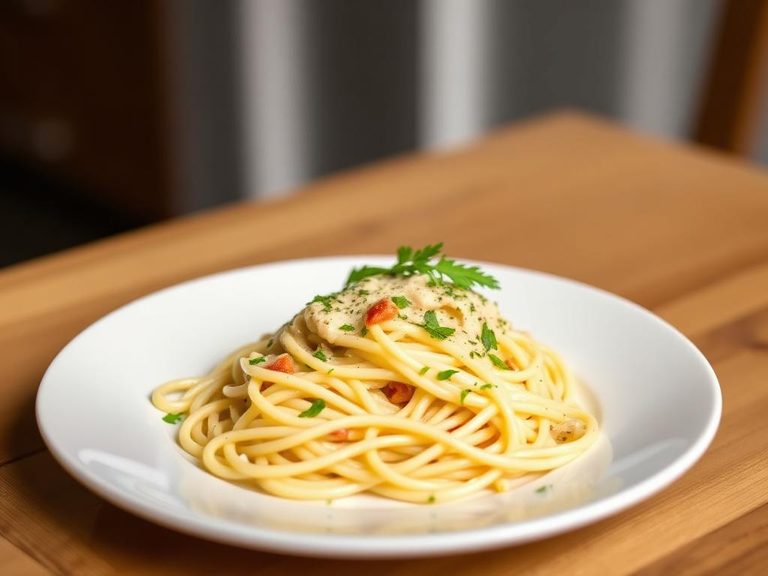
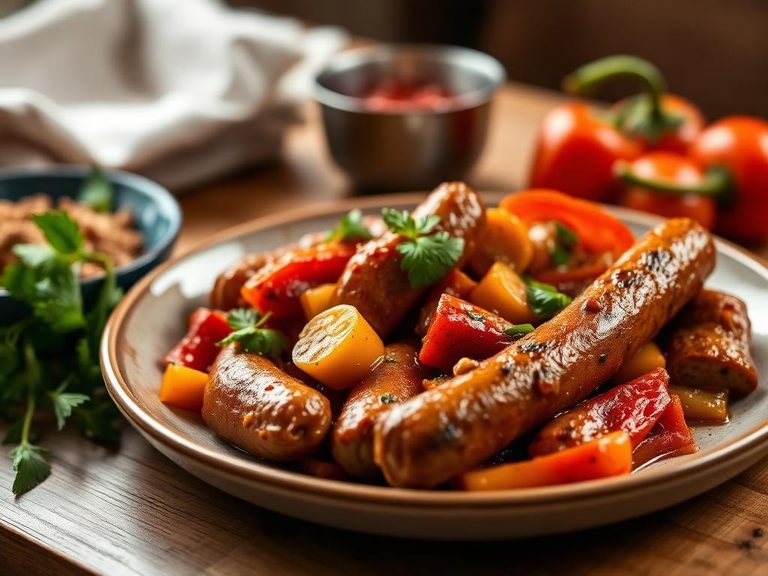
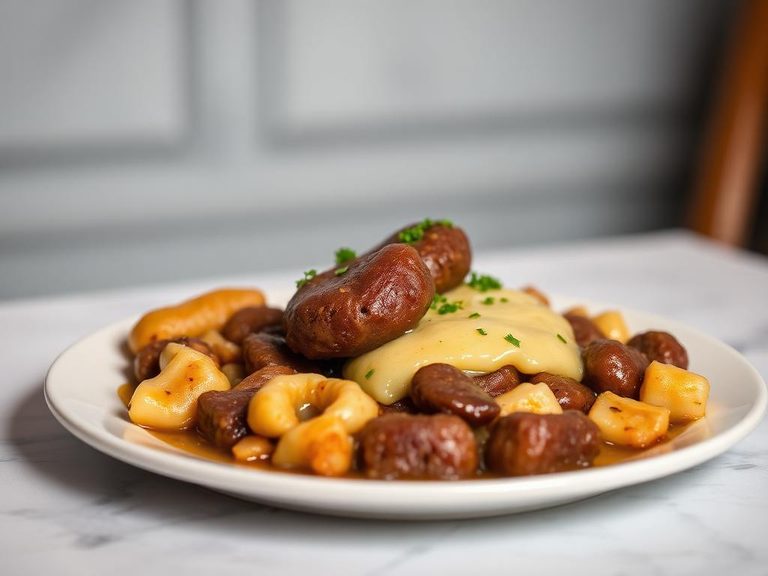
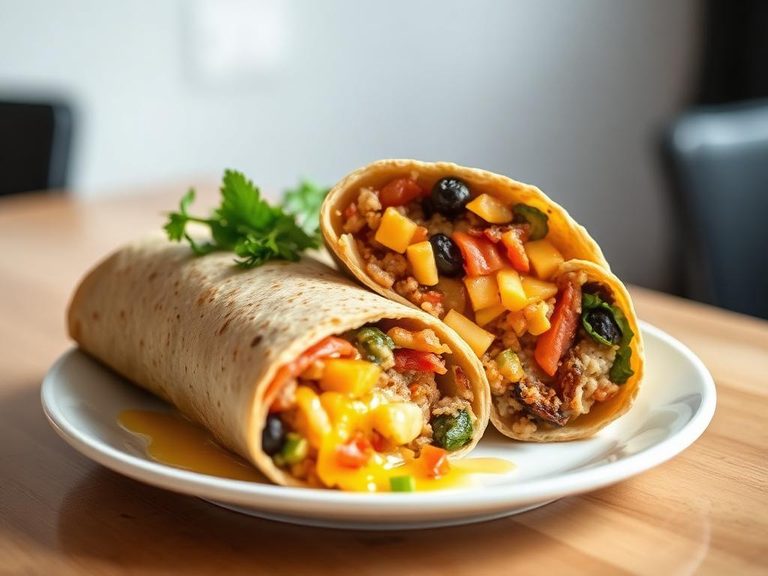
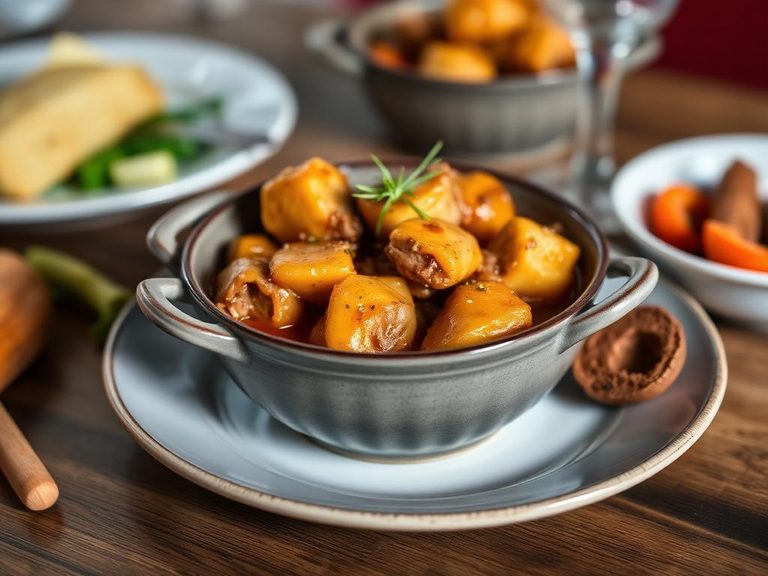
🌍 Where it's eaten
💡 Did you know?
The natural casing of a traditional sausage link is made from the cleaned intestines of animals, which gives it that characteristic 'snap' when you bite into it.
Full nutrition (USDA data · scales with serving)
| Water | 56.6 g |
| Energy | 288 kcal |
| Energy | 1207 kj |
| Protein | 15.4 g |
| Total lipid (fat) | 24.8 g |
| Ash | 2.5 g |
| Carbohydrate, by difference | 0.93 g |
| Fiber, total dietary | 0.00 g |
| Total Sugars | 0.93 g |
| Sucrose | 0.10 g |
| Glucose | 0.56 g |
| Fructose | 0.00 g |
| Lactose | 0.00 g |
| Maltose | 0.27 g |
| Galactose | 0.00 g |
| Calcium, Ca | 8.0 mg |
| Iron, Fe | 1.0 mg |
| Magnesium, Mg | 15.0 mg |
| Phosphorus, P | 133 mg |
| Potassium, K | 307 mg |
| Sodium, Na | 739 mg |
| Zinc, Zn | 2.0 mg |
| Copper, Cu | 0.06 mg |
| Manganese, Mn | 0.02 mg |
| Selenium, Se | 17.8 ug |
| Vitamin C, total ascorbic acid | 0.00 mg |
| Thiamin | 0.22 mg |
| Riboflavin | 0.15 mg |
| Niacin | 5.4 mg |
| Pantothenic acid | 0.69 mg |
| Vitamin B-6 | 0.17 mg |
| Folate, total | 2.0 ug |
| Folic acid | 0.00 ug |
| Folate, food | 2.0 ug |
| Folate, DFE | 2.0 ug |
| Choline, total | 52.5 mg |
| Betaine | 4.7 mg |
| Vitamin B-12 | 0.92 ug |
| Vitamin B-12, added | 0.00 ug |
| Vitamin A, RAE | 27.0 ug |
| Retinol | 27.0 ug |
| Carotene, beta | 0.00 ug |
| Carotene, alpha | 0.00 ug |
| Cryptoxanthin, beta | 0.00 ug |
| Vitamin A, IU | 92.0 iu |
| Lycopene | 0.00 ug |
| Lutein + zeaxanthin | 0.00 ug |
| Vitamin E (alpha-tocopherol) | 0.99 mg |
| Vitamin E, added | 0.00 mg |
| Tocopherol, beta | 0.00 mg |
| Tocopherol, gamma | 0.09 mg |
| Tocopherol, delta | 0.00 mg |
| Tocotrienol, alpha | 0.05 mg |
| Tocotrienol, beta | 0.01 mg |
| Tocotrienol, gamma | 0.08 mg |
| Tocotrienol, delta | 0.00 mg |
| Vitamin D (D2 + D3), International Units | 57.0 iu |
| Vitamin D (D2 + D3) | 1.4 ug |
| Vitamin D2 (ergocalciferol) | 0.00 ug |
| Vitamin D3 (cholecalciferol) | 1.4 ug |
| Vitamin K (phylloquinone) | 0.30 ug |
| Vitamin K (Dihydrophylloquinone) | 0.00 ug |
| Vitamin K (Menaquinone-4) | 18.3 ug |
| Alcohol, ethyl | 0.00 g |
| Caffeine | 0.00 mg |
| Theobromine | 0.00 mg |
Fat & fatty acid profile (per 100g)
| Fatty acids, total saturated | 7.6 g |
| SFA 4:0 | 0.00 g |
| SFA 6:0 | 0.00 g |
| SFA 8:0 | 0.00 g |
| SFA 10:0 | 0.02 g |
| SFA 12:0 | 0.02 g |
| SFA 14:0 | 0.28 g |
| SFA 15:0 | 0.01 g |
| SFA 16:0 | 4.7 g |
| SFA 17:0 | 0.07 g |
| SFA 18:0 | 2.4 g |
| SFA 20:0 | 0.06 g |
| SFA 22:0 | 0.01 g |
| SFA 24:0 | 0.00 g |
| Fatty acids, total monounsaturated | 9.8 g |
| MUFA 14:1 | 0.01 g |
| MUFA 15:1 | 0.00 g |
| MUFA 16:1 | 0.47 g |
| MUFA 16:1 c | 0.46 g |
| MUFA 17:1 | 0.05 g |
| MUFA 18:1 | 9.0 g |
| MUFA 18:1 c | 9.0 g |
| MUFA 20:1 | 0.28 g |
| MUFA 22:1 | 0.01 g |
| MUFA 22:1 c | 0.01 g |
| MUFA 24:1 c | 0.00 g |
| Fatty acids, total polyunsaturated | 4.4 g |
| PUFA 18:2 | 3.9 g |
| PUFA 18:2 n-6 c,c | 3.8 g |
| PUFA 18:2 CLAs | 0.03 g |
| PUFA 18:3 | 0.13 g |
| PUFA 18:3 n-3 c,c,c (ALA) | 0.12 g |
| PUFA 18:3 n-6 c,c,c | 0.01 g |
| PUFA 18:3i | 0.00 g |
| PUFA 18:4 | 0.00 g |
| PUFA 20:2 n-6 c,c | 0.21 g |
| PUFA 20:3 | 0.06 g |
| PUFA 20:3 n-3 | 0.03 g |
| PUFA 20:3 n-6 | 0.03 g |
| PUFA 20:4 | 0.11 g |
| PUFA 20:5 n-3 (EPA) | 0.00 g |
| PUFA 22:4 | 0.04 g |
| PUFA 22:5 n-3 (DPA) | 0.02 g |
| PUFA 22:6 n-3 (DHA) | 0.00 g |
| Fatty acids, total trans | 0.10 g |
| Fatty acids, total trans-monoenoic | 0.08 g |
| TFA 16:1 t | 0.01 g |
| TFA 18:1 t | 0.07 g |
| TFA 22:1 t | 0.00 g |
| TFA 18:2 t not further defined | 0.02 g |
| Fatty acids, total trans-polyenoic | 0.02 g |
| Cholesterol | 70.0 mg |
Amino acid profile (per 100g)
| Tryptophan | 0.16 g |
| Threonine | 0.58 g |
| Isoleucine | 0.63 g |
| Leucine | 1.2 g |
| Lysine | 1.1 g |
| Methionine | 0.38 g |
| Cystine | 0.21 g |
| Phenylalanine | 0.58 g |
| Tyrosine | 0.47 g |
| Valine | 0.73 g |
| Arginine | 1.0 g |
| Histidine | 0.48 g |
| Alanine | 0.98 g |
| Aspartic acid | 1.4 g |
| Glutamic acid | 2.4 g |
| Glycine | 1.1 g |
| Proline | 1.1 g |
| Serine | 0.67 g |
| Hydroxyproline | 0.30 g |
FAQ
What's the difference between breakfast sausage and Italian sausage?
Breakfast sausage is typically seasoned with sage, thyme, and black pepper, while Italian sausage is flavored with fennel seed and anise, giving it a distinct, slightly sweet and aromatic profile.
How can I tell if pork sausage is fully cooked?
Use a meat thermometer: it must reach an internal temperature of 160°F (71°C). The juices should run clear, and there should be no pink color remaining in the center.
Is pork sausage gluten-free?
Many are, but not all. Some brands use breadcrumbs or wheat flour as a filler or binder. Always check the ingredient list for wheat, barley, or rye if you have celiac disease or gluten sensitivity.
Nutrient density (calculated · NRF9.3)
Nutrient Rich Foods index: beneficial nutrients (protein, fiber, vitamins, minerals) minus saturated fat, added sugar & sodium, per 100 kcal.
NRF9.3 index — Fulgoni, Keast & Drewnowski, 2009. Computed from USDA nutrients.
Weight-loss friendliness (composite index)
Energy density 2.88 kcal/g · 21% calories from protein · 0.0 g fiber · 0.9 g sugar per 100 g.
Composite of energy density (Rolls et al., 1999), protein & fiber satiety, minus sugar. A calculated heuristic — ranks satiety-per-calorie, not a clinical measure.
Dietary load (calculated from USDA values)
Potential renal acid load. Positive = acid-forming, negative = alkaline-forming.
Sodium-to-potassium ratio: 2.41 (lower is better — aim for ≤ 1)
Sodium:potassium per WHO potassium guidance. Computed from USDA nutrients.